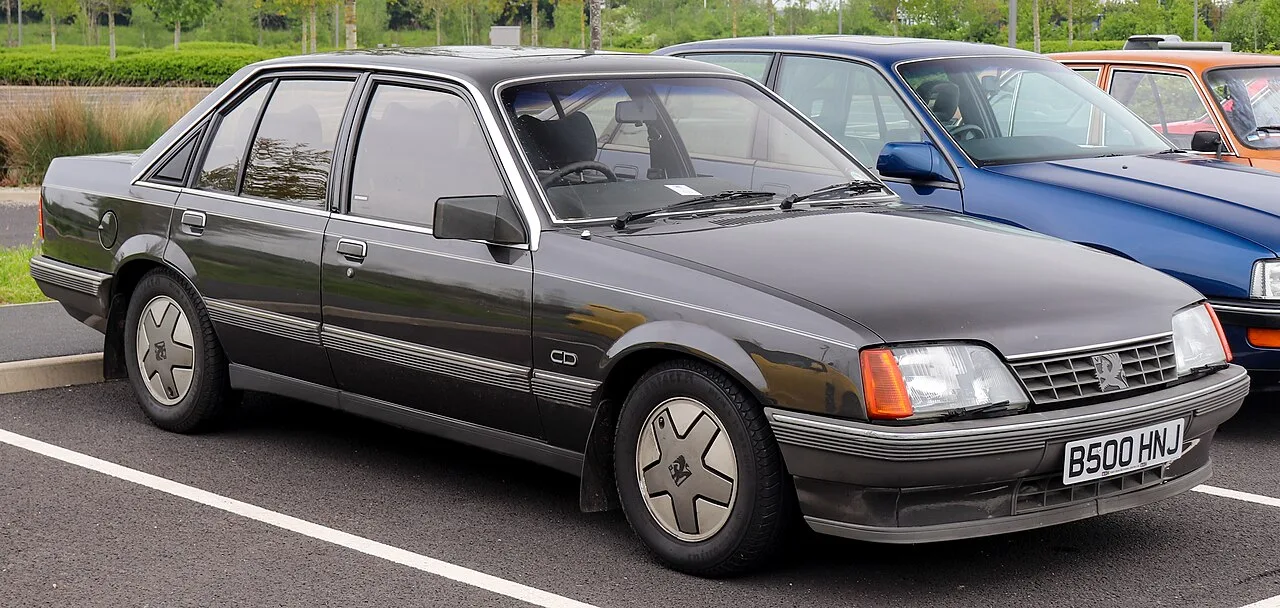
Vauxhall's big new executive saloon for 1978 was British in badge only — the Carlton Mark I was built in Luton from parts shipped in from Opel's own plant in Rüsselsheim, Germany.
Median 94 hp across 367 similar cars
Lead trim: Carlton 1.8 Family II carburettor · up to 120 hp
Vauxhall Carlton Mark I1978–1986
- 0spots by members
- Unclaimednobody has spotted one yet
- 0sets it belongs to
Nobody in Burbles has spotted a Vauxhall Carlton Mark I yet. See one on the street, point the app at it, and the first card is yours — with your @handle permanently credited on this page.
FactVauxhall's big new executive saloon for 1978 was British in badge only — the Carlton Mark I was built in Luton from parts shipped in from Opel's own plant in Rüsselsheim, Germany.
The Vauxhall Carlton is a large family / executive car sold in two distinct generations by the Vauxhall division of GM Europe between 1978 and 1994, based on the Opel Rekord E (Mk.1) and Omega A (Mk.2). The first Carlton was introduced in September 1978 as a replacement for the ageing VX1800/VX2300 saloons, built at Luton from components made at Opel in Rüsselsheim: essentially the Rekord E with Opel-sourced powertrains, but with Vauxhall's "droop snoot" front (no traditional grille, debuted on the Chevette and Cavalier) and a rear number plate moved down to the bumper, and a wooden-embellished full-width hooded instrument binnacle. It was a traditional large saloon or estate with rear-wheel drive, in "L" trim only at first, powered by a 2.0-litre carburettor Opel CIH engine, with options such as central locking, alloy wheels and electric windows; it was designed to compete with the Ford Granada. The Viceroy (a Carlton with the 2.5 or 3.0-litre six, the Opel Commodore) sold poorly and ended after the 1982 "E2" facelift, and the longer Royale and Royale Coupé were badge-engineered Opel Senator and Monza. With the 1982 facelift, UK production ceased, all Carltons were built alongside the Rekord at Rüsselsheim and the droop-snoot front gave way to a more traditional angled grille. The 1983 update brought the Family II 1.8 carburettor engine alongside the 2.0 CIH carburettor and injection units, then a 2.2 CIH fuel-injected petrol in the CD trim and a 2.3 diesel (trims L, GL, CD).
Collectors Spotted in the Vauxhall Carlton Lineage
No member has published a public street spot of the Vauxhall Carlton yet — the First · Worldwide stamp is wide open.
Trims & Figures
5 published trims in the catalogue. A blank is a figure not recorded, not zero.
| Trim | Years | Engine | Power | Torque | 0–60 | Drive | Gearbox | MSRP |
|---|---|---|---|---|---|---|---|---|
| Carlton 1.8 Family II carburettor | 1983–1986 | 1.8 L Inline-4 | 89 hp | 105 lb-ft | — | RWD | — | — |
| Carlton 2.0 CIH carburettor | 1978–1986 | 2.0 L Inline-4 | 99 hp | 115 lb-ft | — | RWD | — | — |
| Carlton 2.0 CIH fuel injection | 1984–1986 | 2.0 L Inline-4 | 120 hp | 129 lb-ft | — | RWD | — | — |
| Carlton 2.2 CIH fuel injection | 1984–1986 | 2.2 L Inline-4 | 113 hp | 134 lb-ft | — | RWD | — | — |
| Carlton 2.3 diesel | 1983–1986 | 2.3 L | 70 hp | 97 lb-ft | — | RWD | — | — |
Owning one
We don’t estimate running costs for a car like this. What it costs depends on its condition, its specialist and how it is driven, and an average would mislead.
Owners’ builds
Nobody has claimed one yet.
Photographs
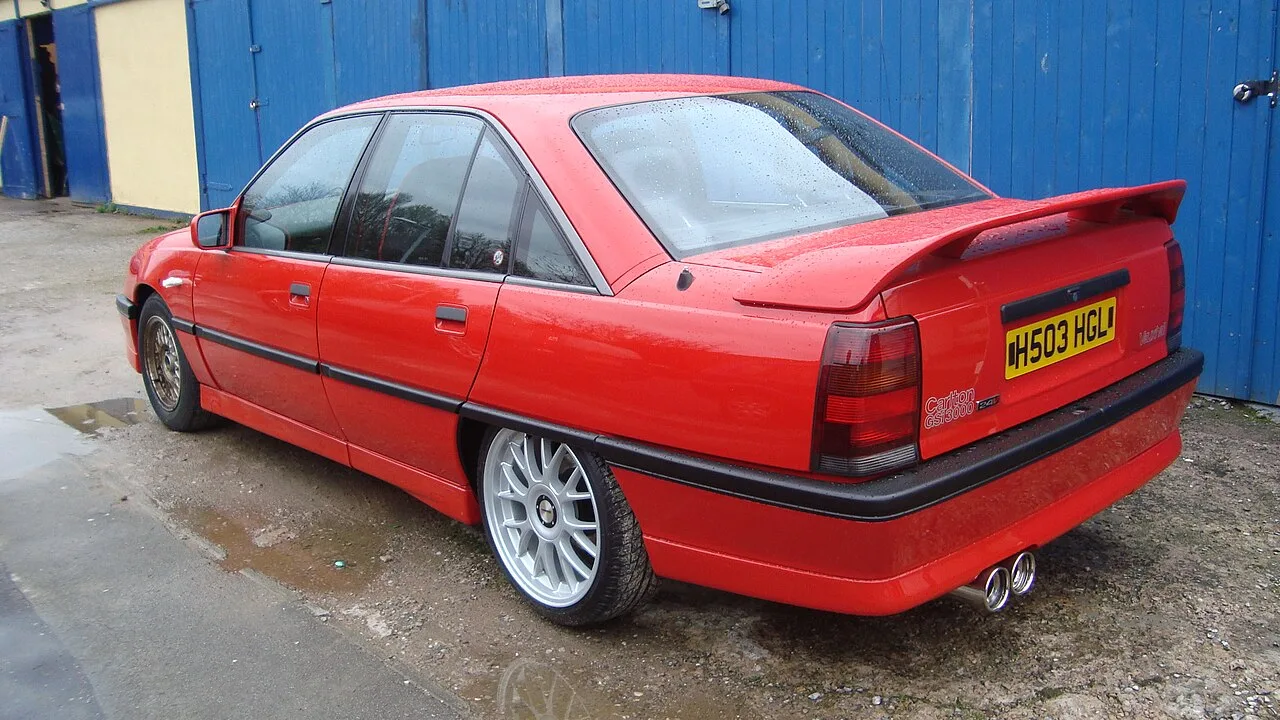
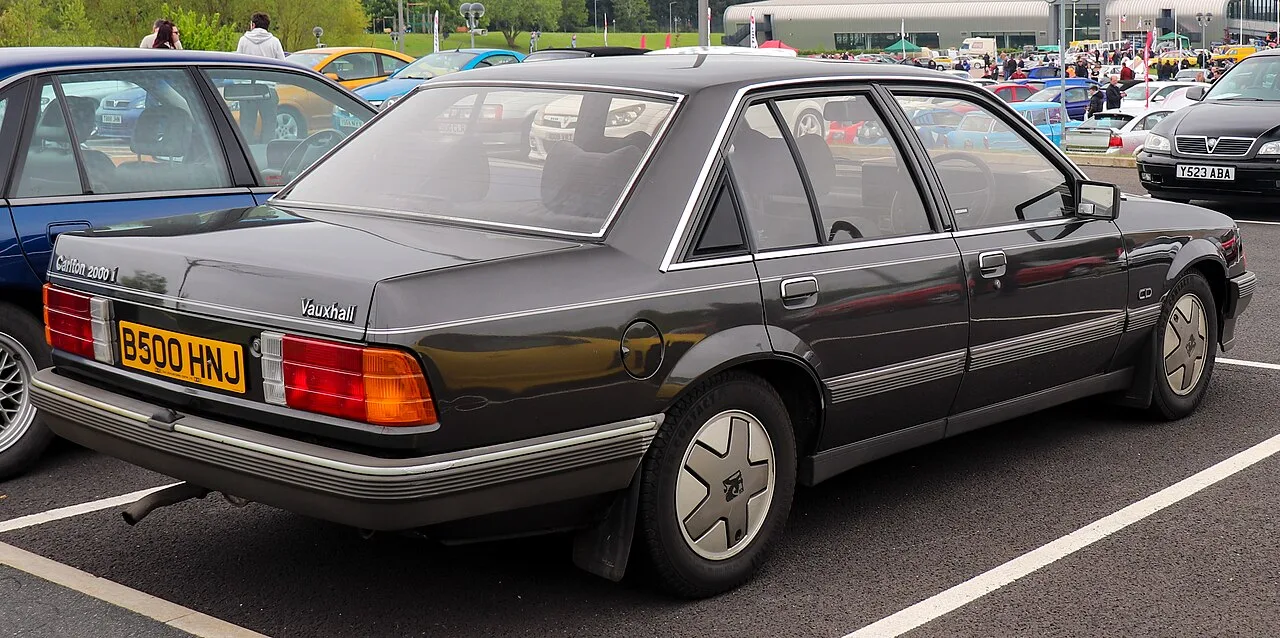
The cheaper Carlton actually sliced through the air better than its posher Senator sibling — 0.28 Cd against the Senator's 0.30 — thanks to a different roofline and rear doors.
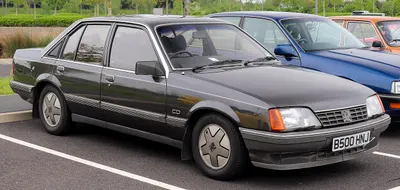
Vauxhall's big new executive saloon for 1978 was British in badge only — the Carlton Mark I was built in Luton from parts shipped in from Opel's own plant in Rüsselsheim, Germany.
Rivals
Same body, same money, other badges — tap any card to flip.

It briefly served as senior sibling to Marquette, a GM companion brand cancelled after just one year.

Nissan hired former BMW engineers to help develop the 510's suspension, which is why period reviewers frequently compared its handling to the BMW 1600/2002.

A Trabant 601 won its class at the 1970 Monte Carlo Rally, with a second 601 right behind it in second.

The 600 was a stopgap: the P50's body over the 601's mechanicals, and for a while its estate was built alongside the new 601 saloon.

The G80 Sport brought a 370 PS twin-turbo 3.3 V6, a mesh grille and copper-tinted chrome with copper stitching to match.

The Vigor was sold only with a five-cylinder engine, an unusual configuration Honda used to fit a longer engine transversely under a short hood.

The GS/E coupe earned the nickname "German Charger" for its long hood, short deck stance borrowed from Detroit muscle cars.

This DeVille/Fleetwood was the first production car anywhere to mount its V8 sideways, Cadillac's front-drive gamble on the new C-body.