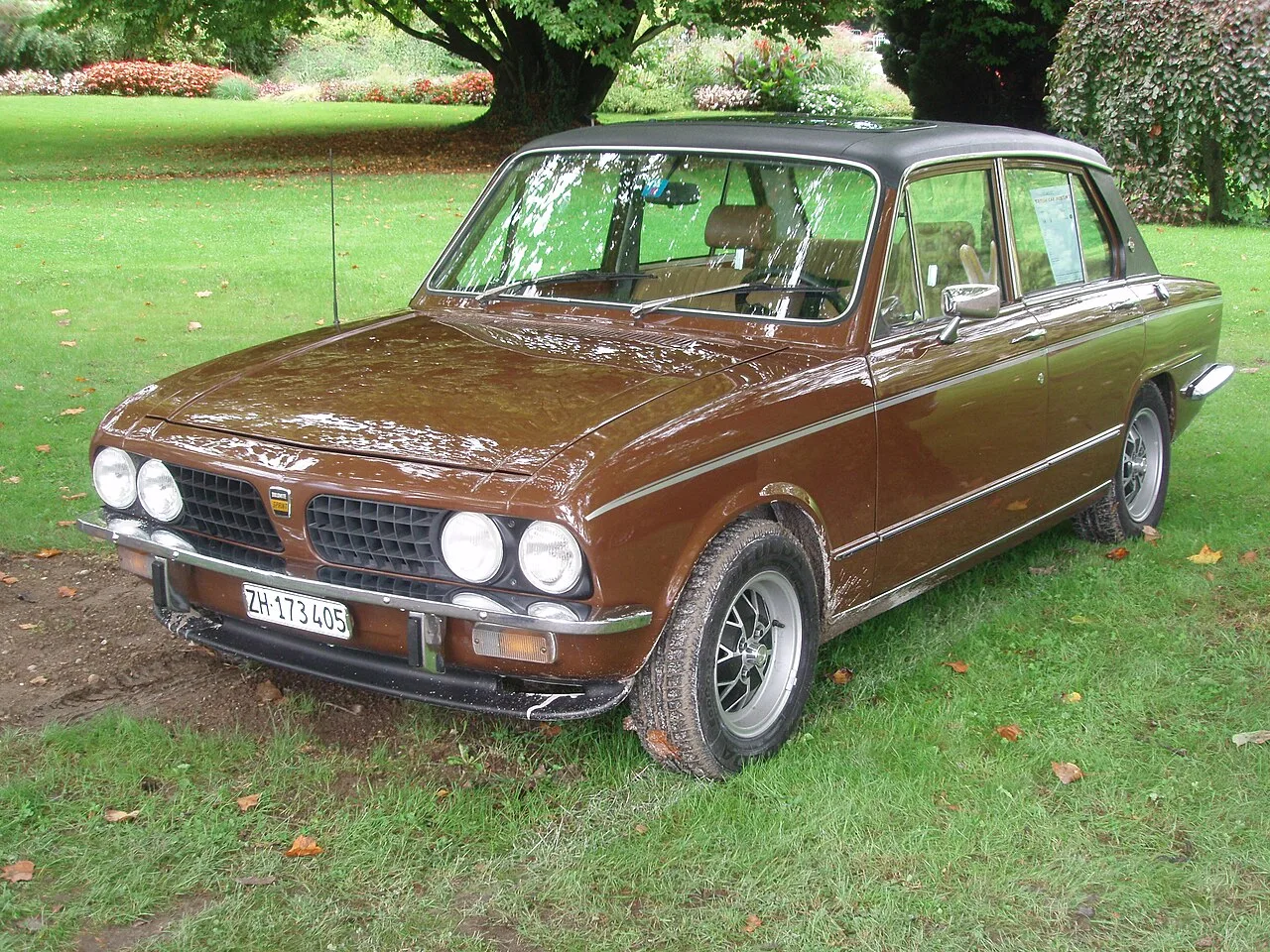
The Sprint's 16-valve head was engineered with Coventry Climax input, arriving a year late as the car once meant to be called the Dolomite 135.
Median 94 hp across 313 similar cars
Lead trim: 1300 (1,296 cc) · up to 127 hp
Triumph Dolomite1972–1980
- 0spots by members
- Unclaimednobody has spotted one yet
- 0sets it belongs to
Nobody in Burbles has spotted a Triumph Dolomite yet. See one on the street, point the app at it, and the first card is yours — with your @handle permanently credited on this page.
FactThe Sprint's 16-valve head was engineered with Coventry Climax input, arriving a year late as the car once meant to be called the Dolomite 135.
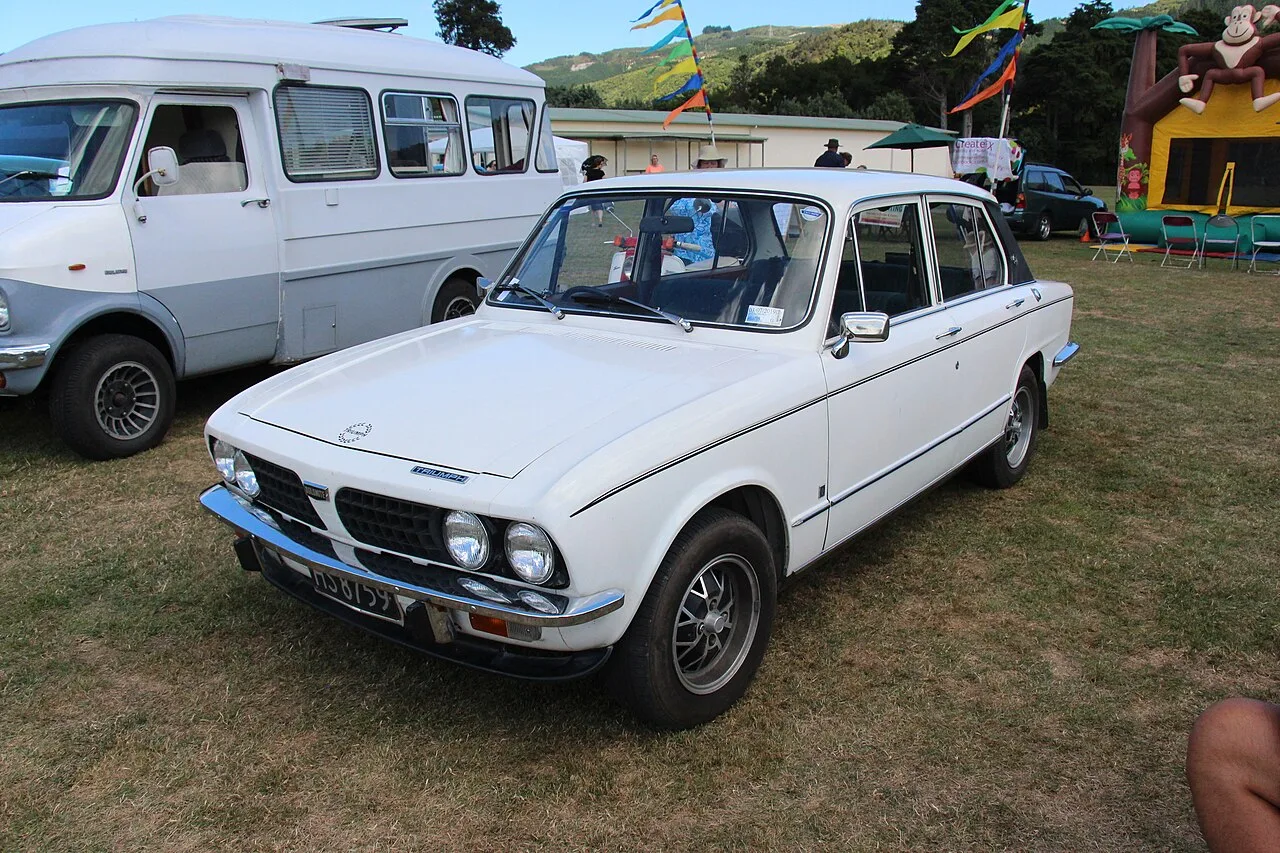
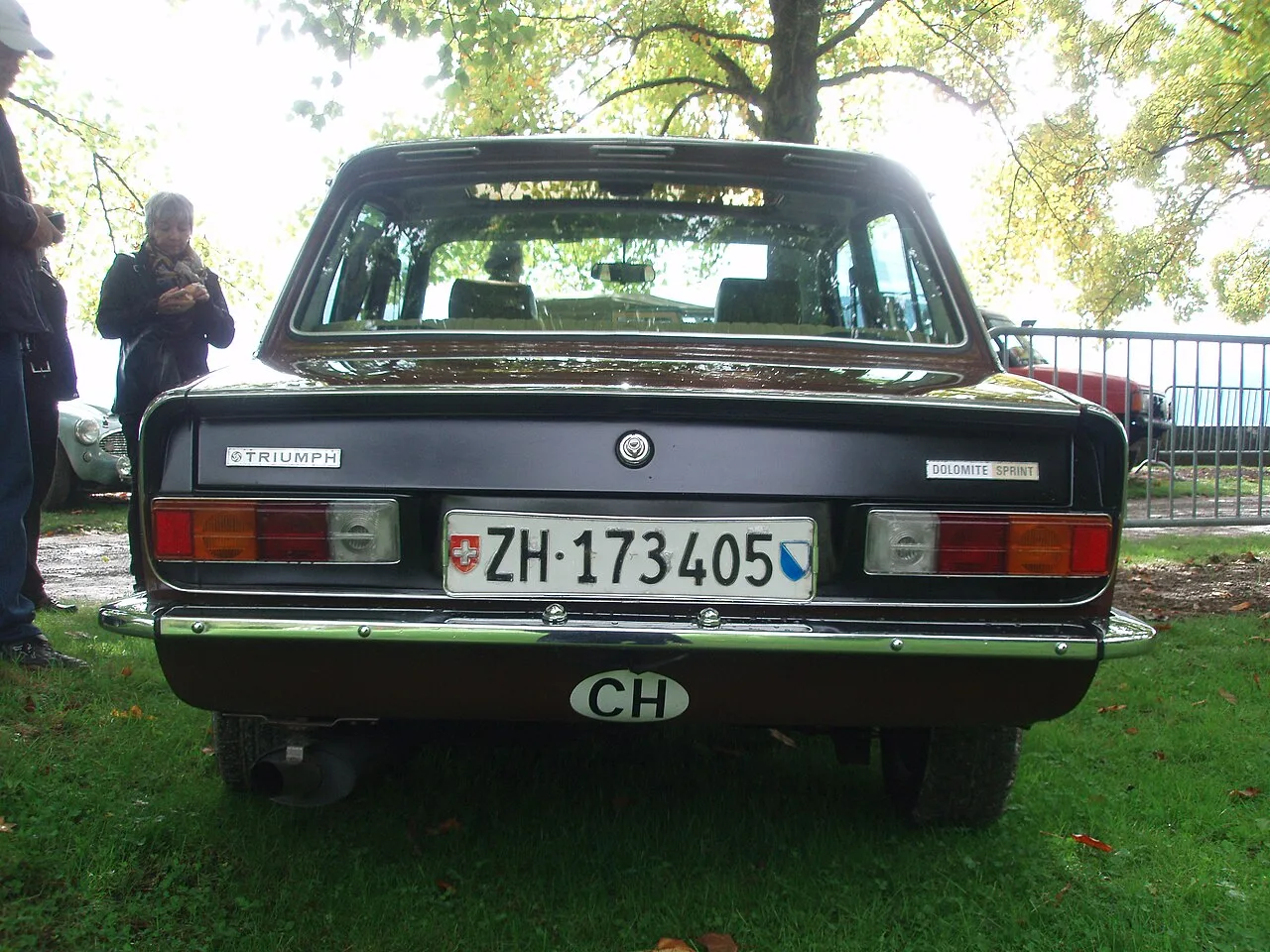
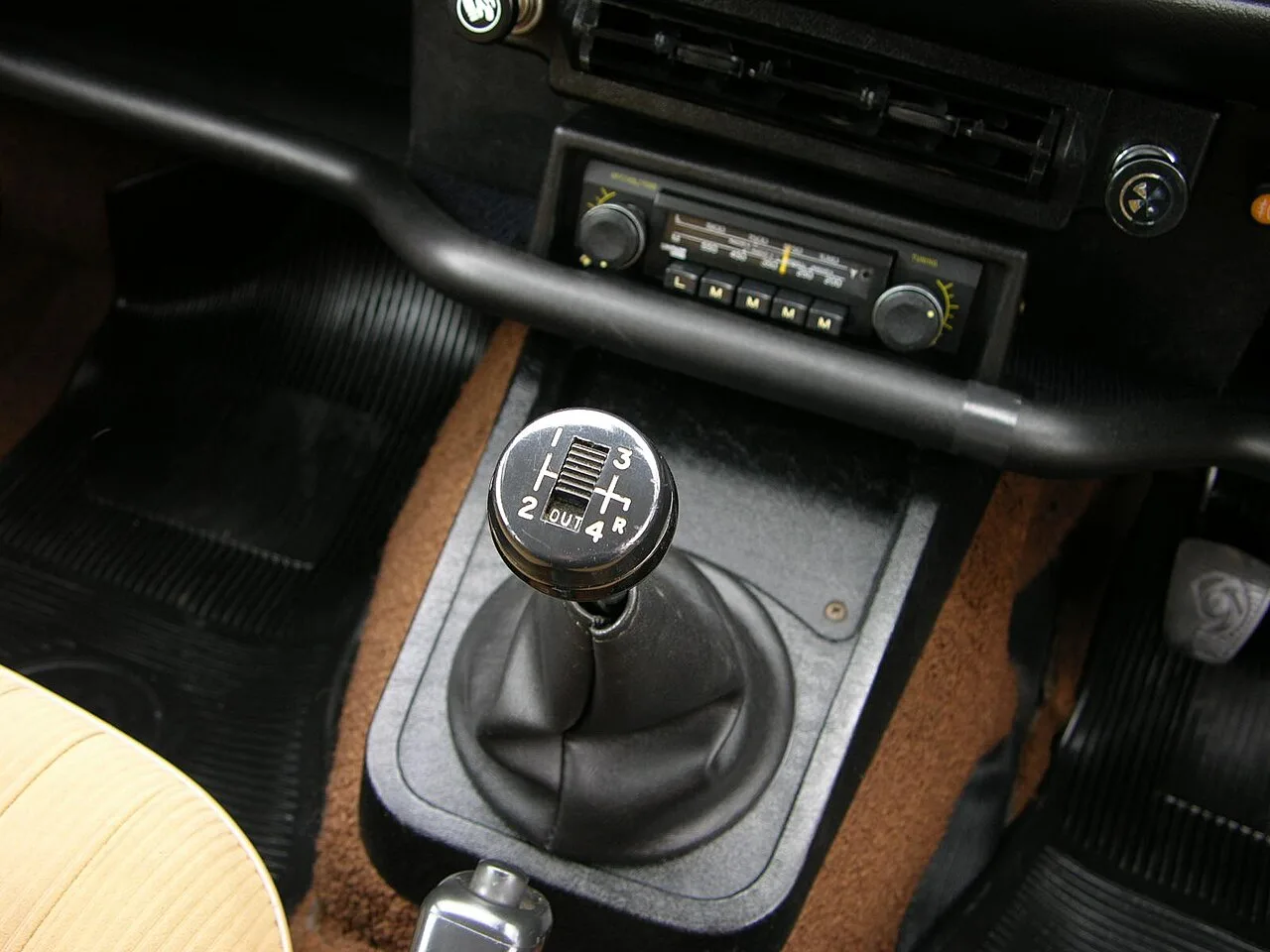
A small sports saloon produced by Triumph, part of British Leyland, at Canley, Coventry, from October 1972 to August 1980, designed by Giovanni Michelotti; 204,003 were made in all versions. The final addition to Triumph's "Project Ajax" small-car range, which began in 1965 with the Triumph 1300, it was unveiled at the London Motor Show in October 1971 to replace the six-cylinder Vitesse and the upmarket front-wheel-drive models, though strikes delayed full production. It used the longer bodyshell of the front-wheel-drive Triumph 1500 with most of the running gear of the rear-wheel-drive Toledo. The 1,854 cc slant-four with an alloy OHC head on an iron block, a version of which Triumph also supplied to Saab for the 99, gave 91 bhp and 100 mph. In June 1973 came the Dolomite Sprint, a year late, whose 1,998 cc slant-four had a 16-valve head designed with Harry Mundy and the engineers at Coventry Climax, with all valves worked by a single camshaft, producing 127 bhp; it was meant to be the "Dolomite 135" and 22,941 were made. After the Ryder Report the range was rationalised in 1976 as the 1300, 1500, 1500HL, 1850HL and Sprint.
Collectors Spotted in the Triumph Dolomite Lineage
No member has published a public street spot of the Triumph Dolomite yet — the First · Worldwide stamp is wide open.
Trims & Figures
4 published trims in the catalogue. A blank is a figure not recorded, not zero.
| Trim | Years | Engine | Power | Torque | 0–60 | Drive | Gearbox | MSRP |
|---|---|---|---|---|---|---|---|---|
| 1300 (1,296 cc) | 1976–1980 | 1.3 L | 58 hp | 68 lb-ft | — | RWD | — | — |
| 1500 / 1500HL (1,493 cc) | 1976–1980 | 1.5 L | 71 hp | 84 lb-ft | — | RWD | — | — |
| 1850HL 1854 cc slant-four (91 bhp) | 1972–1980 | 1.9 L Inline-4 | 91 hp | 108 lb-ft | — | RWD | — | — |
| Sprint 1998 cc 16-valve (127 bhp) | 1973–1980 | 2.0 L Inline-4 | 127 hp | 122 lb-ft | — | RWD | — | — |
Owning one
We don’t estimate running costs for a car like this. What it costs depends on its condition, its specialist and how it is driven, and an average would mislead.
Owners’ builds
Nobody has claimed one yet.
Photographs
Rivals
Same body, same money, other badges — tap any card to flip.

It briefly served as senior sibling to Marquette, a GM companion brand cancelled after just one year.

Nissan hired former BMW engineers to help develop the 510's suspension, which is why period reviewers frequently compared its handling to the BMW 1600/2002.

A Trabant 601 won its class at the 1970 Monte Carlo Rally, with a second 601 right behind it in second.

The 600 was a stopgap: the P50's body over the 601's mechanicals, and for a while its estate was built alongside the new 601 saloon.

The G80 Sport brought a 370 PS twin-turbo 3.3 V6, a mesh grille and copper-tinted chrome with copper stitching to match.

The Vigor was sold only with a five-cylinder engine, an unusual configuration Honda used to fit a longer engine transversely under a short hood.

The GS/E coupe earned the nickname "German Charger" for its long hood, short deck stance borrowed from Detroit muscle cars.

This DeVille/Fleetwood was the first production car anywhere to mount its V8 sideways, Cadillac's front-drive gamble on the new C-body.