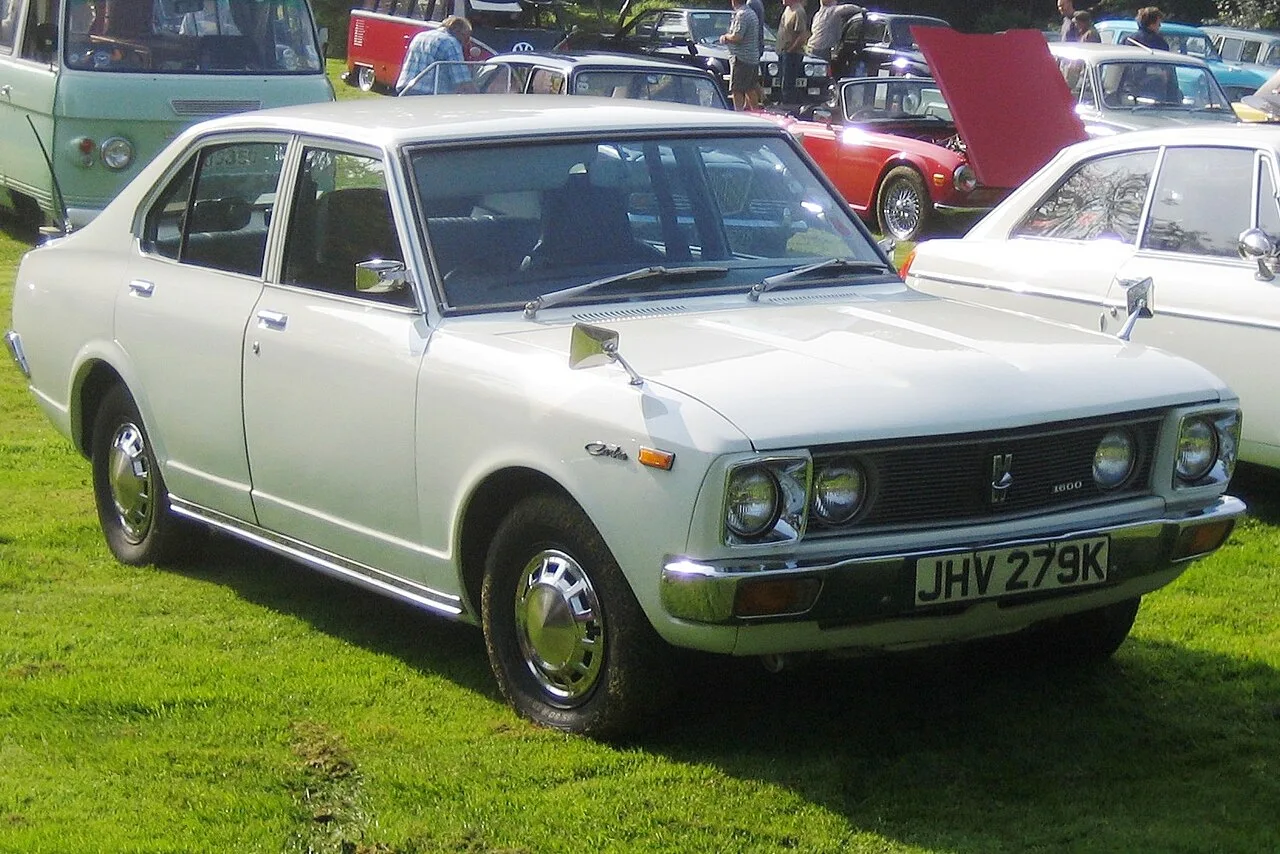
Toyota's first Carina crossed the Atlantic just as a new 10% US import duty landed — sales flopped, and Toyota pulled it from the American market after only two years.
Lead trim: 1.4 T OHV · up to 143 hp
Toyota Carina A10/A30A10/A30 · 1970–1977
- 0spots by members
- Unclaimednobody has spotted one yet
- 0sets it belongs to
Nobody in Burbles has spotted a Toyota Carina A10/A30 yet. See one on the street, point the app at it, and the first card is yours — with your @handle permanently credited on this page.
FactToyota's first Carina crossed the Atlantic just as a new 10% US import duty landed — sales flopped, and Toyota pulled it from the American market after only two years.
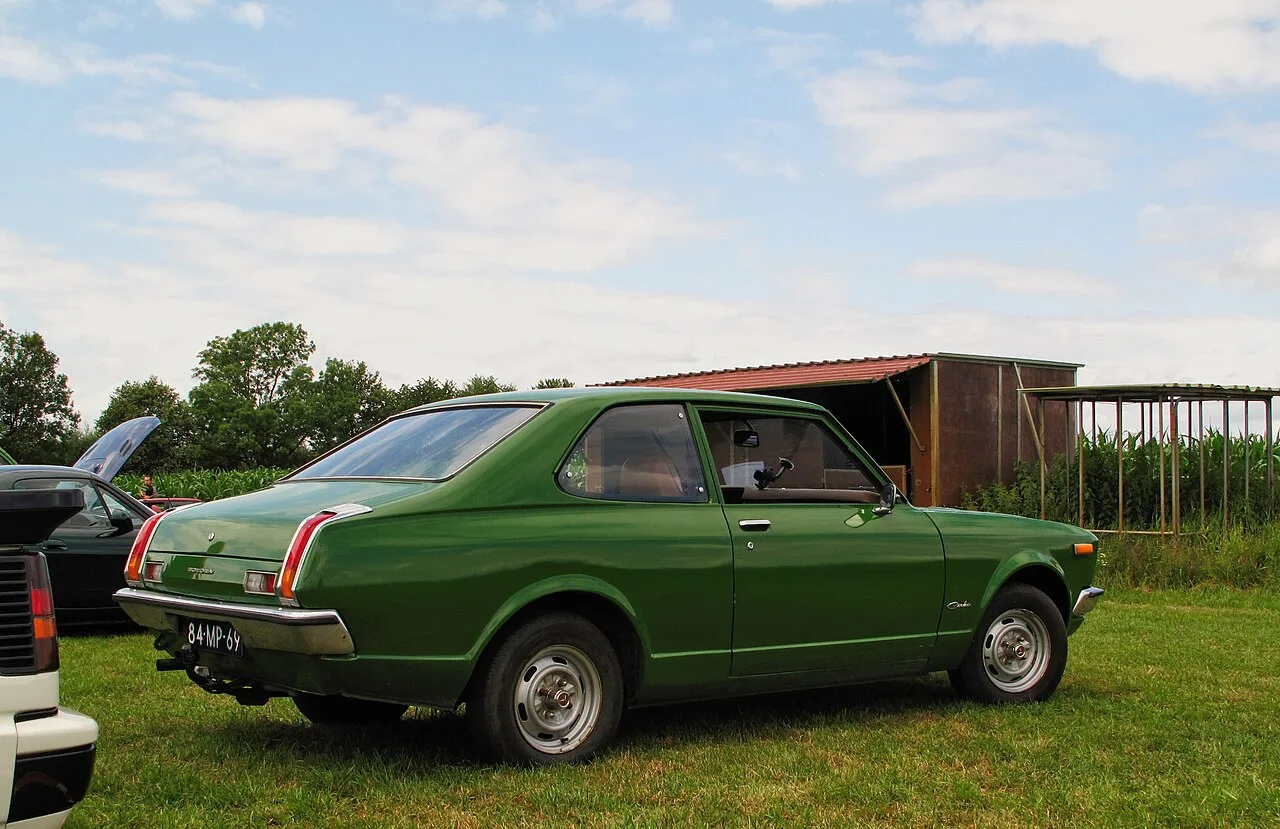
Introduced in December 1970 as the sedan counterpart of the Celica, with which it originally shared its platform and factory, and sold in Japan exclusively through Toyota Store dealers (Europe followed in October 1971). Front-engine, rear-wheel drive with a 1407 cc T or 1588 cc 2T overhead-valve four, a 4-speed manual, or a 2- or 3-speed automatic, front discs and a junior-to-Crown position beside the similarly sized Corona. The Carina 1600GT coupé arrived in 1971 with the 2T-G twin-cam engine shared with the Celica GT, sold beside the Corona 1600GT and Celica GT through different dealer channels. Body styles were 2/4-door sedans, a 2-door hardtop coupé and a 5-door wagon/van (Carina vans from December 1975). It was exported to the United States, where a new 10% import duty and poor sales ended it after about two years, and a late-1975 facelift brought a plethora of altered Japanese-market engines from 1.4 to 2.0 litres.
Collectors Spotted in the Toyota Carina Lineage
No member has published a public street spot of the Toyota Carina yet — the First · Worldwide stamp is wide open.
Trims & Figures
4 published trims in the catalogue. A blank is a figure not recorded, not zero.
| Trim | Years | Engine | Power | Torque | 0–60 | Drive | Gearbox | MSRP |
|---|---|---|---|---|---|---|---|---|
| 1.4 T OHV | 1970–1977 | 1.4 L Inline-4 | 85 hp | 85 lb-ft | — | RWD | — | — |
| 1.6 2T OHV | 1970–1977 | 1.6 L Inline-4 | 99 hp | 99 lb-ft | — | RWD | — | — |
| 1600GT 2T-G DOHC | 1971–1977 | 1.6 L Inline-4 | 113 hp | 105 lb-ft | — | RWD | — | — |
| 2000GT 18R-G DOHC | 1971–1977 | 2.0 L Inline-4 | 143 hp | 130 lb-ft | — | RWD | — | — |
Owning one
We don’t estimate running costs for a car like this. What it costs depends on its condition, its specialist and how it is driven, and an average would mislead.
Owners’ builds
Nobody has claimed one yet.
Photographs
The last Carina ever built came with a five-valve, 8,000rpm redline engine, ending 31 years of the nameplate in December 2001.
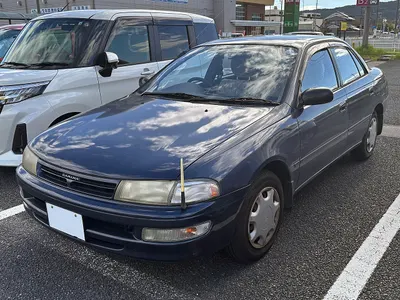
Britain got its own Carina: Toyota built the Corona-based Carina E at a brand-new plant in Burnaston, Derbyshire, from December 1992.
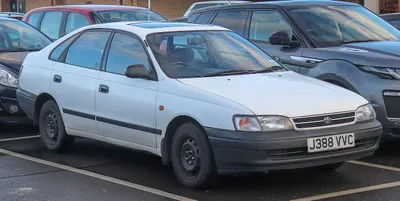
The Carina wagon and van kept selling until March 1992, when the all-new Caldina finally took over.
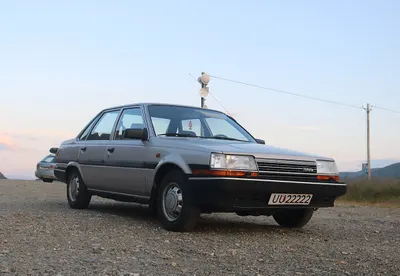
This generation is where the Carina switched sides entirely — adopting the Corona's front-wheel-drive platform and leaving rear-wheel drive behind for good.
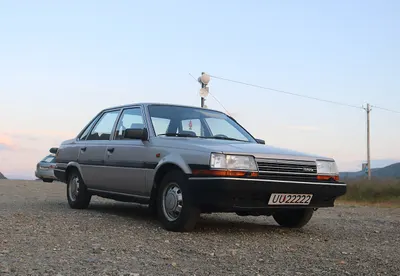
An everyday A60 Carina sedan raced the Dakar Rally for Japanese private teams in 1981 and 1982 — and actually picked up marathon-class championships doing it.
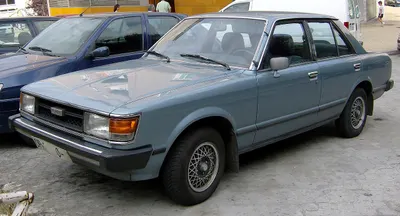
Action star Sonny Chiba fronted Toyota's Carina commercials in Japan for decades — a movie tough guy selling a family sedan.
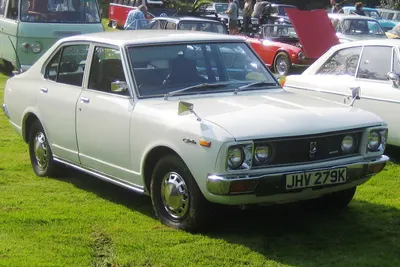
Toyota's first Carina crossed the Atlantic just as a new 10% US import duty landed — sales flopped, and Toyota pulled it from the American market after only two years.
Rivals
Same body, same money, other badges — tap any card to flip.

It briefly served as senior sibling to Marquette, a GM companion brand cancelled after just one year.

Nissan hired former BMW engineers to help develop the 510's suspension, which is why period reviewers frequently compared its handling to the BMW 1600/2002.

A Trabant 601 won its class at the 1970 Monte Carlo Rally, with a second 601 right behind it in second.

The 600 was a stopgap: the P50's body over the 601's mechanicals, and for a while its estate was built alongside the new 601 saloon.

The G80 Sport brought a 370 PS twin-turbo 3.3 V6, a mesh grille and copper-tinted chrome with copper stitching to match.

The Vigor was sold only with a five-cylinder engine, an unusual configuration Honda used to fit a longer engine transversely under a short hood.

The GS/E coupe earned the nickname "German Charger" for its long hood, short deck stance borrowed from Detroit muscle cars.

This DeVille/Fleetwood was the first production car anywhere to mount its V8 sideways, Cadillac's front-drive gamble on the new C-body.