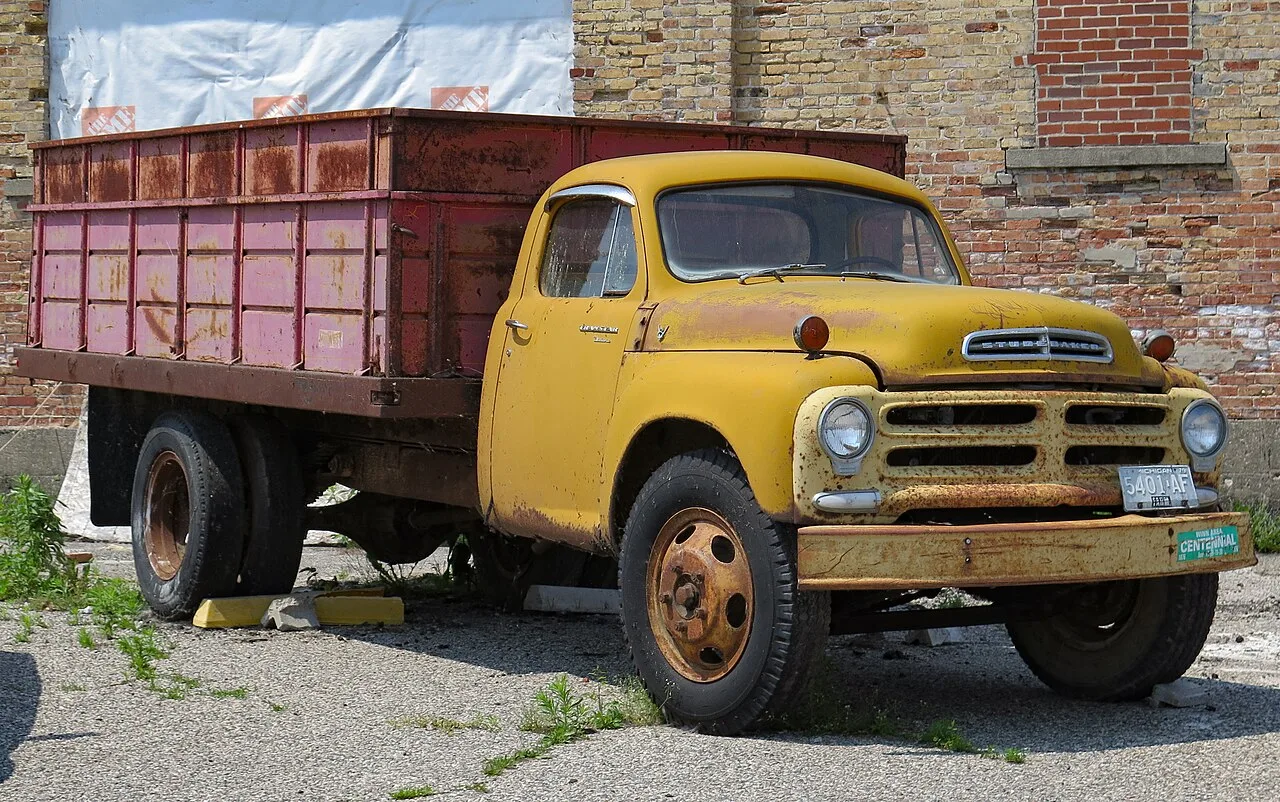
The Transtar name vanished for the 1959 model year, then came back in 1960 on the heavy-duty trucks while the Champ took over the light end.
Median 103 hp across 14 similar cars
Lead trim: Transtar 185 cu in Champion six · up to 140 hp
Studebaker Transtar1956–1964
- 0spots by members
- Unclaimednobody has spotted one yet
- 0sets it belongs to
Nobody in Burbles has spotted a Studebaker Transtar yet. See one on the street, point the app at it, and the first card is yours — with your @handle permanently credited on this page.
FactThe Transtar name vanished for the 1959 model year, then came back in 1960 on the heavy-duty trucks while the Champ took over the light end.
Transtar was the model name given to the line of trucks produced by the Studebaker Corporation from 1956–1958 and 1960–1963 (the last vehicles sold as 1964 models), used on most trucks in the Studebaker E-series. Introduced for the 1956 (2E series) model year in 1/2-ton, 3/4-ton, 1-ton, 2-ton and 2-ton heavy duty capacities (the three smaller models available with factory-built pickup bodies), with basic styling dating back to the 1949 models; it continued on most 1957–58 3E series trucks (with an aggressive new fiberglass grille), while a stripped-down Scotsman without the Transtar name was introduced in 1958. The name was dropped for the 1959 4E series (renamed Deluxe); for 1960 Studebaker introduced the 1/2- and 3/4-ton Champ line (with 1959–60 Lark front end and cab sheetmetal, in response to the Ford Ranchero and Chevrolet El Camino), and the Transtar name reappeared on the medium- and heavy-duty (1- and 2-ton) trucks through the 1964 models. Studebaker suspended production of all truck models when it closed its US factory in December 1963. Engines per the infobox: 185 cu in (3.0 L) Champion six, 246 cu in (4.0 L) six and 224, 259 and 289 cu in V8s (rear- or four-wheel drive).
Collectors Spotted in the Studebaker Transtar Lineage
No member has published a public street spot of the Studebaker Transtar yet — the First · Worldwide stamp is wide open.
Trims & Figures
5 published trims in the catalogue. A blank is a figure not recorded, not zero.
| Trim | Years | Engine | Power | Torque | 0–60 | Drive | Gearbox | MSRP |
|---|---|---|---|---|---|---|---|---|
| Transtar 185 cu in Champion six | 1956–1964 | 3.0 L Inline-6 | 92 hp | — | — | — | — | — |
| Transtar 224 cu in V8 | 1956–1964 | 3.7 L V8 | 140 hp | — | — | — | — | — |
| Transtar 246 cu in six | 1956–1964 | 4.0 L Inline-6 | — | — | — | — | — | — |
| Transtar 259 cu in V8 | 1956–1964 | 4.2 L V8 | — | — | — | — | — | — |
| Transtar 289 cu in V8 | 1956–1964 | 4.7 L V8 | — | — | — | — | — | — |
Owning one
We don’t estimate running costs for a car like this. What it costs depends on its condition, its specialist and how it is driven, and an average would mislead.
Owners’ builds
Nobody has claimed one yet.
Photographs
Rivals
Same body, same money, other badges — tap any card to flip.
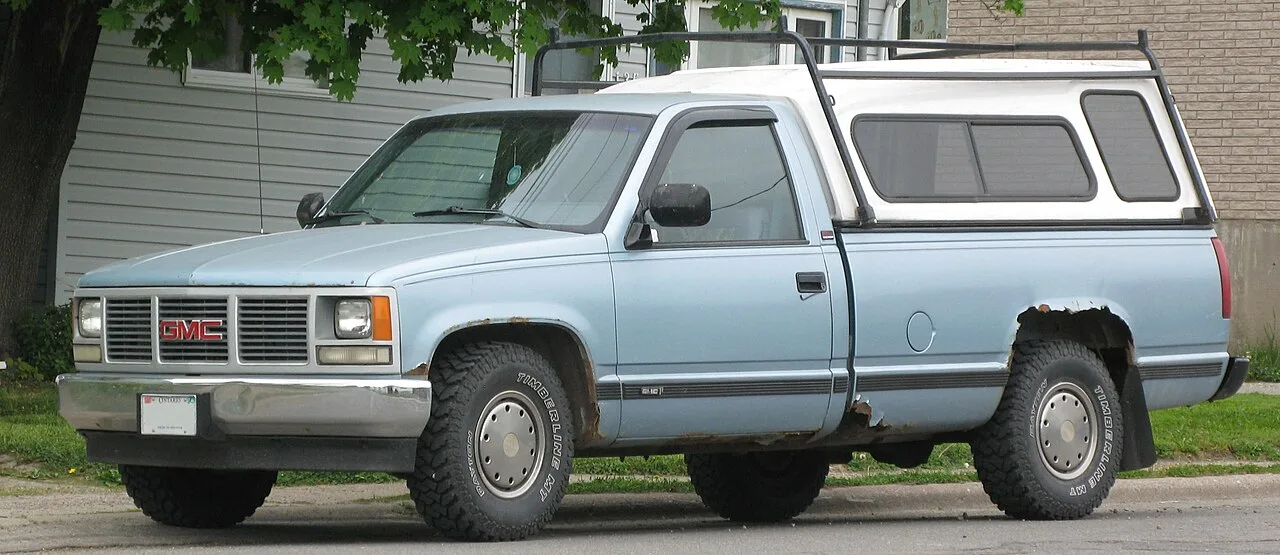
The GMT400 split the twins for good: 1988 was the year "C/K" became Chevrolet-only badging, while GMC's version of the very same truck became the Sierra.
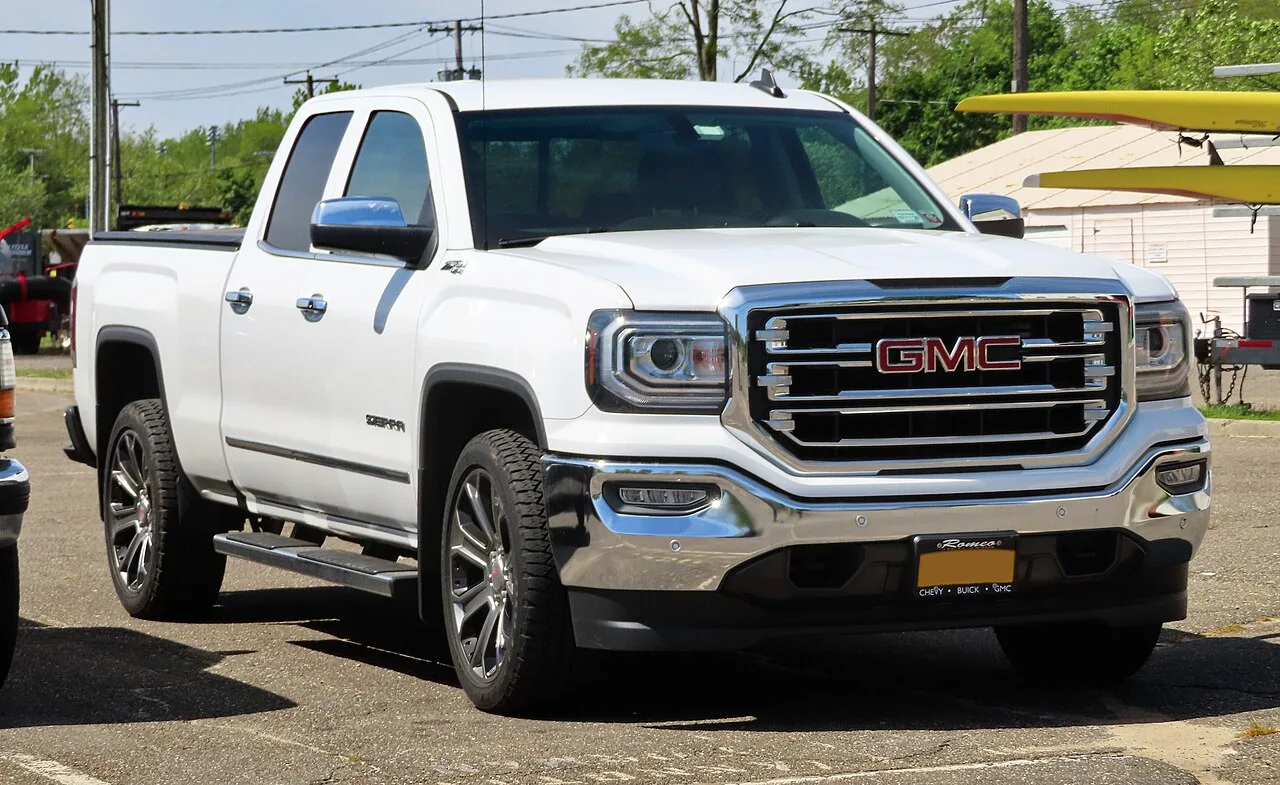
GMC found 10 extra horsepower in the Sierra All Terrain X's 5.3L V8 with nothing more than a performance exhaust, no other changes needed to go from 355 to 365 hp.
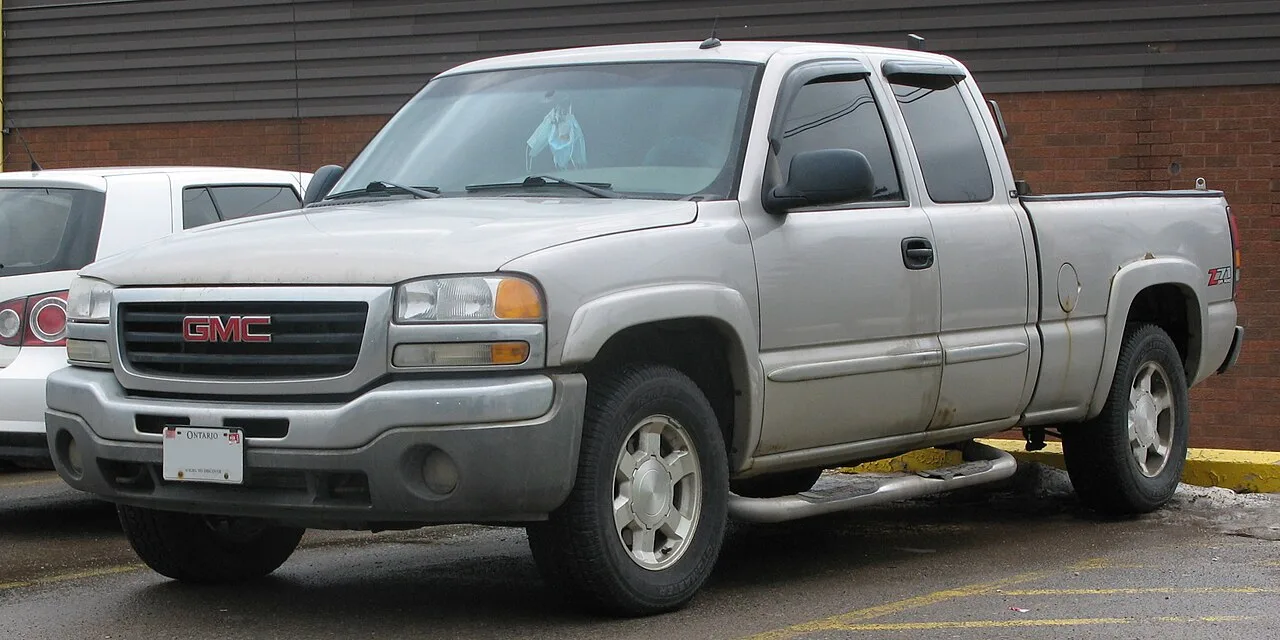
This Sierra kept rolling off the line for a full extra year after its replacement arrived - badged "Classic" in 2007 just to tell the two generations apart on dealer lots.
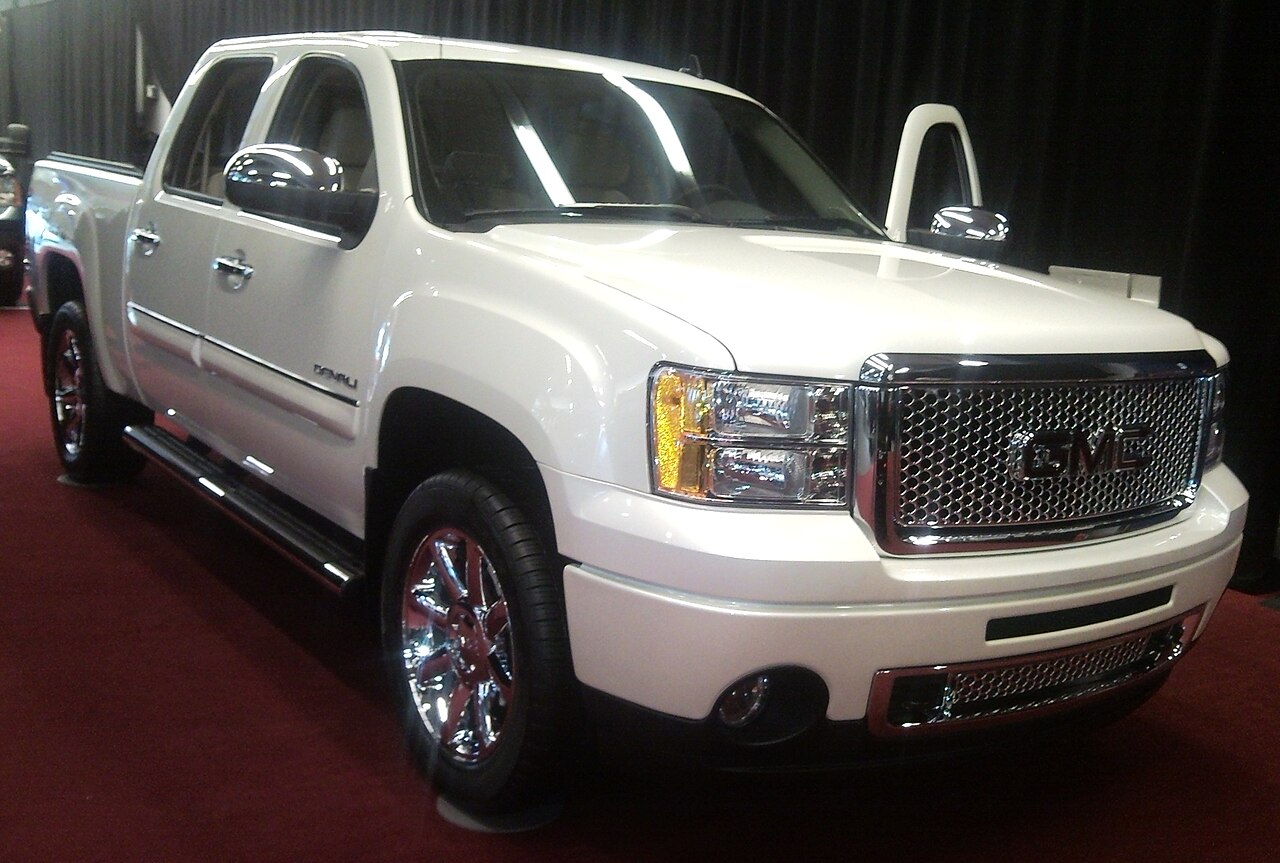
When this GMT900 Sierra launched for 2007, GM kept selling the outgoing truck alongside it, badged "Classic," so buyers could choose old or new side by side on the same lot.
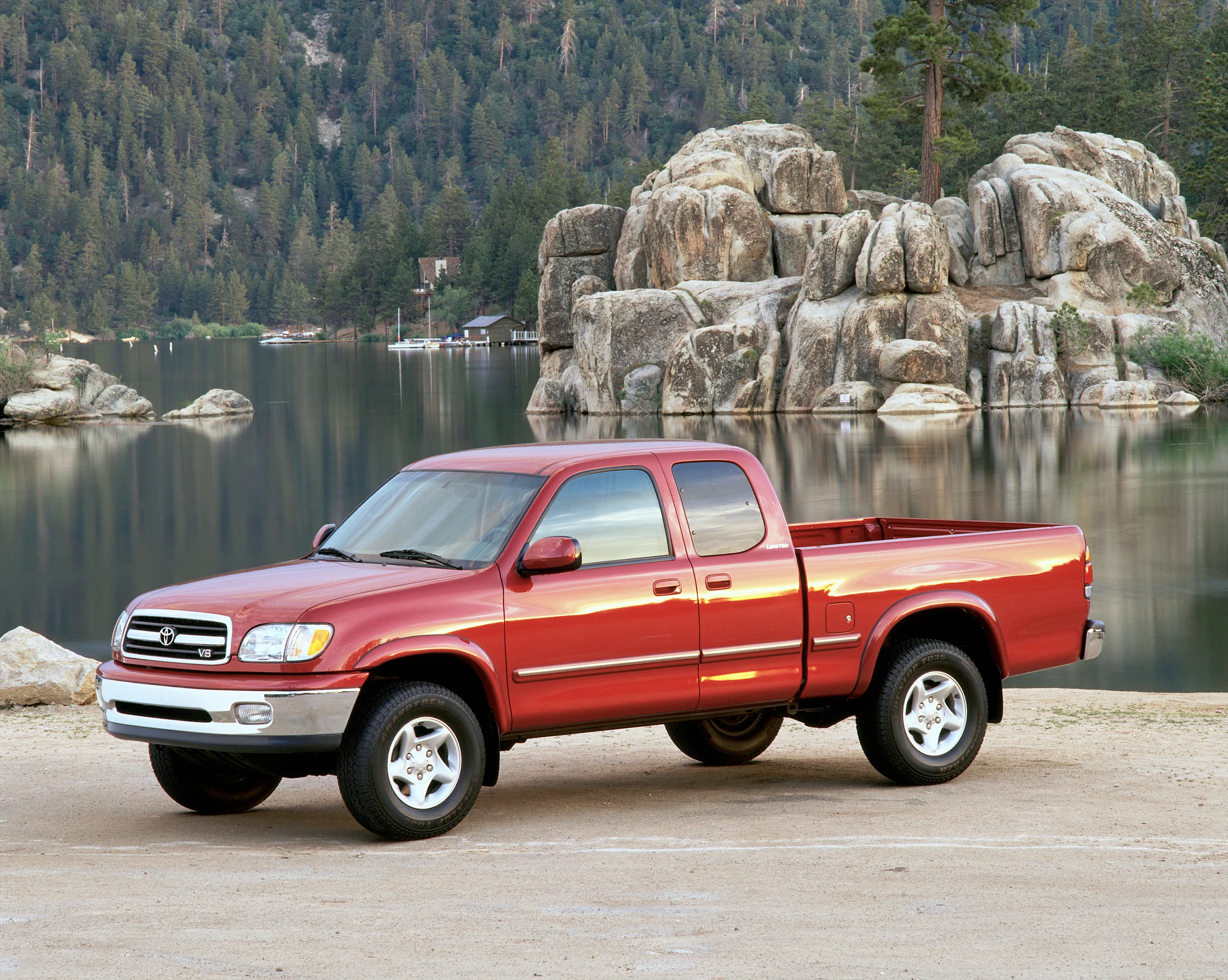
Toyota showed it as the T150 until Ford sued over the likeness to the F-150, and the production truck was renamed Tundra.
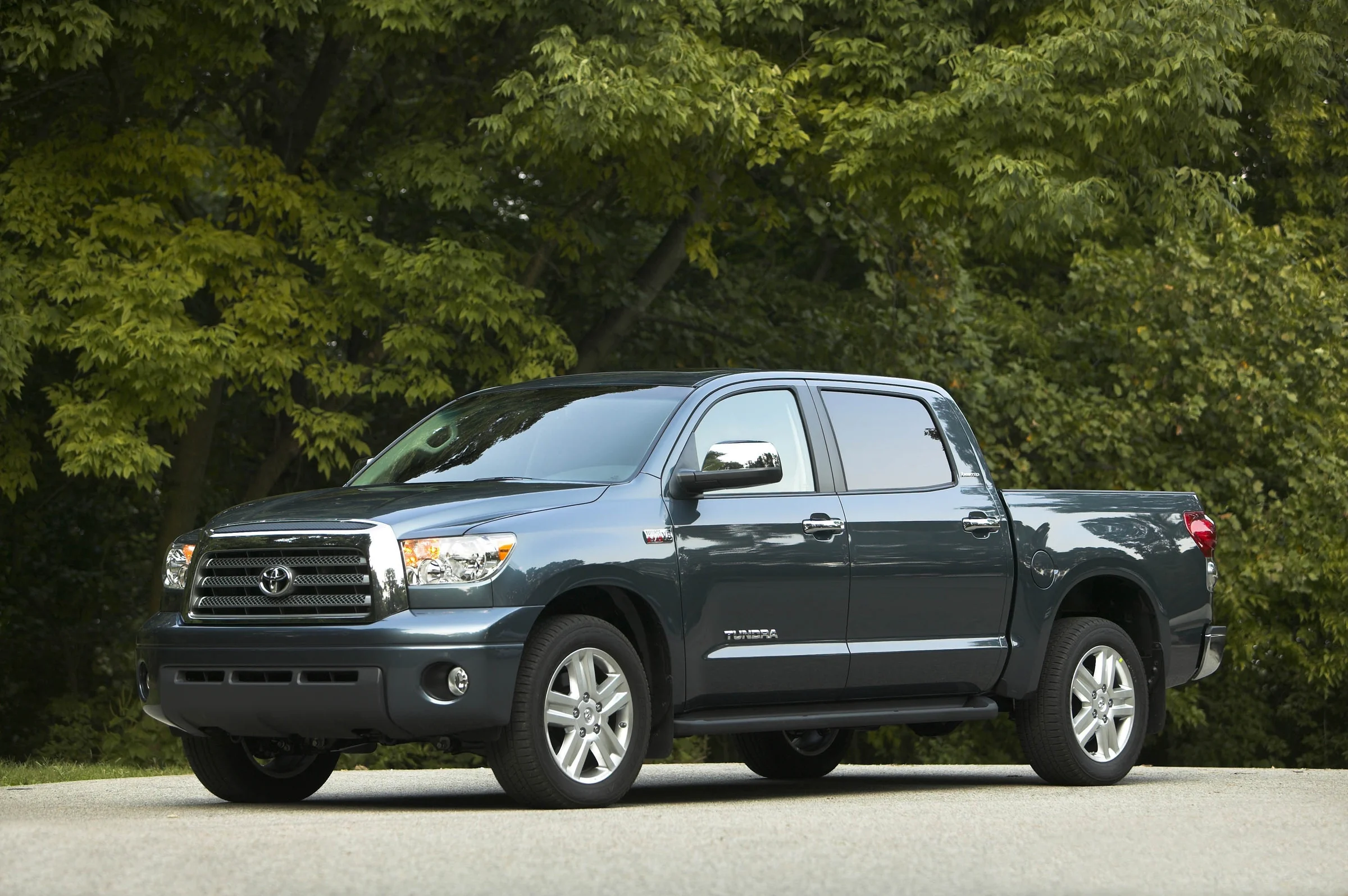
A Louisiana owner put over a million miles on his 2007 Tundra in eight years; Toyota gave him a new truck and took his apart to study it.
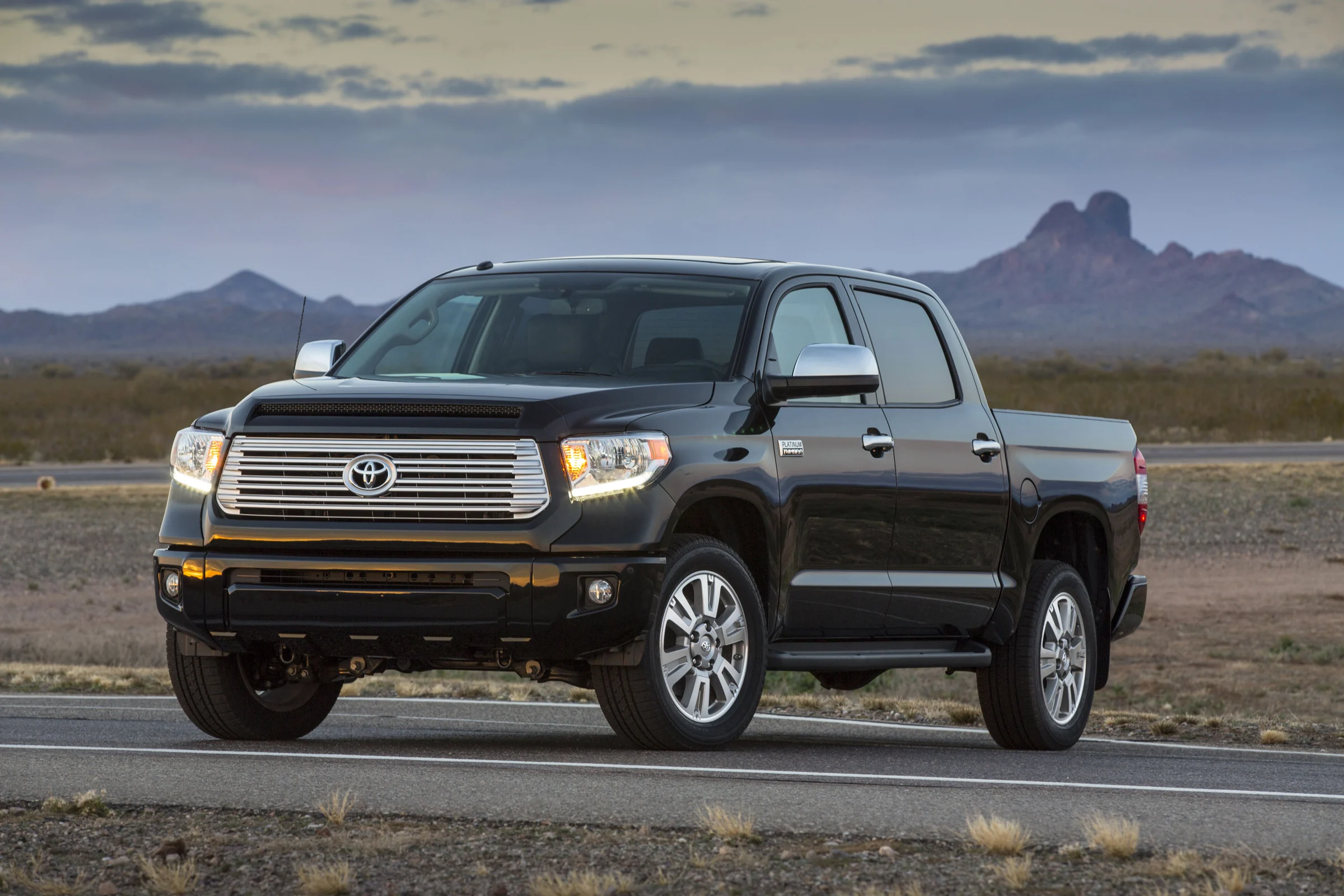
Toyota's Texas Tundra plant sits on land bought from the state's oldest working cattle ranch, and the 1794 Edition is named for the year that ranch was founded.
Its launch colours had pun names such as "Anti-Establish Mint" and "Freudian Gilt", sent to Lee Iacocca by a friend.