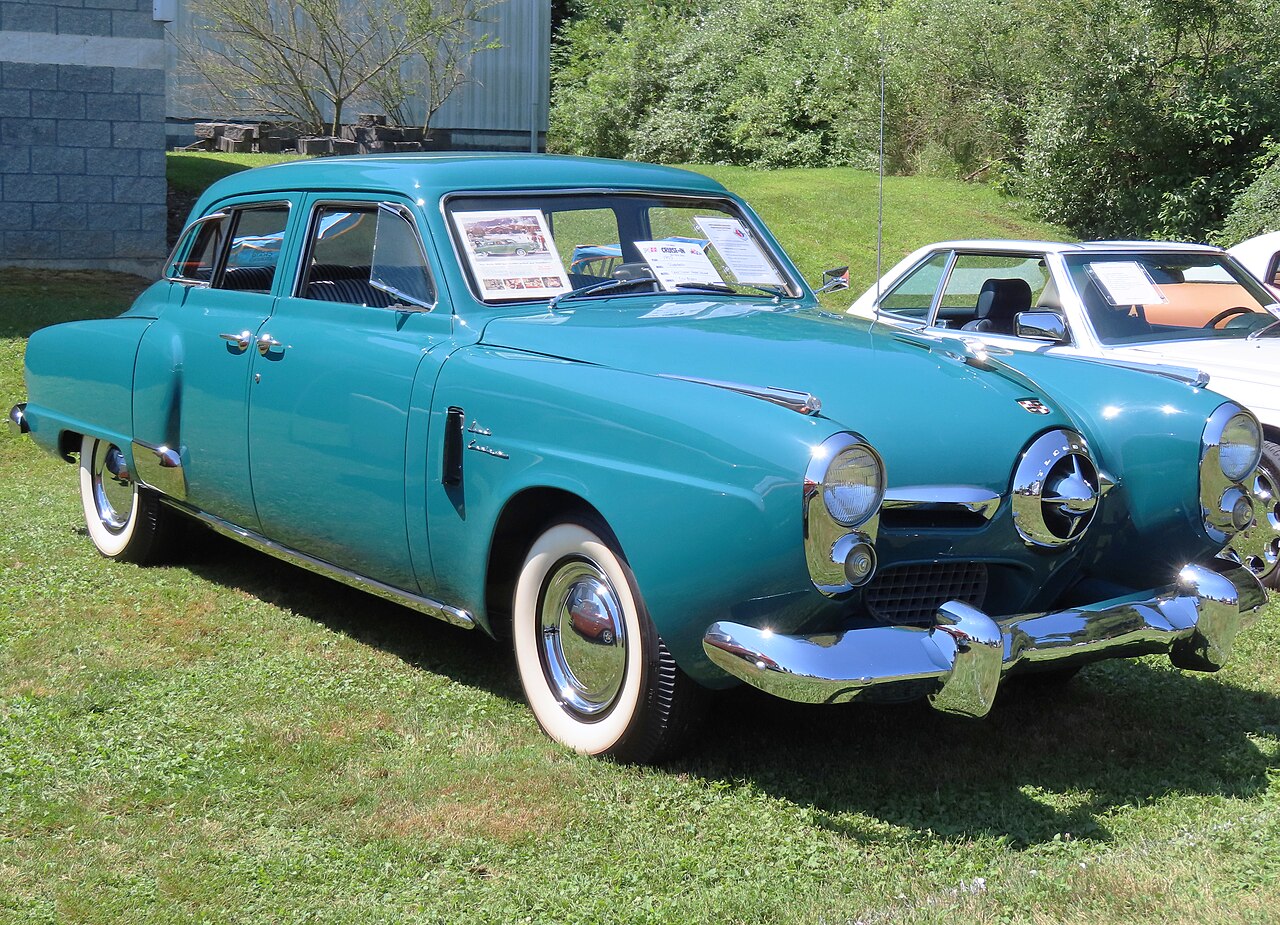
This Studebaker's optional automatic transmission was years ahead of its rivals: it had hill-holder, anti-creep, reverse lock-out and a locking torque converter for near-zero power loss in top gear.
Median 90 hp across 129 similar cars
Lead trim: Land Cruiser (1951–1952)
Studebaker Land Cruiser1947–1952
- 0spots by members
- Unclaimednobody has spotted one yet
- 0sets it belongs to
Nobody in Burbles has spotted a Studebaker Land Cruiser yet. See one on the street, point the app at it, and the first card is yours — with your @handle permanently credited on this page.
FactThis Studebaker's optional automatic transmission was years ahead of its rivals: it had hill-holder, anti-creep, reverse lock-out and a locking torque converter for near-zero power loss in top gear.
The 1947 Studebaker was touted as "First by Far with a Postwar Car" with a completely new body: the new Land Cruiser exclusively rode the company's longest wheelbase (124 in), providing additional legroom for rear-seat passengers, with center-opening, rear-hinged rear "suicide" doors, and was powered by the larger of Studebaker's two straight-6 engines (suggested price US$2,043 with a one-piece curved windshield, electric clock and carpeting; US$2,265 for 1948 and US$2,328 for 1949). Studebaker coasted along with the old bodies until 1952, but 1950 brought the "Next Look in Cars" with the three-point "bullet-nose" front, similar in style to the 1949 Ford (over 10,000 more Land Cruisers sold than in 1949; price US$2,187) and Studebaker Automatic Drive mid-year (reverse lock-out, hill-holder, anti-creep and a locking torque converter). Sales in 1951 rose by almost 12,000, probably due to the new Studebaker V8 introduced that year; the Land Cruiser again had its own wheelbase, at 119 in (the Commander now sharing the Champion's 115 in), at US$2,289. The 1952 Land Cruiser was the last to use real glass for the tail and parking light lenses, with a "clam digger" grille previewing the next generation.
Collectors Spotted in the Studebaker Land Cruiser Lineage
No member has published a public street spot of the Studebaker Land Cruiser yet — the First · Worldwide stamp is wide open.
Trims & Figures
2 published trims in the catalogue. A blank is a figure not recorded, not zero.
| Trim | Years | Engine | Power | Torque | 0–60 | Drive | Gearbox | MSRP |
|---|---|---|---|---|---|---|---|---|
| Land Cruiser (1951–1952) | 1951–1952 | — | 120 hp | 190 lb-ft | — | — | — | — |
| Land Cruiser straight-six (1947–1950) | 1947–1950 | Inline-6 | — | — | — | — | — | — |
Owning one
We don’t estimate running costs for a car like this. What it costs depends on its condition, its specialist and how it is driven, and an average would mislead.
Owners’ builds
Nobody has claimed one yet.
Photographs
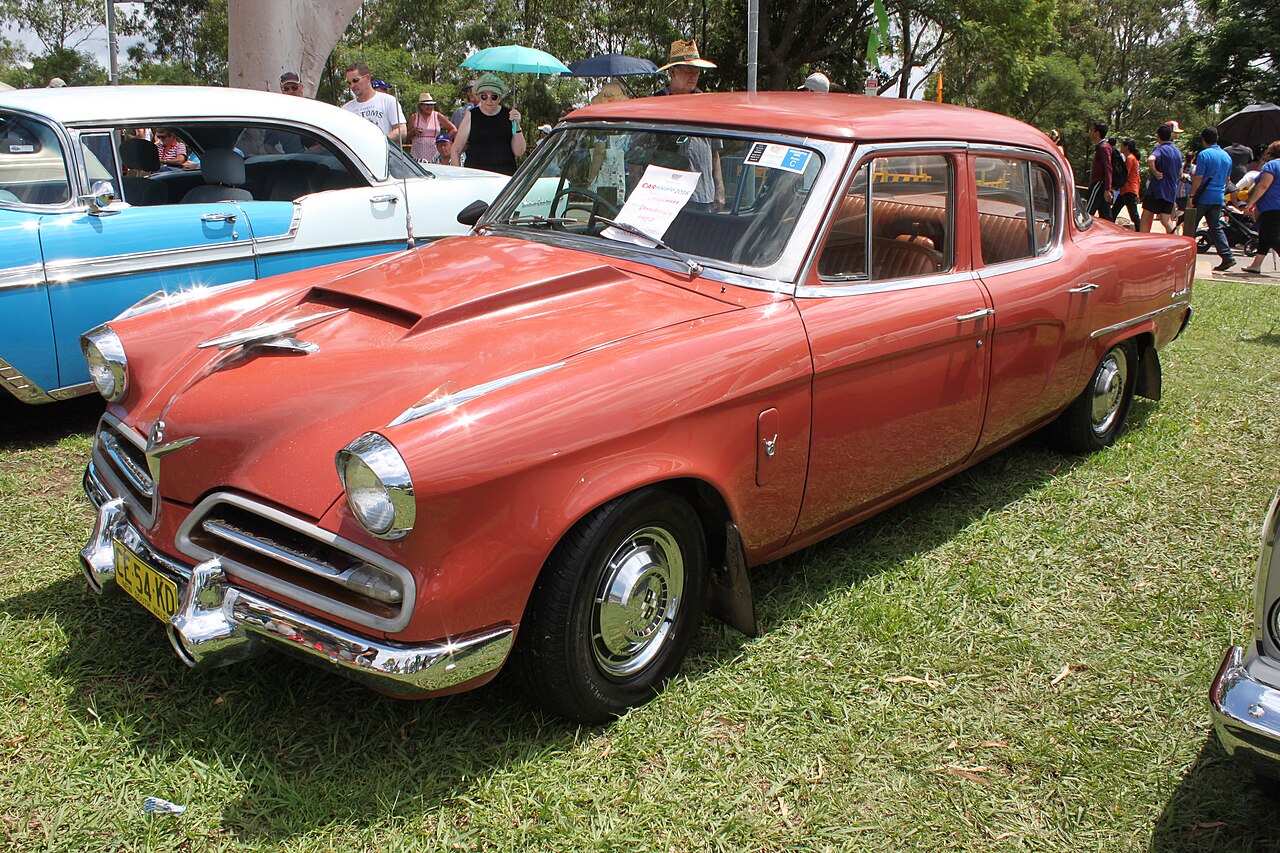
The 1953 Land Cruiser's frame flexed so badly that jacking up one corner to change a tire could jam the doors shut -- too thin a steel gauge, fixed in later years.
This Studebaker's optional automatic transmission was years ahead of its rivals: it had hill-holder, anti-creep, reverse lock-out and a locking torque converter for near-zero power loss in top gear.
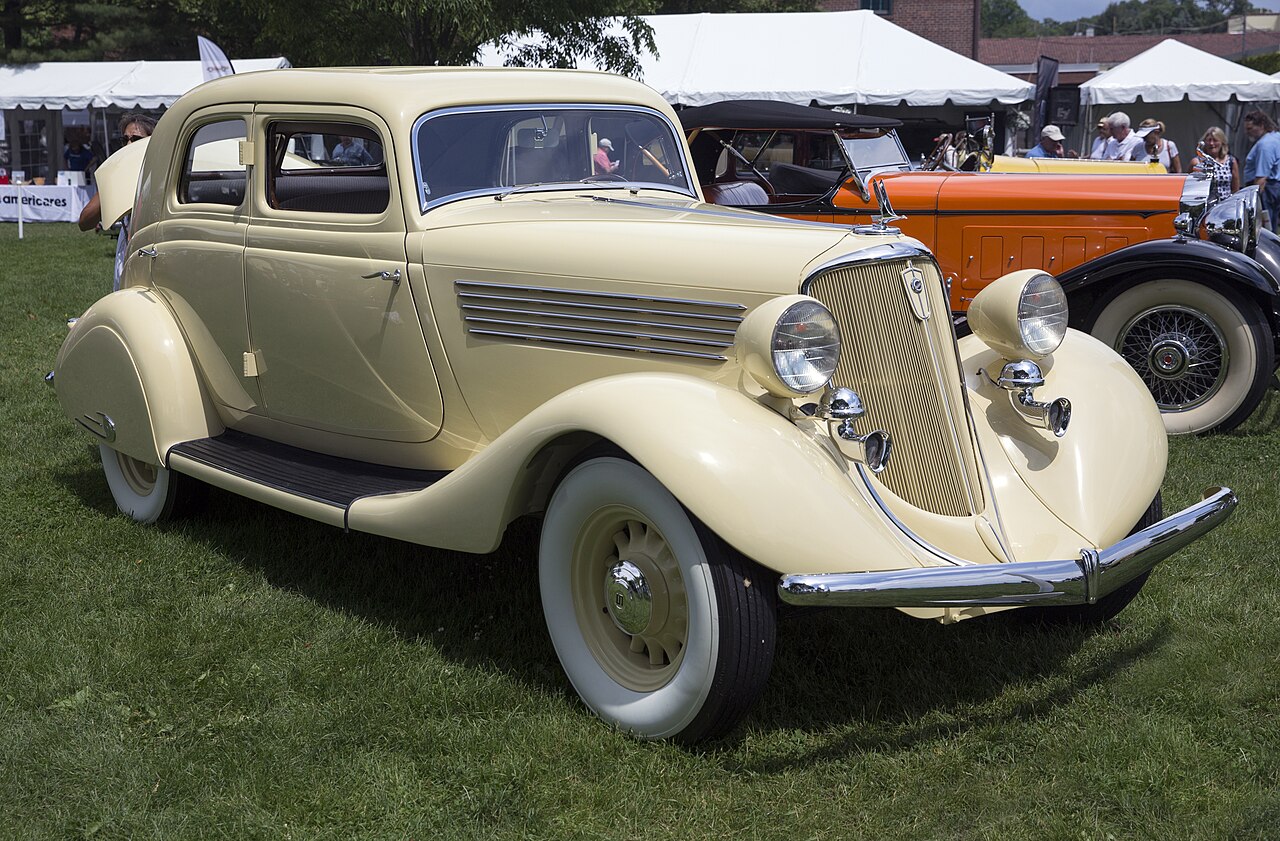
For 1941, Studebaker's ultra-luxury Skyway Land Cruiser got a curved single-pane windshield, rear fender skirts and premium trim, at a time when flat glass was the industry norm.
Rivals
Same body, same money, other badges — tap any card to flip.

It briefly served as senior sibling to Marquette, a GM companion brand cancelled after just one year.

Nissan hired former BMW engineers to help develop the 510's suspension, which is why period reviewers frequently compared its handling to the BMW 1600/2002.

A Trabant 601 won its class at the 1970 Monte Carlo Rally, with a second 601 right behind it in second.

The 600 was a stopgap: the P50's body over the 601's mechanicals, and for a while its estate was built alongside the new 601 saloon.

The G80 Sport brought a 370 PS twin-turbo 3.3 V6, a mesh grille and copper-tinted chrome with copper stitching to match.

The Vigor was sold only with a five-cylinder engine, an unusual configuration Honda used to fit a longer engine transversely under a short hood.

The GS/E coupe earned the nickname "German Charger" for its long hood, short deck stance borrowed from Detroit muscle cars.

This DeVille/Fleetwood was the first production car anywhere to mount its V8 sideways, Cadillac's front-drive gamble on the new C-body.