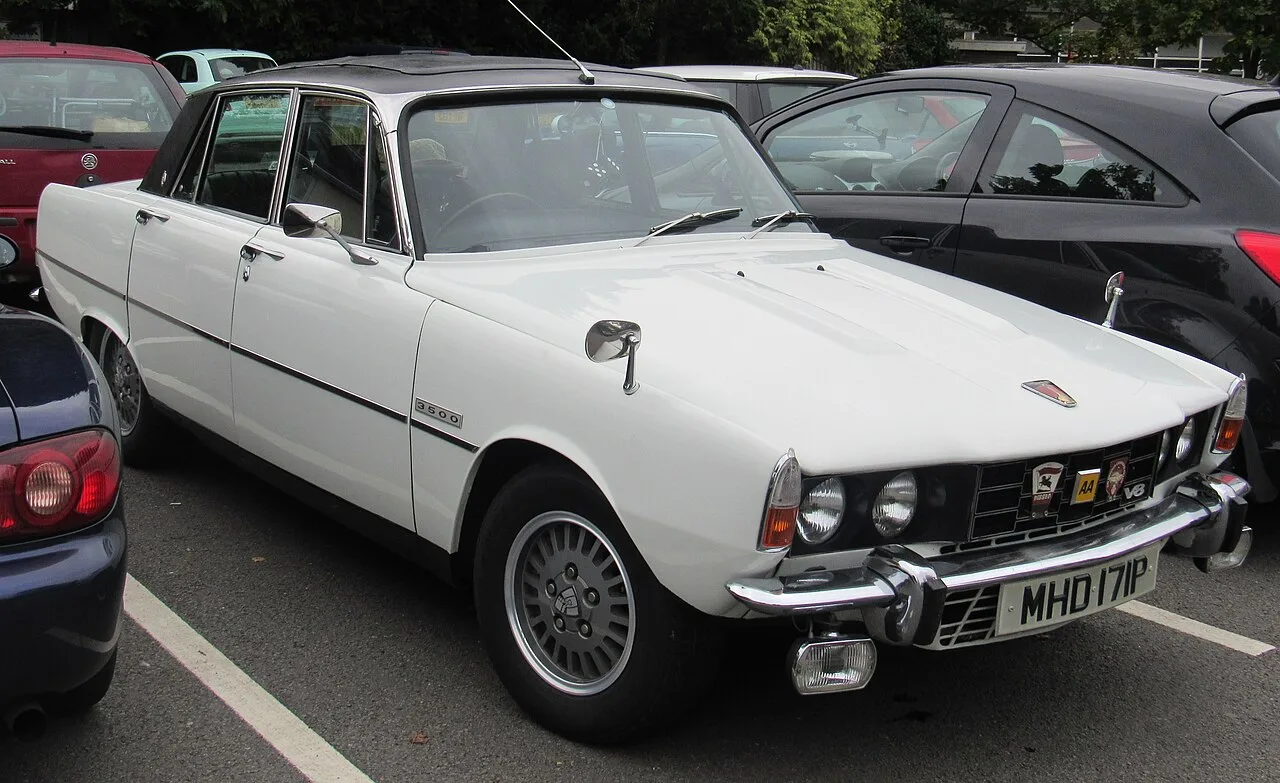
The front suspension was engineered wide specifically to fit a gas turbine engine that Rover ultimately never installed.
Lead trim: 2200 SC (2,205 cc single-carburettor four, 98 bhp) · up to 184 hp
Rover P6 2000P6 · 1963–1973
- 0spots by members
- Unclaimednobody has spotted one yet
- 0sets it belongs to
Nobody in Burbles has spotted a Rover P6 2000 yet. See one on the street, point the app at it, and the first card is yours — with your @handle permanently credited on this page.
FactThe front suspension was engineered wide specifically to fit a gas turbine engine that Rover ultimately never installed.
The Rover P6 series, named the 2000, 2200 or 3500 depending on engine displacement, is a saloon car produced by Rover and subsequently British Leyland from 1963 to 1977 in Solihull, and was the first winner of the European Car of the Year award; 322,302 were produced. Announced on 9 October 1963 just before the Earls Court Motor Show and marketed first as the Rover 2000, it was a complete "clean sheet" design intended to appeal to a larger number of buyers than earlier models such as the P4. It was advanced for the time, with a de Dion tube rear suspension, four-wheel disc brakes (inboard at the rear) and a fully synchromesh transmission, and its unibody design featured non-stressed panels bolted to a unit frame, inspired by the Citroën DS. The front suspension was designed to leave as much width as possible for the engine compartment so that Rover's gas turbine engine could be fitted; the turbine was never used, but the compartment was wide enough for the Buick-derived Rover V8, available from April 1968. The car's primary competitor on the domestic UK market was the Triumph 2000, released one week after the P6.
Collectors Spotted in the Rover P6 Lineage
No member has published a public street spot of the Rover P6 yet — the First · Worldwide stamp is wide open.
Trims & Figures
7 published trims in the catalogue. A blank is a figure not recorded, not zero.
| Trim | Years | Engine | Power | Torque | 0–60 | Drive | Gearbox | MSRP |
|---|---|---|---|---|---|---|---|---|
| 2000 (1,978 cc overhead cam four, 104 bhp) | 1963–1973 | 2.0 L Inline-4 | 104 hp | — | — | — | — | — |
| 2000 TC (1,978 cc twin-carburettor four, about 110 bhp) | 1966–1973 | 2.0 L Inline-4 | 110 hp | — | — | — | — | — |
| 2200 SC (2,205 cc single-carburettor four, 98 bhp) | 1973–1977 | 2.2 L Inline-4 | 98 hp | — | — | — | — | — |
| 2200 TC (2,205 cc twin-carburettor four, 115 bhp) | 1973–1977 | 2.2 L Inline-4 | 115 hp | — | — | — | — | — |
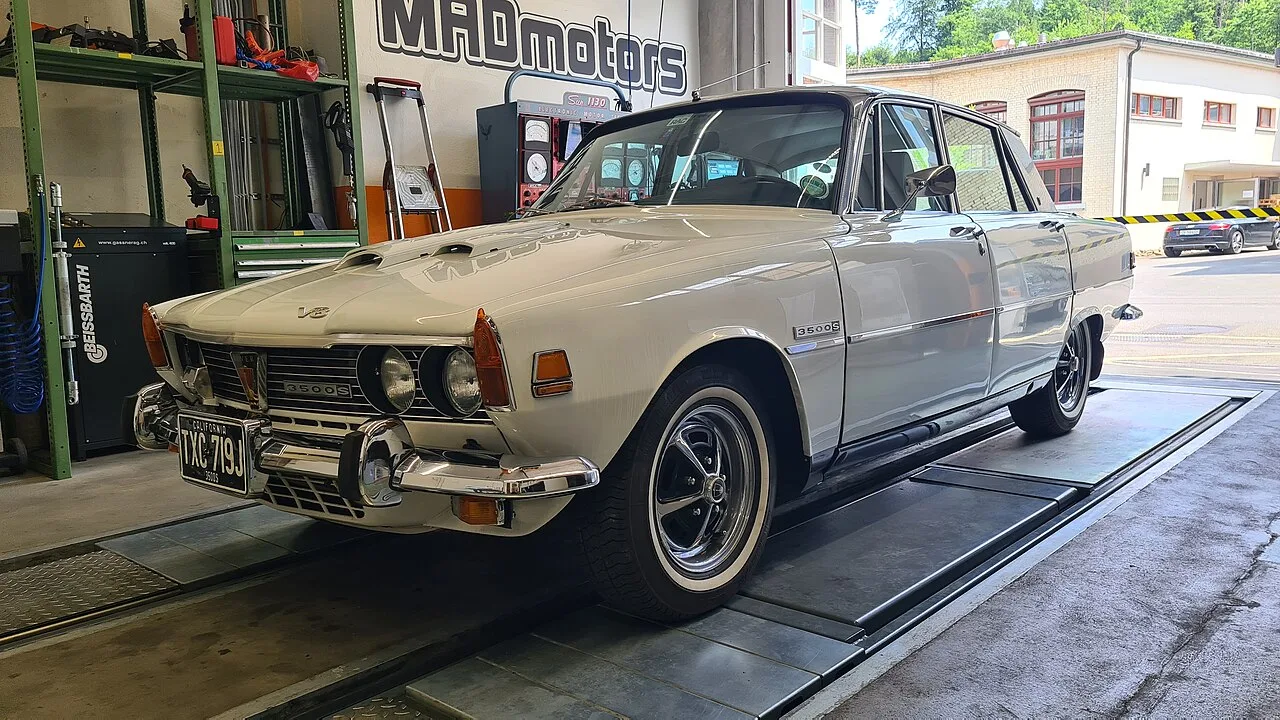
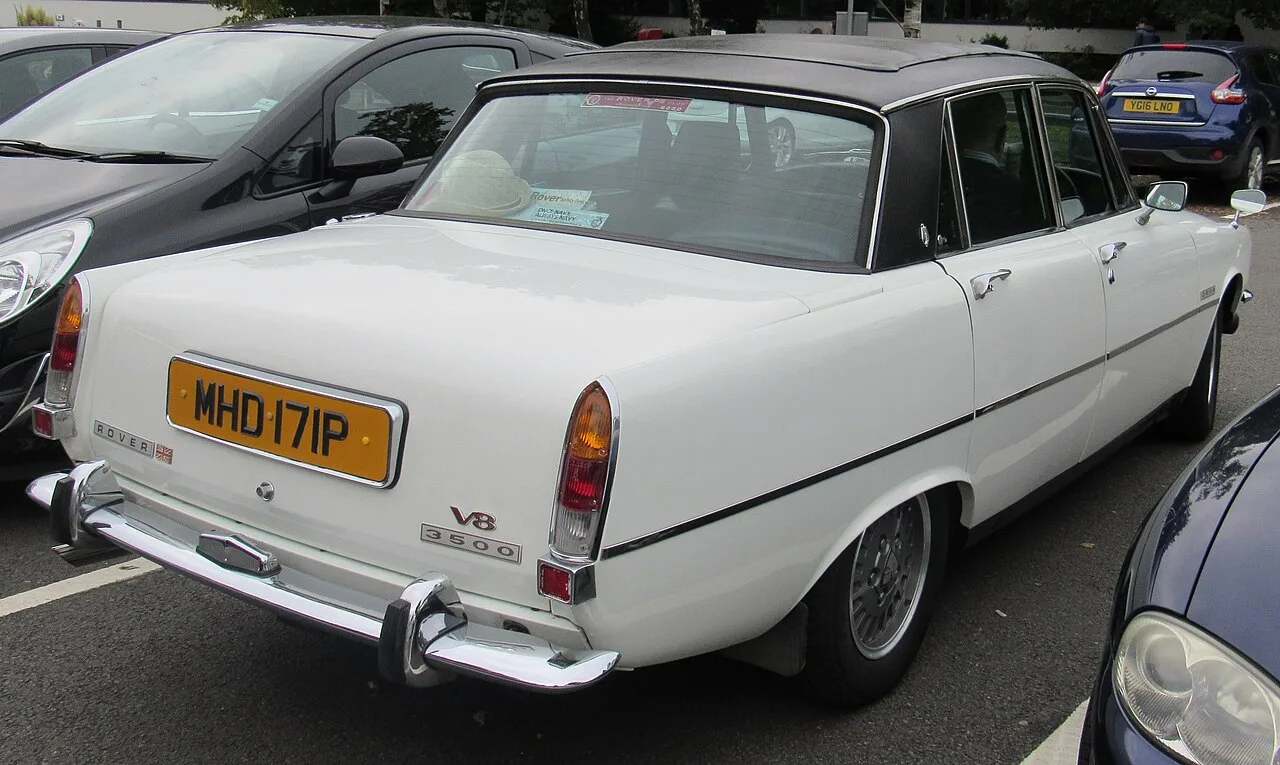
| 3500 (3.5 L Rover OHV V8, automatic) | 1968–1977 | 3.5 L V8 | — | — | 10.5 s | — | — | — |
| 3500 high compression (3.5 L Rover OHV V8, 184 hp) | 1971–1977 | 3.5 L V8 | 184 hp | — | — | — | — | — |
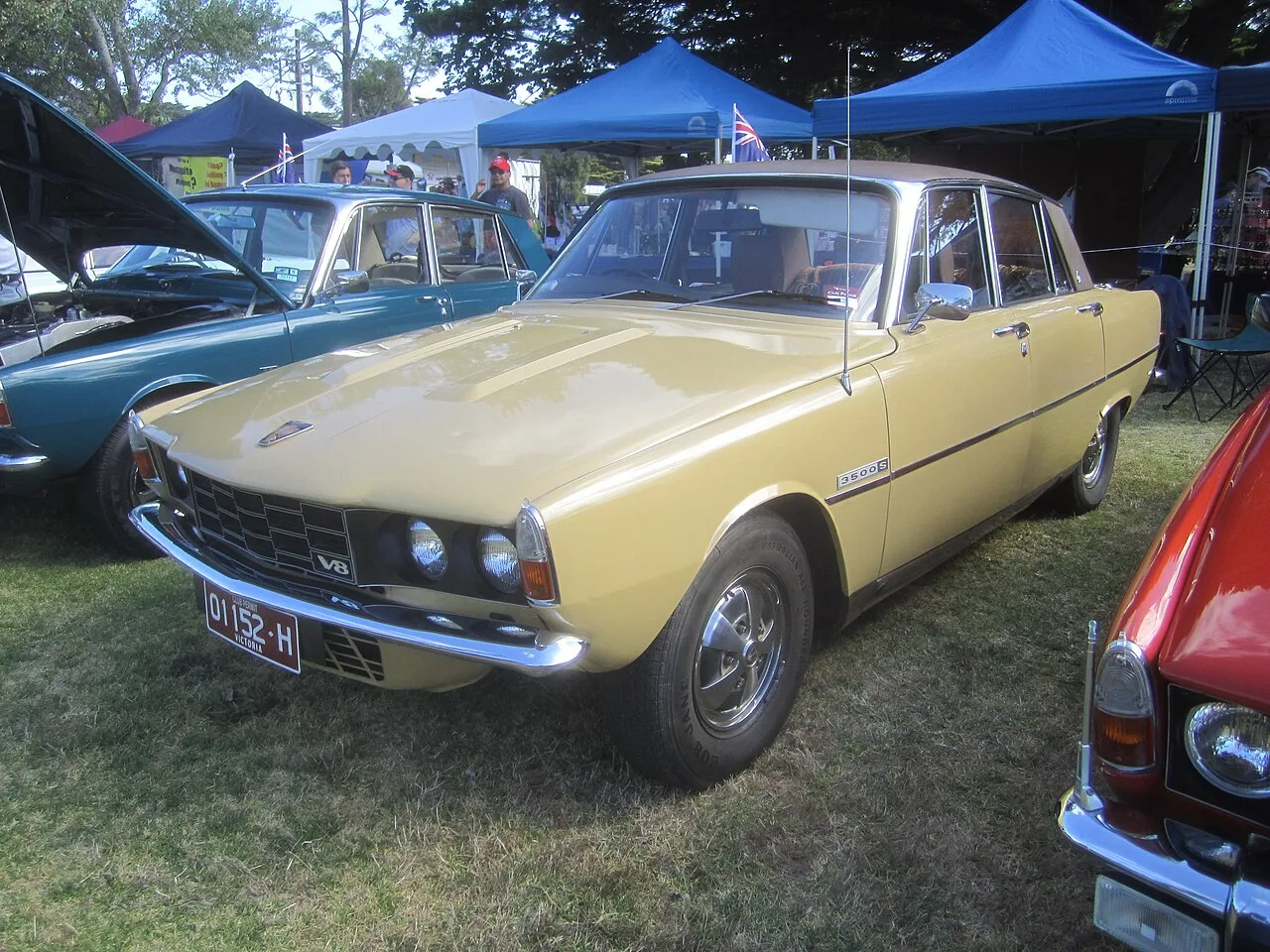
| 3500S (3.5 L Rover OHV V8, four-speed manual) | 1971–1977 | 3.5 L V8 | — | — | 9.0 s | — | — | — |
Owning one
We don’t estimate running costs for a car like this. What it costs depends on its condition, its specialist and how it is driven, and an average would mislead.
Owners’ builds
Nobody has claimed one yet.
Photographs
Rivals
Same body, same money, other badges — tap any card to flip.

It briefly served as senior sibling to Marquette, a GM companion brand cancelled after just one year.

Nissan hired former BMW engineers to help develop the 510's suspension, which is why period reviewers frequently compared its handling to the BMW 1600/2002.

A Trabant 601 won its class at the 1970 Monte Carlo Rally, with a second 601 right behind it in second.

The 600 was a stopgap: the P50's body over the 601's mechanicals, and for a while its estate was built alongside the new 601 saloon.

The G80 Sport brought a 370 PS twin-turbo 3.3 V6, a mesh grille and copper-tinted chrome with copper stitching to match.

The Vigor was sold only with a five-cylinder engine, an unusual configuration Honda used to fit a longer engine transversely under a short hood.

The GS/E coupe earned the nickname "German Charger" for its long hood, short deck stance borrowed from Detroit muscle cars.

This DeVille/Fleetwood was the first production car anywhere to mount its V8 sideways, Cadillac's front-drive gamble on the new C-body.