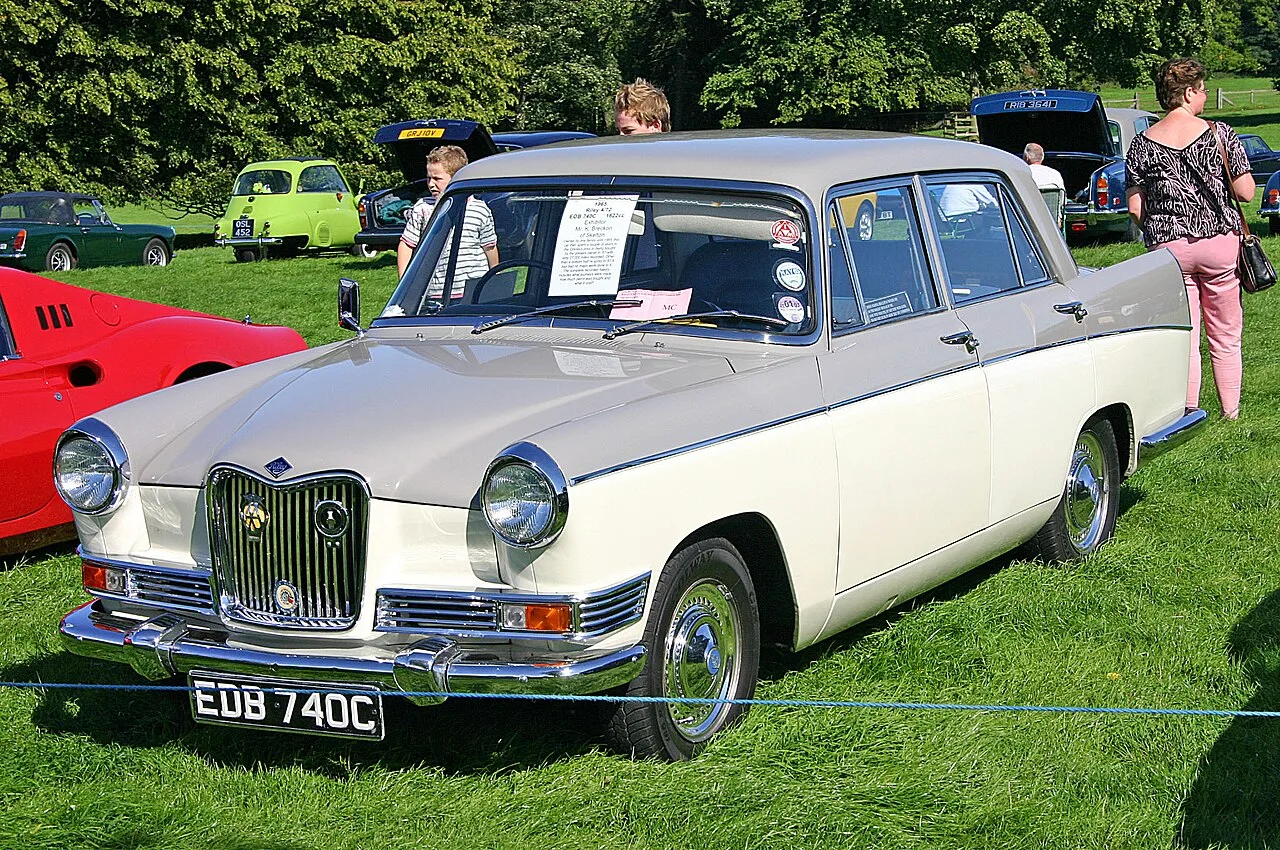
When this Riley added an automatic option in 1961, it quietly became the first mass-produced car in Europe to use the Borg-Warner 35 — a transmission Borg-Warner had developed for the US a decade earlier.
Lead trim: 4/Seventy Two 1.6 B-Series twin-carb (1622 cc, 68 hp)
Riley 4/721961–1969
- 0spots by members
- Unclaimednobody has spotted one yet
- 0sets it belongs to
Nobody in Burbles has spotted a Riley 4/72 yet. See one on the street, point the app at it, and the first card is yours — with your @handle permanently credited on this page.
FactWhen this Riley added an automatic option in 1961, it quietly became the first mass-produced car in Europe to use the Borg-Warner 35 — a transmission Borg-Warner had developed for the US a decade earlier.
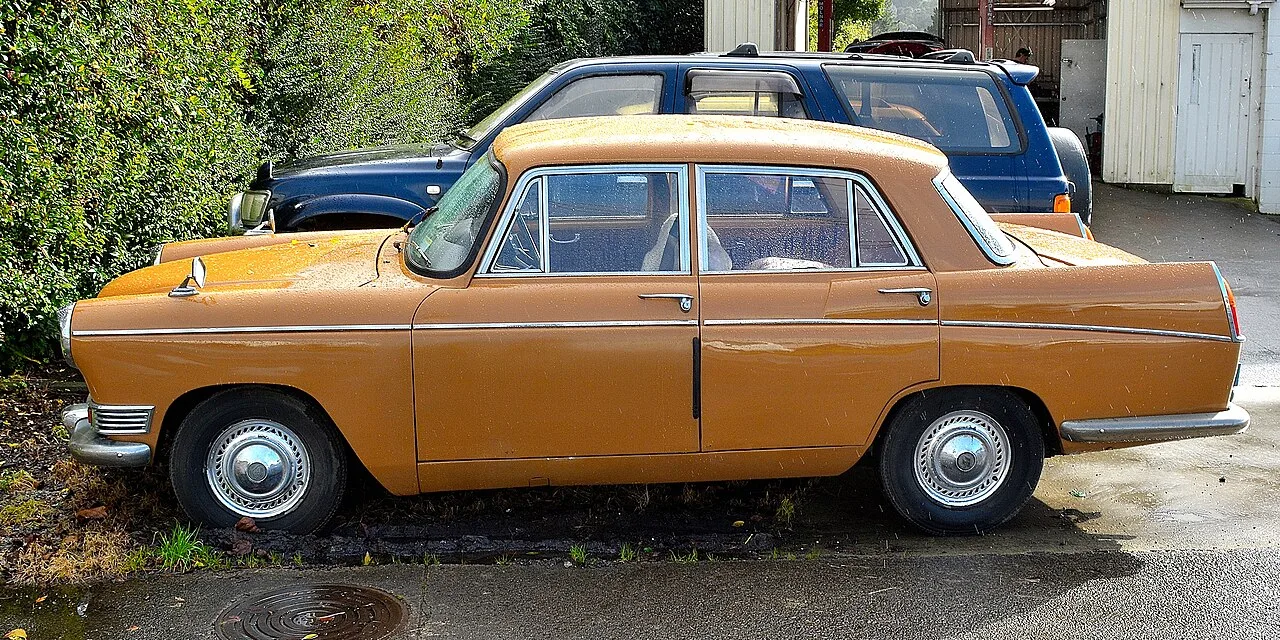
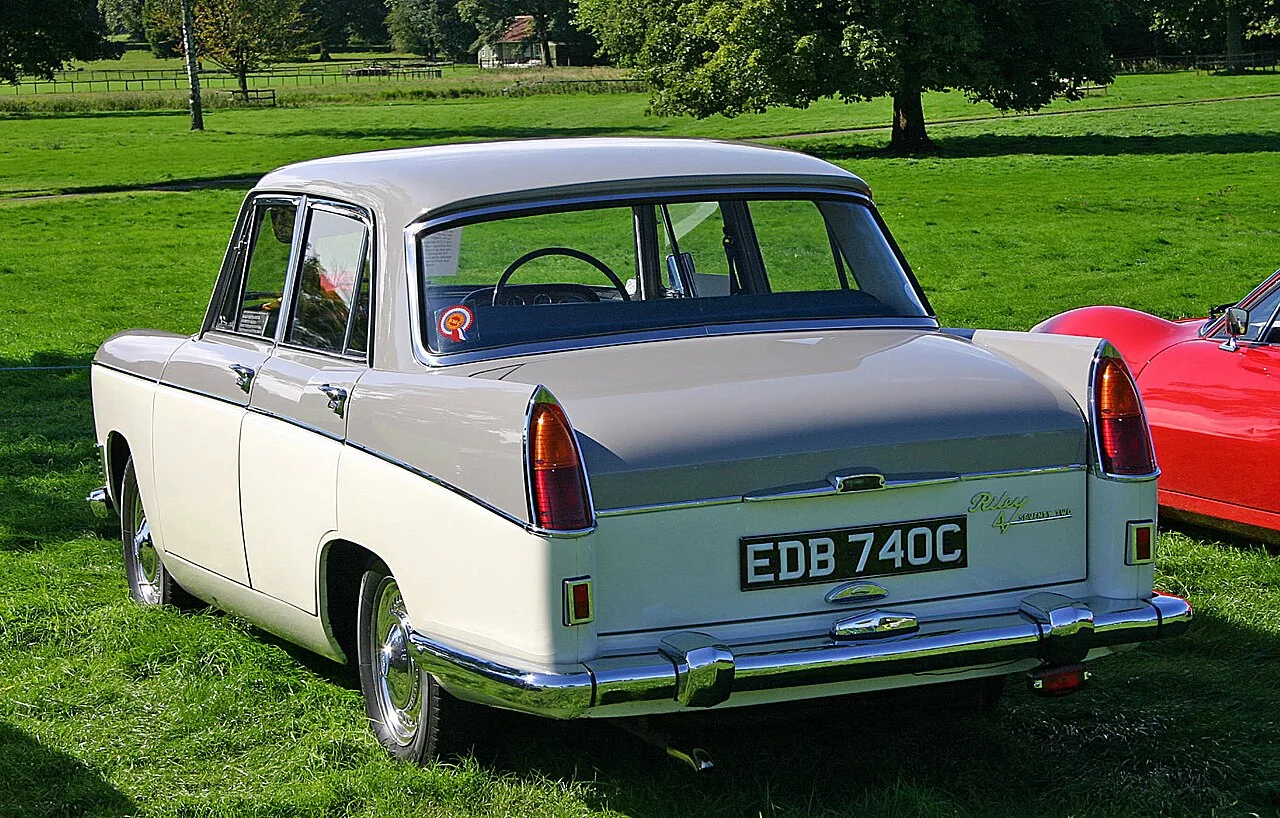
Just before the 1961 Motor Show, in October, the Riley 4/Sixty Eight became the 4/Seventy-Two (14,151 made, 1961–1969; also the Riley 1500 in Argentina and the Riley Comet in Austria), closely related again to the 16/60 update of the Wolseley car. The engine was now 1.6 L (1,622 cc) and the Riley again got the twin-carburettor version with 68 hp (51 kW), with improved suspension with anti-roll bars; the wheelbase was 1 in (25.4 mm) longer through moving the back axle rearwards and the front track increased by 2 inches, changes made at the same time to all the BMC Farina cars. It was closely related to the Pininfarina-designed MG Magnette Mark III and Wolseley 15/60 and to the simpler Austin A55 Cambridge Mark II and Morris Oxford V pair, and was the most expensive car in that series. Its main competitor, appearing in 1963, was the Humber Sceptre from the Rootes Group, with an 85 hp engine, a 6-speed manual (four direct ratios plus overdrive on 3rd and 4th) or a 3-speed automatic (post 1965) and a more modern interior, which thoroughly outsold it. The Motor tested an automatic 4/72 in 1962 at 81.3 mph, 0–60 mph in 20.6 seconds and 26.5 mpg. It had no successor.
Collectors Spotted in the Riley 4/72 Lineage
No member has published a public street spot of the Riley 4/72 yet — the First · Worldwide stamp is wide open.
Trims & Figures
One published trim in the catalogue. A blank is a figure not recorded, not zero.
| Trim | Years | Engine | Power | Torque | 0–60 | Drive | Gearbox | MSRP |
|---|---|---|---|---|---|---|---|---|
| 4/Seventy Two 1.6 B-Series twin-carb (1622 cc, 68 hp) | 1961–1969 | 1.6 L Inline-4 | 68 hp | — | — | — | — | — |
Owning one
We don’t estimate running costs for a car like this. What it costs depends on its condition, its specialist and how it is driven, and an average would mislead.
Owners’ builds
Nobody has claimed one yet.
Photographs
Rivals
Same body, same money, other badges — tap any card to flip.

It briefly served as senior sibling to Marquette, a GM companion brand cancelled after just one year.

Nissan hired former BMW engineers to help develop the 510's suspension, which is why period reviewers frequently compared its handling to the BMW 1600/2002.

A Trabant 601 won its class at the 1970 Monte Carlo Rally, with a second 601 right behind it in second.

The 600 was a stopgap: the P50's body over the 601's mechanicals, and for a while its estate was built alongside the new 601 saloon.

The G80 Sport brought a 370 PS twin-turbo 3.3 V6, a mesh grille and copper-tinted chrome with copper stitching to match.

The Vigor was sold only with a five-cylinder engine, an unusual configuration Honda used to fit a longer engine transversely under a short hood.

The GS/E coupe earned the nickname "German Charger" for its long hood, short deck stance borrowed from Detroit muscle cars.

This DeVille/Fleetwood was the first production car anywhere to mount its V8 sideways, Cadillac's front-drive gamble on the new C-body.