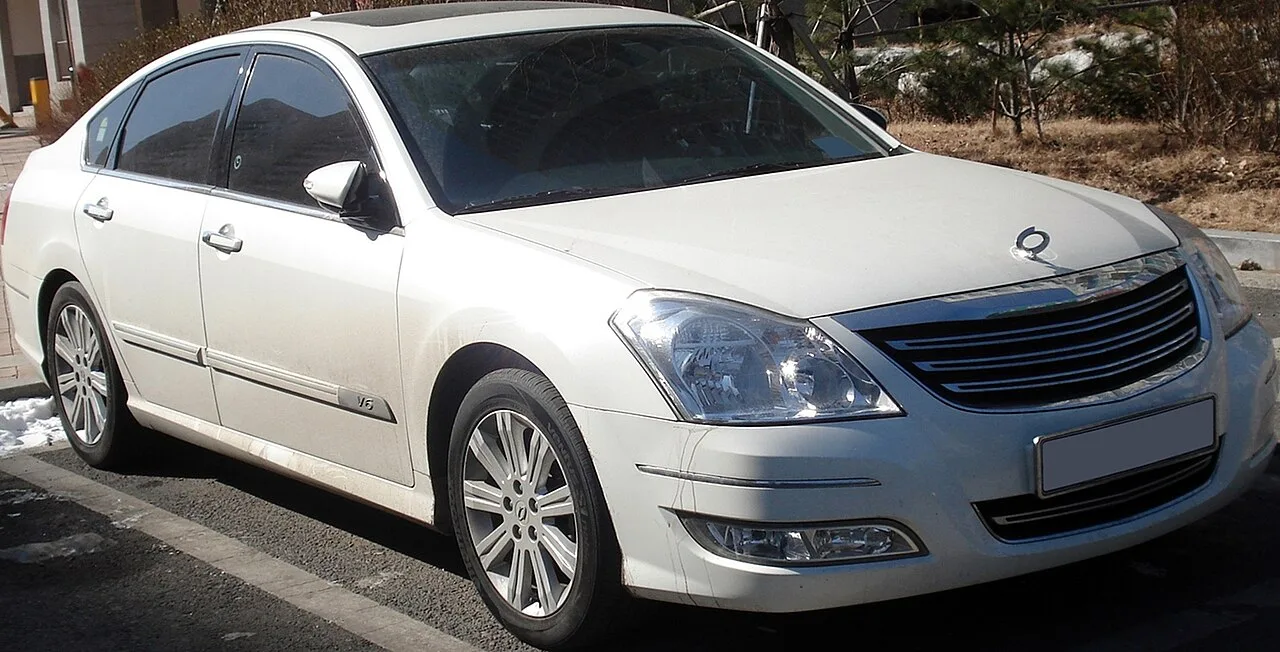
Renault Samsung spent more than 32 months and about 400 billion won — roughly 270 million euros — developing this generation of SM7.
Lead trim: SM7 2.5 V6 (VQ25 / 2ZV) · up to 258 hp
Renault Samsung SM7L47 · 2011–2019
- 0spots by members
- Unclaimednobody has spotted one yet
- 0sets it belongs to
Nobody in Burbles has spotted a Renault Samsung SM7 yet. See one on the street, point the app at it, and the first card is yours — with your @handle permanently credited on this page.
FactRenault Samsung spent more than 32 months and about 400 billion won — roughly 270 million euros — developing this generation of SM7.
The second-generation Renault Samsung SM7 (L47, designer Alejandro Mesonero-Romanos), based on a stretched version of the third-generation Renault Samsung SM5 (L43), went on sale in South Korea in August 2011 after more than 32 months of development at a cost of about 400 billion won (270 million euros) by Renault Samsung's R&D department. It has two third-generation Nissan VQ engines, the 2.5 L (VQ25 / 2ZV) and 3.5 L (VQ35 / 5ZV) V6, with 6-speed manual and automatic transmissions, an integrated front bumper-grille, bi-xenon adaptive headlamps and LED rear lamps, and three trim levels (SE, LE, RE) with equipment such as three-zone automatic air conditioning, massaging seats, paddle shifting and pressure-sensitive dampers. A liquefied-petroleum-gas SM7 arrived in August 2015; the 2013 model year added a blind-spot monitor, and the September 2014 SM7 Nova facelift took the QM3's front-end design. A revised version, the Renault Talisman, was sold only in China from June 2012 (2012-2015). The SM7 left production in late 2019, stock selling out by early January 2020. Wheelbase 110.6 in, length 196.7 in, width 73.6 in, height 58.3 in.
Collectors Spotted in the Renault Samsung SM7 Lineage
No member has published a public street spot of the Renault Samsung SM7 yet — the First · Worldwide stamp is wide open.
Trims & Figures
2 published trims in the catalogue. A blank is a figure not recorded, not zero.
| Trim | Years | Engine | Power | Torque | 0–60 | Drive | Gearbox | MSRP |
|---|---|---|---|---|---|---|---|---|
| SM7 2.5 V6 (VQ25 / 2ZV) | 2011–2019 | 2.5 L V6 | 190 hp | 179 lb-ft | — | FWD | — | — |
| SM7 3.5 V6 (VQ35 / 5ZV) | 2011–2019 | 3.5 L V6 | 258 hp | 243 lb-ft | — | FWD | — | — |
Owning one
We don’t estimate running costs for a car like this. What it costs depends on its condition, its specialist and how it is driven, and an average would mislead.
Owners’ builds
Nobody has claimed one yet.
Photographs
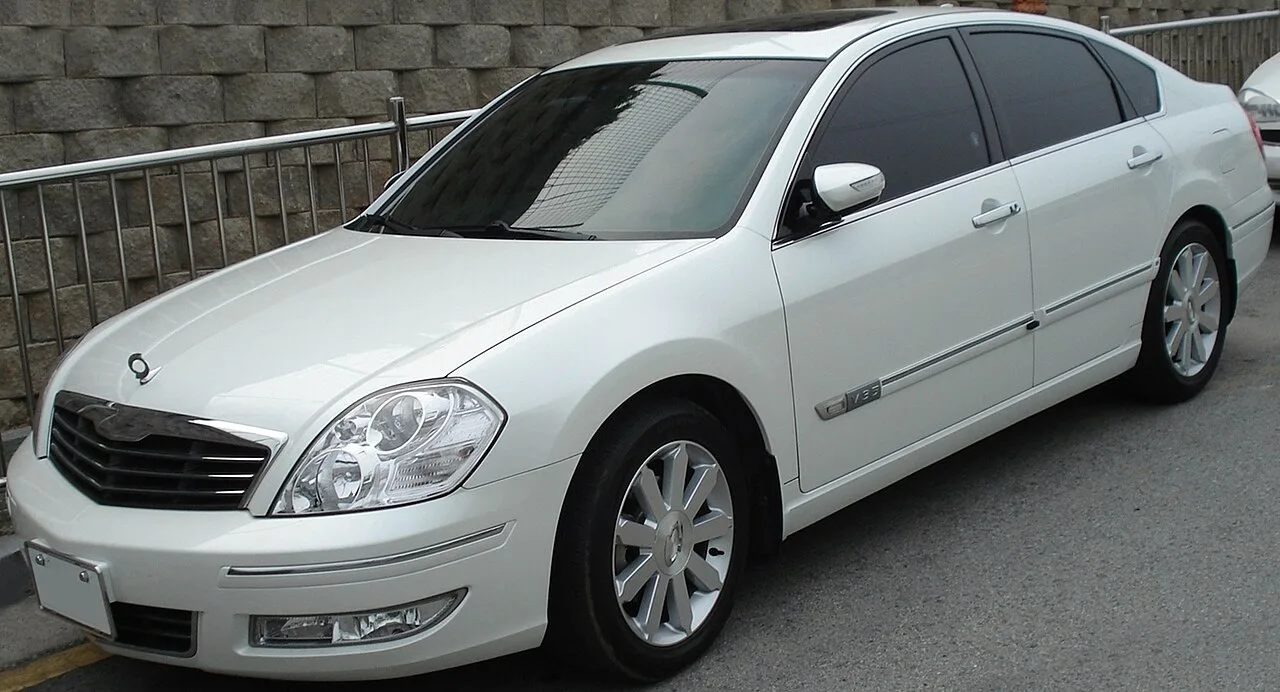
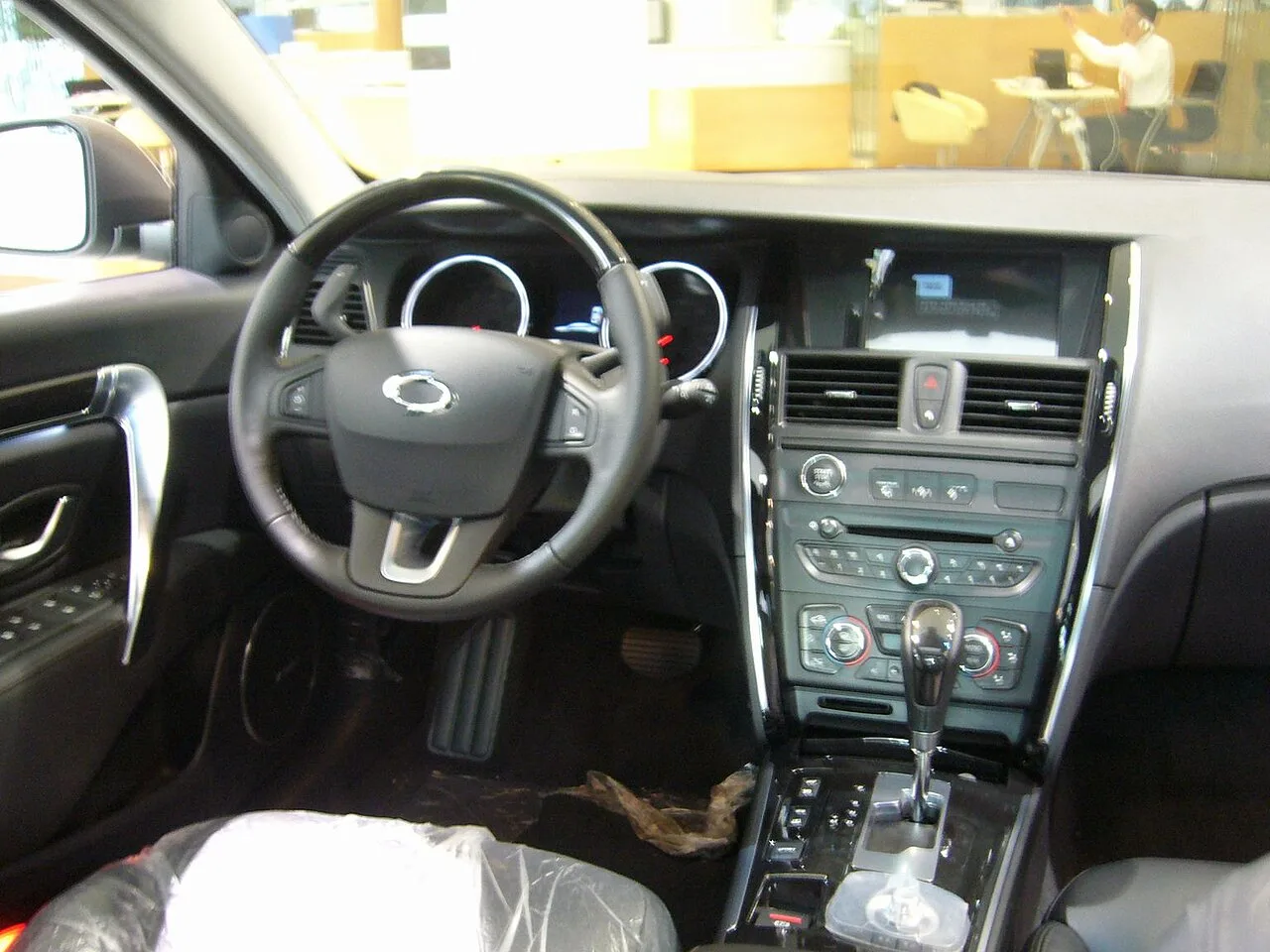

Renault Samsung spent more than 32 months and about 400 billion won — roughly 270 million euros — developing this generation of SM7.

This SM7 shared its bones with two very different Nissans at once — the Teana in Asia, and the sixth-generation Maxima everywhere else.
Rivals
Same body, same money, other badges — tap any card to flip.

It briefly served as senior sibling to Marquette, a GM companion brand cancelled after just one year.

Nissan hired former BMW engineers to help develop the 510's suspension, which is why period reviewers frequently compared its handling to the BMW 1600/2002.

A Trabant 601 won its class at the 1970 Monte Carlo Rally, with a second 601 right behind it in second.

The 600 was a stopgap: the P50's body over the 601's mechanicals, and for a while its estate was built alongside the new 601 saloon.

The G80 Sport brought a 370 PS twin-turbo 3.3 V6, a mesh grille and copper-tinted chrome with copper stitching to match.

The Vigor was sold only with a five-cylinder engine, an unusual configuration Honda used to fit a longer engine transversely under a short hood.

The GS/E coupe earned the nickname "German Charger" for its long hood, short deck stance borrowed from Detroit muscle cars.

This DeVille/Fleetwood was the first production car anywhere to mount its V8 sideways, Cadillac's front-drive gamble on the new C-body.