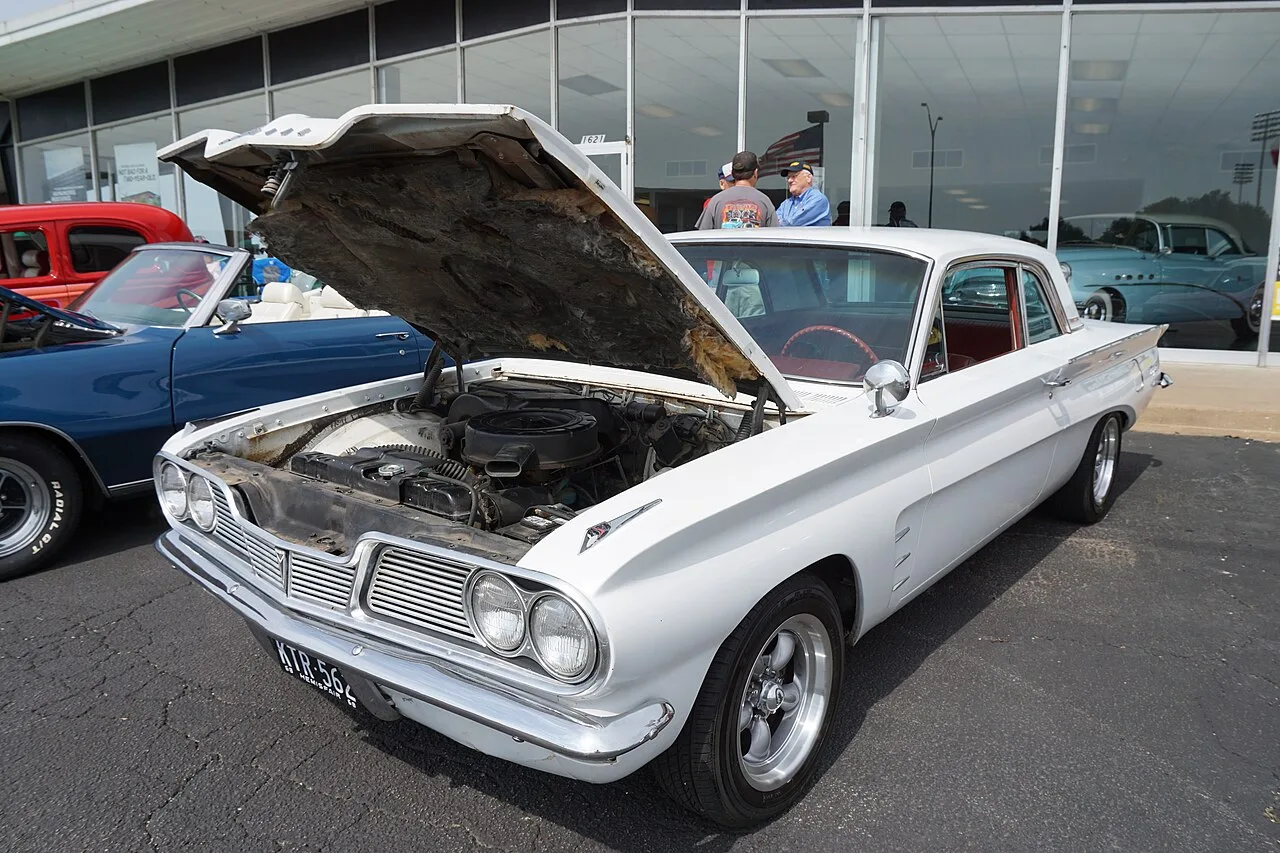
This Tempest used a flexible "rope drive" torque shaft to link its front engine to a rear transaxle — a one-piece design so unusual it had only ever appeared on a single GM concept car before.
Lead trim: Tempest Trophy 4 195 cu in I4 (166 hp at 4800 rpm, 4-barrel) · up to 260 hp
Pontiac Tempest1961–1963
- 0spots by members
- Unclaimednobody has spotted one yet
- 0sets it belongs to
Nobody in Burbles has spotted a Pontiac Tempest yet. See one on the street, point the app at it, and the first card is yours — with your @handle permanently credited on this page.
FactThis Tempest used a flexible "rope drive" torque shaft to link its front engine to a rear transaxle — a one-piece design so unusual it had only ever appeared on a single GM concept car before.
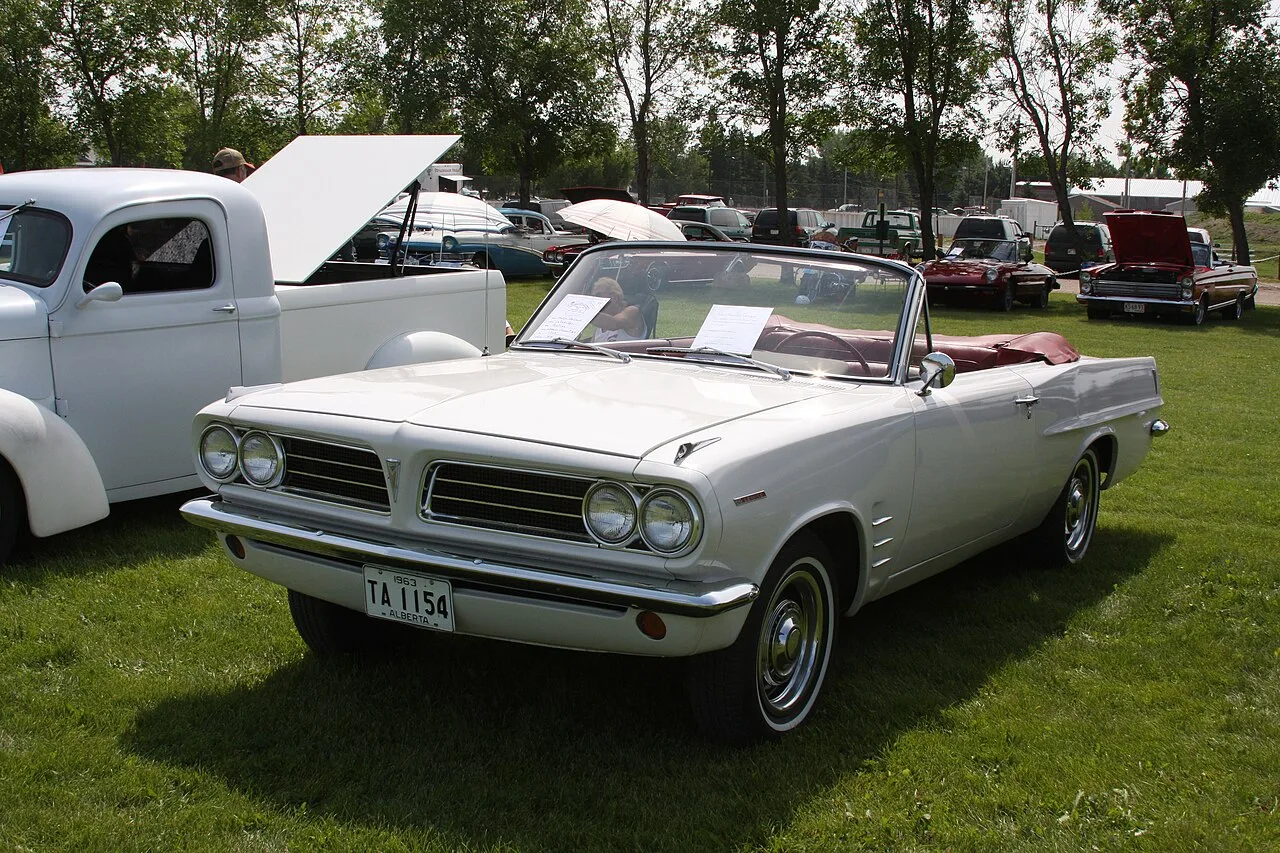
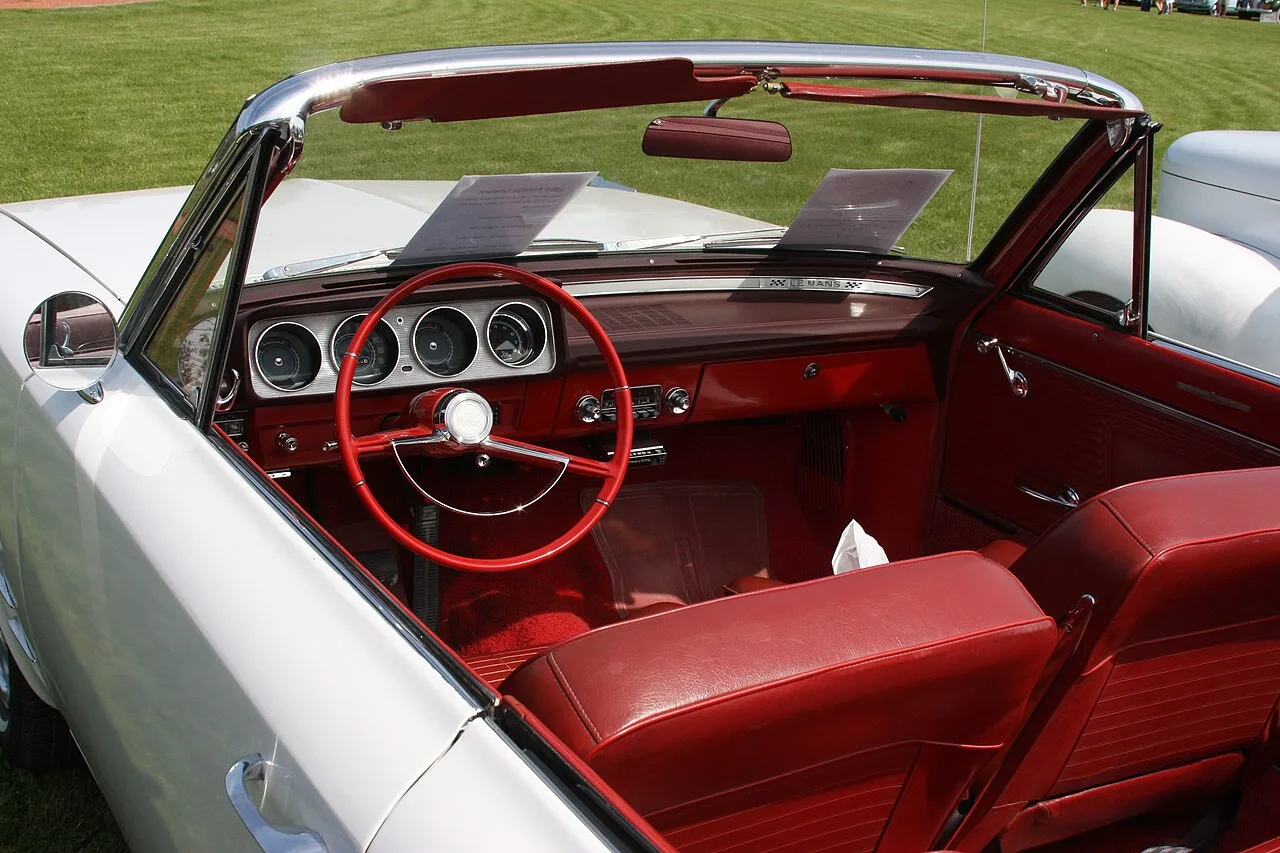
The Pontiac Tempest was produced by Pontiac from 1960 to 1970 and again from 1987 to 1991, introduced as an entry-level compact in October 1960 at the Paris Auto Show for the 1961 model year and named Motor Trend's 1961 Car of the Year. Built on GM's first unibody chassis, its Y-platform was shared with the Buick Special/Skylark and Oldsmobile F-85/Cutlass, but the Pontiac had a unique layout: a front-engine, rear-transaxle design with independent rear suspension that gave nearly 50/50 weight distribution, a 195 cubic-inch "Trophy 4" four derived from the right cylinder bank of the 389 V8, and a curved "rope drive" torque shaft to a two-speed automatic transaxle (TempesTorque) or a three-speed manual (a four-speed manual arrived for 1962). The Trophy 4 came in three versions: 8.6:1 or 10.25:1 with a single-barrel carburetor (110–140 hp) and a 10.25:1 four-barrel that produced 166 hp at 4,800 rpm and 215 lb-ft at 2,800 rpm (SAE gross). In 1961 and 1962 an aluminum Buick-built 215 cubic-inch V8 was optional (155–215 hp; about 3,662 ordered), and for 1963 a 326 cubic-inch Pontiac V8 (actually 336 cu in) with a high-compression rating of 260 hp and 352 lb-ft, ordered on 52 percent of the 131,490 Tempests and LeMans sold that year. Wheelbase 112 in, length 189.3 in, width 72.2 in. Twelve 1963 "Super Duty" Tempests were built for NHRA Factory Experimental class racing.
Collectors Spotted in the Pontiac Tempest Lineage
No member has published a public street spot of the Pontiac Tempest yet — the First · Worldwide stamp is wide open.
Trims & Figures
3 published trims in the catalogue. A blank is a figure not recorded, not zero.
| Trim | Years | Engine | Power | Torque | 0–60 | Drive | Gearbox | MSRP |
|---|---|---|---|---|---|---|---|---|
| Tempest 215 cu in Buick aluminum V8 (1961–1962) | 1961–1962 | 3.5 L V8 | — | — | — | RWD | — | — |
| Tempest 326 V8 (260 hp, high compression, 1963) | 1963–1963 | 5.3 L V8 | 260 hp | 352 lb-ft | — | RWD | — | — |
| Tempest Trophy 4 195 cu in I4 (166 hp at 4800 rpm, 4-barrel) | 1961–1963 | 3.2 L Inline-4 | 166 hp | 215 lb-ft | — | RWD | — | — |
Owning one
We don’t estimate running costs for a car like this. What it costs depends on its condition, its specialist and how it is driven, and an average would mislead.
Owners’ builds
Nobody has claimed one yet.
Photographs
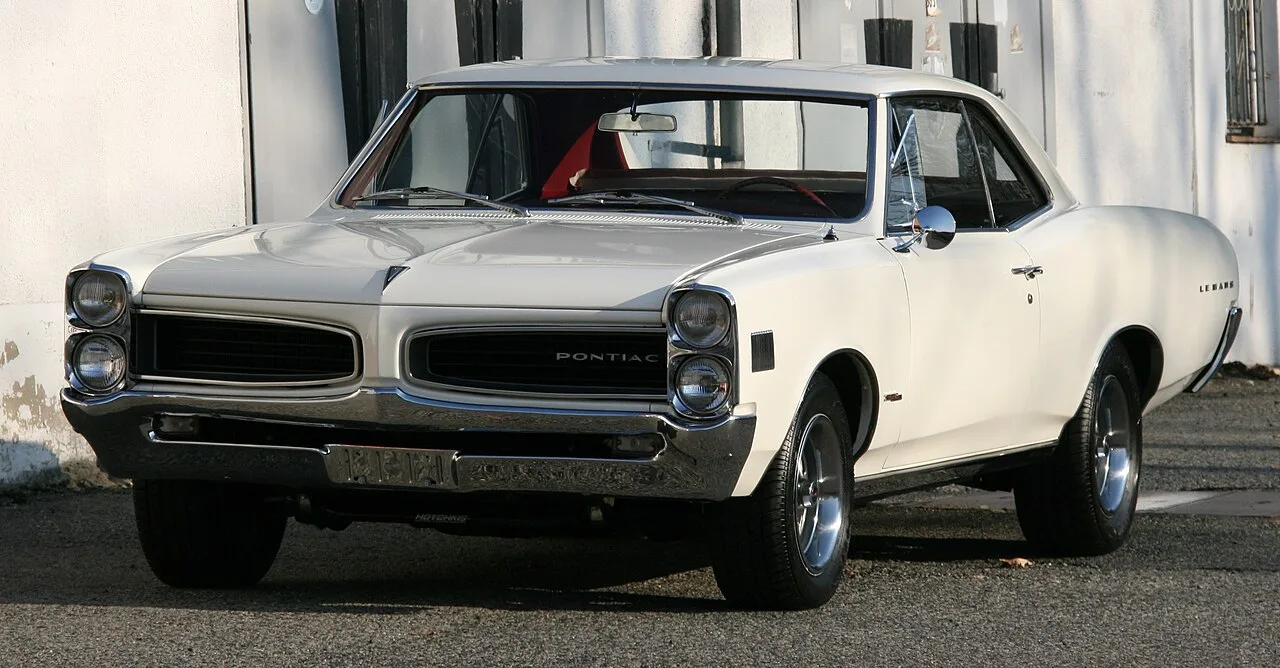
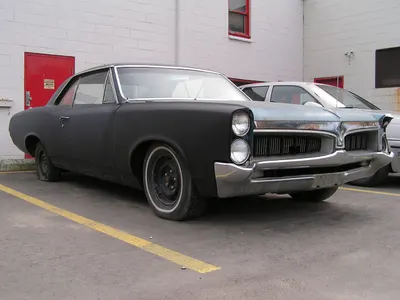
For exactly one model year, 1969, the Tempest Custom became the Custom S — a trim name Pontiac almost called the "TC" instead, before quietly retiring it after a single season.
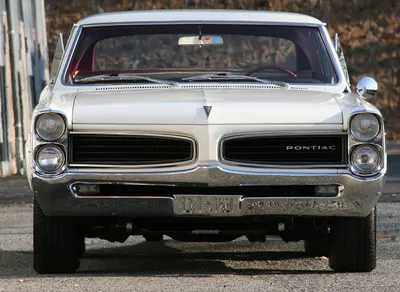
The 1966 Tempest's overhead-cam six was the only one of its kind in any American production car — and it was also the first US-built engine to time its camshaft with a belt instead of a chain.
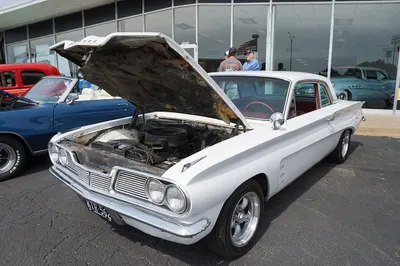
This Tempest used a flexible "rope drive" torque shaft to link its front engine to a rear transaxle — a one-piece design so unusual it had only ever appeared on a single GM concept car before.
Rivals
Same body, same money, other badges — tap any card to flip.

It briefly served as senior sibling to Marquette, a GM companion brand cancelled after just one year.

Nissan hired former BMW engineers to help develop the 510's suspension, which is why period reviewers frequently compared its handling to the BMW 1600/2002.

A Trabant 601 won its class at the 1970 Monte Carlo Rally, with a second 601 right behind it in second.

The 600 was a stopgap: the P50's body over the 601's mechanicals, and for a while its estate was built alongside the new 601 saloon.

The G80 Sport brought a 370 PS twin-turbo 3.3 V6, a mesh grille and copper-tinted chrome with copper stitching to match.

The Vigor was sold only with a five-cylinder engine, an unusual configuration Honda used to fit a longer engine transversely under a short hood.

The GS/E coupe earned the nickname "German Charger" for its long hood, short deck stance borrowed from Detroit muscle cars.

This DeVille/Fleetwood was the first production car anywhere to mount its V8 sideways, Cadillac's front-drive gamble on the new C-body.