A red-on-white 1955 Star Chief convertible drove Lucy and Ricky to Hollywood on 'I Love Lucy' — one of early TV's most memorable car cameos.
Lead trim: Star Chief 347 cu in V8 (1957)
Pontiac Star Chief1955–1957
- 0spots by members
- Unclaimednobody has spotted one yet
- 0sets it belongs to
Nobody in Burbles has spotted a Pontiac Star Chief yet. See one on the street, point the app at it, and the first card is yours — with your @handle permanently credited on this page.
FactA red-on-white 1955 Star Chief convertible drove Lucy and Ricky to Hollywood on 'I Love Lucy' — one of early TV's most memorable car cameos.
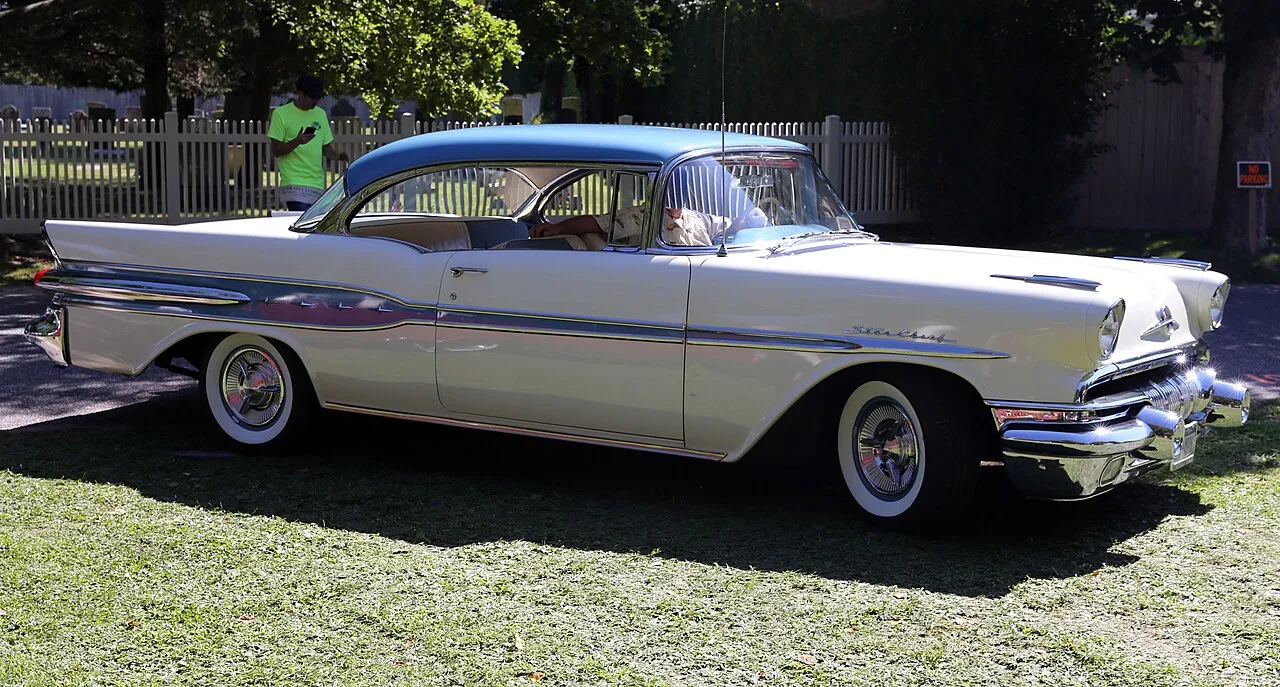
Along with an all-new body, the straight-eight was superseded in 1955 by the new Strato Streak V8 (287 cu in), followed by a 316.6 cu in V8 in 1956 and a 347 cu in V8 in 1957. The 1955 design had two wide "Silver Streaks" running the length of the hood; the Star Chief Safari two-door hardtop wagon (similar to Chevrolet's Bel Air Nomad) joined on 31 January 1955 and lasted through 1957, though it sat on the shorter Chieftain 122 in wheelbase, and in January 1957 the four-door Custom Safari Transcontinental wagon was introduced. In 1957 the high-performance Star Chief Custom Bonneville was introduced and the "Star Flight" design replaced the silver streaks. Wheelbase 124 in, length 213.7 in, width 76.6 in, curb weight 3,860 lb.
Collectors Spotted in the Pontiac Star Chief Lineage
No member has published a public street spot of the Pontiac Star Chief yet — the First · Worldwide stamp is wide open.
Trims & Figures
3 published trims in the catalogue. A blank is a figure not recorded, not zero.
| Trim | Years | Engine | Power | Torque | 0–60 | Drive | Gearbox | MSRP |
|---|---|---|---|---|---|---|---|---|
| Star Chief 287 cu in Strato Streak V8 (1955) | 1955–1955 | 4.7 L V8 | — | — | — | RWD | — | — |
| Star Chief 316.6 cu in V8 (1956) | 1956–1956 | 5.2 L V8 | — | — | — | RWD | — | — |
| Star Chief 347 cu in V8 (1957) | 1957–1957 | 5.7 L V8 | — | — | — | RWD | — | — |
Owning one
We don’t estimate running costs for a car like this. What it costs depends on its condition, its specialist and how it is driven, and an average would mislead.
Owners’ builds
Nobody has claimed one yet.
Photographs
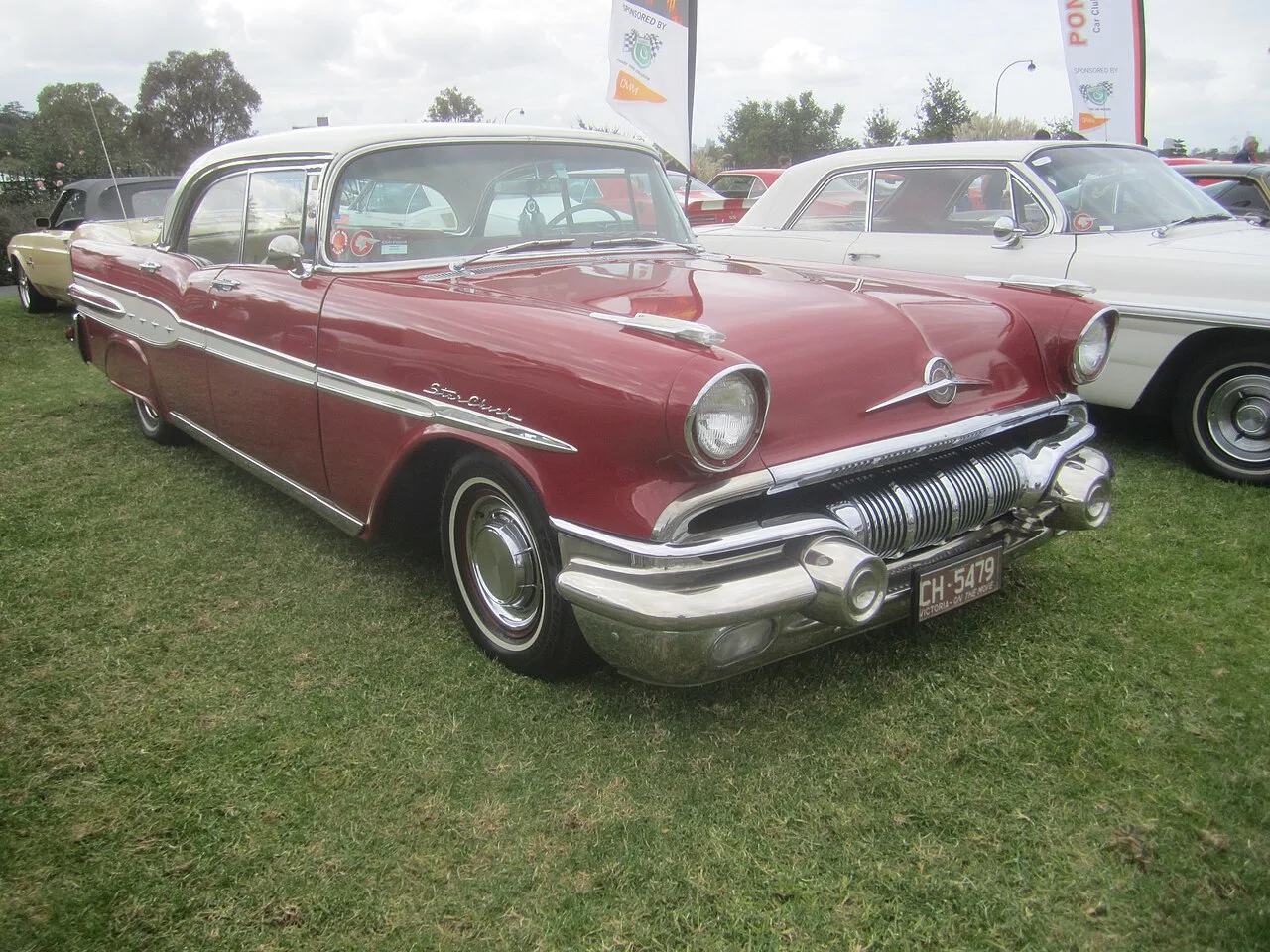
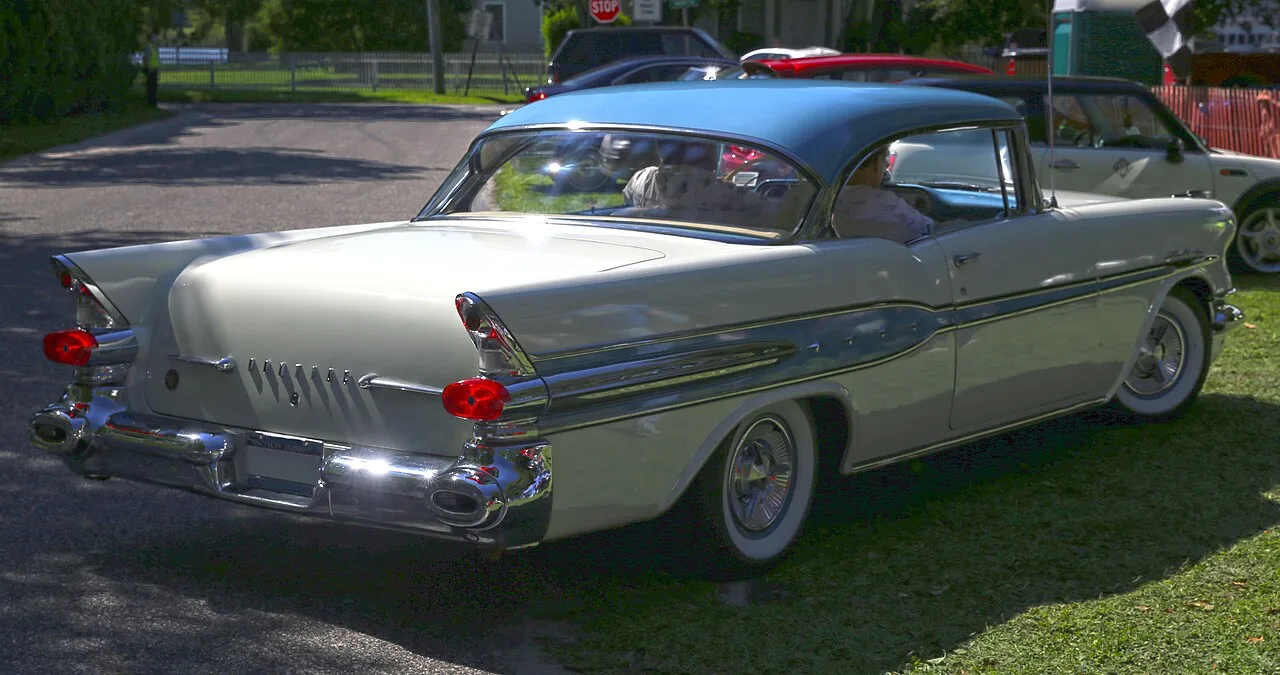
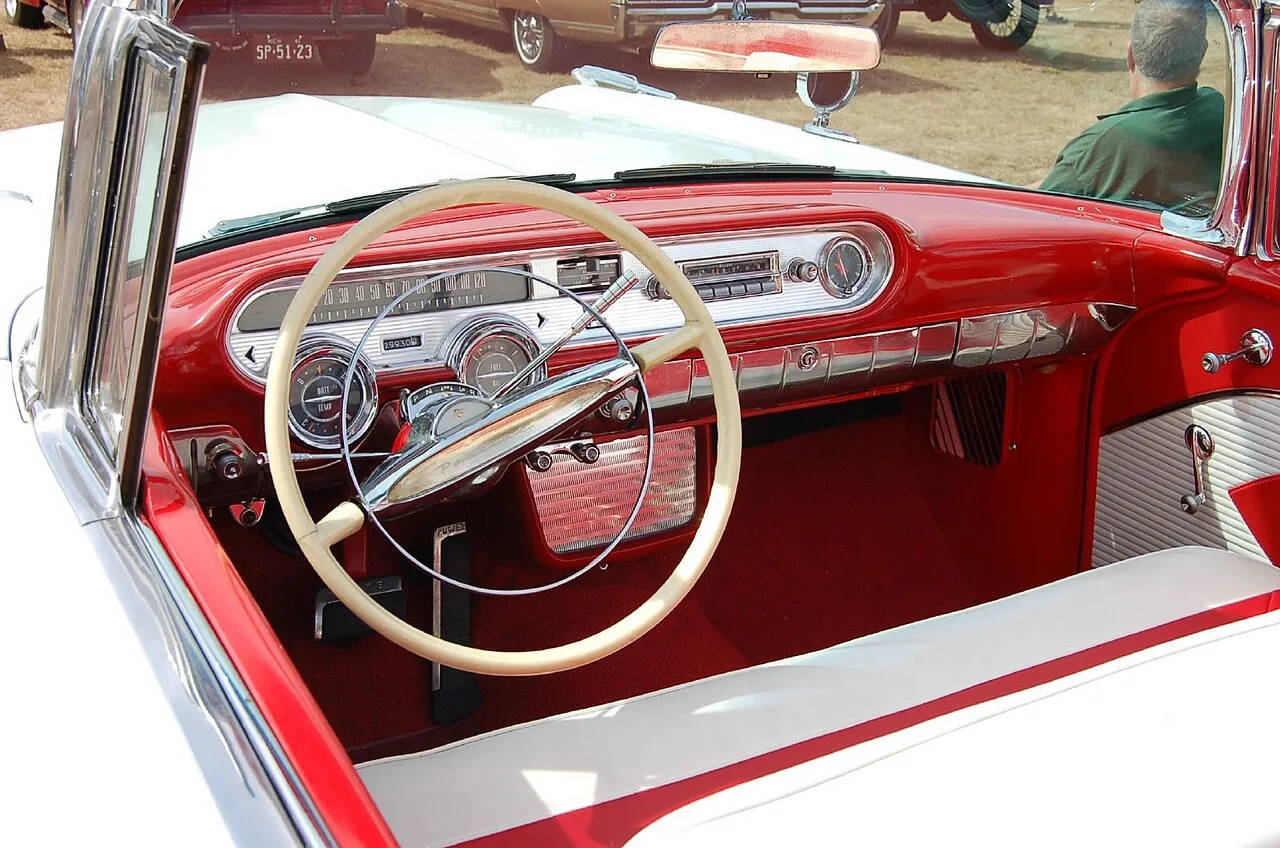
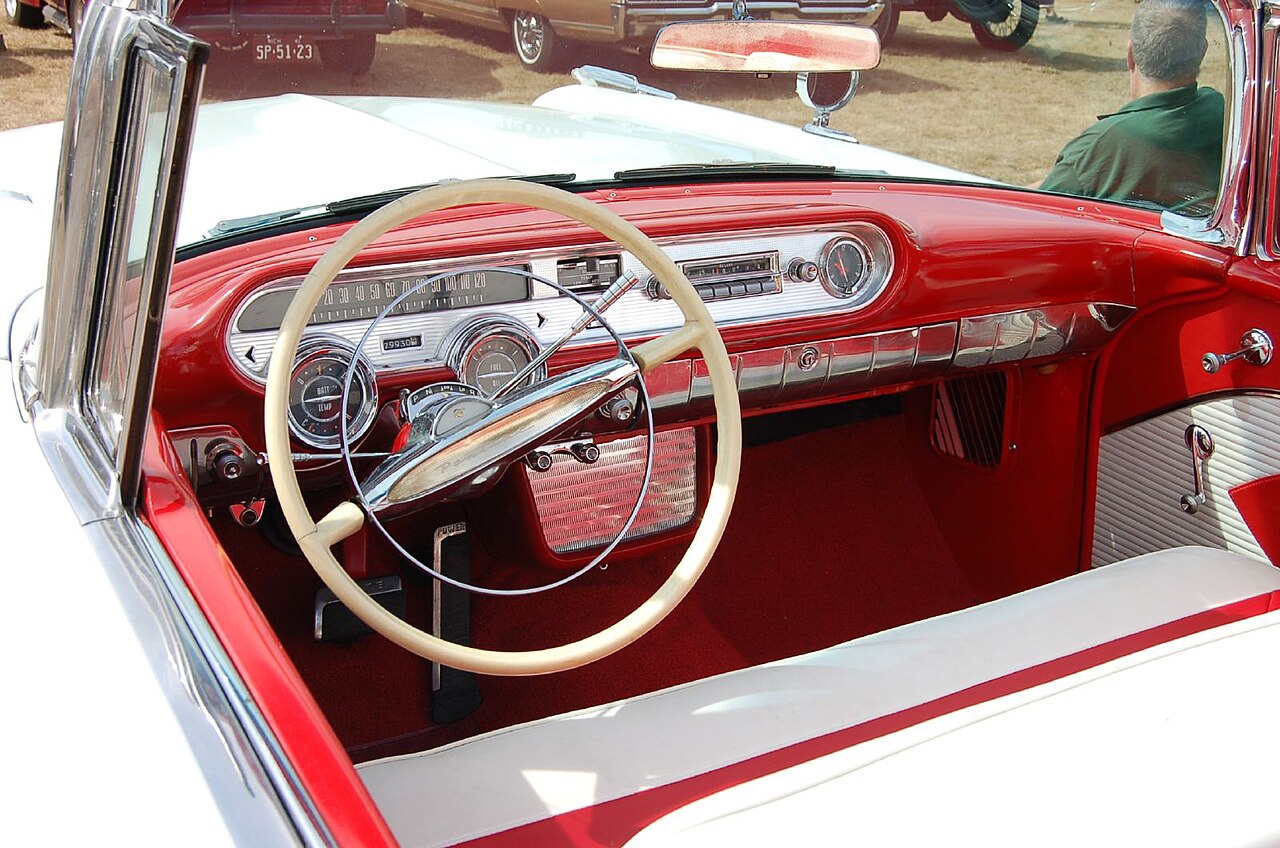
1966 was the Star Chief's last stand under its own name — Pontiac rebranded it Star Chief Executive that year, the first step toward quietly retiring a nameplate it now saw as dated.
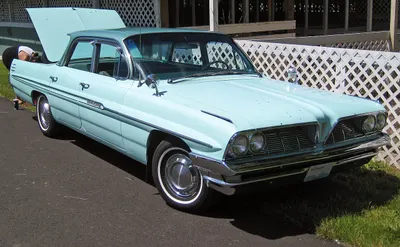
For 1962 Pontiac quietly offered the Star Chief a 405-horsepower 421 Super Duty V8 — an option so rare it was probably never actually ordered.
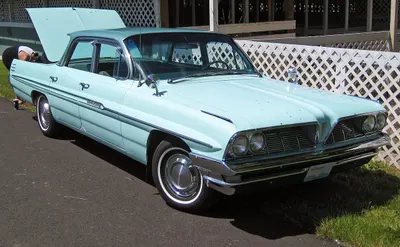
In 1959 the Star Chief — Pontiac's overlooked middle child, squeezed between the Catalina and Bonneville — still accounted for nearly 18% of every Pontiac sold.
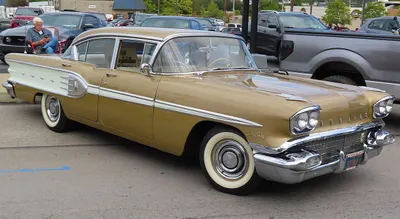
The 1958 Star Chief closed out a 25-year Pontiac tradition: this was the last year the brand’s signature "Silver Streak" hood styling appeared, after debuting all the way back in 1933.
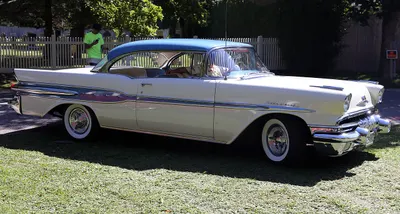
A red-on-white 1955 Star Chief convertible drove Lucy and Ricky to Hollywood on 'I Love Lucy' — one of early TV's most memorable car cameos.
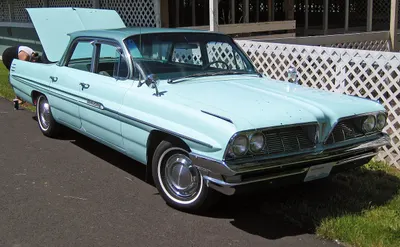
The debut Star Chief quietly made history: it was the first car in its price class to offer factory air conditioning with all the hardware packaged neatly under the hood.
Rivals
Same body, same money, other badges — tap any card to flip.

It briefly served as senior sibling to Marquette, a GM companion brand cancelled after just one year.

Nissan hired former BMW engineers to help develop the 510's suspension, which is why period reviewers frequently compared its handling to the BMW 1600/2002.

A Trabant 601 won its class at the 1970 Monte Carlo Rally, with a second 601 right behind it in second.

The 600 was a stopgap: the P50's body over the 601's mechanicals, and for a while its estate was built alongside the new 601 saloon.

The G80 Sport brought a 370 PS twin-turbo 3.3 V6, a mesh grille and copper-tinted chrome with copper stitching to match.

The Vigor was sold only with a five-cylinder engine, an unusual configuration Honda used to fit a longer engine transversely under a short hood.

The GS/E coupe earned the nickname "German Charger" for its long hood, short deck stance borrowed from Detroit muscle cars.

This DeVille/Fleetwood was the first production car anywhere to mount its V8 sideways, Cadillac's front-drive gamble on the new C-body.