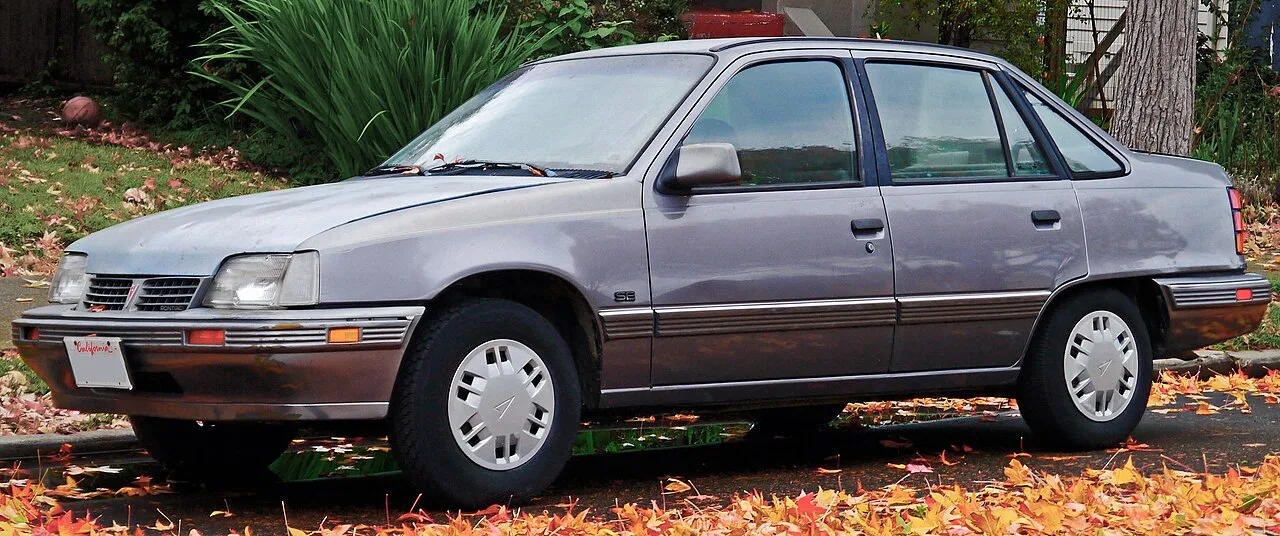
GM and Daewoo announced their joint LeMans factory in January 1984 — political turmoil in South Korea held the car up for four years before it reached American showrooms in 1988.
Lead trim: LeMans 1.6 L L73 I4 (74 hp at 5600 rpm, 1988) · up to 95 hp
Pontiac Lemans1988–1993
- 0spots by members
- Unclaimednobody has spotted one yet
- 0sets it belongs to
Nobody in Burbles has spotted a Pontiac Lemans yet. See one on the street, point the app at it, and the first card is yours — with your @handle permanently credited on this page.
FactGM and Daewoo announced their joint LeMans factory in January 1984 — political turmoil in South Korea held the car up for four years before it reached American showrooms in 1988.
From 1988 through 1993 the LeMans name was resurrected for a sixth generation: a front-wheel-drive subcompact badge-engineered from the Daewoo LeMans built in South Korea (GM T platform, related to the Opel Kadett E). For the 1988 model year Pontiac revived the nameplate in North America, replacing the Pontiac 1000 as the smallest Pontiac, with sales beginning in June 1987 as a captive import in three-door hatchback ("Aerocoupe") and four-door sedan body styles (also sold in Canada as the Passport Optima). The throttle-body-injected 1.6-litre four (an Opel design built in South Korea) produced 74 hp at 5,600 rpm in the introductory Value Leader, standard and SE trims; in February 1988 the sportier LeMans GSE Aerocoupe arrived with an Australian-built 95 hp 2.0 L four (max power at 4,800 rpm, throttle-body injected). A four-speed manual was standard, with a five-speed (standard on the SE) and a three-speed automatic optional. Wheelbase 2,520 mm (99.2 in), width 1,662 mm (65.4 in), height 1,393 mm (54.8 in).
Collectors Spotted in the Pontiac Lemans Lineage
No member has published a public street spot of the Pontiac Lemans yet — the First · Worldwide stamp is wide open.
Trims & Figures
2 published trims in the catalogue. A blank is a figure not recorded, not zero.
| Trim | Years | Engine | Power | Torque | 0–60 | Drive | Gearbox | MSRP |
|---|---|---|---|---|---|---|---|---|
| LeMans 1.6 L L73 I4 (74 hp at 5600 rpm, 1988) | 1988–1988 | 1.6 L Inline-4 | 74 hp | 90 lb-ft | — | FWD | — | — |
| LeMans GSE 2.0 L LT2 I4 (95 hp at 4800 rpm, 1988) | 1988–1988 | 2.0 L Inline-4 | 95 hp | 118 lb-ft | — | FWD | — | — |
Owning one
We don’t estimate running costs for a car like this. What it costs depends on its condition, its specialist and how it is driven, and an average would mislead.
Owners’ builds
Nobody has claimed one yet.
Photographs
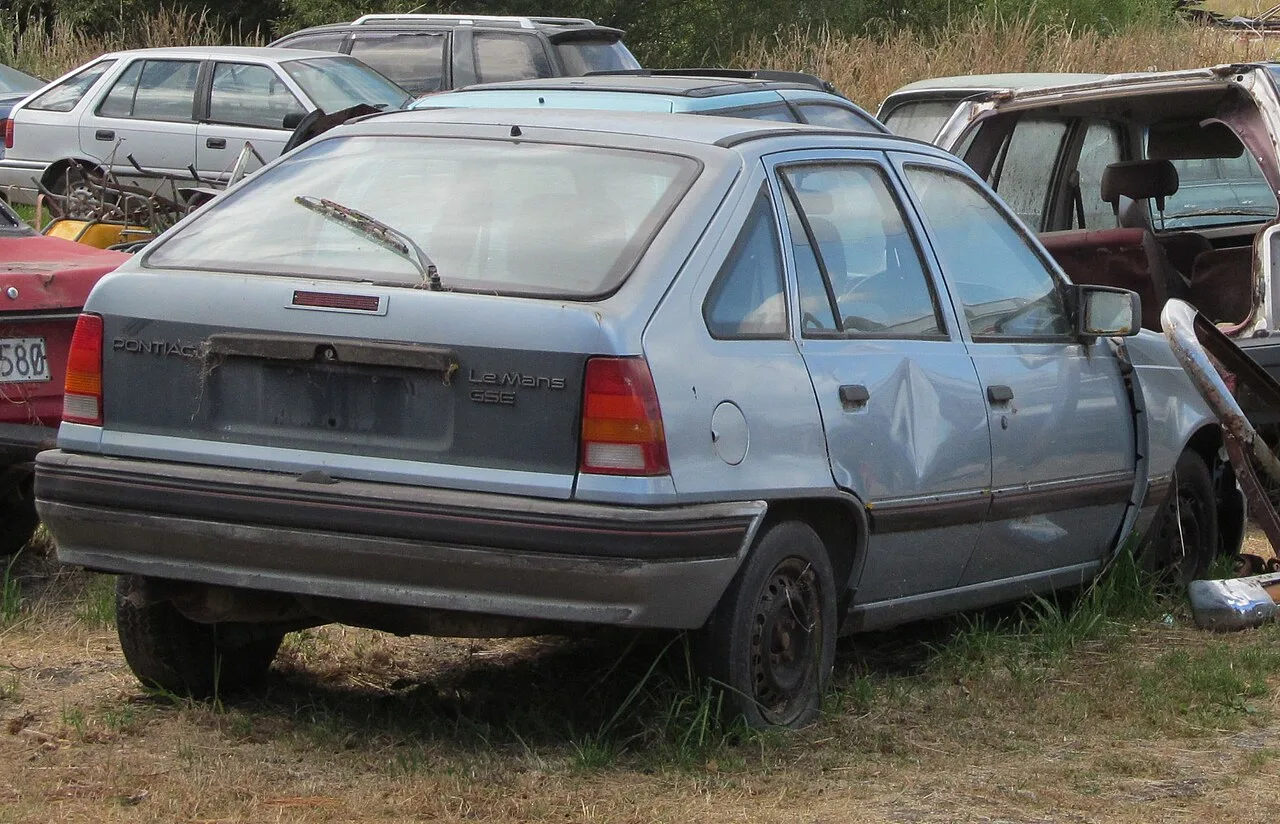
The Daewoo-built Pontiac LeMans wore three different badges depending where you bought it — Pontiac in the US, Passport Optima in Canada — and its five-speed gearbox was an Opel design built in Japan by Isuzu.
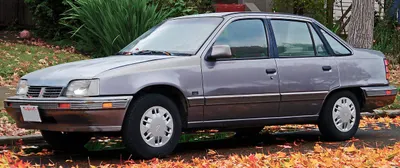
GM and Daewoo announced their joint LeMans factory in January 1984 — political turmoil in South Korea held the car up for four years before it reached American showrooms in 1988.
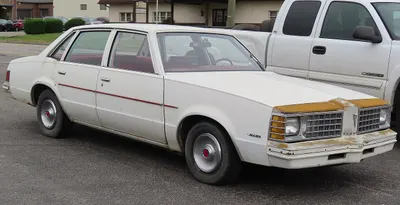
The 1978 downsizing that remade the LeMans cut 600 to 800 pounds off the car in a single model year — one of GM's most dramatic mid-size diets of the era.
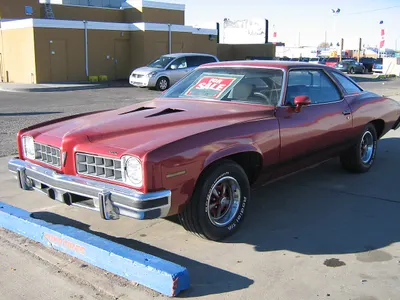
In 1977, Pontiac kept selling the old mid-size LeMans right alongside its all-new, smaller full-size Catalina and Bonneville — a deliberate hedge in case the radical downsizing flopped.
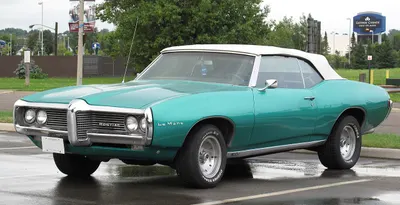
Pontiac's new 350 V8 wasn't designed from a blank sheet — it was stitched together from three existing engines, borrowing the 389/400/326's crank stroke and stretching the 326's bore to get there.
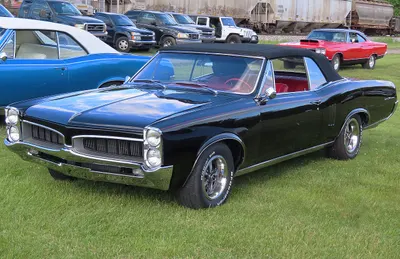
The overhead-cam six under this LeMans's hood was John DeLorean's idea, years before he left to build his own stainless-steel sports car.
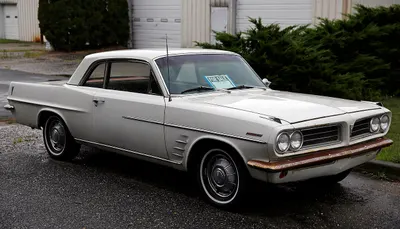
The first Pontiac LeMans put its transmission out back next to a four-wheel independent suspension, chasing near-50/50 weight balance on a compact nobody remembers as a handler.
Rivals
Same body, same money, other badges — tap any card to flip.

It briefly served as senior sibling to Marquette, a GM companion brand cancelled after just one year.

Nissan hired former BMW engineers to help develop the 510's suspension, which is why period reviewers frequently compared its handling to the BMW 1600/2002.

A Trabant 601 won its class at the 1970 Monte Carlo Rally, with a second 601 right behind it in second.

The 600 was a stopgap: the P50's body over the 601's mechanicals, and for a while its estate was built alongside the new 601 saloon.

The G80 Sport brought a 370 PS twin-turbo 3.3 V6, a mesh grille and copper-tinted chrome with copper stitching to match.

The Vigor was sold only with a five-cylinder engine, an unusual configuration Honda used to fit a longer engine transversely under a short hood.

The GS/E coupe earned the nickname "German Charger" for its long hood, short deck stance borrowed from Detroit muscle cars.

This DeVille/Fleetwood was the first production car anywhere to mount its V8 sideways, Cadillac's front-drive gamble on the new C-body.