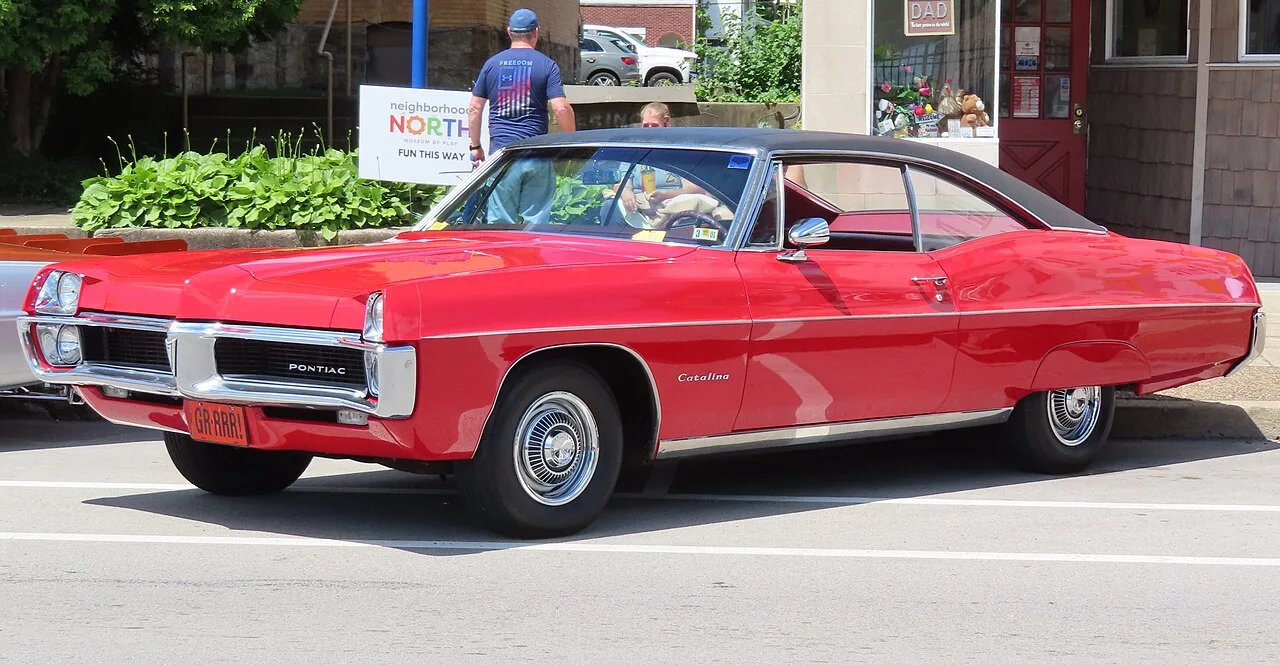
Did you know the 1967 Catalina hid an industry first behind its windshield? Its concealed windshield wipers were the first of their kind on any car.
Lead trim: Catalina 350 V8 (255 hp, 1970) · up to 290 hp
Pontiac Catalina1965–1970
- 0spots by members
- Unclaimednobody has spotted one yet
- 0sets it belongs to
Nobody in Burbles has spotted a Pontiac Catalina yet. See one on the street, point the app at it, and the first card is yours — with your @handle permanently credited on this page.
FactDid you know the 1967 Catalina hid an industry first behind its windshield? Its concealed windshield wipers were the first of their kind on any car.
The third-generation Catalina (1965–1970) was completely restyled for 1965 with more flowing "Coke-bottle" sheetmetal and fastback rooflines on two-door hardtops, on a 121 in wheelbase (1965–68) and 122 in (1969–70), 214.6 in long. It was available with GM's three-speed Turbo Hydramatic 400 transmission and a range of V8s: the 389 and 421 (1965–66), the new 400 and 428 (from 1967) and the 350 and 455 (1970). In 1965 the standard 389 two-barrel was rated at 256 hp with the base three-speed manual (8.6 to 1 compression) or 290 hp with Turbo Hydramatic (10.5 to 1); engine offerings stayed the same for 1966, and the 1967 standard engine was a two-barrel 400 at 265 hp with the manual or 290 hp with Turbo Hydramatic (265 hp regular-fuel version as a no-cost option). The 1967 model got concealed windshield wipers (an industry first) and all the US Government-mandated safety equipment; for 1969 the 290 hp 400 two-barrel was the standard engine, and for 1970 sedans and coupes came standard with a 255 hp 350 cubic-inch V8, with 400s and the new 455 (360 hp, or 370 hp "HO") optional. The Pontiac 2+2 became a separate performance package/series within this generation. The page notes the 1965–70 GM B platform is the fourth best selling automobile platform in history.
Collectors Spotted in the Pontiac Catalina Lineage
No member has published a public street spot of the Pontiac Catalina yet — the First · Worldwide stamp is wide open.
Trims & Figures
4 published trims in the catalogue. A blank is a figure not recorded, not zero.
| Trim | Years | Engine | Power | Torque | 0–60 | Drive | Gearbox | MSRP |
|---|---|---|---|---|---|---|---|---|
| Catalina 350 V8 (255 hp, 1970) | 1970–1970 | 5.7 L V8 | 255 hp | 355 lb-ft | — | RWD | — | — |
| Catalina 389 V8 (256 hp, 2-barrel, manual) | 1965–1966 | 6.4 L V8 | 256 hp | 388 lb-ft | — | RWD | — | — |
| Catalina 400 V8 (265 hp, 2-barrel, manual, 1967) | 1967–1967 | 6.6 L V8 | 265 hp | 397 lb-ft | — | RWD | — | — |
| Catalina 400 V8 (290 hp, 2-barrel, 1969) | 1969–1969 | 6.6 L V8 | 290 hp | 428 lb-ft | — | RWD | — | — |
Owning one
We don’t estimate running costs for a car like this. What it costs depends on its condition, its specialist and how it is driven, and an average would mislead.
Owners’ builds
Nobody has claimed one yet.
Photographs
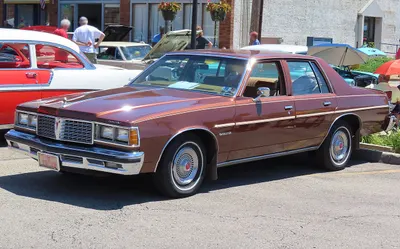
California banned Pontiac's own V8s the very year this generation launched — so every Catalina sold there ran a Chevy, Buick, or Olds engine instead.
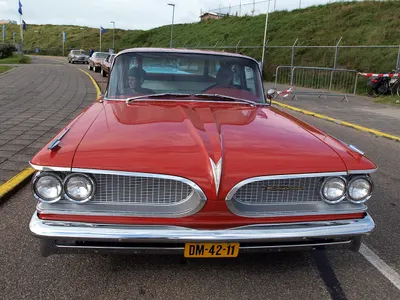
1975 marked the end of an era for Pontiac -- the Grand Ville Brougham was the brand's last full-size convertible, and Pontiac wouldn't build another until 1982.
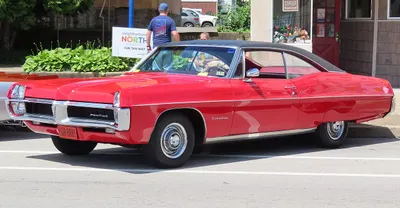
When the 2+2 went from trim package to full performance model in 1965, Pontiac didn't mess around — the 421-cubic-inch V8 became the BASE engine, with up to 376 hp on tap.
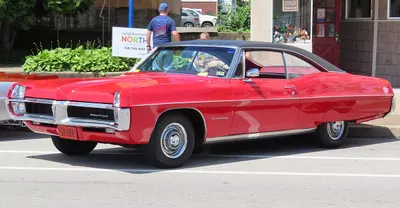
Did you know the 1967 Catalina hid an industry first behind its windshield? Its concealed windshield wipers were the first of their kind on any car.
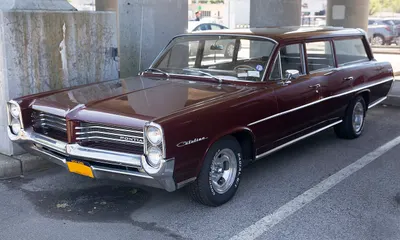
Bucket seats, heavy-duty suspension, and real performance intent — the 1964 2+2 package cost just $291 on top of a base Catalina.
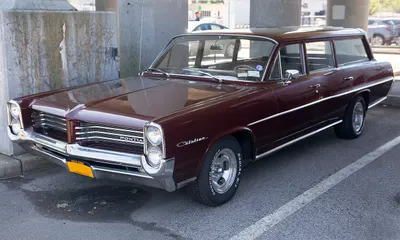
A 1963 Catalina convertible, hot-rodded by Californian Bill Straub, became NASA's tow vehicle for the M2-F1 — the ungainly lifting-body aircraft that helped pioneer the Space Shuttle's landing technique.
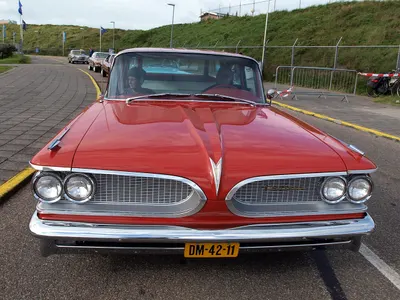
The 1959 Catalina's split grille wasn't planned — designers cut a conventional oval grille in half and swapped the pieces while experimenting, and the accident became iconic.
Rivals
Same body, same money, other badges — tap any card to flip.

It briefly served as senior sibling to Marquette, a GM companion brand cancelled after just one year.

Nissan hired former BMW engineers to help develop the 510's suspension, which is why period reviewers frequently compared its handling to the BMW 1600/2002.

A Trabant 601 won its class at the 1970 Monte Carlo Rally, with a second 601 right behind it in second.

The 600 was a stopgap: the P50's body over the 601's mechanicals, and for a while its estate was built alongside the new 601 saloon.

The G80 Sport brought a 370 PS twin-turbo 3.3 V6, a mesh grille and copper-tinted chrome with copper stitching to match.

The Vigor was sold only with a five-cylinder engine, an unusual configuration Honda used to fit a longer engine transversely under a short hood.

The GS/E coupe earned the nickname "German Charger" for its long hood, short deck stance borrowed from Detroit muscle cars.

This DeVille/Fleetwood was the first production car anywhere to mount its V8 sideways, Cadillac's front-drive gamble on the new C-body.