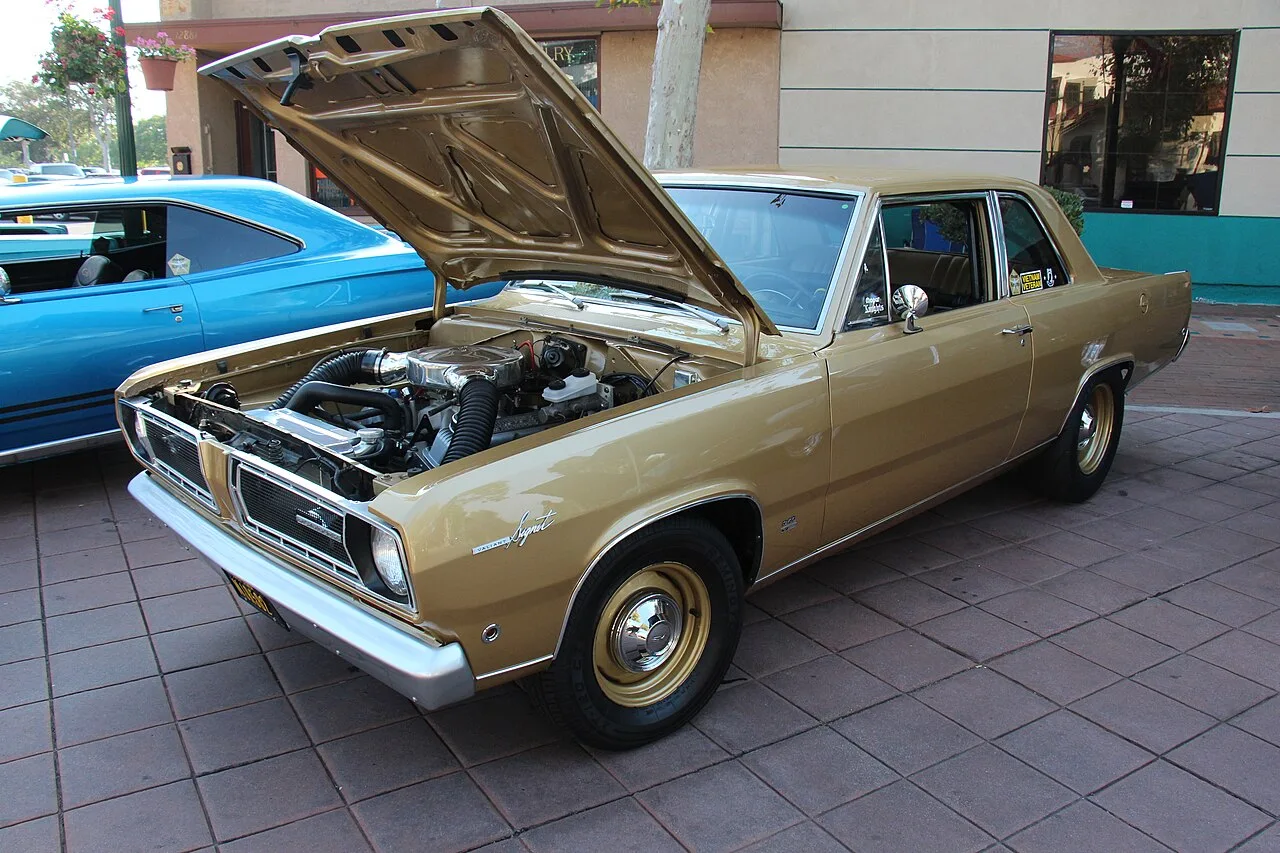
The redesigned 1967 Valiant dropped wagons, hardtops and convertibles down to sedans only — anyone wanting the coupe thrill just bought the Barracuda, which was secretly the same car in a sportier suit.
Median 108 hp across 326 similar cars
Lead trim: Valiant 170 LG Slant-6 I6 (115 bhp) · up to 230 hp
Plymouth ValiantVALIANT-1967 · 1967–1973
- 0spots by members
- Unclaimednobody has spotted one yet
- 0sets it belongs to
Nobody in Burbles has spotted a Plymouth Valiant yet. See one on the street, point the app at it, and the first card is yours — with your @handle permanently credited on this page.
FactThe redesigned 1967 Valiant dropped wagons, hardtops and convertibles down to sedans only — anyone wanting the coupe thrill just bought the Barracuda, which was secretly the same car in a sportier suit.
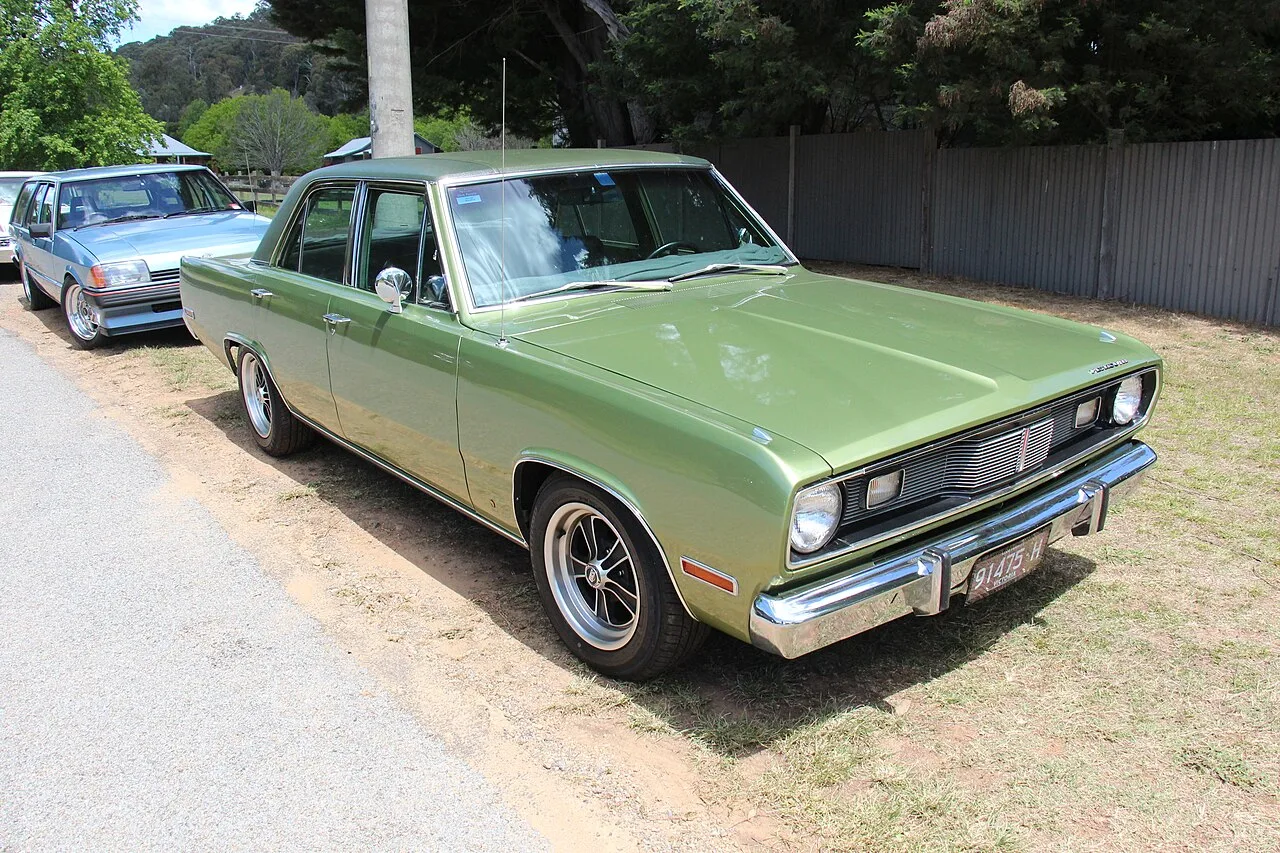
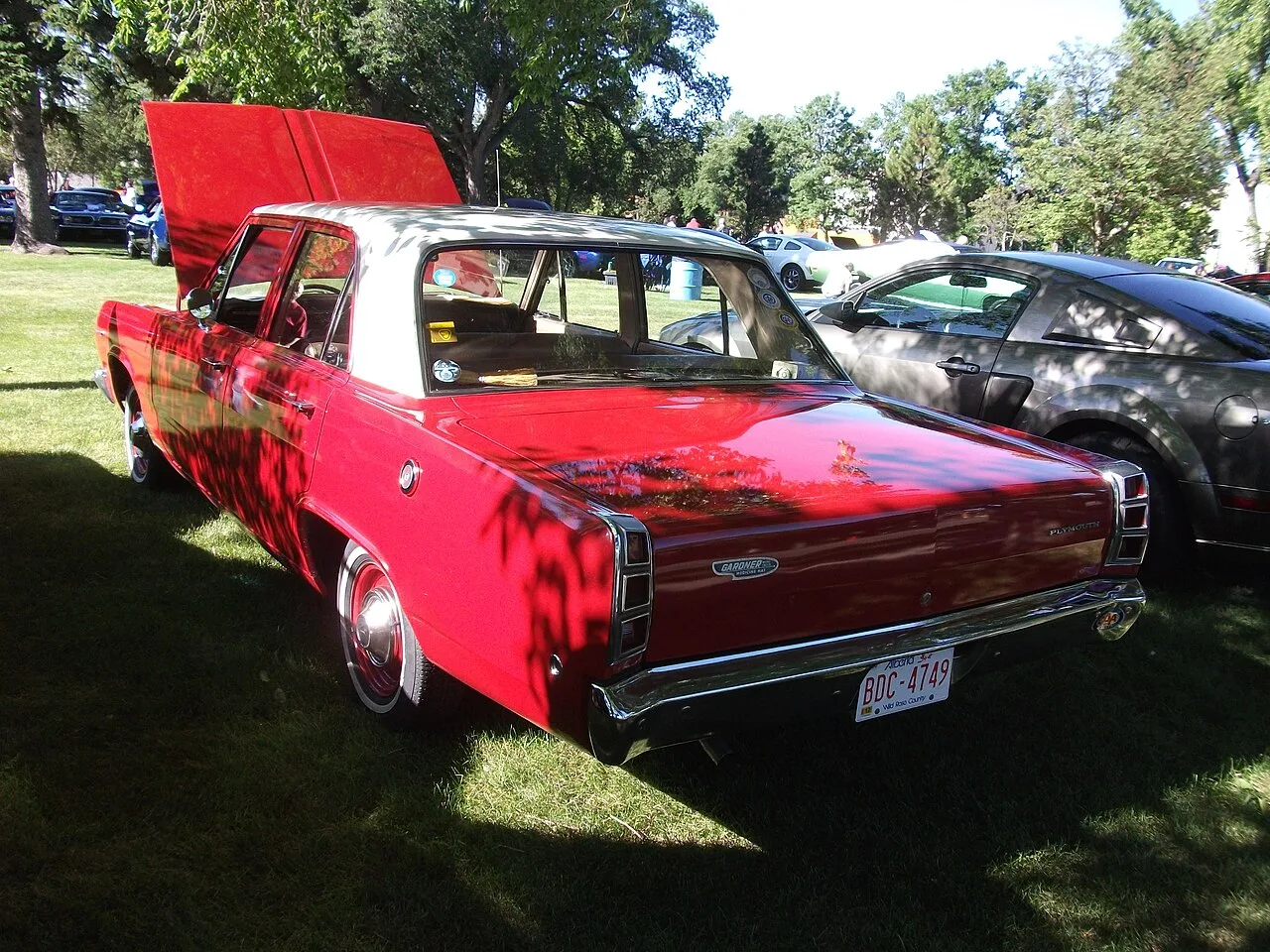
The Valiant was completely redesigned for the 1967 model year and the station wagons, hardtops and convertibles were dropped (buyers who wanted a Valiant-type hardtop or convertible could choose the similarly styled Barracuda); the new range was two- and four-door sedans on a newly lengthened 108 in (2,743 mm) wheelbase with a straightforward rectilinear design, vertically split grille and vertical fanned taillights. The 170 cu in (2.8 L) Slant-6 was raised from 101 bhp to 115 bhp for 1967 with the slightly bigger camshaft introduced on the 225 in 1965 and larger-throttle-bore carburetors; federally mandated safety equipment was provided on all 1967s. The 318 cu in (5.2 L), 230 bhp V8 was a Valiant option for the first time in 1968; for 1970 the two-door sedan was dropped in favour of the new Duster coupé and, for all except export Valiants, the base 170 was replaced by a new 198 cu in (3.2 L) slant-six that gave better performance and used the same block as the 225. The 1971 Valiant set sales records (256,930 calendar year deliveries) and from 1971 a badge-engineered Dodge Dart Swinger two-door hardtop was offered as the "Valiant Scamp" on a 111 in wheelbase; 1972 was the Valiant's best year with 330,373 sold, and for 1973 all models got 5 mph bumpers and side-impact door beams while the engines were progressively detuned for emissions. Through the early 1970s the Valiant took more than 40% of Plymouth's total sales. Engines: 170, 198 and 225 cu in Slant-6, 273 and 318 cu in LA V8s; wheelbase 108.0 in, Scamp 111.0 in.
Collectors Spotted in the Plymouth Valiant Lineage
No member has published a public street spot of the Plymouth Valiant yet — the First · Worldwide stamp is wide open.
Trims & Figures
5 published trims in the catalogue. A blank is a figure not recorded, not zero.
| Trim | Years | Engine | Power | Torque | 0–60 | Drive | Gearbox | MSRP |
|---|---|---|---|---|---|---|---|---|
| Valiant 170 LG Slant-6 I6 (115 bhp) | 1967–1969 | 2.8 L Inline-6 | 115 hp | — | — | RWD | — | — |
| Valiant 198 RG Slant-6 I6 (from 1970) | 1970–1973 | 3.2 L Inline-6 | — | — | — | RWD | — | — |
| Valiant 225 RG Slant-6 I6 | 1967–1973 | 3.7 L Inline-6 | — | — | — | RWD | — | — |
| Valiant 273 LA V8 | 1967–1973 | 4.5 L V8 | 180 hp | 260 lb-ft | — | RWD | — | — |
| Valiant 318 LA V8 (230 bhp, from 1968) | 1968–1973 | 5.2 L V8 | 230 hp | 320 lb-ft | — | RWD | — | — |
Owning one
We don’t estimate running costs for a car like this. What it costs depends on its condition, its specialist and how it is driven, and an average would mislead.
Owners’ builds
Nobody has claimed one yet.
Photographs
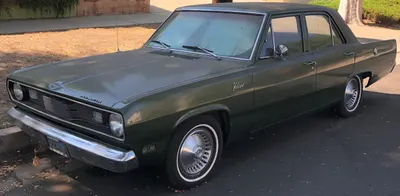
In 1976 Chrysler sold cop-spec Valiants with a 360 V8 police package that ran the quarter-mile in 16.4 seconds — fast enough to catch nearly any muscle car still on sale that year.
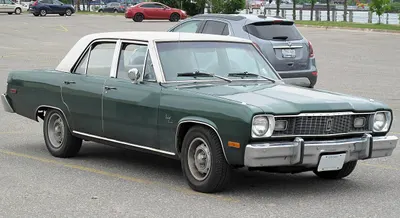
By 1974 the Valiant sedan wasn't really its own car anymore — Plymouth simply rebadged the Dodge Dart, leaving only minor cosmetic differences between the two nameplates.
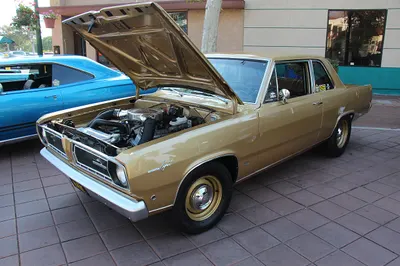
The redesigned 1967 Valiant dropped wagons, hardtops and convertibles down to sedans only — anyone wanting the coupe thrill just bought the Barracuda, which was secretly the same car in a sportier suit.
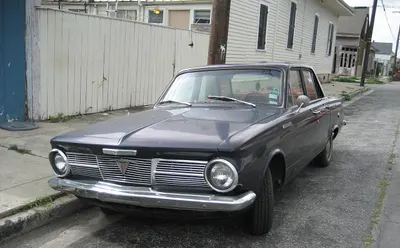
This Valiant's platform beat the Mustang to the punch — the Barracuda, built on the Valiant's wheelbase, hood and windshield, reached showrooms two weeks before Ford's pony car, in April 1964.
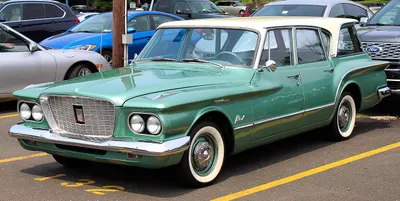
The Valiant's grille was cast in aluminum instead of the usual zinc die-casting — shaving the whole assembly down to 3 pounds, a quarter the weight rivals carried up front.
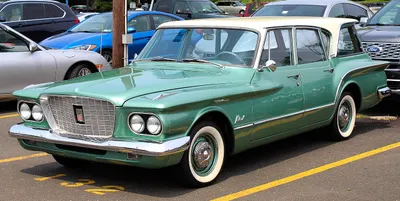
Seven Hyper-Pak Valiants entered NASCAR's 1960 compact-car race at Daytona and swept first through seventh. NASCAR never ran that race again.
Rivals
Same body, same money, other badges — tap any card to flip.

It briefly served as senior sibling to Marquette, a GM companion brand cancelled after just one year.

Nissan hired former BMW engineers to help develop the 510's suspension, which is why period reviewers frequently compared its handling to the BMW 1600/2002.

A Trabant 601 won its class at the 1970 Monte Carlo Rally, with a second 601 right behind it in second.

The 600 was a stopgap: the P50's body over the 601's mechanicals, and for a while its estate was built alongside the new 601 saloon.

The G80 Sport brought a 370 PS twin-turbo 3.3 V6, a mesh grille and copper-tinted chrome with copper stitching to match.

The Vigor was sold only with a five-cylinder engine, an unusual configuration Honda used to fit a longer engine transversely under a short hood.

The GS/E coupe earned the nickname "German Charger" for its long hood, short deck stance borrowed from Detroit muscle cars.

This DeVille/Fleetwood was the first production car anywhere to mount its V8 sideways, Cadillac's front-drive gamble on the new C-body.