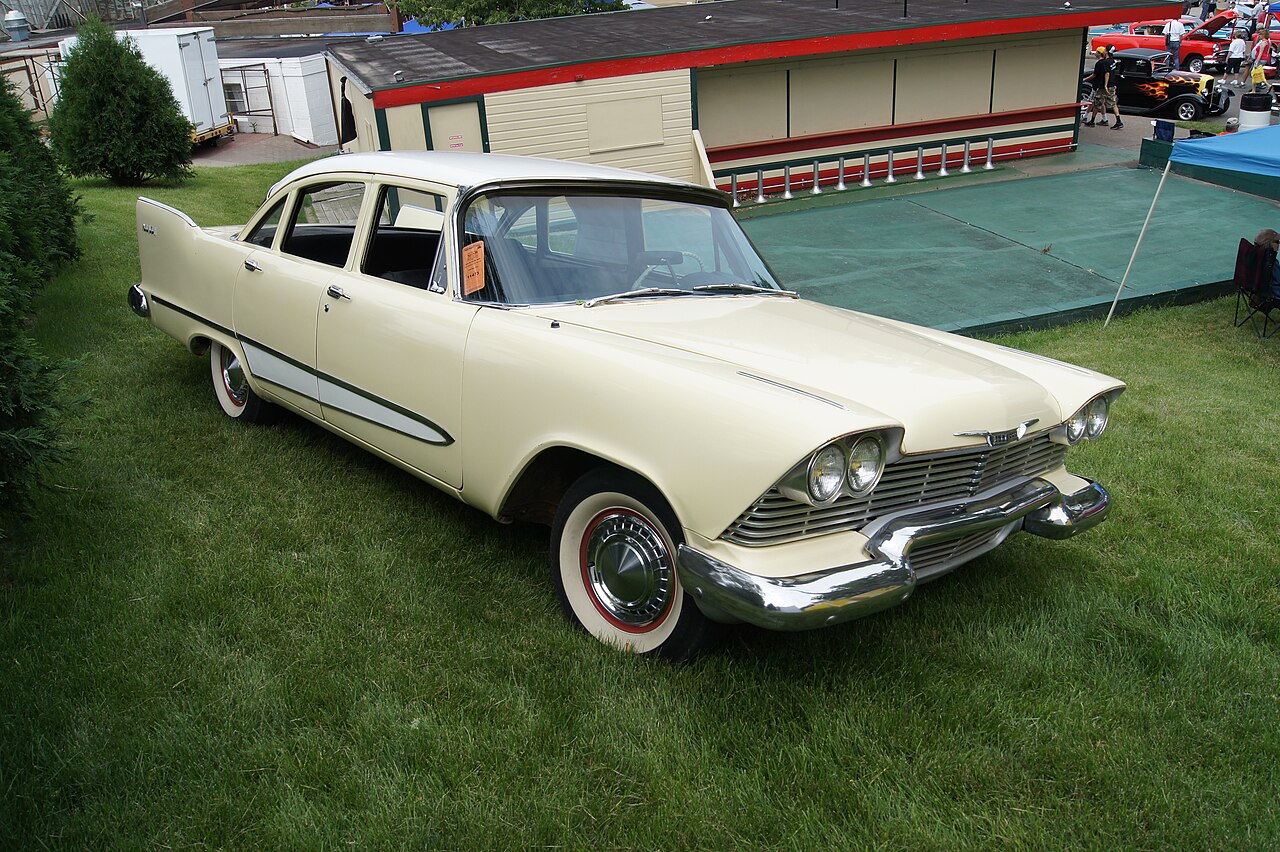
The 1958 Business Coupe deleted the rear seat as an option, Plymouth's cheapest car built mainly to be a fleet special, not a family car.
Lead trim: Plaza
Plymouth Plaza1954–1958
- 0spots by members
- Unclaimednobody has spotted one yet
- 0sets it belongs to
Nobody in Burbles has spotted a Plymouth Plaza yet. See one on the street, point the app at it, and the first card is yours — with your @handle permanently credited on this page.
FactThe 1958 Business Coupe deleted the rear seat as an option, Plymouth's cheapest car built mainly to be a fleet special, not a family car.
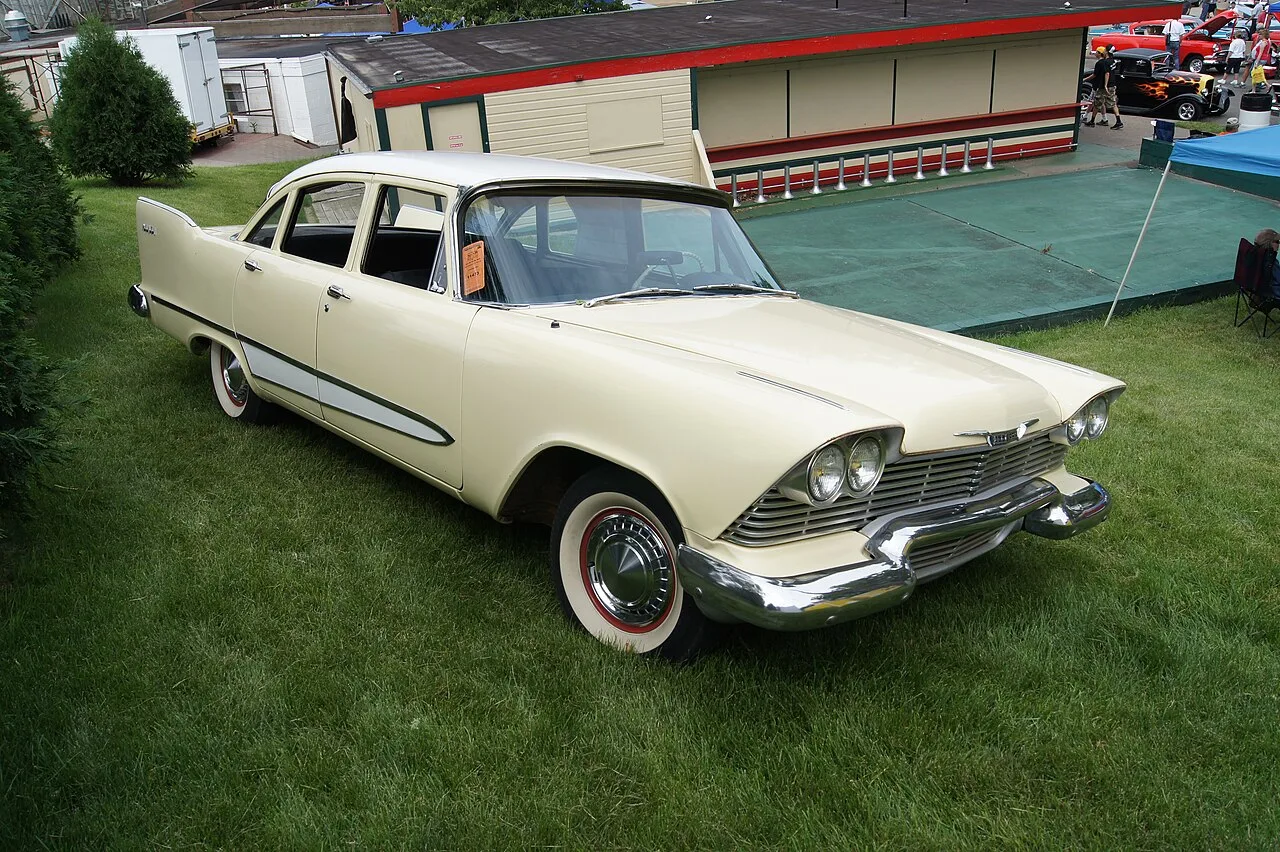
The Plymouth Plaza was produced by Plymouth from 1954 through the 1958 model year as Plymouth's entry-level car, priced under the Savoy and known as Plymouth's "Price Leader" (Dodge Kingsway in Canada), offered as a sedan, coupe and wagon (2-door sedan, 4-door sedan, 2-door coupé, 2-door and 4-door station wagons) on a 115.0 in wheelbase. In 1958 the Plaza offered the widest choice of options to date, with options formerly reserved for higher-priced lines available for the first time; the Business Coupe was Plymouth's least produced model of 1958 (1,472 units), differing from the regular 2-door Club Sedan in that the rear seat was an optional accessory, and Plymouth added a "Silver Special" (a Plaza Club Sedan with silver roof and Sportone inserts, a short stainless steel spear on the front fenders and "Forward Look" emblems on the fins; 94,728 Plazas were produced in 1958). With minimal trim, plain cloth-and-vinyl upholstery and limited options its appeal was mainly to fleet buyers such as police departments, though it was available to budget-conscious consumers wanting a full-size car with a V8 and automatic. For 1959 Plymouth discontinued the Plaza and moved the Savoy name down to its entry-level model. The page lists the engines as 241 and 240 cu in (3.9 L) V8s, a 260 cu in (4.3 L) V8, and 251 (4.1 L) and 230 cu in (3.8 L) sixes without years or ratings.
Collectors Spotted in the Plymouth Plaza Lineage
No member has published a public street spot of the Plymouth Plaza yet — the First · Worldwide stamp is wide open.
Trims & Figures
One published trim in the catalogue. A blank is a figure not recorded, not zero.
| Trim | Years | Engine | Power | Torque | 0–60 | Drive | Gearbox | MSRP |
|---|---|---|---|---|---|---|---|---|
| Plaza | 1954–1958 | — | — | — | — | RWD | — | — |
Owning one
We don’t estimate running costs for a car like this. What it costs depends on its condition, its specialist and how it is driven, and an average would mislead.
Owners’ builds
Nobody has claimed one yet.
Photographs
Rivals
Same body, same money, other badges — tap any card to flip.

It briefly served as senior sibling to Marquette, a GM companion brand cancelled after just one year.

Nissan hired former BMW engineers to help develop the 510's suspension, which is why period reviewers frequently compared its handling to the BMW 1600/2002.

A Trabant 601 won its class at the 1970 Monte Carlo Rally, with a second 601 right behind it in second.

The 600 was a stopgap: the P50's body over the 601's mechanicals, and for a while its estate was built alongside the new 601 saloon.

The G80 Sport brought a 370 PS twin-turbo 3.3 V6, a mesh grille and copper-tinted chrome with copper stitching to match.

The Vigor was sold only with a five-cylinder engine, an unusual configuration Honda used to fit a longer engine transversely under a short hood.

The GS/E coupe earned the nickname "German Charger" for its long hood, short deck stance borrowed from Detroit muscle cars.

This DeVille/Fleetwood was the first production car anywhere to mount its V8 sideways, Cadillac's front-drive gamble on the new C-body.