Greek-market 304 saloons got a smaller 1127 cc engine solely to duck under a 1,200 cc local tax threshold.
Lead trim: Break / Fourgonette 1.1 XK5 (59 hp) · up to 75 hp
Peugeot 3041969–1980
- 0spots by members
- Unclaimednobody has spotted one yet
- 0sets it belongs to
Nobody in Burbles has spotted a Peugeot 304 yet. See one on the street, point the app at it, and the first card is yours — with your @handle permanently credited on this page.
FactGreek-market 304 saloons got a smaller 1127 cc engine solely to duck under a 1,200 cc local tax threshold.
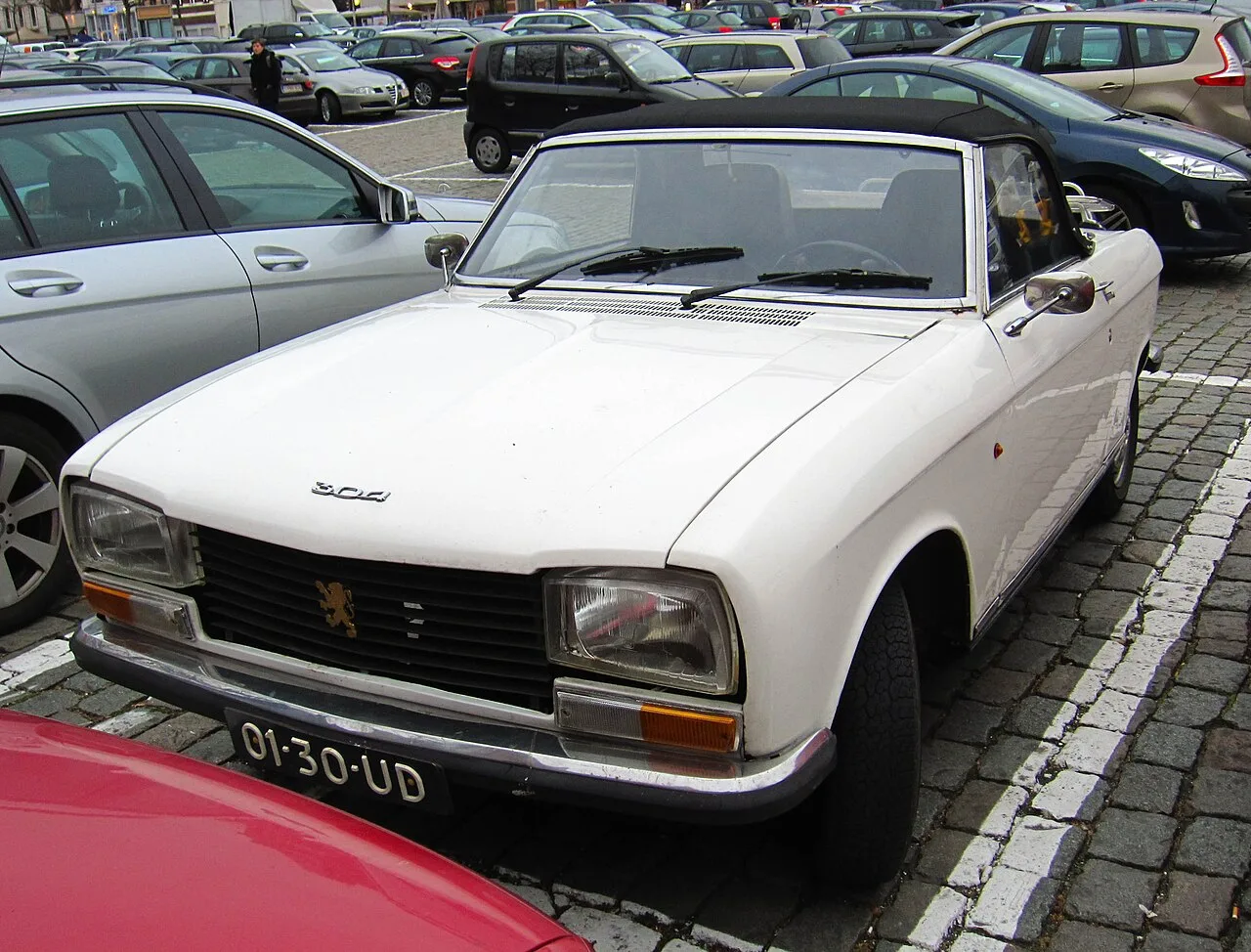
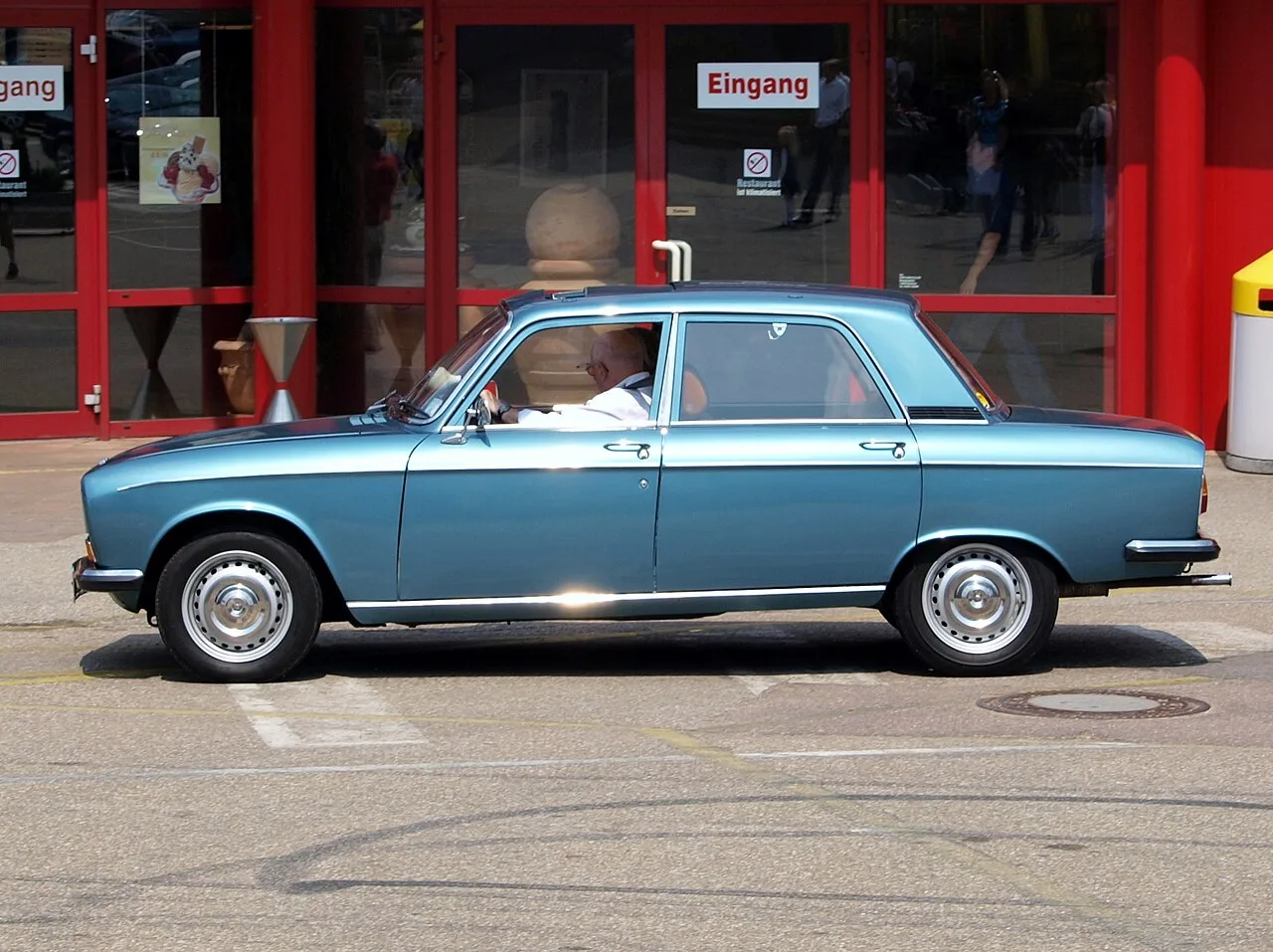
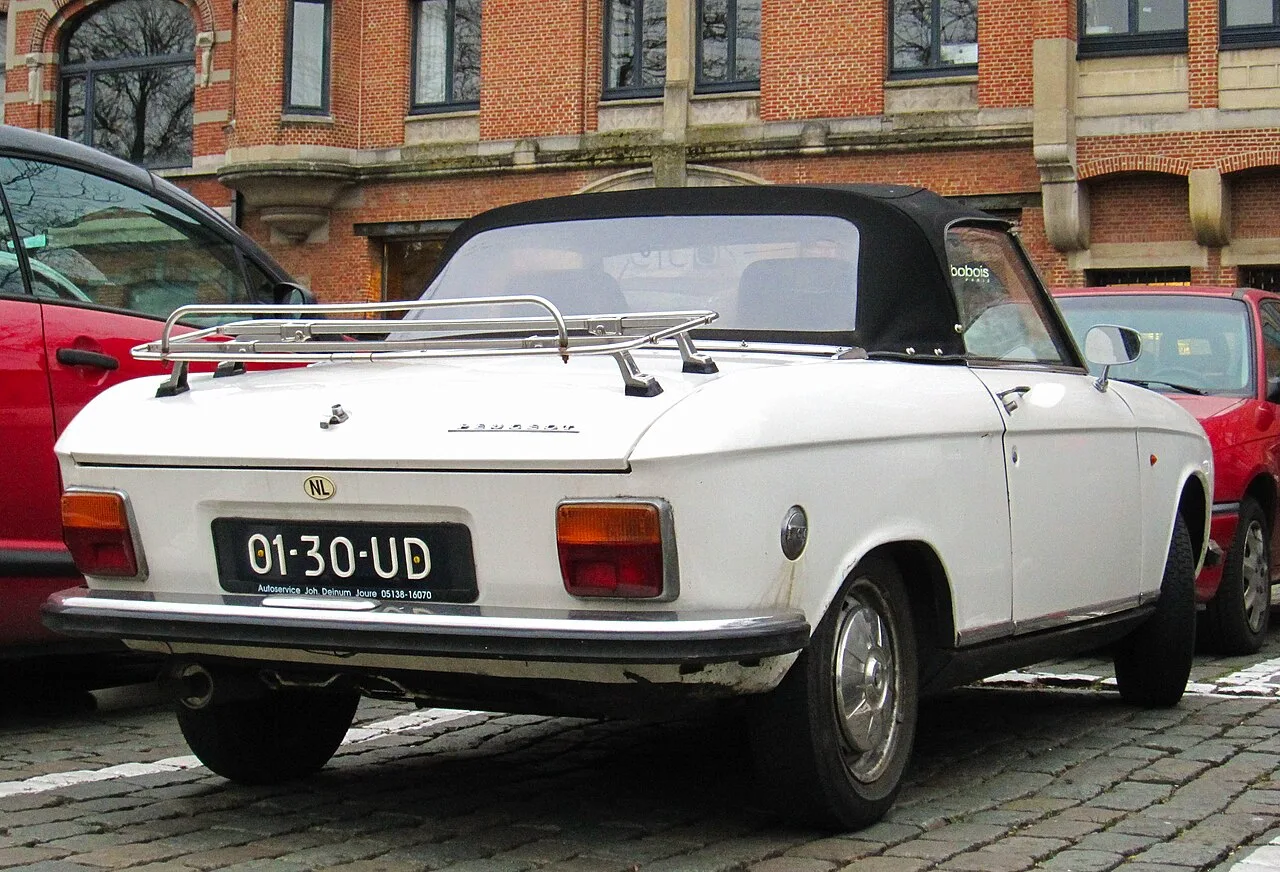
Introduced at the Paris Motor Show in September 1969, drawn by Aldo Brovarone at Pininfarina and built on the 204's body and mechanicals with its all-alloy SOHC transverse engine, front-wheel drive, four-speed gearbox and front discs. It sat in the 7CV tax band, one step above the 204. Body styles were a four-door saloon, an estate (Break), a 3-door coupé, a cabriolet and a van (Fourgonette). Peugeot built 1,178,423. The launch 1,288 cc XL3 gave 65 hp DIN; the twin-choke XL3S added 10 hp (75 hp) on the coupé and cabriolet from March 1972 and on the saloon that autumn, and a 1975 revision brought the 1,290 cc XL5/XL5S. The 6CV Break and Fourgonette with the 204's 1127 cc XK5 came at the 1976 Paris show, along with diesels of 1,357 and 1,548 cc. In Greece the saloon used the 204's 1,130 cc engine to stay under a 1,200 cc tax threshold, and US-market engines had a lower compression ratio. The 305 replaced it; the saloon ended in summer 1979 and the Break in spring 1980.
Collectors Spotted in the Peugeot 304 Lineage
No member has published a public street spot of the Peugeot 304 yet — the First · Worldwide stamp is wide open.
Trims & Figures
6 published trims in the catalogue. A blank is a figure not recorded, not zero.
| Trim | Years | Engine | Power | Torque | 0–60 | Drive | Gearbox | MSRP |
|---|---|---|---|---|---|---|---|---|
| 1.3 XL3 (65 hp) | 1969–1975 | 1.3 L Inline-4 | 65 hp | 69.5 lb-ft | — | FWD | — | — |
| 1.3 XL3S twin-choke (75 hp) | 1972–1975 | 1.3 L Inline-4 | 75 hp | 74 lb-ft | — | FWD | — | — |
| 1.3 XL5 (65 hp) | 1975–1980 | 1.3 L Inline-4 | 65 hp | 69.5 lb-ft | — | FWD | — | — |
| 1.4 XL4D diesel (45 hp) | 1976–1980 | 1.4 L Inline-4 | 45 hp | 57 lb-ft | — | FWD | — | — |
| 1.5 XIDL diesel (47 hp) | 1979–1980 | 1.5 L Inline-4 | 47 hp | 63 lb-ft | — | FWD | — | — |
| Break / Fourgonette 1.1 XK5 (59 hp) | 1976–1980 | 1.1 L Inline-4 | 59 hp | 59.3 lb-ft | — | FWD | — | — |
Owning one
We don’t estimate running costs for a car like this. What it costs depends on its condition, its specialist and how it is driven, and an average would mislead.
Owners’ builds
Nobody has claimed one yet.
Photographs
Rivals
Same body, same money, other badges — tap any card to flip.

It briefly served as senior sibling to Marquette, a GM companion brand cancelled after just one year.

Nissan hired former BMW engineers to help develop the 510's suspension, which is why period reviewers frequently compared its handling to the BMW 1600/2002.

A Trabant 601 won its class at the 1970 Monte Carlo Rally, with a second 601 right behind it in second.

The 600 was a stopgap: the P50's body over the 601's mechanicals, and for a while its estate was built alongside the new 601 saloon.

The G80 Sport brought a 370 PS twin-turbo 3.3 V6, a mesh grille and copper-tinted chrome with copper stitching to match.

The Vigor was sold only with a five-cylinder engine, an unusual configuration Honda used to fit a longer engine transversely under a short hood.

The GS/E coupe earned the nickname "German Charger" for its long hood, short deck stance borrowed from Detroit muscle cars.

This DeVille/Fleetwood was the first production car anywhere to mount its V8 sideways, Cadillac's front-drive gamble on the new C-body.