Peugeot let visitors to its 1937 Paris stand vote on what the small car should be, then built the 202 from the results.
Lead trim: 202 Berline 1.1 (1133 cc, 30 PS)
Peugeot 2021938–1949
- 0spots by members
- Unclaimednobody has spotted one yet
- 0sets it belongs to
Nobody in Burbles has spotted a Peugeot 202 yet. See one on the street, point the app at it, and the first card is yours — with your @handle permanently credited on this page.
FactPeugeot let visitors to its 1937 Paris stand vote on what the small car should be, then built the 202 from the results.
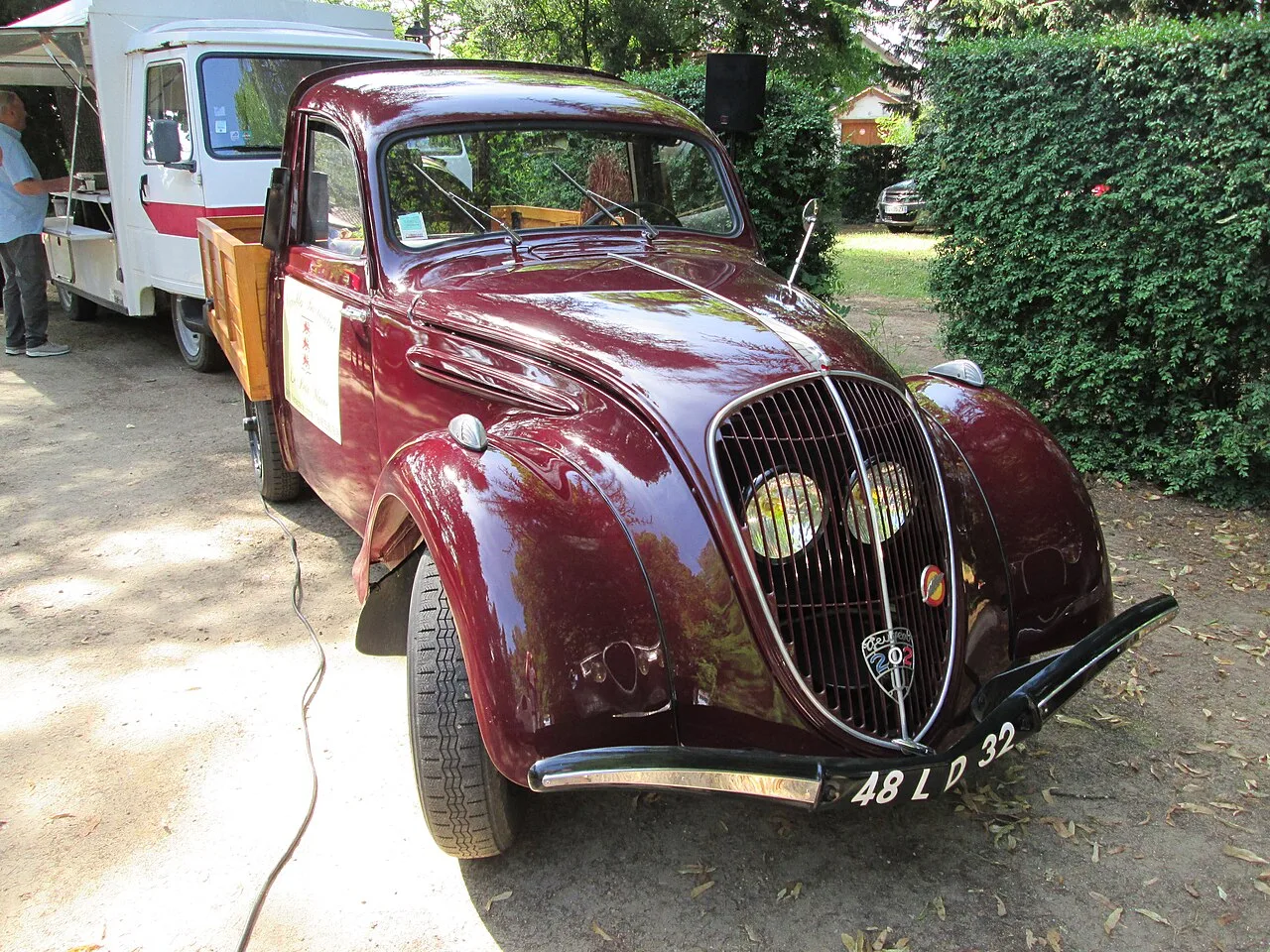
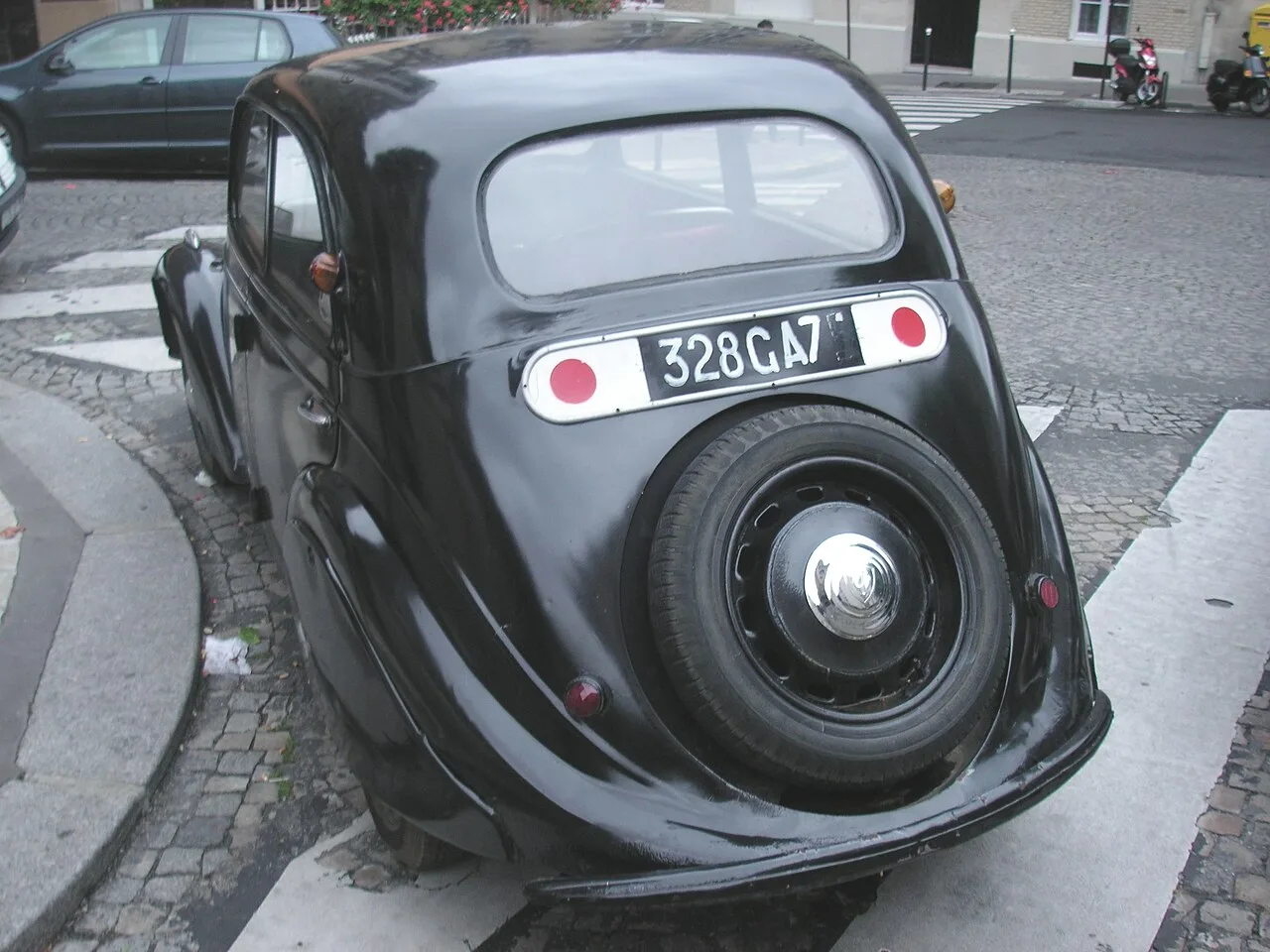
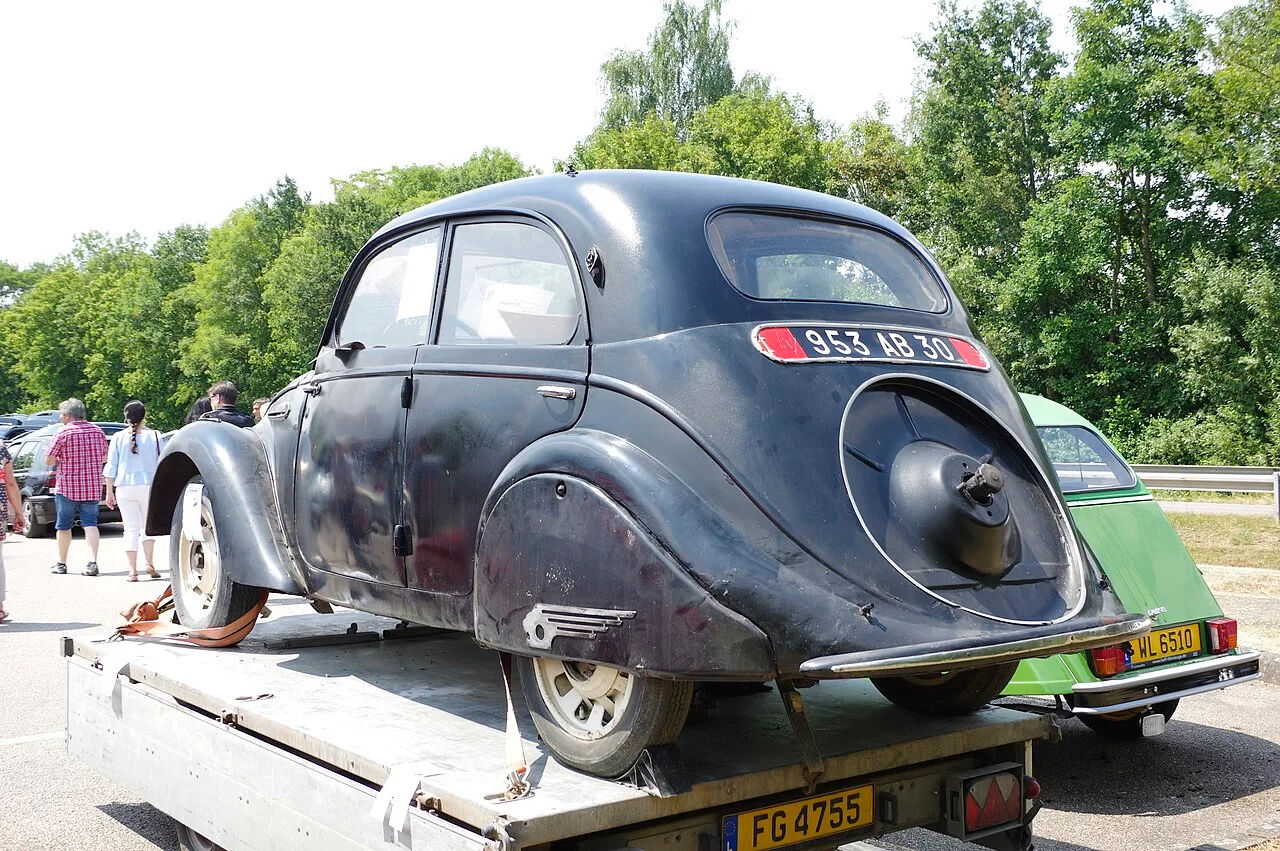
The Peugeot 202 is a supermini developed and designed by Peugeot, produced between 1938 and 1942 and then, after a brief run of 20 in early 1945, from mid-1946 until 1949, by which time the 203 had replaced it; 104,126 were built. Production started in January 1938 and the car was formally launched on 2 March 1938 with a dinner and presentation for the specialist press in the Bois de Boulogne, after Peugeot had staged a massive "referendum" of visitors to its stand at the 1937 Paris Motor Show to find out what customers expected from the new small car. The steel-bodied 202 was instantly recognisable as a Peugeot from the headlights set close to the streamlined sloping front grille, shared with the larger 402 and 302, which made the battery, mounted ahead of the engine, exceptionally easy to inspect or replace. It was powered by a 1133 cc water-cooled engine with overhead valves (at a time when the rival Renault Juvaquatre still used a side-valve unit) giving 30 PS at 4000 rpm and a top speed of about 100 km/h, driving the rear wheels through a three-speed manual transmission with synchromesh on the top two ratios, and it kept the independent front suspension introduced on the 201 in 1931. Hydraulic brakes arrived for 1946, a glove box was added, and in October 1948 the reduced-specification 202 "Affaires" appeared, losing the heater and the sliding steel sunroof, at a list price of 320,000 francs, before the cabriolet was delisted. Body styles were a 4-door saloon, 2-door and 4-door cabriolets and a 2-door pickup, and the long-wheelbase hatch version, priced more than 50% above the saloon, remained rare with just over 3,000 produced.
Collectors Spotted in the Peugeot 202 Lineage
No member has published a public street spot of the Peugeot 202 yet — the First · Worldwide stamp is wide open.
Trims & Figures
One published trim in the catalogue. A blank is a figure not recorded, not zero.
| Trim | Years | Engine | Power | Torque | 0–60 | Drive | Gearbox | MSRP |
|---|---|---|---|---|---|---|---|---|
| 202 Berline 1.1 (1133 cc, 30 PS) | 1938–1949 | 1.1 L Inline-4 | 30 hp | 45 lb-ft | — | RWD | — | — |
Owning one
We don’t estimate running costs for a car like this. What it costs depends on its condition, its specialist and how it is driven, and an average would mislead.
Owners’ builds
Nobody has claimed one yet.
Photographs
Rivals
Same body, same money, other badges — tap any card to flip.

It briefly served as senior sibling to Marquette, a GM companion brand cancelled after just one year.

Nissan hired former BMW engineers to help develop the 510's suspension, which is why period reviewers frequently compared its handling to the BMW 1600/2002.

A Trabant 601 won its class at the 1970 Monte Carlo Rally, with a second 601 right behind it in second.

The 600 was a stopgap: the P50's body over the 601's mechanicals, and for a while its estate was built alongside the new 601 saloon.

The G80 Sport brought a 370 PS twin-turbo 3.3 V6, a mesh grille and copper-tinted chrome with copper stitching to match.

The Vigor was sold only with a five-cylinder engine, an unusual configuration Honda used to fit a longer engine transversely under a short hood.

The GS/E coupe earned the nickname "German Charger" for its long hood, short deck stance borrowed from Detroit muscle cars.

This DeVille/Fleetwood was the first production car anywhere to mount its V8 sideways, Cadillac's front-drive gamble on the new C-body.