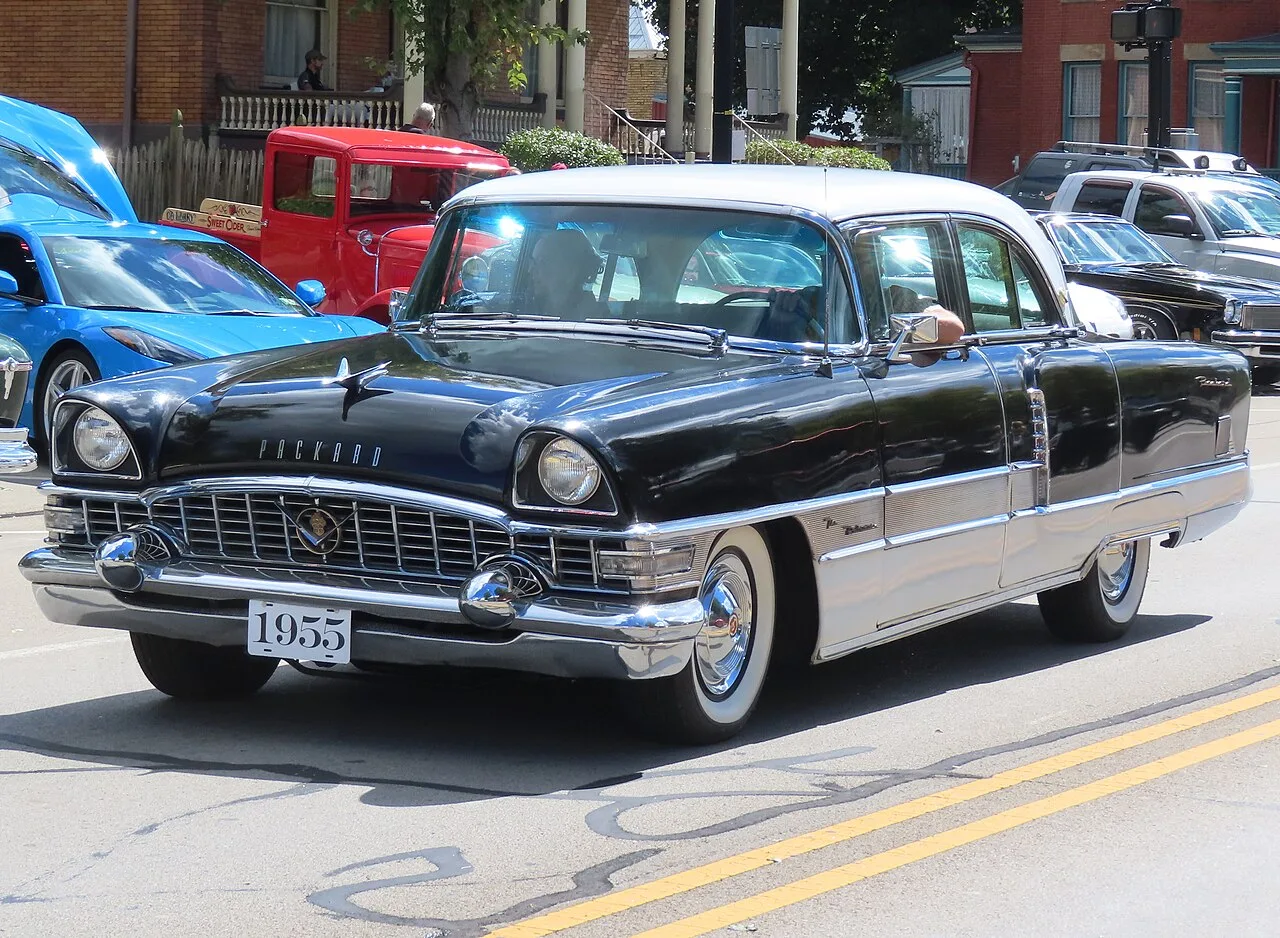
After decades of building only straight-eight engines, Packard finally broke tradition in 1955 and gave the Patrician its first-ever V8.
Lead trim: Patrician 374 cu in V8 (Twin-Ultramatic)
Packard Patrician1955–1956
- 0spots by members
- Unclaimednobody has spotted one yet
- 0sets it belongs to
Nobody in Burbles has spotted a Packard Patrician yet. See one on the street, point the app at it, and the first card is yours — with your @handle permanently credited on this page.
FactAfter decades of building only straight-eight engines, Packard finally broke tradition in 1955 and gave the Patrician its first-ever V8.
For 1955 the entire senior Packard line got an extensive update by designer Dick Teague (a modern grille, "Cathedral" tail lights, hooded headlights, a wrap-around windshield, new dashboard and two- and three-tone paint), the year the company introduced its only V8, a 374 cu in (6.1 L) with the Twin-Ultramatic. The 1955 Patrician was a four-door sedan only at US$3,890 (9,127 built); for 1956 there were minor changes (a revised headlight housing with black surround, a new grille texture) and 3,375 were built before the model was dropped. The final true Packard built (not a rebadged Studebaker) was a black Patrician sedan on June 25, 1956, shipped to a dealer in Guntersville, Alabama. Wheelbase 127 in, length 219.7 in, width 78.3 in, height 62.2 in, curb weight 4,552 lb.
Collectors Spotted in the Packard Patrician Lineage
No member has published a public street spot of the Packard Patrician yet — the First · Worldwide stamp is wide open.
Trims & Figures
One published trim in the catalogue. A blank is a figure not recorded, not zero.
| Trim | Years | Engine | Power | Torque | 0–60 | Drive | Gearbox | MSRP |
|---|---|---|---|---|---|---|---|---|
| Patrician 374 cu in V8 (Twin-Ultramatic) | 1955–1956 | 6.1 L V8 | 290 hp | 405 lb-ft | — | RWD | — | — |
Owning one
We don’t estimate running costs for a car like this. What it costs depends on its condition, its specialist and how it is driven, and an average would mislead.
Owners’ builds
Nobody has claimed one yet.
Photographs
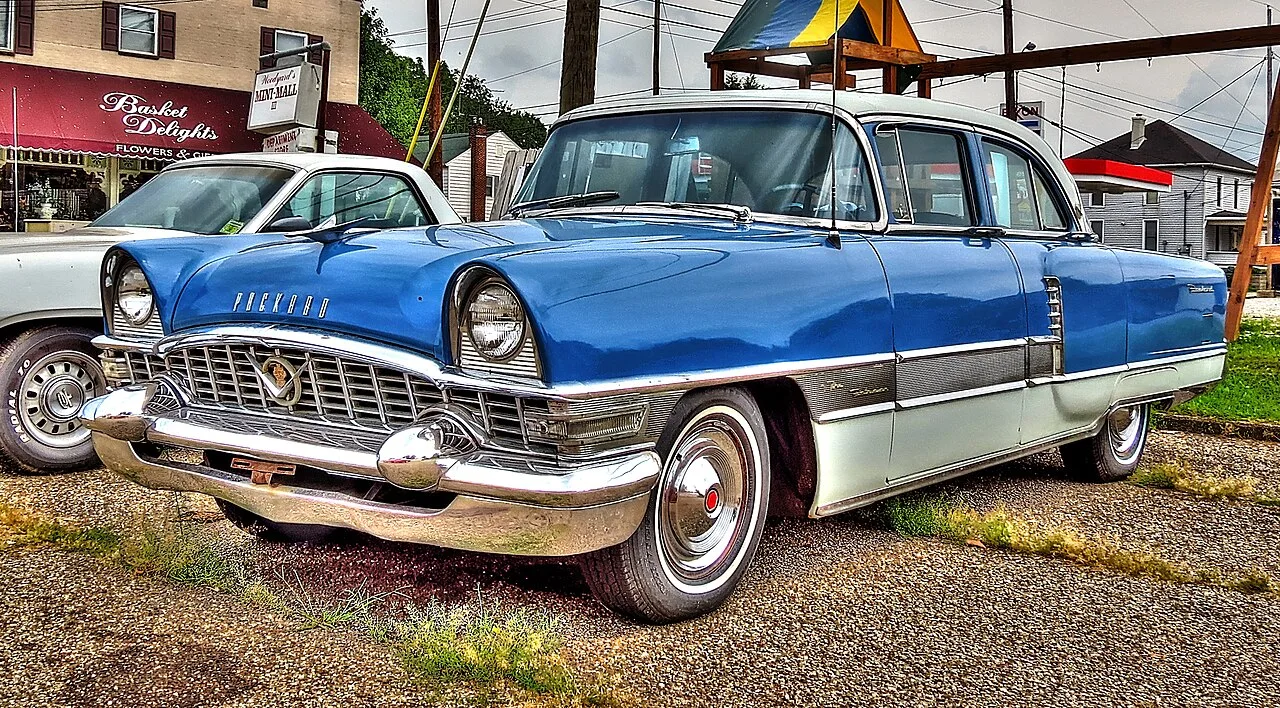
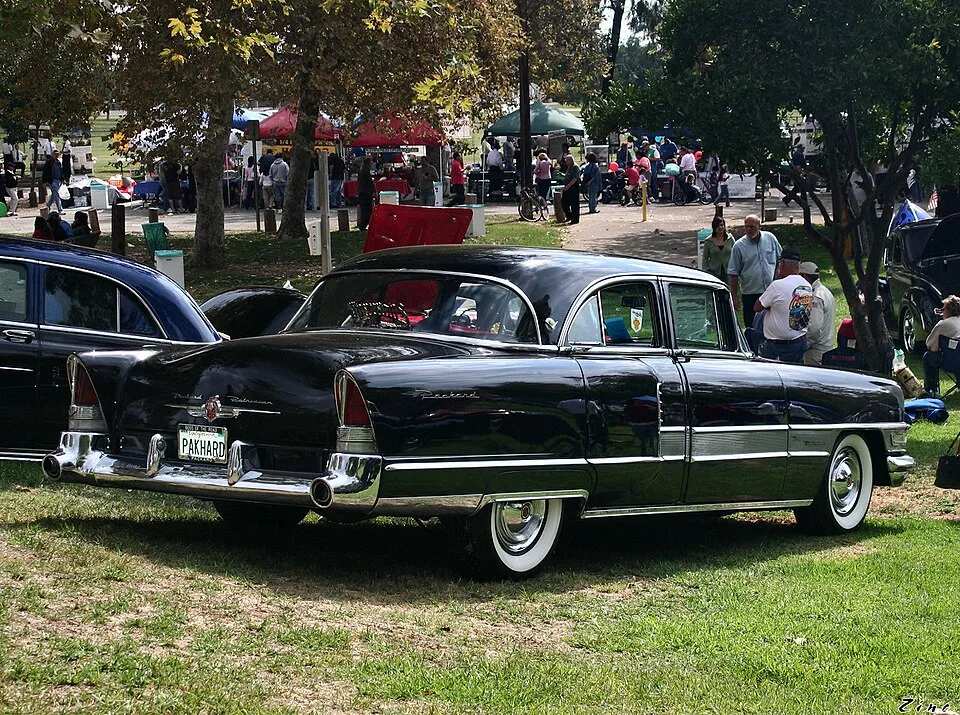
After decades of building only straight-eight engines, Packard finally broke tradition in 1955 and gave the Patrician its first-ever V8.
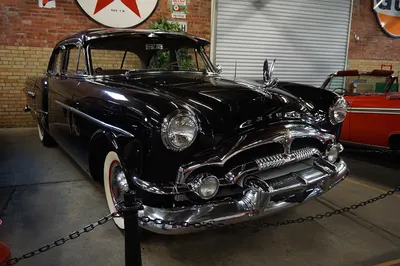
Starting a 1953 Packard Patrician meant flooring the accelerator pedal to trip a switch built into the carburetor — a real ignition key with a start position didn't arrive until 1954.
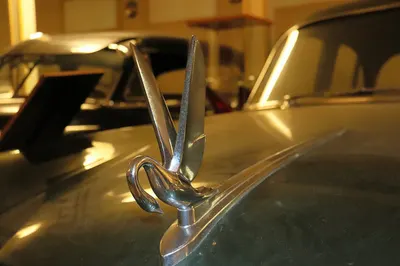
The 1951-52 Patrician 400's straight-eight got nine main bearings instead of the usual five — pure over-engineering, since it added zero extra horsepower.
Rivals
Same body, same money, other badges — tap any card to flip.

It briefly served as senior sibling to Marquette, a GM companion brand cancelled after just one year.

Nissan hired former BMW engineers to help develop the 510's suspension, which is why period reviewers frequently compared its handling to the BMW 1600/2002.

A Trabant 601 won its class at the 1970 Monte Carlo Rally, with a second 601 right behind it in second.

The 600 was a stopgap: the P50's body over the 601's mechanicals, and for a while its estate was built alongside the new 601 saloon.

The G80 Sport brought a 370 PS twin-turbo 3.3 V6, a mesh grille and copper-tinted chrome with copper stitching to match.

The Vigor was sold only with a five-cylinder engine, an unusual configuration Honda used to fit a longer engine transversely under a short hood.

The GS/E coupe earned the nickname "German Charger" for its long hood, short deck stance borrowed from Detroit muscle cars.

This DeVille/Fleetwood was the first production car anywhere to mount its V8 sideways, Cadillac's front-drive gamble on the new C-body.