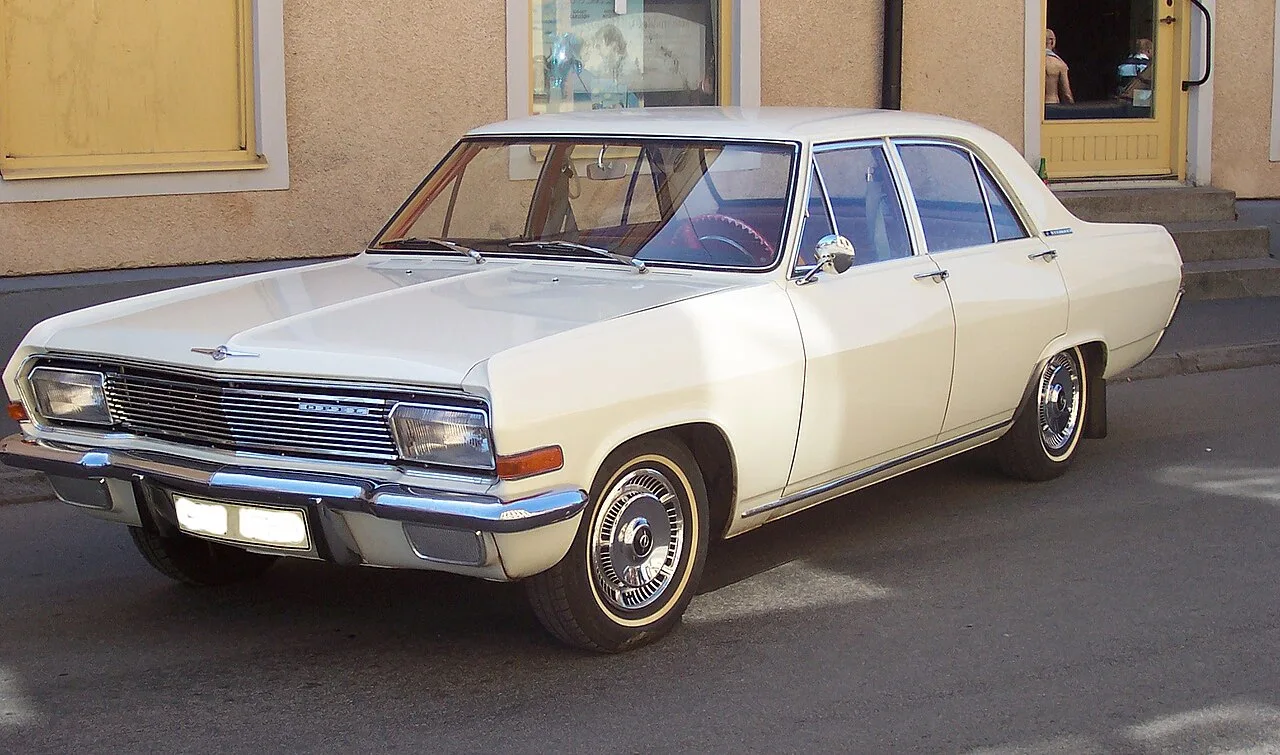
This Kapitän outsold almost everything else in 1950s Germany — only the Beetle and Opel’s own Rekord beat it.
Lead trim: Kapitän 2.5 I6 (68 PS) · up to 74 hp
Opel Kapitän1953–1958
- 0spots by members
- Unclaimednobody has spotted one yet
- 0sets it belongs to
Nobody in Burbles has spotted a Opel Kapitän yet. See one on the street, point the app at it, and the first card is yours — with your @handle permanently credited on this page.
FactThis Kapitän outsold almost everything else in 1950s Germany — only the Beetle and Opel’s own Rekord beat it.
In November 1953 Opel launched a completely new Kapitän that was longer and wider than its predecessor, with a revised rear live axle, a rear stabilising bar and slightly enlarged drum brakes. The six-cylinder engine was carried over with the compression ratio raised to 7.0:1, giving 68 PS initially, 71 PS for 1955 and 75 PS for 1956. Like the smaller Olympia Rekord, which somewhat resembled 1953 US Plymouth models such as the Cranbrook, the Kapitän used a similar design language; model year 1956 saw a mild facelift with a more up-to-date grille, bezelled headlamps, larger front indicators and revised side trim, and from May 1957 a semi-automatic three-speed overdrive transmission with a fourth gear became available on request. The 1956 reached a top speed of 140 km/h (87 mph) and consumed 13 L/100 km. From November 1953 to February 1958, 154,098 Kapitäns were built, making this generation the third-most popular car in Germany behind the Volkswagen Beetle and Opel's own Rekord.
Collectors Spotted in the Opel Kapitän Lineage
No member has published a public street spot of the Opel Kapitän yet — the First · Worldwide stamp is wide open.
Trims & Figures
3 published trims in the catalogue. A blank is a figure not recorded, not zero.
| Trim | Years | Engine | Power | Torque | 0–60 | Drive | Gearbox | MSRP |
|---|---|---|---|---|---|---|---|---|
| Kapitän 2.5 I6 (68 PS) | 1953–1954 | 2.5 L Inline-6 | 67 hp | 122 lb-ft | — | RWD | — | — |
| Kapitän 2.5 I6 (71 PS) | 1955–1955 | 2.5 L Inline-6 | 70 hp | 125 lb-ft | — | RWD | — | — |
| Kapitän 2.5 I6 (75 PS) | 1956–1958 | 2.5 L Inline-6 | 74 hp | 125 lb-ft | — | RWD | — | — |
Owning one
We don’t estimate running costs for a car like this. What it costs depends on its condition, its specialist and how it is driven, and an average would mislead.
Owners’ builds
Nobody has claimed one yet.
Photographs
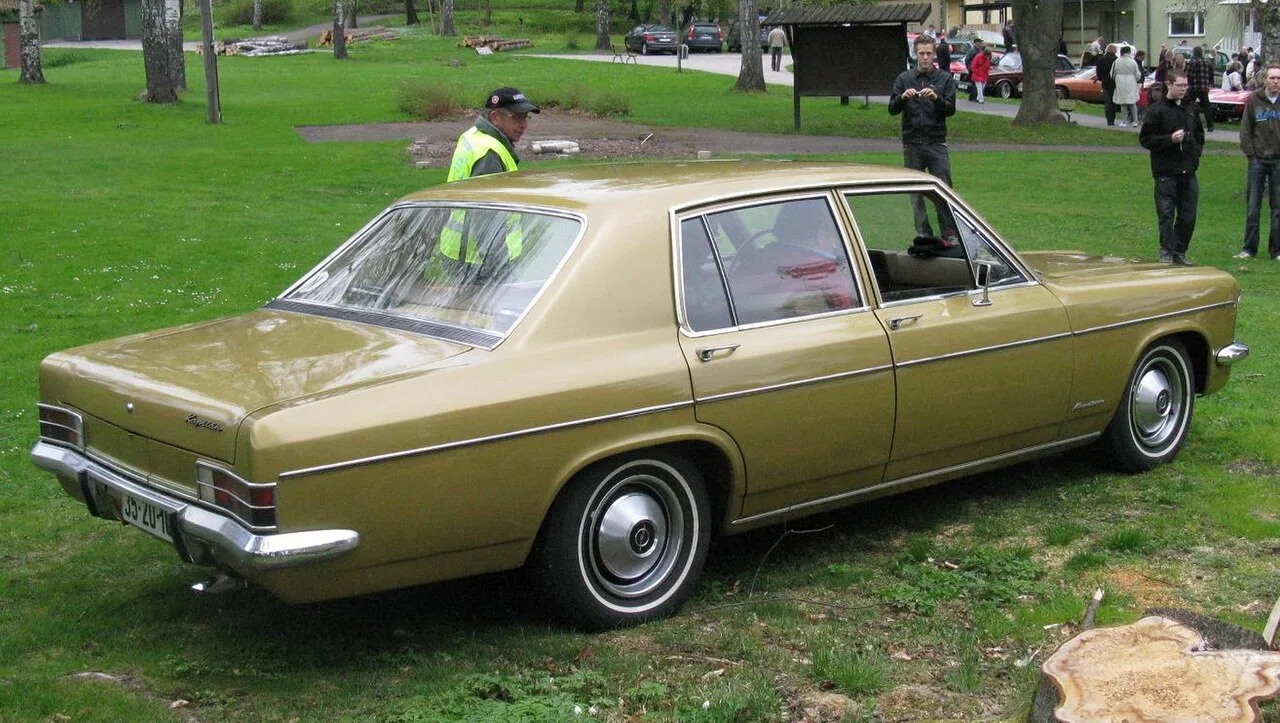
Opel's last Kapitän flopped hard — only 4,976 were built in 15 months, as buyers of big cars kept choosing the pricier Admiral and Diplomat for more prestige instead.
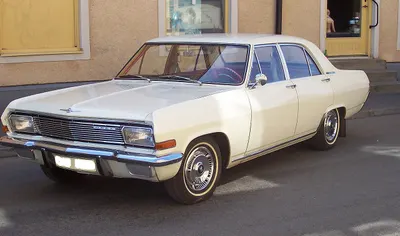
Opel's staid German flagship had an unlikely heart option: a small run of Kapitän A sedans could be ordered with a Chevrolet-sourced 4.6-litre V8.
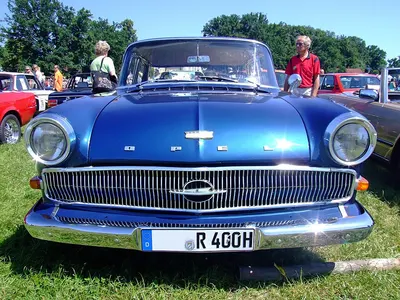
Opel built 145,618 of this Kapitän in just over four years — more than any Kapitän before or since, making the P2 the best-selling generation the nameplate ever had.
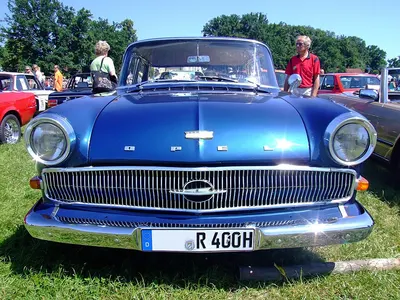
The Kapitän P1's showy wraparound glass and American-style roofline looked like a dream car, but it cost the driver visibility and left the rear doors oddly narrow.
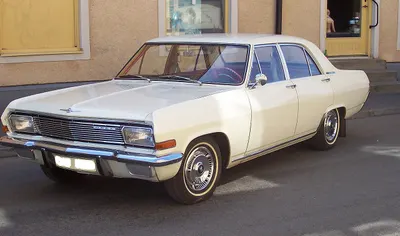
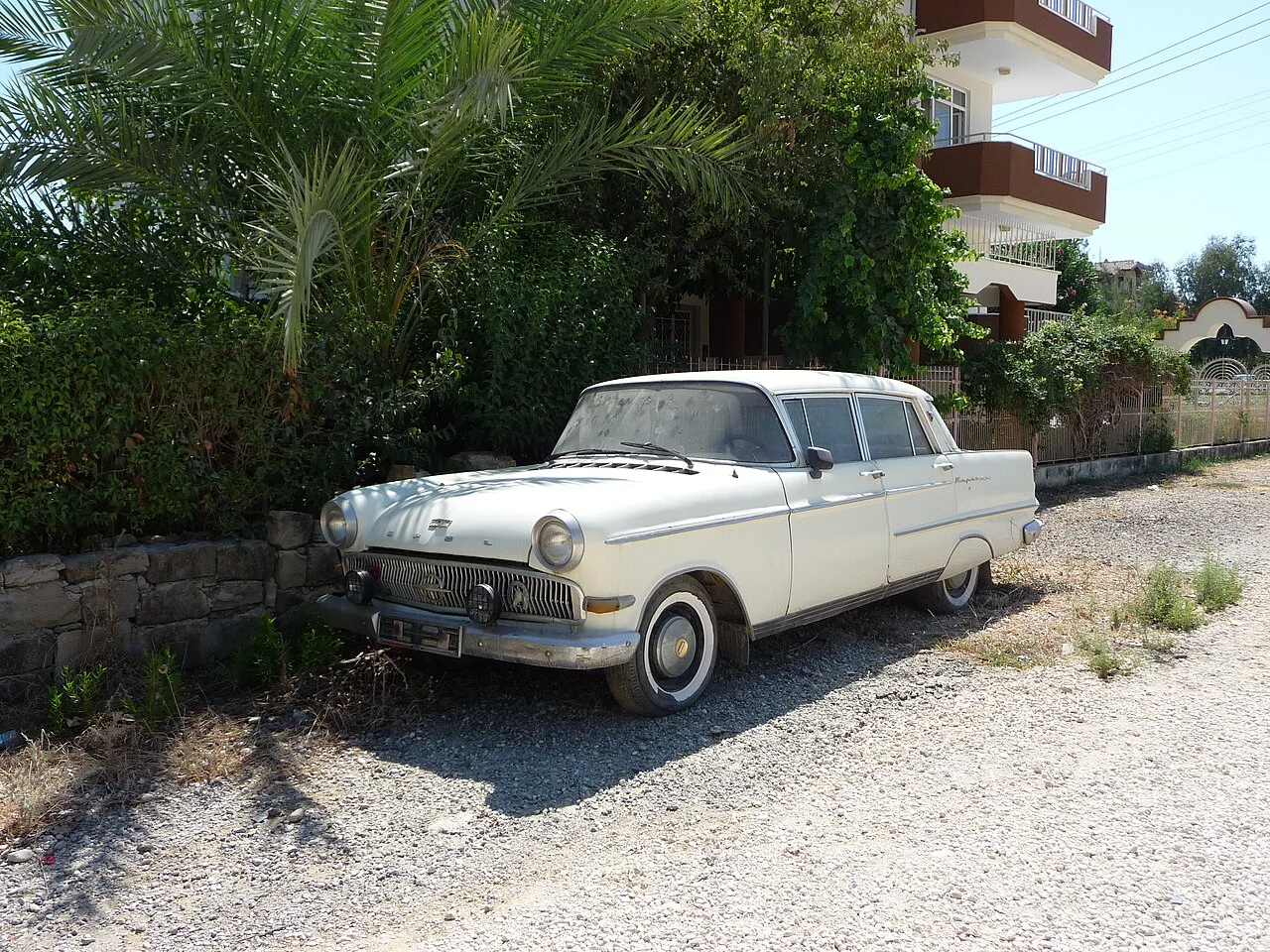
This Kapitän outsold almost everything else in 1950s Germany — only the Beetle and Opel’s own Rekord beat it.
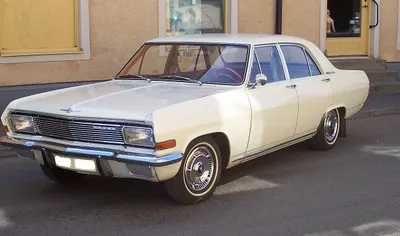
A bold claim that still holds up: the 1951 Kapitän was the most modern large mass-produced car in Europe during the immediate pre- and postwar years.
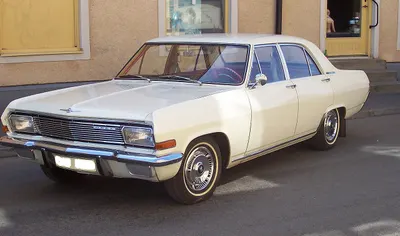
Opel's six-cylinder engine for the postwar Kapitän was ready a year before the car actually launched — Allied occupation rules banned civilian sales of any car over 1.5 litres until October 1948.
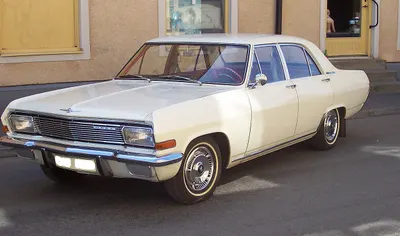
This Kapitän’s unibody construction was advanced enough that Soviet engineers studied it — and its influence shows up in the GAZ-M20 Pobeda.
Rivals
Same body, same money, other badges — tap any card to flip.

It briefly served as senior sibling to Marquette, a GM companion brand cancelled after just one year.

Nissan hired former BMW engineers to help develop the 510's suspension, which is why period reviewers frequently compared its handling to the BMW 1600/2002.

A Trabant 601 won its class at the 1970 Monte Carlo Rally, with a second 601 right behind it in second.

The 600 was a stopgap: the P50's body over the 601's mechanicals, and for a while its estate was built alongside the new 601 saloon.

The G80 Sport brought a 370 PS twin-turbo 3.3 V6, a mesh grille and copper-tinted chrome with copper stitching to match.

The Vigor was sold only with a five-cylinder engine, an unusual configuration Honda used to fit a longer engine transversely under a short hood.

The GS/E coupe earned the nickname "German Charger" for its long hood, short deck stance borrowed from Detroit muscle cars.

This DeVille/Fleetwood was the first production car anywhere to mount its V8 sideways, Cadillac's front-drive gamble on the new C-body.