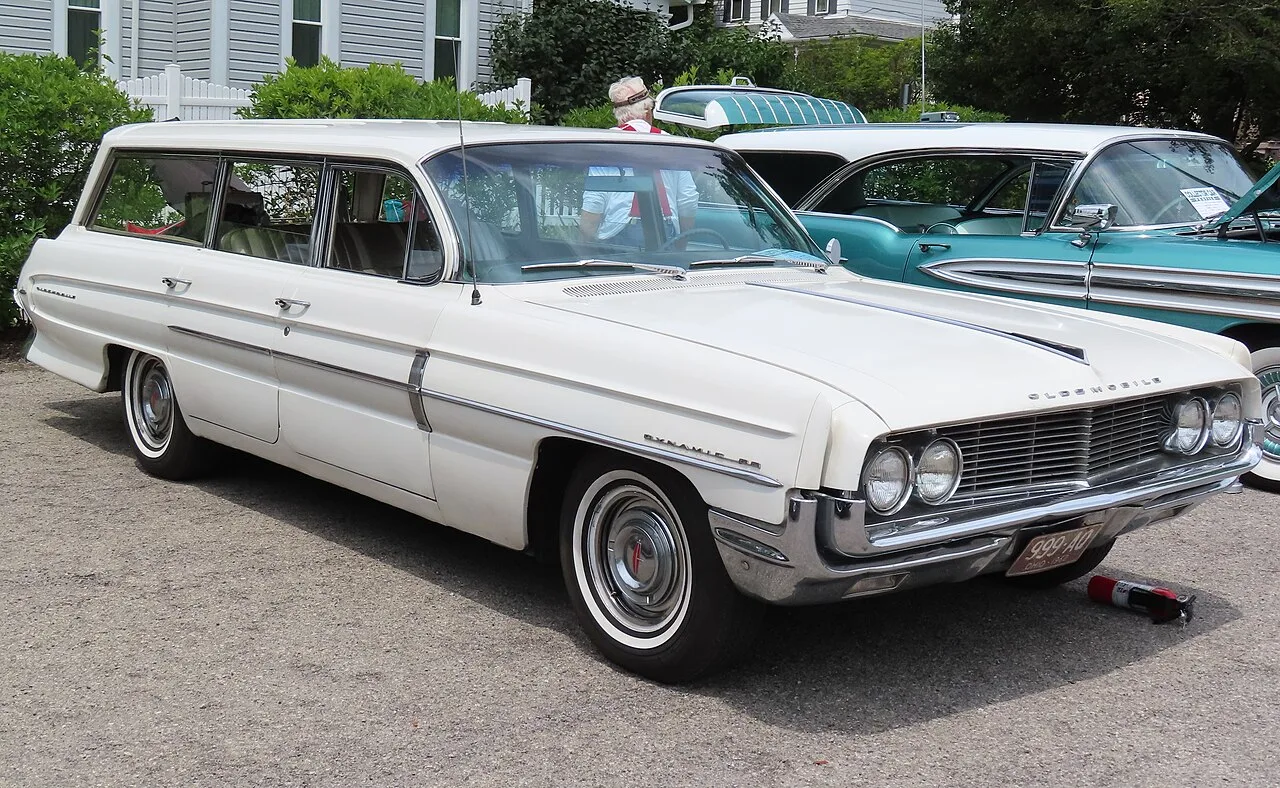
Early-60s 88s read speed off a 'speed bar' — a rolling cylinder painted green, yellow and red that scrolled past a window as the car sped up.
Median 89 hp across 231 similar cars
Lead trim: Dynamic 88 394 cu in Rocket V8 2-barrel (250 hp, 1961) · up to 325 hp
Oldsmobile Eighty-Eight1961–1964
- 0spots by members
- Unclaimednobody has spotted one yet
- 0sets it belongs to
Nobody in Burbles has spotted a Oldsmobile Eighty-Eight yet. See one on the street, point the app at it, and the first card is yours — with your @handle permanently credited on this page.
FactEarly-60s 88s read speed off a 'speed bar' — a rolling cylinder painted green, yellow and red that scrolled past a window as the car sped up.
An all-new body and chassis with a perimeter "Guard Beam" frame and all-coil suspension highlighted the 1961 full-size Oldsmobiles, which were joined by the division's first compact, the F-85 (wheelbase 123 in, length 214.4 in). All full-size Oldsmobiles received the 394 cubic-inch Rocket V8, the Dynamic 88 getting a two-barrel 250 hp version that used regular gas and the Super 88 a four-barrel "Ultra High Compression" 394 Skyrocket V8 rated at 325 hp (the Skyrocket was an extra-cost option on the Dynamic 88), with a new three-speed "Roto" Hydra-matic optional. For 1962 the Dynamic 88's standard engine was uprated to 280 hp with a higher compression ratio requiring premium fuel (a 260 hp regular-fuel version was a no-cost option), 330 hp for the Skyrocket V8 standard on the Super 88 and Ninety-Eight and 345 hp for the top Starfire; models and drivetrains were unchanged for 1963. New for 1964 was the price-leader Jetstar 88, sharing the full-size body but using the smaller 330 V8 and a two-speed Jetaway automatic with smaller drum brakes, and the Jetstar I, which shared the Starfire's notchback body and its 345 hp 394 engine.
Collectors Spotted in the Oldsmobile Eighty-Eight Lineage
No member has published a public street spot of the Oldsmobile Eighty-Eight yet — the First · Worldwide stamp is wide open.
Trims & Figures
3 published trims in the catalogue. A blank is a figure not recorded, not zero.
| Trim | Years | Engine | Power | Torque | 0–60 | Drive | Gearbox | MSRP |
|---|---|---|---|---|---|---|---|---|
| Dynamic 88 394 cu in Rocket V8 (280 hp, 1962–1963) | 1962–1963 | 6.5 L V8 | 280 hp | 430 lb-ft | — | RWD | — | — |
| Dynamic 88 394 cu in Rocket V8 2-barrel (250 hp, 1961) | 1961–1961 | 6.5 L V8 | 250 hp | 405 lb-ft | — | RWD | — | — |
| Super 88 394 cu in Skyrocket V8 4-barrel (325 hp, 1961) | 1961–1961 | 6.5 L V8 | 325 hp | 435 lb-ft | — | RWD | — | — |
Owning one
We don’t estimate running costs for a car like this. What it costs depends on its condition, its specialist and how it is driven, and an average would mislead.
Owners’ builds
Nobody has claimed one yet.
Photographs
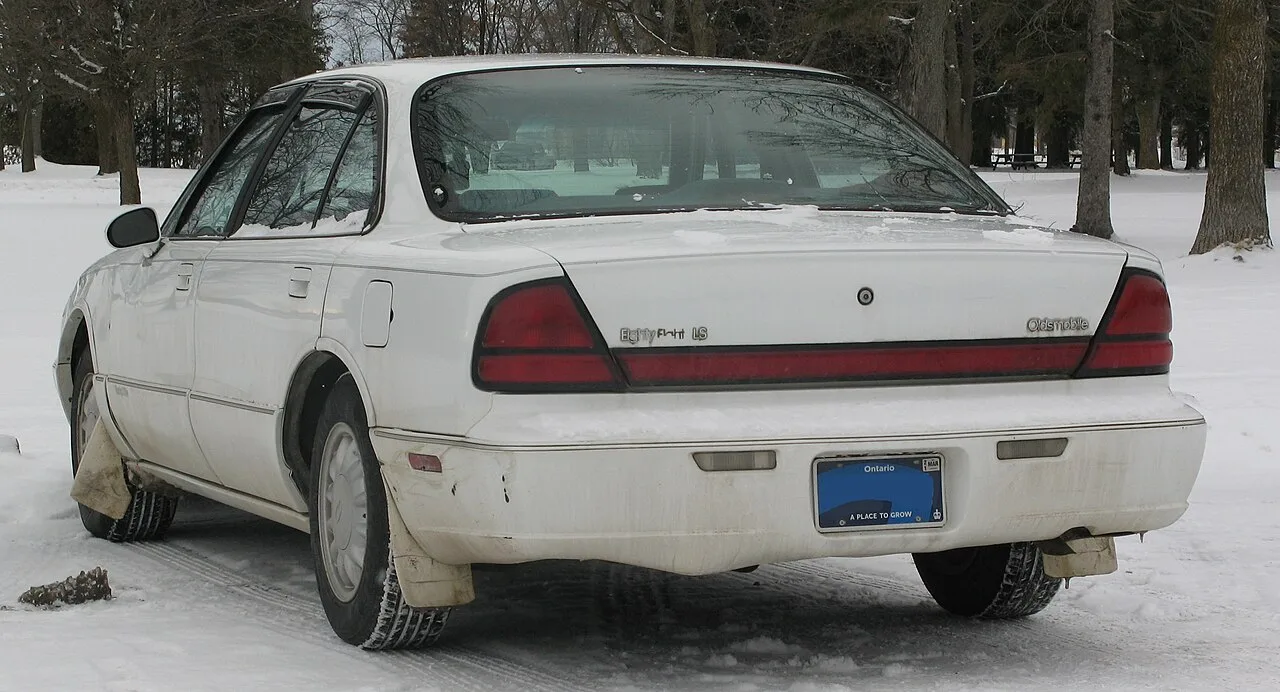
Its Regency version had a self-dimming driver's door mirror as standard, something even Cadillac did not fit as standard.
This Eighty Eight could talk: an optional computer-synthesized male voice warned you out loud if the coolant was low, the engine overheated, or you'd left the headlights on.
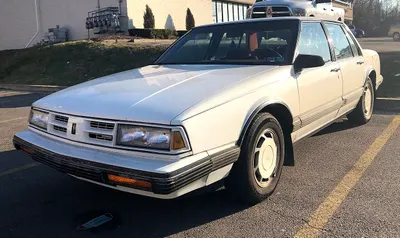
In 1988 it became the first GM car offered with a driver's-side airbag, twelve years after GM had dropped its earlier ACRS airbag system.
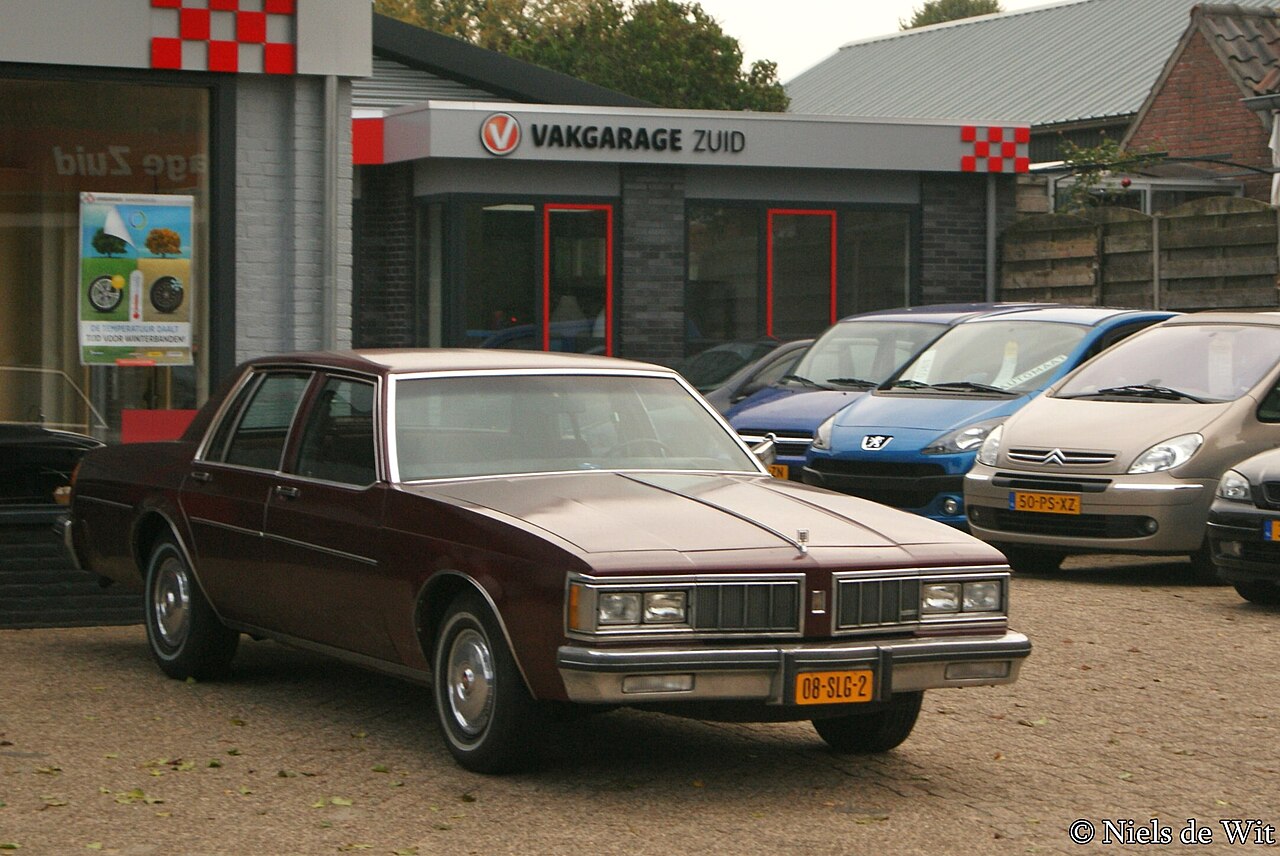
The 1977 downsizing hit hard — this full-size Delta 88 ended up riding on the exact same 116-inch wheelbase as the mid-size Cutlass sedan, and nearly 900 lb lighter than the model it replaced.
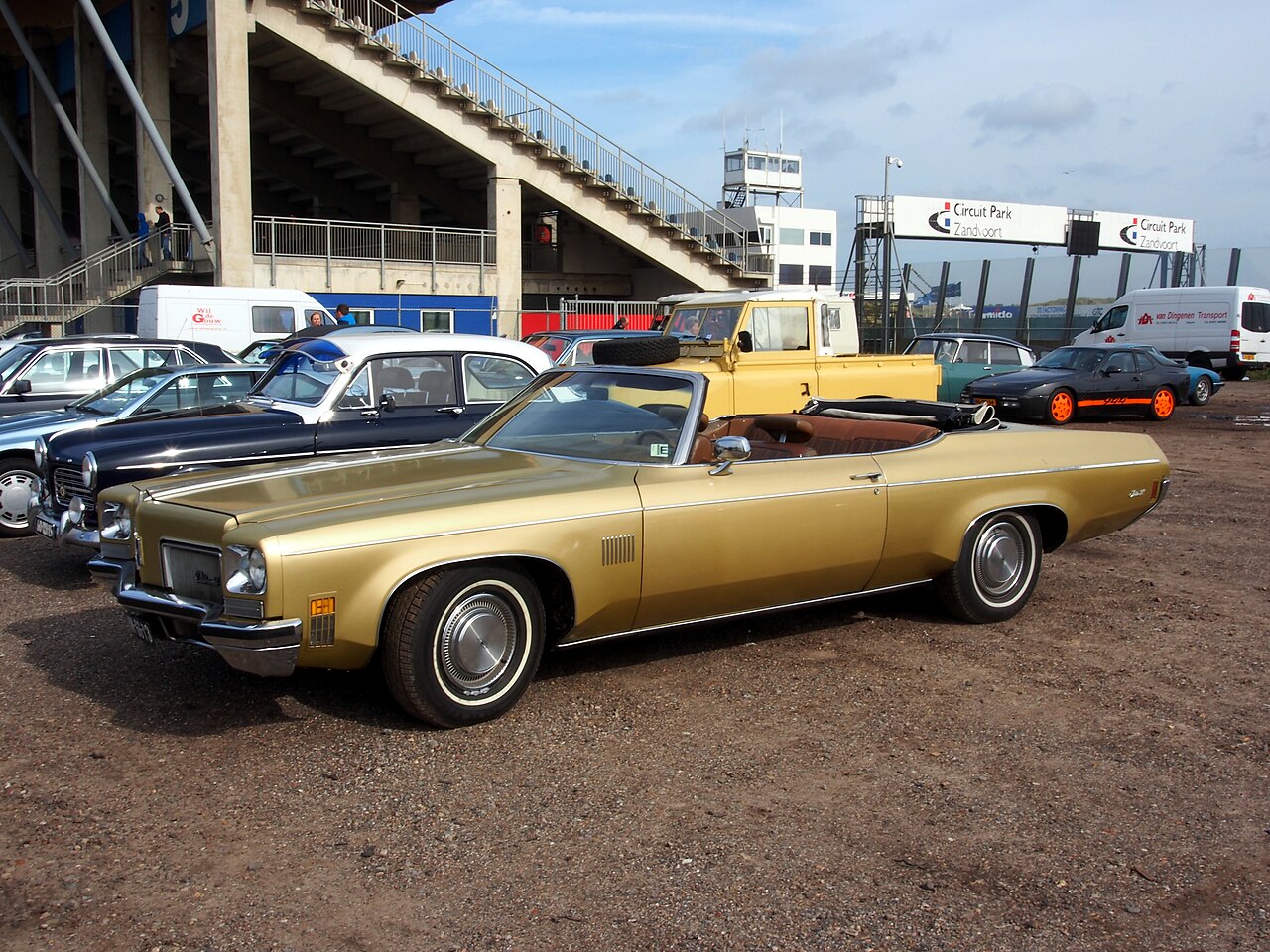
In 1974 you could special-order a Delta 88 with driver and passenger airbags — a rarely-picked factory option that made it one of the first production cars ever offered with them.
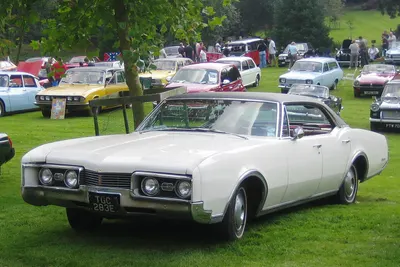
Oldsmobile named this car after a Cold War fighter jet: having already borrowed the Starfire name from an Air Force plane, it named the Delta 88 after the Convair F-102 Delta Dagger interceptor.
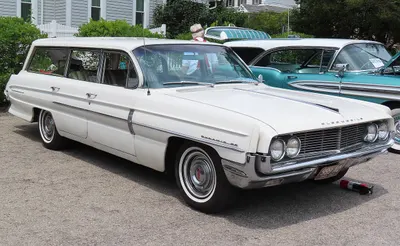
Early-60s 88s read speed off a 'speed bar' — a rolling cylinder painted green, yellow and red that scrolled past a window as the car sped up.
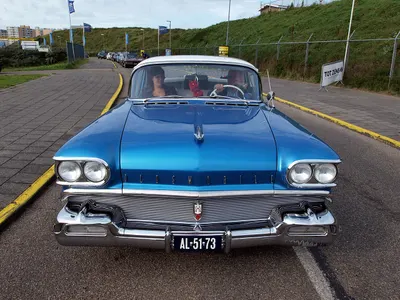
This 88 had a speedometer that color-coded your speed for you — green under 35, amber up to 65, red beyond that, decades before dashboards did this digitally.
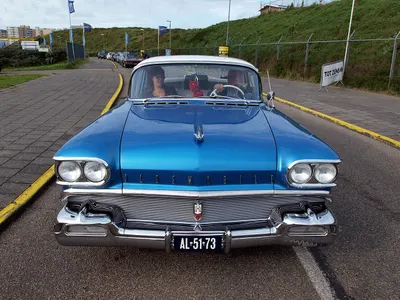
A Ford stylist bought a chrome-heavy 1958 Olds as a daily driver, then rearranged its hood lettering to spell "SLOBMODEL" as a jab at the era's design excess.
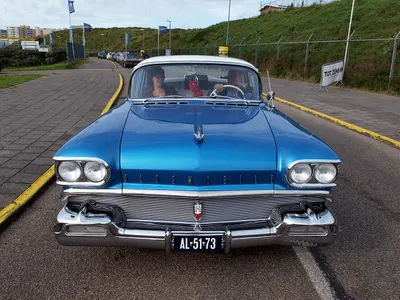
The 1956 Olds 88 quietly killed a chore drivers had lived with for 16 years: its new Jetaway Hydra-Matic was the first Oldsmobile automatic that never needed the periodic band adjustment its predecessors required.
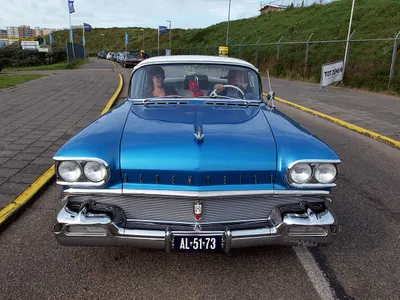
A fire at GM's own Hydra-Matic plant forced some 1953 Oldsmobiles to ship with a Buick transmission instead.
Rivals
Same body, same money, other badges — tap any card to flip.

It briefly served as senior sibling to Marquette, a GM companion brand cancelled after just one year.

Nissan hired former BMW engineers to help develop the 510's suspension, which is why period reviewers frequently compared its handling to the BMW 1600/2002.

A Trabant 601 won its class at the 1970 Monte Carlo Rally, with a second 601 right behind it in second.

The 600 was a stopgap: the P50's body over the 601's mechanicals, and for a while its estate was built alongside the new 601 saloon.

The G80 Sport brought a 370 PS twin-turbo 3.3 V6, a mesh grille and copper-tinted chrome with copper stitching to match.

The Vigor was sold only with a five-cylinder engine, an unusual configuration Honda used to fit a longer engine transversely under a short hood.

The GS/E coupe earned the nickname "German Charger" for its long hood, short deck stance borrowed from Detroit muscle cars.

This DeVille/Fleetwood was the first production car anywhere to mount its V8 sideways, Cadillac's front-drive gamble on the new C-body.