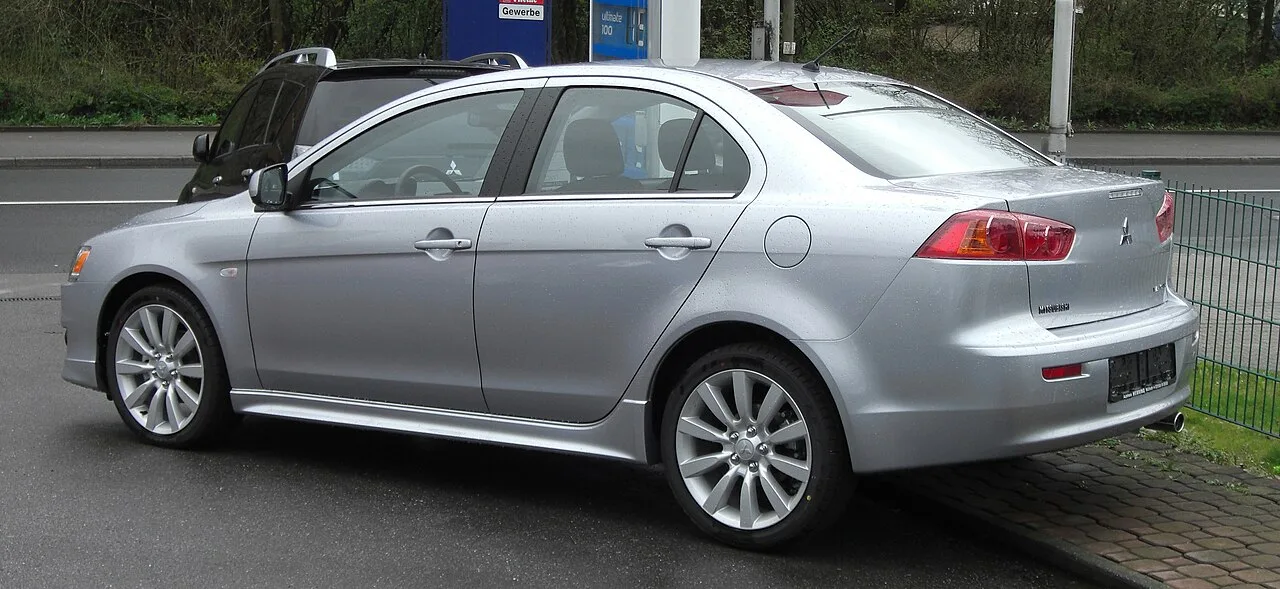
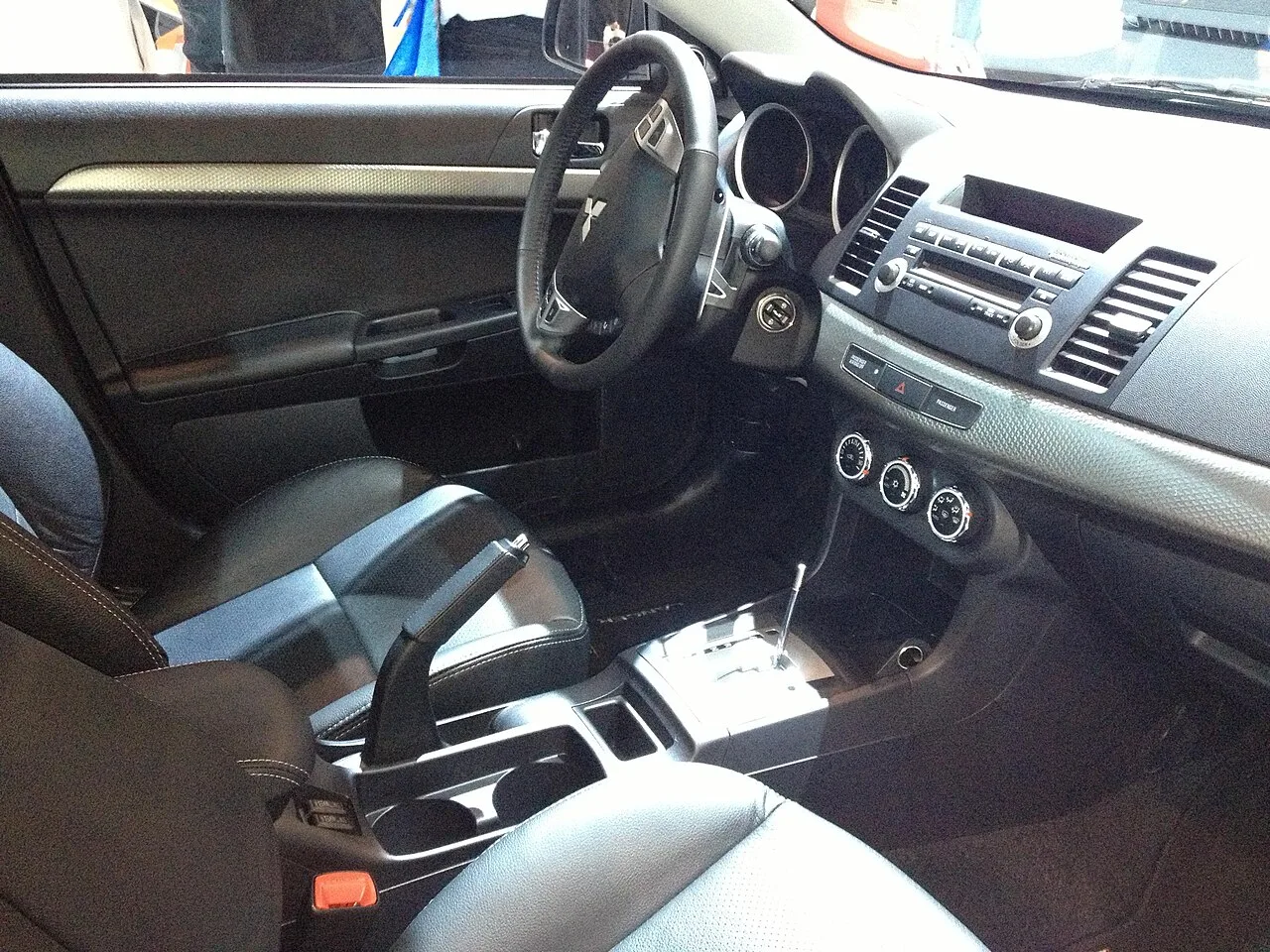
VerifiedFIRST · WORLDWIDEFIRST PRINTIn its own home market, this generation of Lancer wasn't even sold as a Lancer — Japan still had the old Lancer in showrooms, so this one was badged Galant Fortis instead.

The very first Lancer was already a rally winner: the 1600 GSR took the Safari Rally twice and the Southern Cross Rally four times before the nameplate was even established.
Lead trim: 1.2 G11B Orion MCA-Jet (70 PS) · up to 108 hp
Nobody in Burbles has spotted a Mitsubishi Lancer A70 yet. See one on the street, point the app at it, and the first card is yours — with your @handle permanently credited on this page.
FactThe very first Lancer was already a rally winner: the 1600 GSR took the Safari Rally twice and the Southern Cross Rally four times before the nameplate was even established.
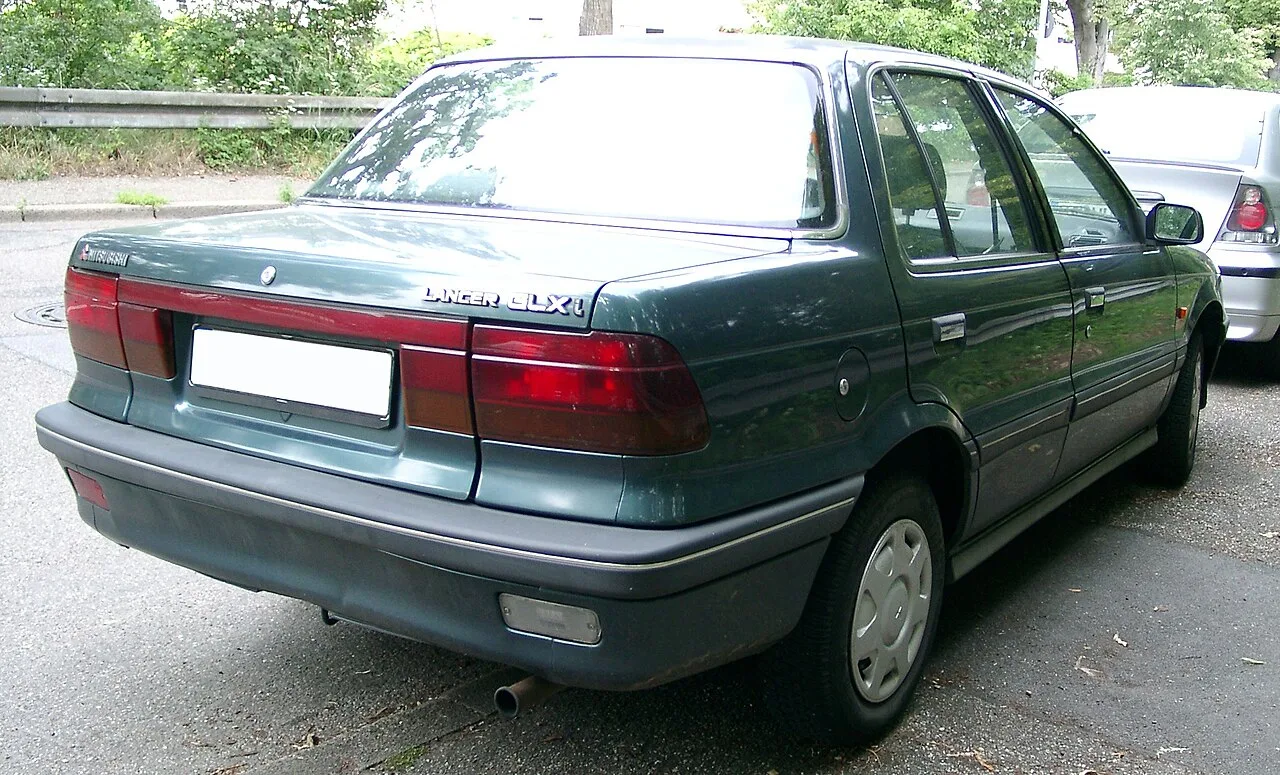
The first Lancer, launched in February 1973 in two- and four-door sedan form (a five-door wagon in September 1973) to fill the gap between the Minica kei car and the much larger Galant, replacing the Colt 1200. Twelve models ran from a basic 1.2 L sedan to the 1600 GSR, and all wore "coke-bottle" styling. Originally a 1.2 L OHV Neptune 4G42 (70 PS, A71), a 1.4 L OHC Saturn 4G33 (92 PS, A72) or a 1.6 L 4G32 (100 PS, A73); the 1600 GSR had two Mikuni-built twin-barrel Solex carburettors for 110 PS at 6,700 rpm. The GSR earned the nickname "King of Cars" in Africa for its Safari Rally results (a clean sweep of the podium in 1976, and only one of thirteen factory cars failing to finish in 1974–77), took the top four places on its 1973 Southern Cross Rally debut, and in rally form made 165 PS at 7,800 rpm. Sold as the Colt Lancer (UK), Dodge Colt (US, 1977), Chrysler Valiant Lancer (Australia, about 11,800) and Plymouth Colt (Canada). The November 1976 facelift and the April 1977 MCA-Jet lean-burn engines brought the A140 codes; sedan production ended in 1979 while the van continued to February 1985.
Real Mitsubishi Lancer cards spotted on the street by Burbles collectors. Tap any card to flip it over, inspect the collector’s binder, or follow them.
VerifiedFIRST · WORLDWIDEFIRST PRINTIn its own home market, this generation of Lancer wasn't even sold as a Lancer — Japan still had the old Lancer in showrooms, so this one was badged Galant Fortis instead.
8 published trims in the catalogue. A blank is a figure not recorded, not zero.
| Trim | Years | Engine | Power | Torque | 0–60 | Drive | Gearbox | MSRP |
|---|---|---|---|---|---|---|---|---|
| 1.2 4G42 Neptune OHV (70 PS) | 1973–1975 | 1.2 L Inline-4 | 69 hp | 70 lb-ft | — | RWD | — | — |
| 1.2 G11B Orion MCA-Jet (70 PS) | 1977–1979 | 1.2 L Inline-4 | 69 hp | 79 lb-ft | — | RWD | — | — |
| 1.4 4G33 Saturn OHC (92 PS) | 1973–1977 | 1.4 L Inline-4 | 91 hp | — | — | RWD | — | — |
| 1.4 G12B Orion (80 PS) | 1978–1979 | 1.4 L Inline-4 | 79 hp | — | — | RWD | — | — |
| 1.4 G33B Saturn MCA-Jet (82 PS) | 1977–1979 | 1.4 L Inline-4 | 81 hp | — | — | RWD | — | — |
| 1.6 4G32 (100 PS) | 1973–1979 | 1.6 L Inline-4 | 99 hp | — | — | RWD | — | — |
| 1.6 G32B MCA-Jet (86 PS) | 1977–1979 | 1.6 L Inline-4 | 85 hp | — | — | RWD | — | — |
| 1600 GSR 4G32 twin Solex (110 PS) | 1973–1976 | 1.6 L Inline-4 | 108 hp | — | — | RWD | — | — |
We don’t estimate running costs for a car like this. What it costs depends on its condition, its specialist and how it is driven, and an average would mislead.
Nobody has claimed one yet.


In its own home market, this generation of Lancer wasn't even sold as a Lancer — Japan still had the old Lancer in showrooms, so this one was badged Galant Fortis instead.

This CS Lancer refused to die on schedule: in the Philippines, Mitsubishi kept selling it right alongside its own replacement, the 'Lancer EX,' for four more years until 2012.

Europe's Lancer EX2000 Turbo rally car made 280 PS, yet Japan's own emissions rules kept the road turbo a slow seller at home.

The very first Lancer was already a rally winner: the 1600 GSR took the Safari Rally twice and the Southern Cross Rally four times before the nameplate was even established.
Same body, same money, other badges — tap any card to flip.

It briefly served as senior sibling to Marquette, a GM companion brand cancelled after just one year.

Nissan hired former BMW engineers to help develop the 510's suspension, which is why period reviewers frequently compared its handling to the BMW 1600/2002.

A Trabant 601 won its class at the 1970 Monte Carlo Rally, with a second 601 right behind it in second.

The 600 was a stopgap: the P50's body over the 601's mechanicals, and for a while its estate was built alongside the new 601 saloon.

The G80 Sport brought a 370 PS twin-turbo 3.3 V6, a mesh grille and copper-tinted chrome with copper stitching to match.

The Vigor was sold only with a five-cylinder engine, an unusual configuration Honda used to fit a longer engine transversely under a short hood.

The GS/E coupe earned the nickname "German Charger" for its long hood, short deck stance borrowed from Detroit muscle cars.

This DeVille/Fleetwood was the first production car anywhere to mount its V8 sideways, Cadillac's front-drive gamble on the new C-body.