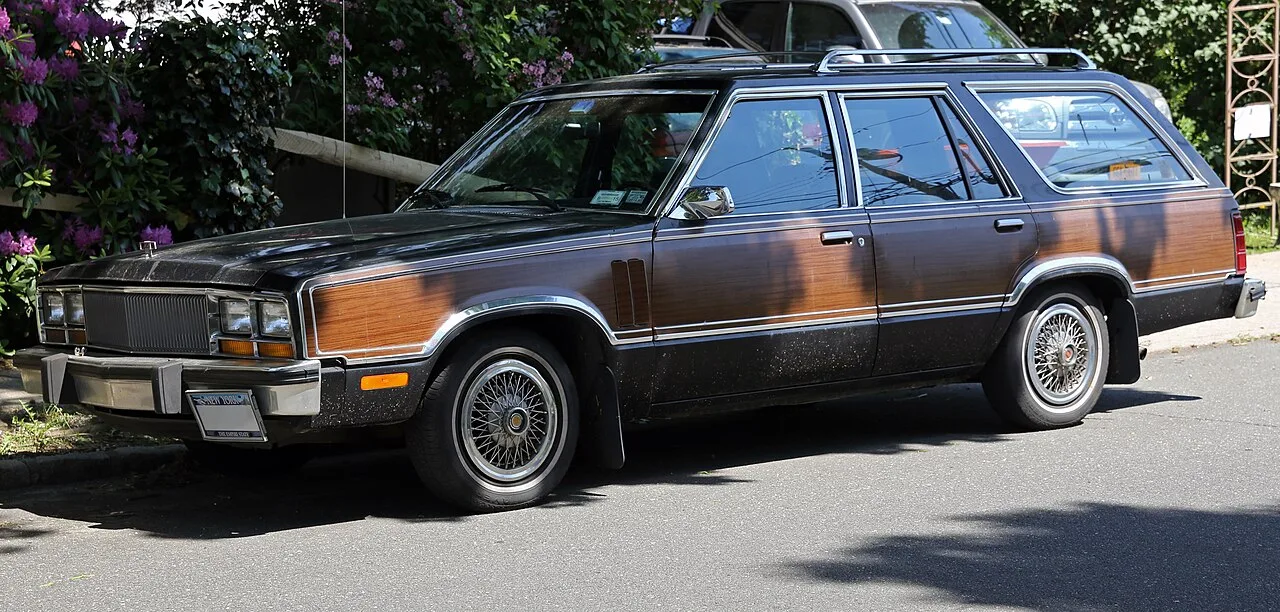
The Zephyr's waterfall grille and ribbed taillamps didn't stay exclusive for long — the same styling language spread across the Mercury lineup, turning up on the Lynx, Capri, Cougar and Marquis too.
Lead trim: Zephyr 200 cu in Thriftpower six (85 hp) · up to 139 hp
Mercury Zephyr1978–1983
- 0spots by members
- Unclaimednobody has spotted one yet
- 0sets it belongs to
Nobody in Burbles has spotted a Mercury Zephyr yet. See one on the street, point the app at it, and the first card is yours — with your @handle permanently credited on this page.
FactThe Zephyr's waterfall grille and ribbed taillamps didn't stay exclusive for long — the same styling language spread across the Mercury lineup, turning up on the Lynx, Capri, Cougar and Marquis too.
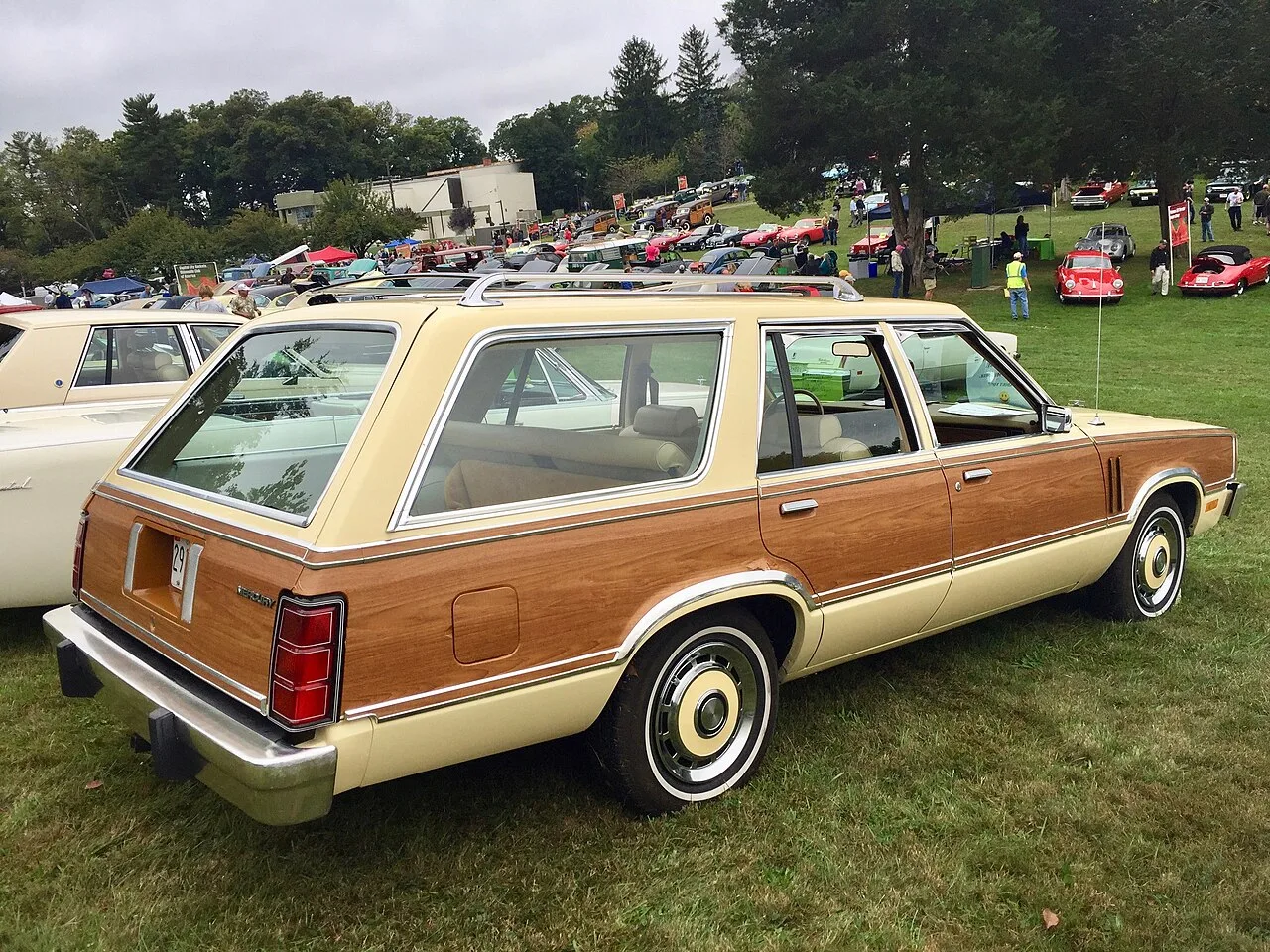
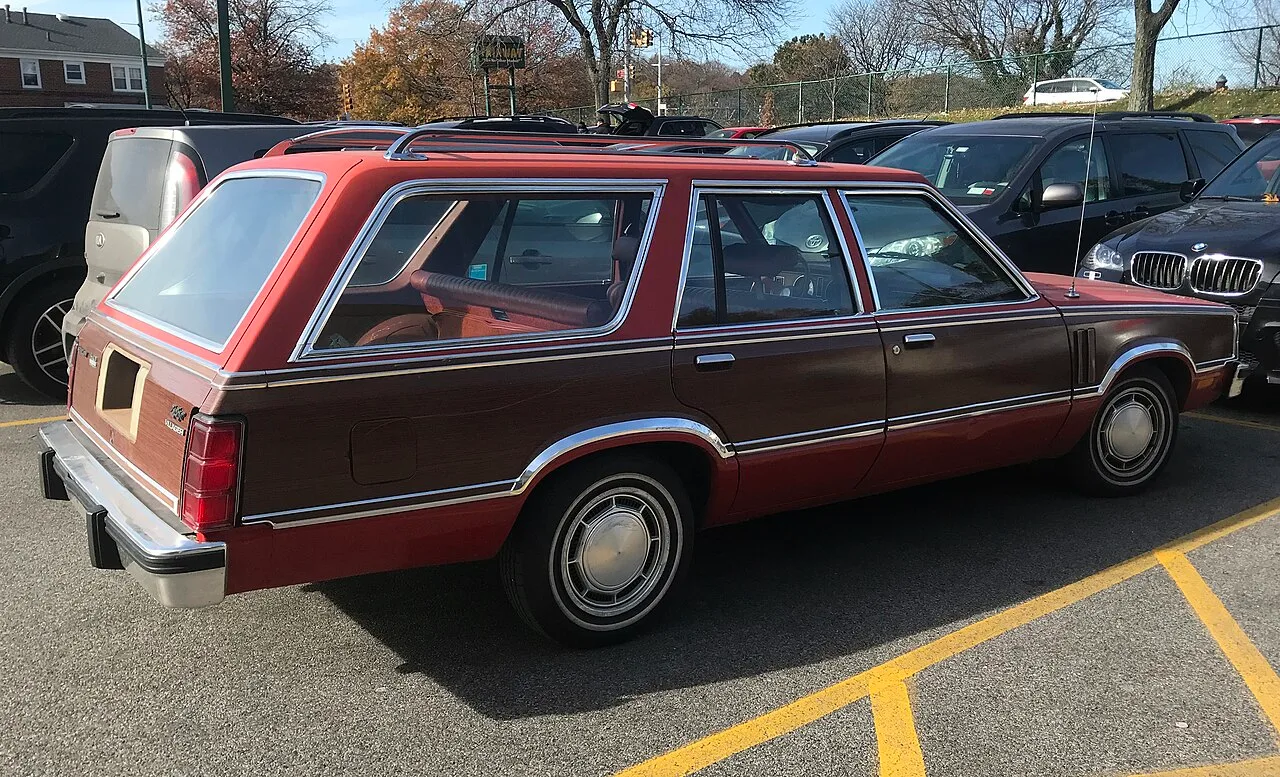
From the 1978 to 1983 model years the Mercury Zephyr served as the Mercury counterpart of the Ford Fairmont, replacing the Maverick-based Comet: the first models on Ford's rear-wheel drive Fox platform, replacing Falcon-based cars. The Zephyr shared the Fairmont's model range and infobox: offered as two- and four-door sedans, a five-door station wagon and the two-door "Zephyr Z-7" coupe, with 105.5 in wheelbase, 193.8 in length, 71.0 in width, 53.5 in height and 2,747–2,959 lb curb weight. It was externally distinguished by four headlights, with a waterfall-style grille, horizontally ribbed taillamps and non-functional front fender vents used across Mercury lines in the early 1980s; the Zephyr was slotted between the Bobcat (replaced for 1981 by the Lynx) and the Monarch (replaced for 1981 by the Cougar). Trims were standard, ES (a successor to the ESS trim of the Monarch) and Ghia, with the GS trim replacing both for 1981; the wagon offered a Villager option package with simulated woodgrain. Engines per the page's Fairmont powertrain table: the 2.3 L Lima four (88 hp at 4800 rpm and 118 lb-ft at 2800 rpm through 1981), a 1980-only 120 hp turbocharged version, the 200 cu in Thriftpower inline-six (85 hp for 1978–79 and 91 hp for 1980–83) and the Windsor V8 (302 cu in, 139 hp at 3600 rpm and 250 lb-ft at 1600 rpm for 1978–79, replaced by a 255 cu in V8 for 1980–81, whose rating the page gives as 119 hp in the table for 1980 and 115 hp in the text, so no rating is entered). For 1982 the 4.2-liter V8 option and the station wagon moved to the more upscale Cougar line; the Zephyr was replaced by the front-wheel-drive Mercury Topaz for 1984.
Collectors Spotted in the Mercury Zephyr Lineage
No member has published a public street spot of the Mercury Zephyr yet — the First · Worldwide stamp is wide open.
Trims & Figures
6 published trims in the catalogue. A blank is a figure not recorded, not zero.
| Trim | Years | Engine | Power | Torque | 0–60 | Drive | Gearbox | MSRP |
|---|---|---|---|---|---|---|---|---|
| Zephyr 2.3 L Lima four (88 hp) | 1978–1981 | 2.3 L Inline-4 | 88 hp | 118 lb-ft | — | RWD | — | — |
| Zephyr 2.3 L turbo Lima four (120 hp, 1980) | 1980–1980 | 2.3 L Inline-4 | 120 hp | 145 lb-ft | — | RWD | — | — |
| Zephyr 200 cu in Thriftpower six (85 hp) | 1978–1979 | 3.3 L Inline-6 | 85 hp | 154 lb-ft | — | RWD | — | — |
| Zephyr 200 cu in Thriftpower six (91 hp) | 1980–1983 | 3.3 L Inline-6 | 91 hp | 160 lb-ft | — | RWD | — | — |
| Zephyr 255 cu in Windsor V8 (1980–1981) | 1980–1981 | 4.2 L V8 | 119 hp | 194 lb-ft | — | RWD | — | — |
| Zephyr 302 cu in Windsor V8 (139 hp) | 1978–1979 | 4.9 L V8 | 139 hp | 250 lb-ft | — | RWD | — | — |
Owning one
We don’t estimate running costs for a car like this. What it costs depends on its condition, its specialist and how it is driven, and an average would mislead.
Owners’ builds
Nobody has claimed one yet.
Photographs
Hear it
j_soundeffects (Freesound via Openverse) · CC BY 4.0
Rivals
Same body, same money, other badges — tap any card to flip.

It briefly served as senior sibling to Marquette, a GM companion brand cancelled after just one year.

Nissan hired former BMW engineers to help develop the 510's suspension, which is why period reviewers frequently compared its handling to the BMW 1600/2002.

A Trabant 601 won its class at the 1970 Monte Carlo Rally, with a second 601 right behind it in second.

The 600 was a stopgap: the P50's body over the 601's mechanicals, and for a while its estate was built alongside the new 601 saloon.

The G80 Sport brought a 370 PS twin-turbo 3.3 V6, a mesh grille and copper-tinted chrome with copper stitching to match.

The Vigor was sold only with a five-cylinder engine, an unusual configuration Honda used to fit a longer engine transversely under a short hood.

The GS/E coupe earned the nickname "German Charger" for its long hood, short deck stance borrowed from Detroit muscle cars.

This DeVille/Fleetwood was the first production car anywhere to mount its V8 sideways, Cadillac's front-drive gamble on the new C-body.