The wagon, over two feet shorter than the old Colony Park, became the only eight-seat vehicle Lincoln-Mercury sold; the Villager minivan seated seven.
Median 147 hp across 327 similar cars
Lead trim: 3.8 Essex V6
Mercury Sable second generation1992–1995
- 0spots by members
- Unclaimednobody has spotted one yet
- 0sets it belongs to
Nobody in Burbles has spotted a Mercury Sable second generation yet. See one on the street, point the app at it, and the first card is yours — with your @handle permanently credited on this page.
FactThe wagon, over two feet shorter than the old Colony Park, became the only eight-seat vehicle Lincoln-Mercury sold; the Villager minivan seated seven.
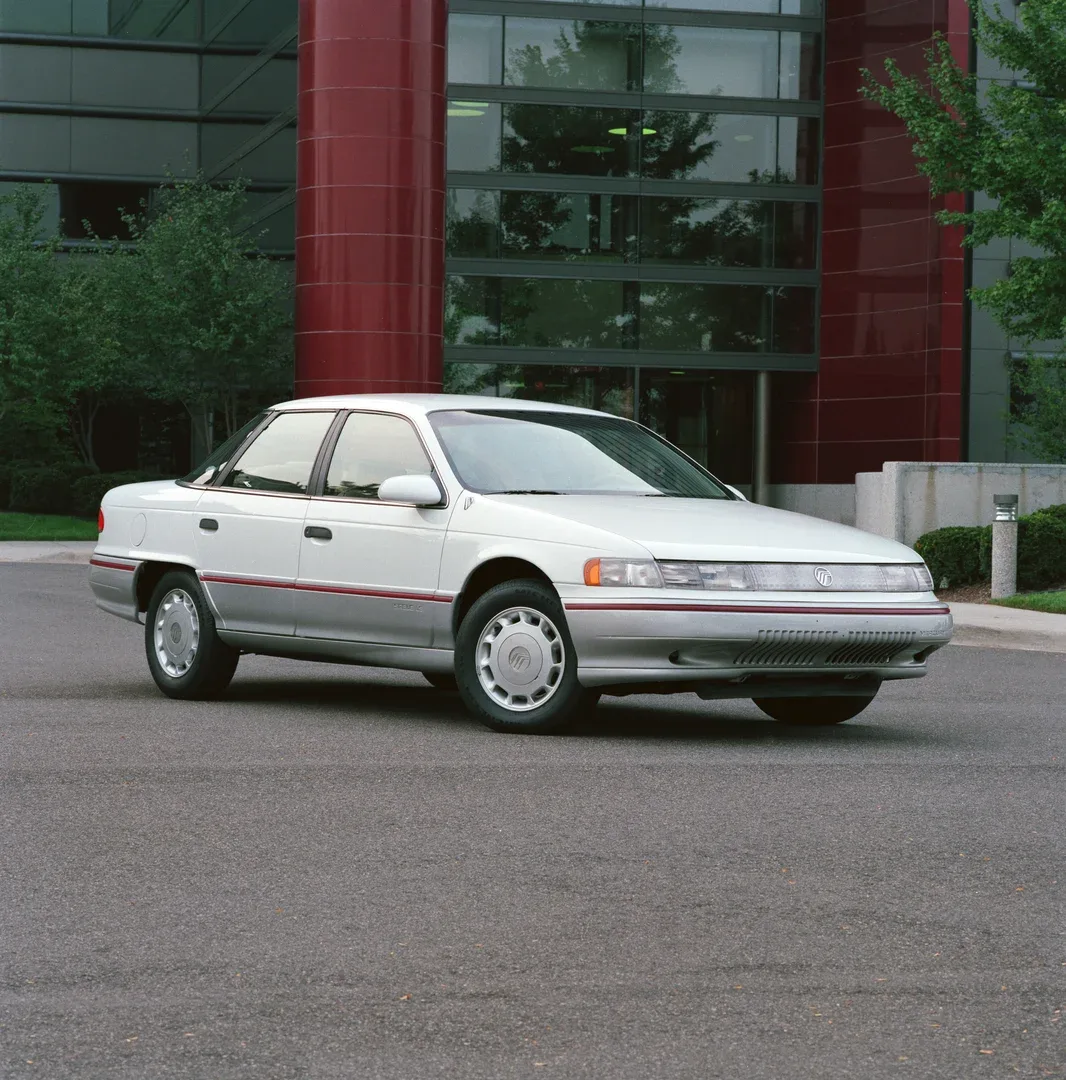
The second-generation Mercury Sable was introduced for the 1992 model year as part of a $650 million investment in the Taurus and Sable. Ford chose an evolutionary change: though it looked similar to the first generation, every body panel on the sedan except the doors was new. It was offered as a four-door sedan and station wagon on the Ford DN5 platform with front-wheel drive, built in Atlanta and Chicago, with 3.0 litre Vulcan and 3.8 litre Essex V6 engines and four-speed automatics.
Collectors Spotted in the Mercury Sable Lineage
No member has published a public street spot of the Mercury Sable yet — the First · Worldwide stamp is wide open.
Trims & Figures
2 published trims in the catalogue. A blank is a figure not recorded, not zero.
| Trim | Years | Engine | Power | Torque | 0–60 | Drive | Gearbox | MSRP |
|---|---|---|---|---|---|---|---|---|
| 3.0 Vulcan V6 | 1992–1995 | 3.0 L V6 | 140 hp | 160 lb-ft | — | FWD | automatic | — |
| 3.8 Essex V6 | 1992–1995 | 3.8 L V6 | 140 hp | 215 lb-ft | — | FWD | automatic | — |
Owning one
An estimate, for the 3.0 Vulcan V6 trim: fuel on its EPA figure and a dated national price, upkeep on a per-mile average for the kind of car it is.
Owners’ builds
Nobody has claimed one yet.
Photographs
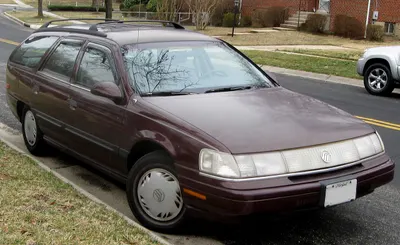
After 23 years of front-wheel-drive-only Sables, this final full-size generation finally offered all-wheel drive — a first for the nameplate right before it was retired.
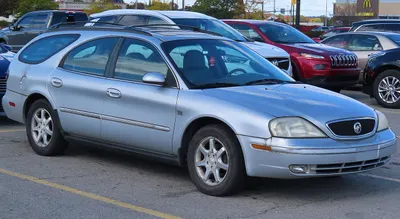
Despite Mercury's long history in Canada, this fourth-generation Sable was never sold there at all — it was exclusive to the US and Mexico.
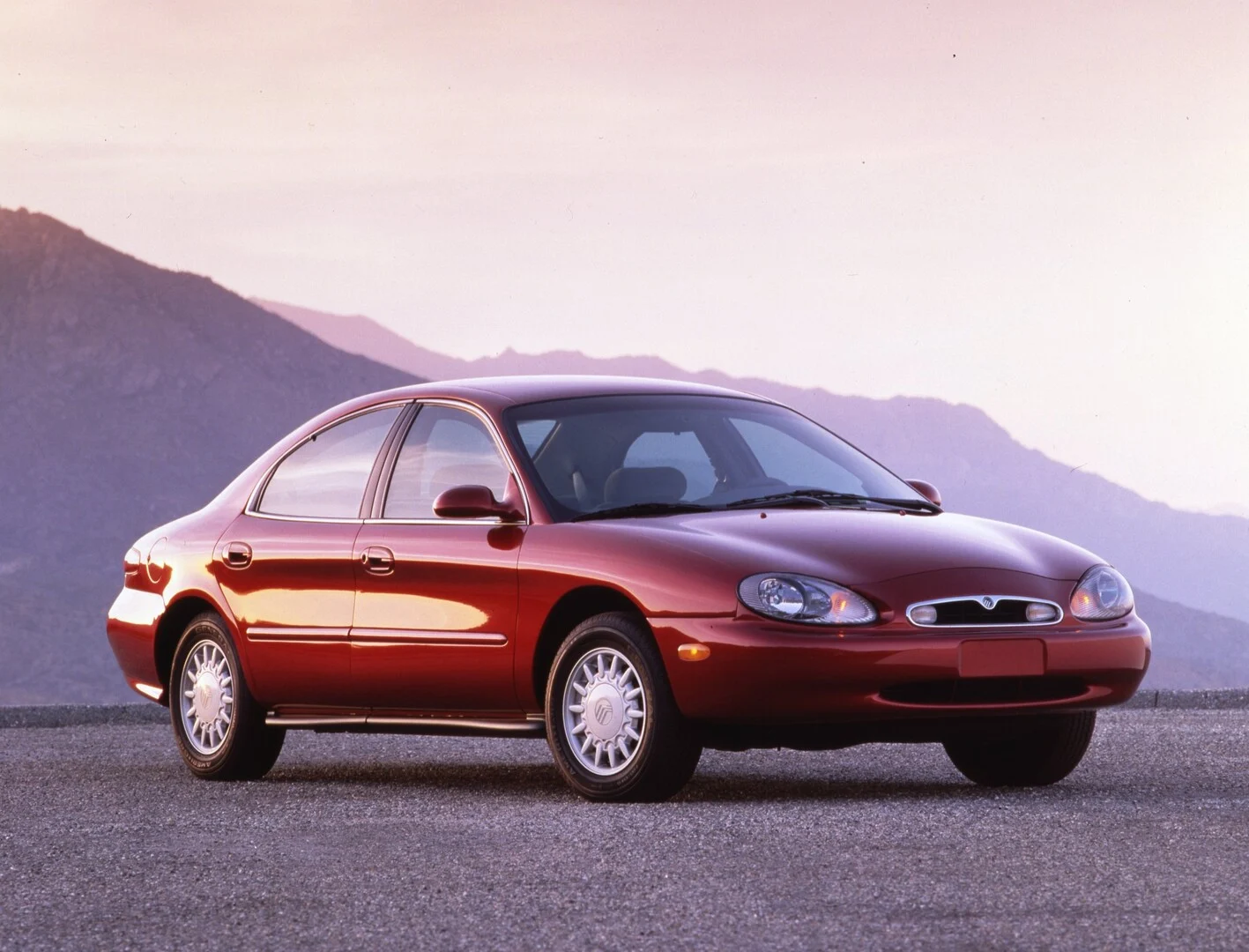
For the first time the Sable used the Taurus's interior, and for 1999 Mercury cut its price by up to $2,000 to stimulate sales.
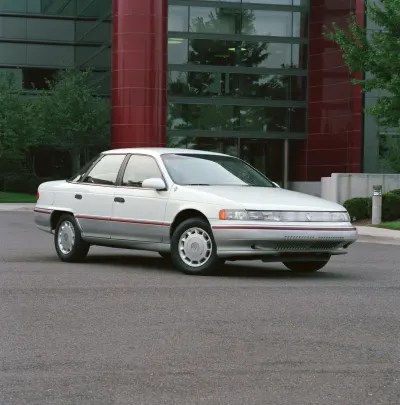
The wagon, over two feet shorter than the old Colony Park, became the only eight-seat vehicle Lincoln-Mercury sold; the Villager minivan seated seven.
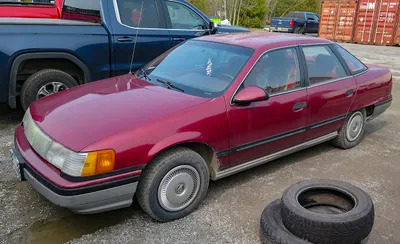
The original Sable borrowed its 'floating roof' look from a European Ford — blacking out the B, C and D-pillars the way the Ford Scorpio liftback did.
Rivals
Same body, same money, other badges — tap any card to flip.

It briefly served as senior sibling to Marquette, a GM companion brand cancelled after just one year.

Nissan hired former BMW engineers to help develop the 510's suspension, which is why period reviewers frequently compared its handling to the BMW 1600/2002.

A Trabant 601 won its class at the 1970 Monte Carlo Rally, with a second 601 right behind it in second.

The 600 was a stopgap: the P50's body over the 601's mechanicals, and for a while its estate was built alongside the new 601 saloon.

The G80 Sport brought a 370 PS twin-turbo 3.3 V6, a mesh grille and copper-tinted chrome with copper stitching to match.

The Vigor was sold only with a five-cylinder engine, an unusual configuration Honda used to fit a longer engine transversely under a short hood.

The GS/E coupe earned the nickname "German Charger" for its long hood, short deck stance borrowed from Detroit muscle cars.

This DeVille/Fleetwood was the first production car anywhere to mount its V8 sideways, Cadillac's front-drive gamble on the new C-body.