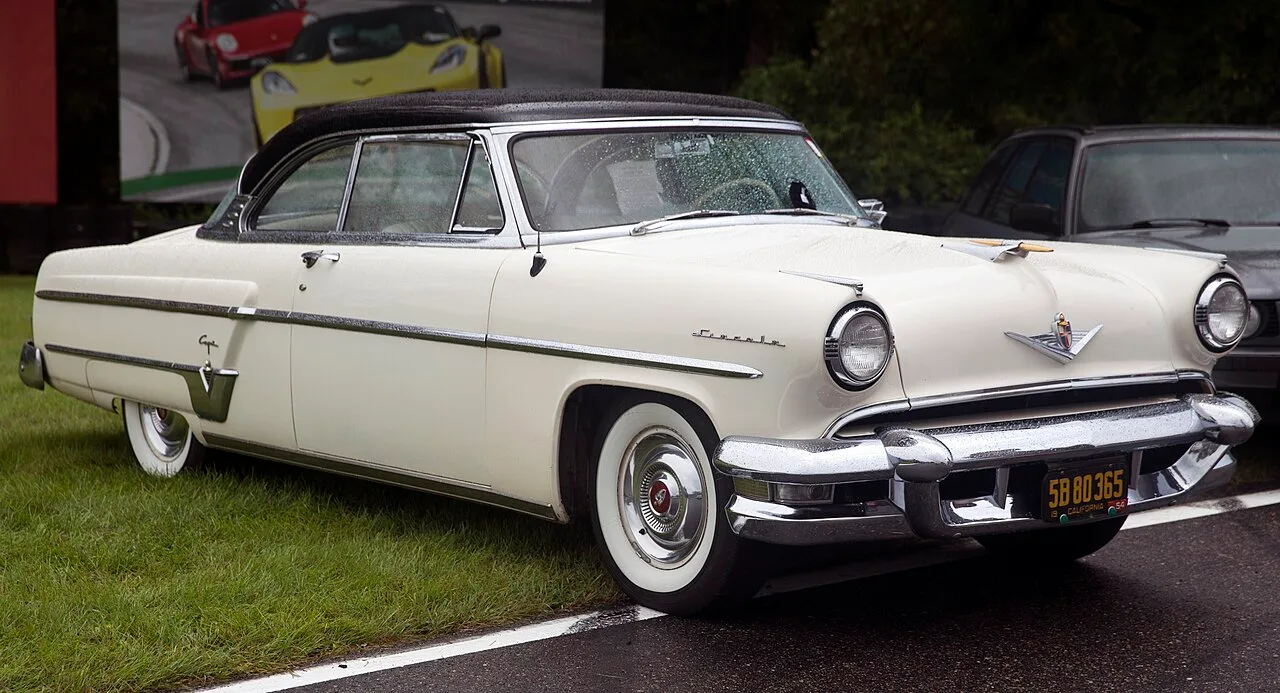
The Capri wasn’t just a showroom cruiser — it raced in the Pan American Road Race’s stock car class from 1952 to 1954, sweeping first through fourth in 1952 and 1953, then first and second in the race’s final year.
Lead trim: Capri 317 cu in Lincoln Y-block V8 (160 hp, 1952) · up to 225 hp
Lincoln Capri1952–1955
- 0spots by members
- Unclaimednobody has spotted one yet
- 0sets it belongs to
Nobody in Burbles has spotted a Lincoln Capri yet. See one on the street, point the app at it, and the first card is yours — with your @handle permanently credited on this page.
FactThe Capri wasn’t just a showroom cruiser — it raced in the Pan American Road Race’s stock car class from 1952 to 1954, sweeping first through fourth in 1952 and 1953, then first and second in the race’s final year.
The Lincoln Capri was sold by Lincoln from 1952 until 1959, a full-size luxury car named for the Italian island in the Gulf of Naples. Introduced in 1952 as a stand-alone model line positioned as a premium trim of the two-door Lincoln Cosmopolitan, it replaced the Cosmopolitan as the standard Lincoln product line. Competing against the Cadillac Series 62, Chrysler New Yorker and Packard Pacific, 14,342 Capris were sold in its debut year and 26,640 in 1953, readily outselling the Cosmopolitan each year; it had Lincoln's new 90-degree V8 and no extended-length limousine, at a list price of US$3,665 for the convertible. On a 123.0 in wheelbase (214.0 in long in 1952 to 215.6 in in 1955, 77.5–77.6 in wide, 62.6–62.7 in high, 4,300–4,600 lb), with a 4-speed Hydra-Matic and later a 3-speed Turbo-Drive, a 1952 Capri with the new 160 hp 317 cu in (5.2 L) overhead-valve Lincoln Y-block tested by Popular Mechanics did 0–60 mph in 14.8 seconds and the quarter-mile in 21.3 seconds. In 1955 the Capri got a larger 341 cu in (5.6 L), 225 hp engine with 8.5:1 compression and a four-barrel Holley carburetor with the standard Ford-built 3-speed Turbo-Drive (the only year for that engine), as a hardtop coupe, convertible and four-door sedan; it was one of the first vehicles to offer an automatic headlight dimmer as optional equipment, and sold 23,673 in 1955, 87% of Lincoln's output that year. The Capri competed in the Stock Car category of the Pan American Road Race from 1952 to 1954, taking first through fourth in 1952 and 1953 and first and second in 1954.
Collectors Spotted in the Lincoln Capri Lineage
No member has published a public street spot of the Lincoln Capri yet — the First · Worldwide stamp is wide open.
Trims & Figures
3 published trims in the catalogue. A blank is a figure not recorded, not zero.
| Trim | Years | Engine | Power | Torque | 0–60 | Drive | Gearbox | MSRP |
|---|---|---|---|---|---|---|---|---|
| Capri 317 cu in Lincoln Y-block V8 (160 hp, 1952) | 1952–1952 | 5.2 L V8 | 160 hp | 284 lb-ft | 14.8 s | RWD | — | — |
| Capri 317 cu in Lincoln Y-block V8 (1953–1954) | 1953–1954 | 5.2 L V8 | 205 hp | 305 lb-ft | — | RWD | — | — |
| Capri 341 cu in Lincoln Y-block V8 (225 hp, 1955) | 1955–1955 | 5.6 L V8 | 225 hp | 332 lb-ft | — | RWD | — | — |
Owning one
We don’t estimate running costs for a car like this. What it costs depends on its condition, its specialist and how it is driven, and an average would mislead.
Owners’ builds
Nobody has claimed one yet.
Photographs
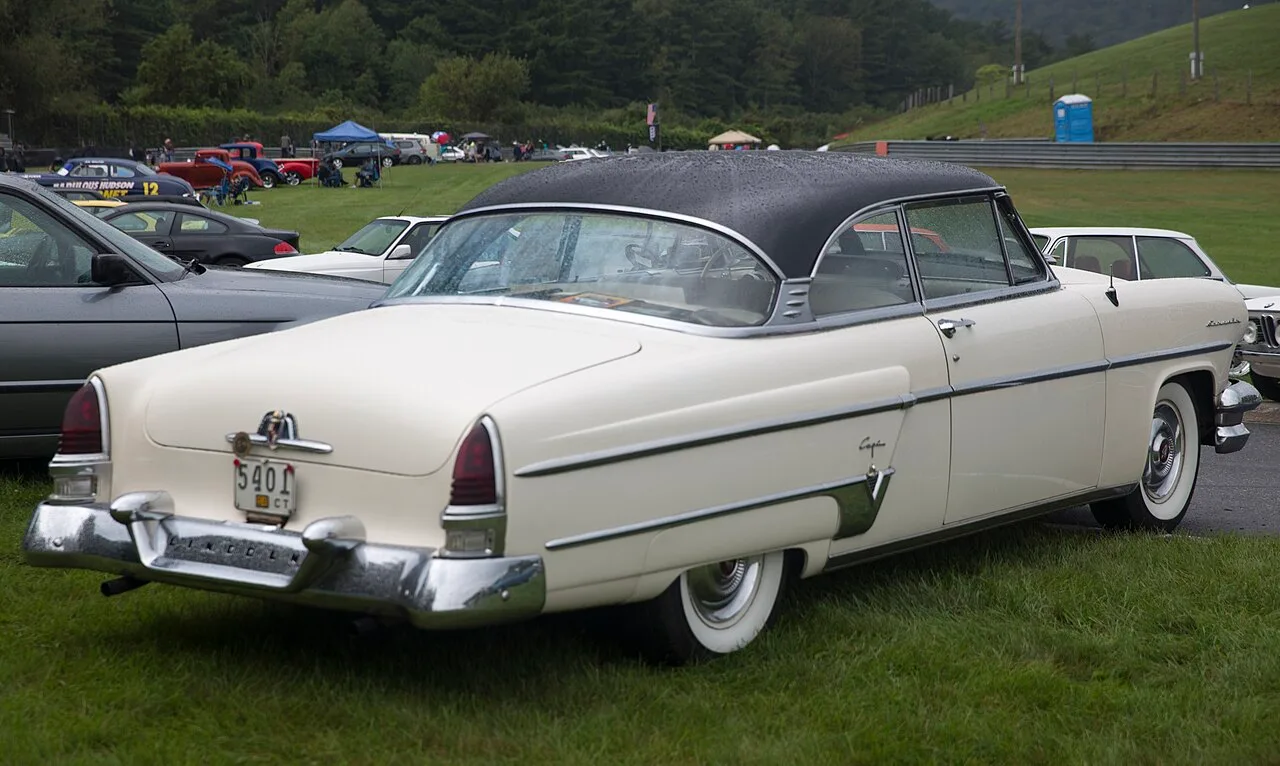
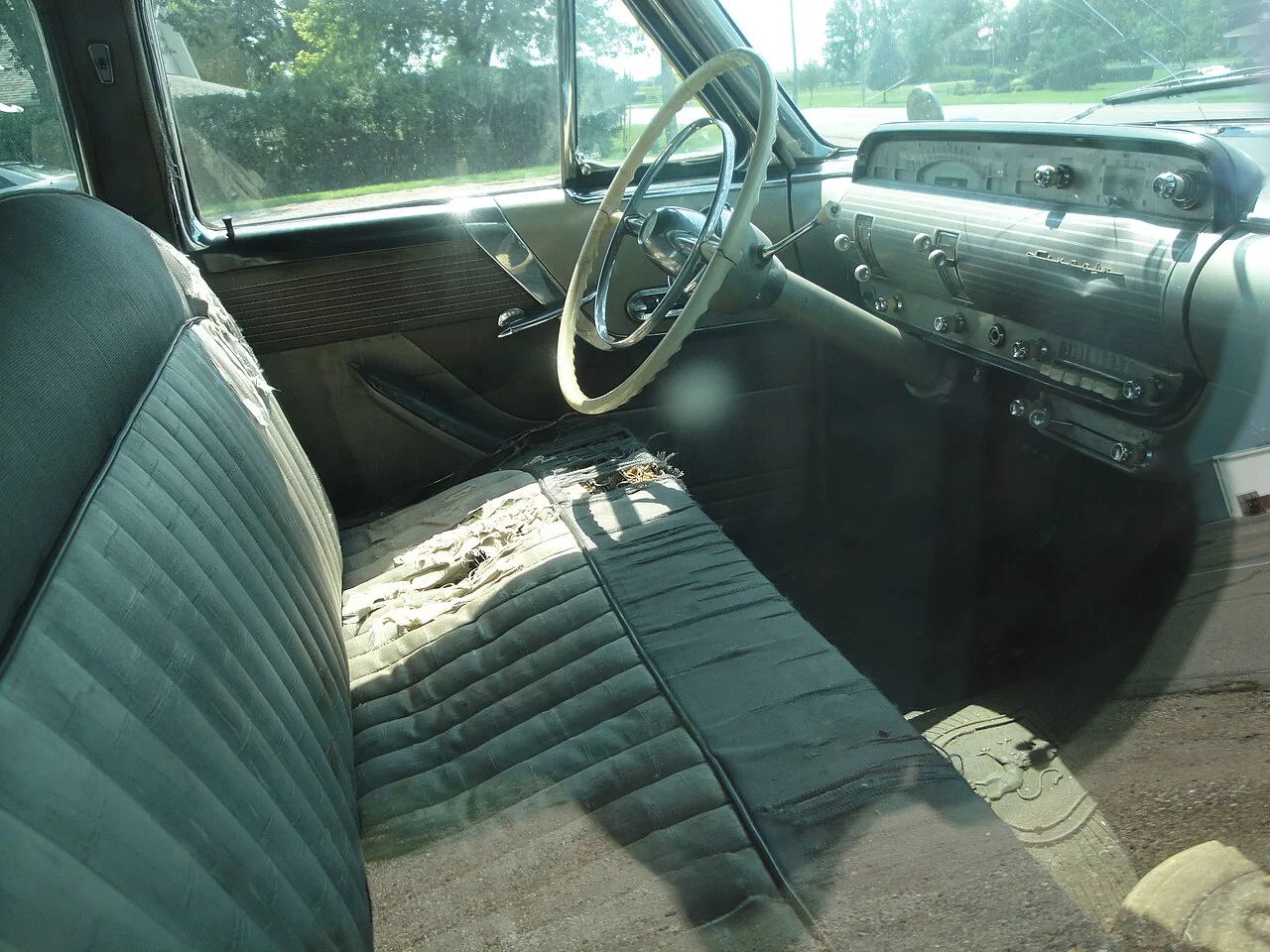
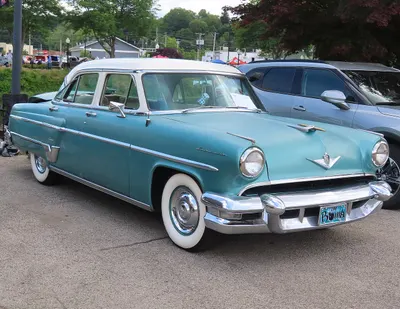
This Capri was one of the largest cars Lincoln ever built — bigger than the Cadillacs and Imperials it competed with, with styling even its own era called excessive.
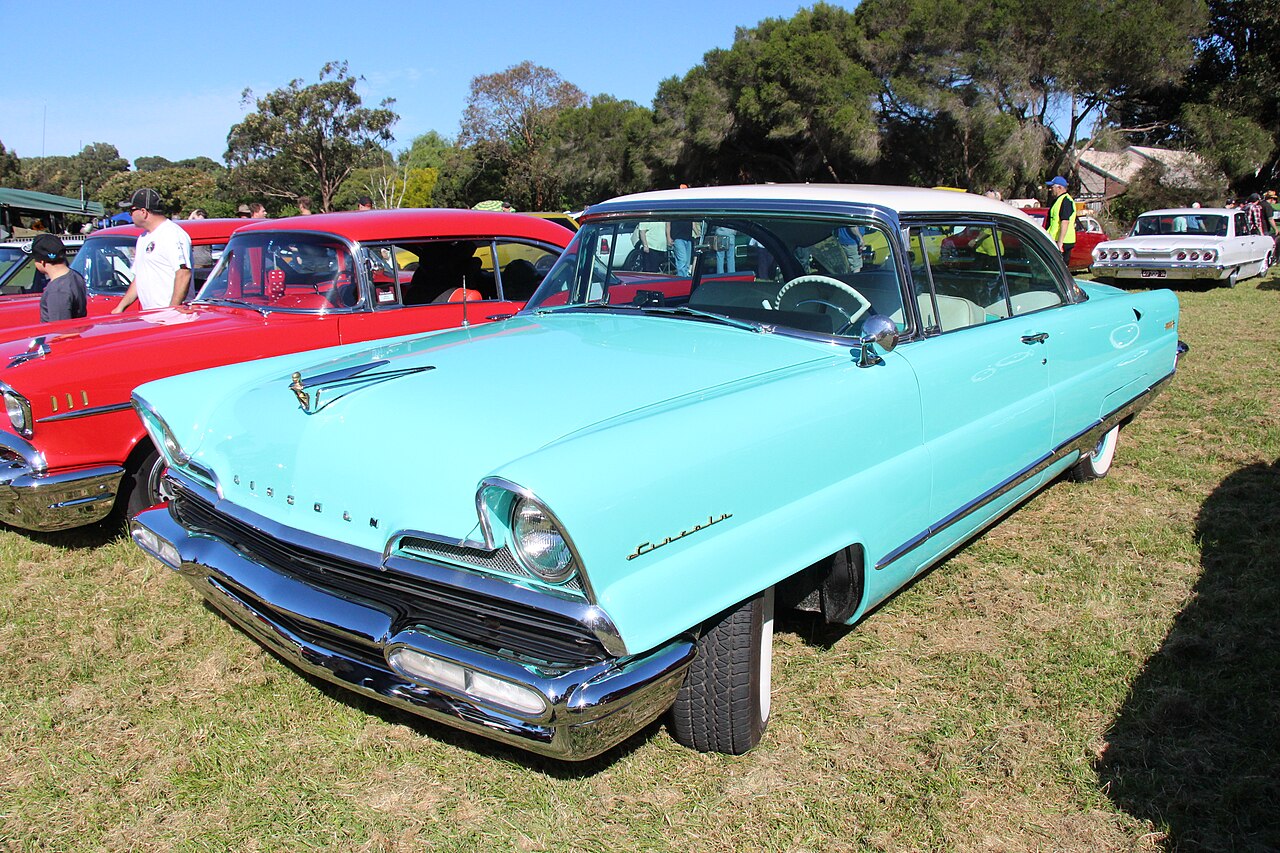
The 1956-57 Capri borrowed its look from two space-age show cars, the Mercury XM-800 and the Lincoln Futura — Lincoln chasing the Space Race on a production sedan.
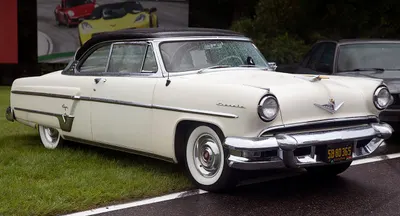
The Capri wasn’t just a showroom cruiser — it raced in the Pan American Road Race’s stock car class from 1952 to 1954, sweeping first through fourth in 1952 and 1953, then first and second in the race’s final year.
Rivals
Same body, same money, other badges — tap any card to flip.

It briefly served as senior sibling to Marquette, a GM companion brand cancelled after just one year.

Nissan hired former BMW engineers to help develop the 510's suspension, which is why period reviewers frequently compared its handling to the BMW 1600/2002.

A Trabant 601 won its class at the 1970 Monte Carlo Rally, with a second 601 right behind it in second.

The 600 was a stopgap: the P50's body over the 601's mechanicals, and for a while its estate was built alongside the new 601 saloon.

The G80 Sport brought a 370 PS twin-turbo 3.3 V6, a mesh grille and copper-tinted chrome with copper stitching to match.

The Vigor was sold only with a five-cylinder engine, an unusual configuration Honda used to fit a longer engine transversely under a short hood.

The GS/E coupe earned the nickname "German Charger" for its long hood, short deck stance borrowed from Detroit muscle cars.

This DeVille/Fleetwood was the first production car anywhere to mount its V8 sideways, Cadillac's front-drive gamble on the new C-body.