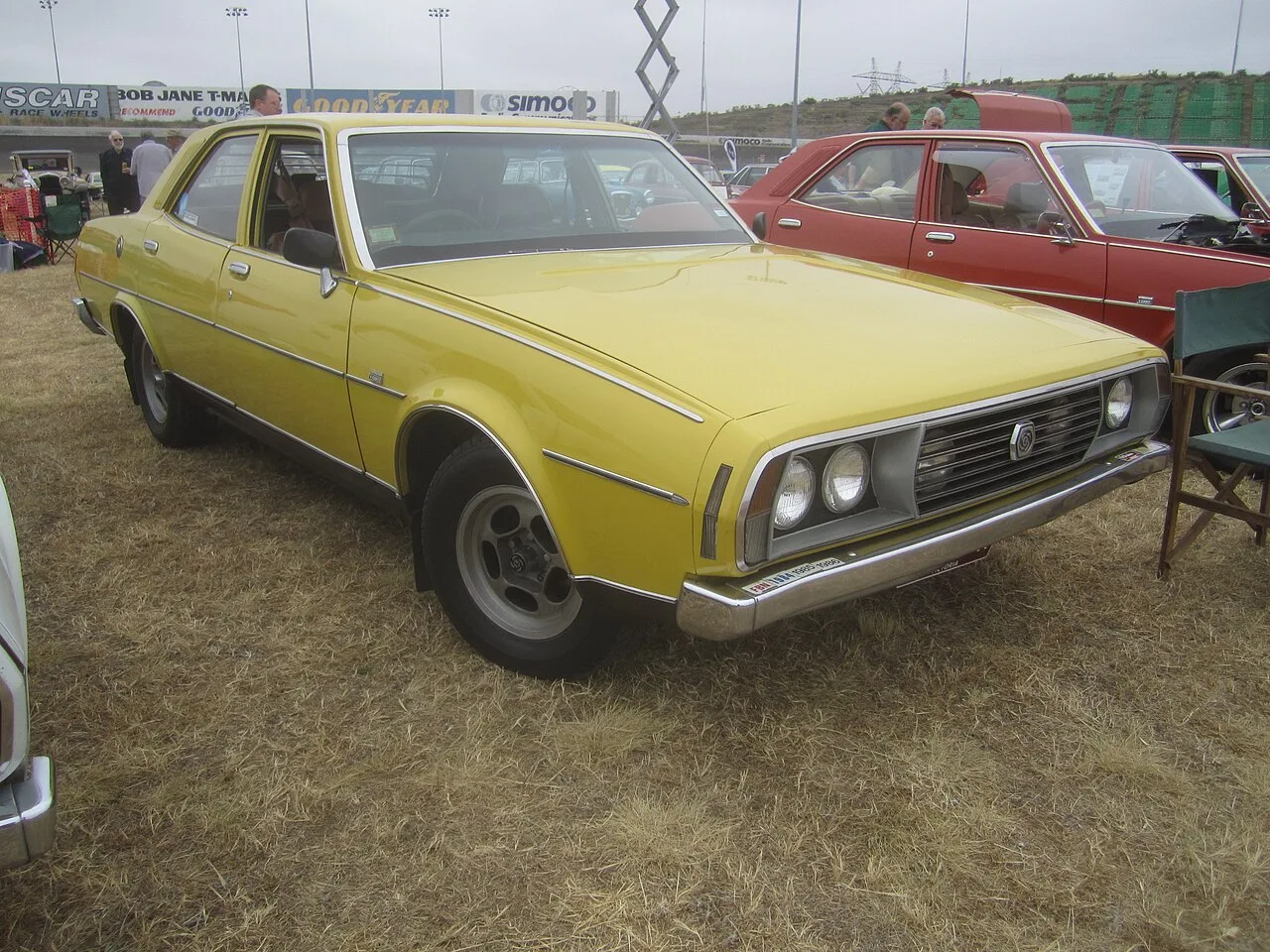
Built on an A$20 million budget with an aluminium V8, it still won Wheels Car of the Year before being branded a lemon.
Lead trim: P76 2.6 E-Series six (121 bhp) · up to 192 hp
Leyland P761973–1976
- 0spots by members
- Unclaimednobody has spotted one yet
- 0sets it belongs to
Nobody in Burbles has spotted a Leyland P76 yet. See one on the street, point the app at it, and the first card is yours — with your @handle permanently credited on this page.
FactBuilt on an A$20 million budget with an aluminium V8, it still won Wheels Car of the Year before being branded a lemon.
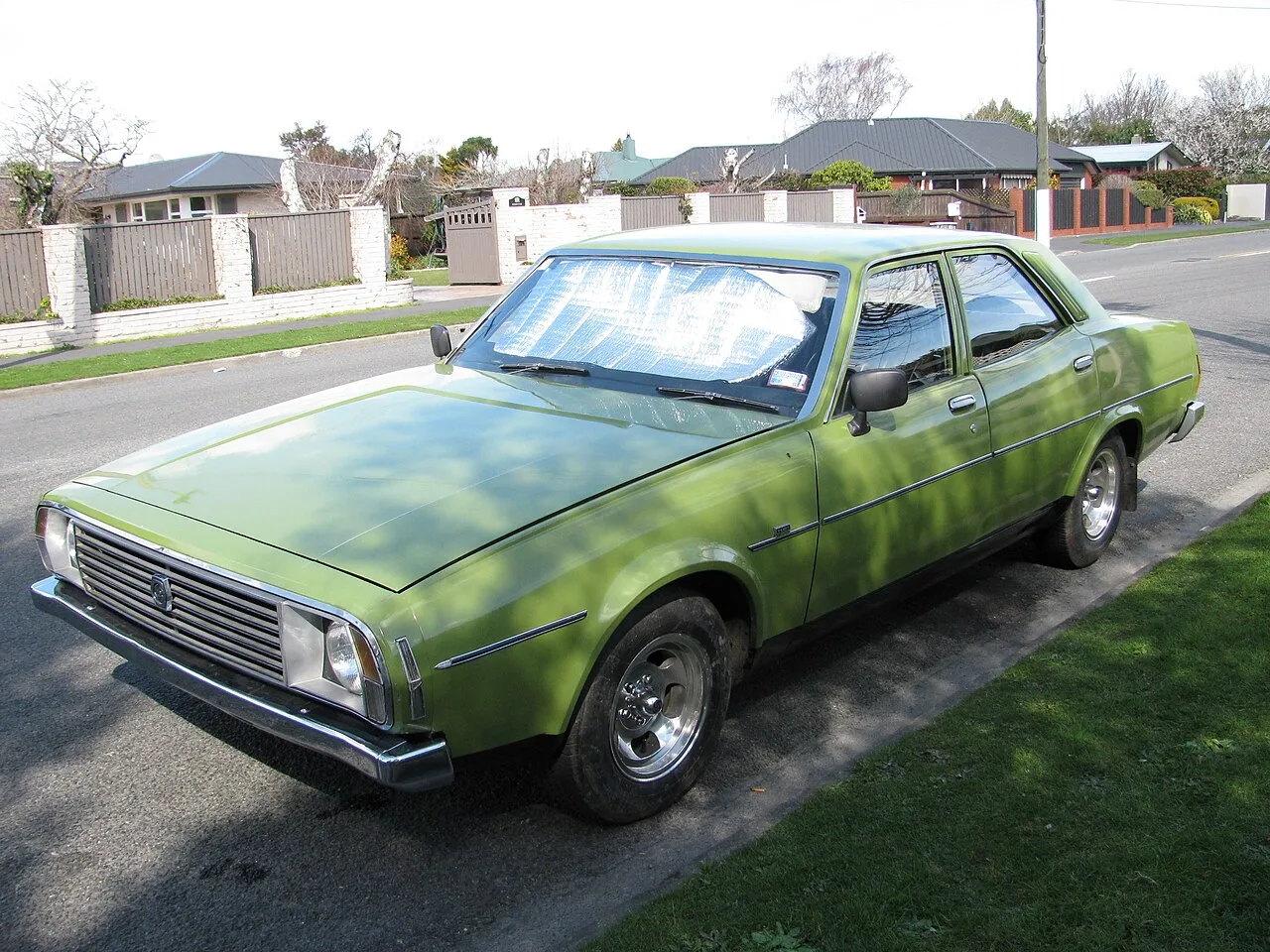
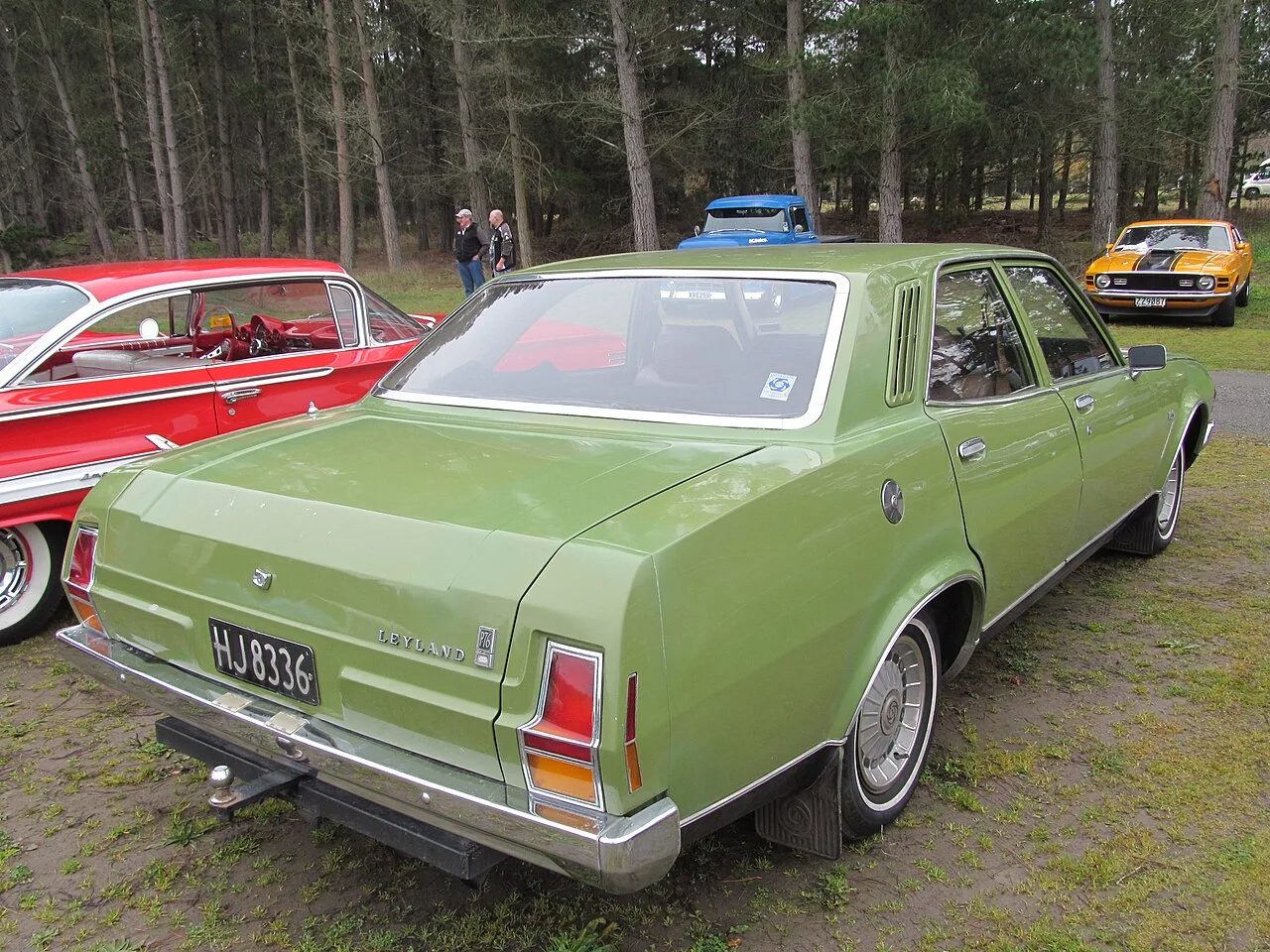
The Leyland P76 is a large car produced by Leyland Australia (the Australian subsidiary of British Leyland) at Zetland, New South Wales, from 1973 to 1976 (18,007 built; also assembled in Petone, New Zealand), designed by Giovanni Michelotti with David Beech, on the "standard Australian wheelbase of 111 inches" to rival the Ford Falcon, Holden Kingswood and Chrysler Valiant. Leyland Australia had won the go-ahead to build a large car in 1969 and designed it from scratch on only A$20m, with an accumulated deficit of £8.6 million at launch. The entry-level P76 had an enlarged 2663 cc, 121 bhp version of the six-cylinder E-Series engine of the smaller Austin Kimberley and Tasman, and the top-of-the-line 192 bhp aluminium 4416 cc V8 was unique to the P76, a derivative of the ex-Buick V8 that powered the Rover 3500 and Range Rover; Leyland claimed a weight advantage approaching 500 lb from the aluminium block. It offered rack-and-pinion steering, power-assisted front discs on all models, MacPherson-strut front suspension, a front-hinged bonnet, a glued-in windscreen and concealed wipers with a body of a remarkably low 215 panels, with Borg-Warner Australia transmissions and a live rear axle. Despite the V8 winning Wheels Car of the Year for 1973, rushed assembly, the fuel crisis and strikes at component makers led to poor build quality and sales slumping, so it was labelled a lemon and BMC ended production in 1976 (a V6 derived from the V8 to replace the six was under development). It won the Targa Florio section of the 1974 World Cup Rally (13th overall) and Leyland celebrated with the limited-edition Targa Florio model, a V8 Super with a limited-slip differential, sports wheels and steering wheel and special paintwork; the Force 7 coupé was announced in 1974 but only 10 pre-production coupés survive, and a wagon prototype was built. Crown and Bryson won the Classic Category of the 2013 and 2019 Peking to Paris rallies in one.
Collectors Spotted in the Leyland P76 Lineage
No member has published a public street spot of the Leyland P76 yet — the First · Worldwide stamp is wide open.
Trims & Figures
2 published trims in the catalogue. A blank is a figure not recorded, not zero.
| Trim | Years | Engine | Power | Torque | 0–60 | Drive | Gearbox | MSRP |
|---|---|---|---|---|---|---|---|---|
| P76 2.6 E-Series six (121 bhp) | 1973–1976 | 2.7 L Inline-6 | 121 hp | — | — | RWD | — | — |
| P76 4.4 aluminium V8 (192 bhp) | 1973–1976 | 4.4 L V8 | 192 hp | — | — | RWD | — | — |
Owning one
We don’t estimate running costs for a car like this. What it costs depends on its condition, its specialist and how it is driven, and an average would mislead.
Owners’ builds
Nobody has claimed one yet.
Photographs
Rivals
Same body, same money, other badges — tap any card to flip.

It briefly served as senior sibling to Marquette, a GM companion brand cancelled after just one year.

Nissan hired former BMW engineers to help develop the 510's suspension, which is why period reviewers frequently compared its handling to the BMW 1600/2002.

A Trabant 601 won its class at the 1970 Monte Carlo Rally, with a second 601 right behind it in second.

The 600 was a stopgap: the P50's body over the 601's mechanicals, and for a while its estate was built alongside the new 601 saloon.

The G80 Sport brought a 370 PS twin-turbo 3.3 V6, a mesh grille and copper-tinted chrome with copper stitching to match.

The Vigor was sold only with a five-cylinder engine, an unusual configuration Honda used to fit a longer engine transversely under a short hood.

The GS/E coupe earned the nickname "German Charger" for its long hood, short deck stance borrowed from Detroit muscle cars.

This DeVille/Fleetwood was the first production car anywhere to mount its V8 sideways, Cadillac's front-drive gamble on the new C-body.