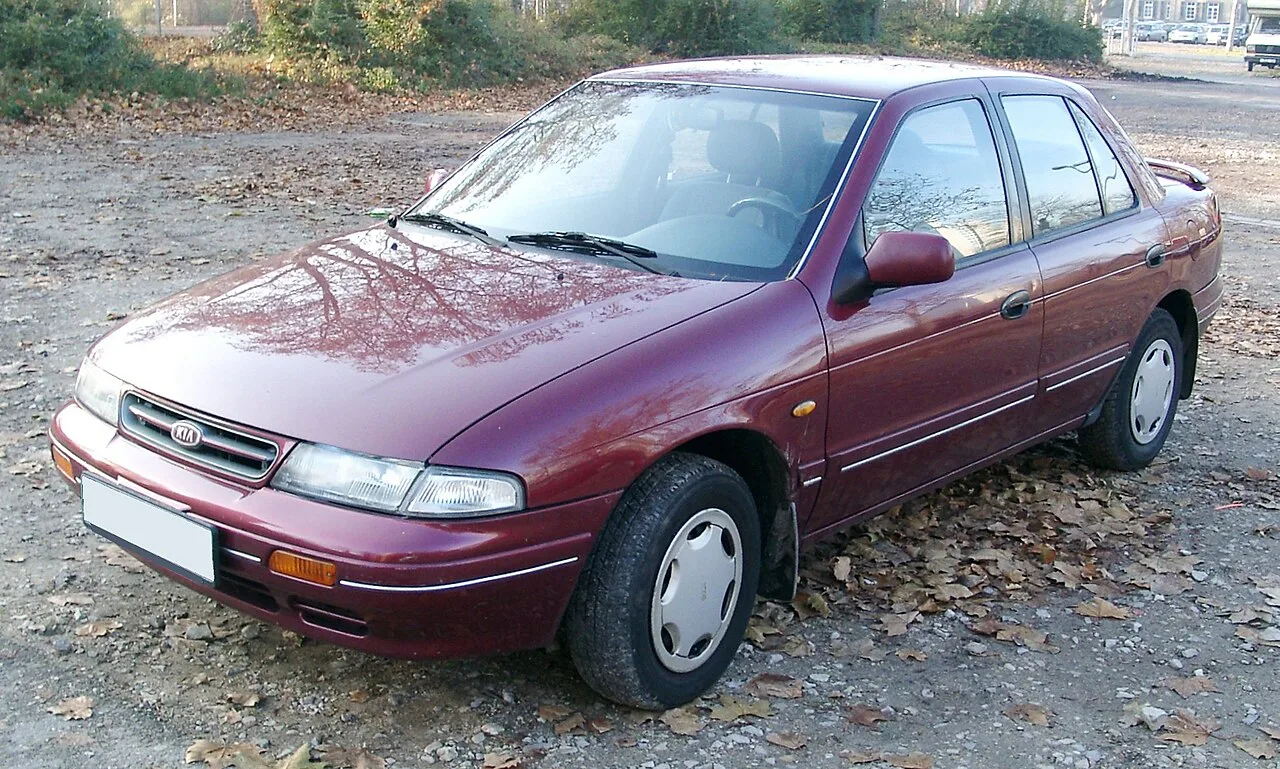
Launching the Sephia in Brazil in 1994, Kia didn't just retune the suspension — it imported 1,000 litres of actual Brazilian gasoline to properly calibrate the engine management.
Median 148 hp across 390 similar cars
Lead trim: Sephia 1.5 B5 (79 hp) · up to 122 hp
Kia Sephia / Mentor first generation1992–1997
- 0spots by members
- Unclaimednobody has spotted one yet
- 0sets it belongs to
Nobody in Burbles has spotted a Kia Sephia / Mentor first generation yet. See one on the street, point the app at it, and the first card is yours — with your @handle permanently credited on this page.
FactLaunching the Sephia in Brazil in 1994, Kia didn't just retune the suspension — it imported 1,000 litres of actual Brazilian gasoline to properly calibrate the engine management.
The first-generation Kia Sephia, presented in September 1992 to replace the ageing Capital, is the first car actually designed by Kia with their own chassis; it was badged Kia Mentor in Australia and (in Indonesia) Timor S515, as a 4-door sedan, 5-door liftback and (Indonesia) 5-door station wagon on a 2,500 mm (98.4 in) wheelbase. The B-series engines were a 1.5-litre rated at 59 kW (79 hp), a 1.6-litre 78 kW (105 hp) and, from 1994, the 1.8-litre BP at 91 kW (122 hp); it sold over 100,000 in its first full year at home (1993) and 472,920 over its life. In the United States sales began in late 1993 for the 1994 model year, the first Kia exported there, and in the 1995 model year the grille and tail lights were restyled and all US Sephias except California RS/LS models got the 1.8-litre DOHC BP (Kia licensed the engine design from Mazda, as used in the Familia BG, but manufactured it themselves). It launched in Europe in the spring of 1994 against budget imports such as the Daewoo Nexia, Hyundai Accent, Proton Persona and Skoda Felicia, and in Brazil in March 1994 with only the 1.5-litre twin-cam of 112 PS (82 kW). The Timor S5 series (sold by PT Timor Putra Nasional in Indonesia from 1996 at half the price of a comparable Toyota Corolla thanks to Timor's national-carmaker tax exemption) comprised the S515 (SOHC carburetted), S515i (DOHC fuel-injected) and the Prodrive-licensed S516i LE, briefly assembled at Purwakarta in 1998 before WTO disputes ended it. Length 4,360 mm (171.7 in), width 1,695 mm (66.7 in), height 1,390 mm (54.7 in).
Collectors Spotted in the Kia Sephia Lineage
No member has published a public street spot of the Kia Sephia yet — the First · Worldwide stamp is wide open.
Trims & Figures
4 published trims in the catalogue. A blank is a figure not recorded, not zero.
| Trim | Years | Engine | Power | Torque | 0–60 | Drive | Gearbox | MSRP |
|---|---|---|---|---|---|---|---|---|
| Sephia 1.5 B5 (79 hp) | 1992–1997 | 1.5 L Inline-4 | 79 hp | 88 lb-ft | — | FWD | — | — |
| Sephia 1.5 twin-cam (Brazil, 112 PS) | 1994–1997 | 1.5 L Inline-4 | 110 hp | — | — | FWD | — | — |
| Sephia 1.6 B6D (105 hp) | 1992–1997 | 1.6 L Inline-4 | 105 hp | 108 lb-ft | — | FWD | — | — |
| Sephia 1.8 BP DOHC (122 hp, from 1994) | 1994–1997 | 1.8 L Inline-4 | 122 hp | 117 lb-ft | — | FWD | — | — |
Owning one
An estimate, for the Sephia 1.5 B5 (79 hp) trim: fuel on its EPA figure and a dated national price, upkeep on a per-mile average for the kind of car it is.
Owners’ builds
Nobody has claimed one yet.
Photographs
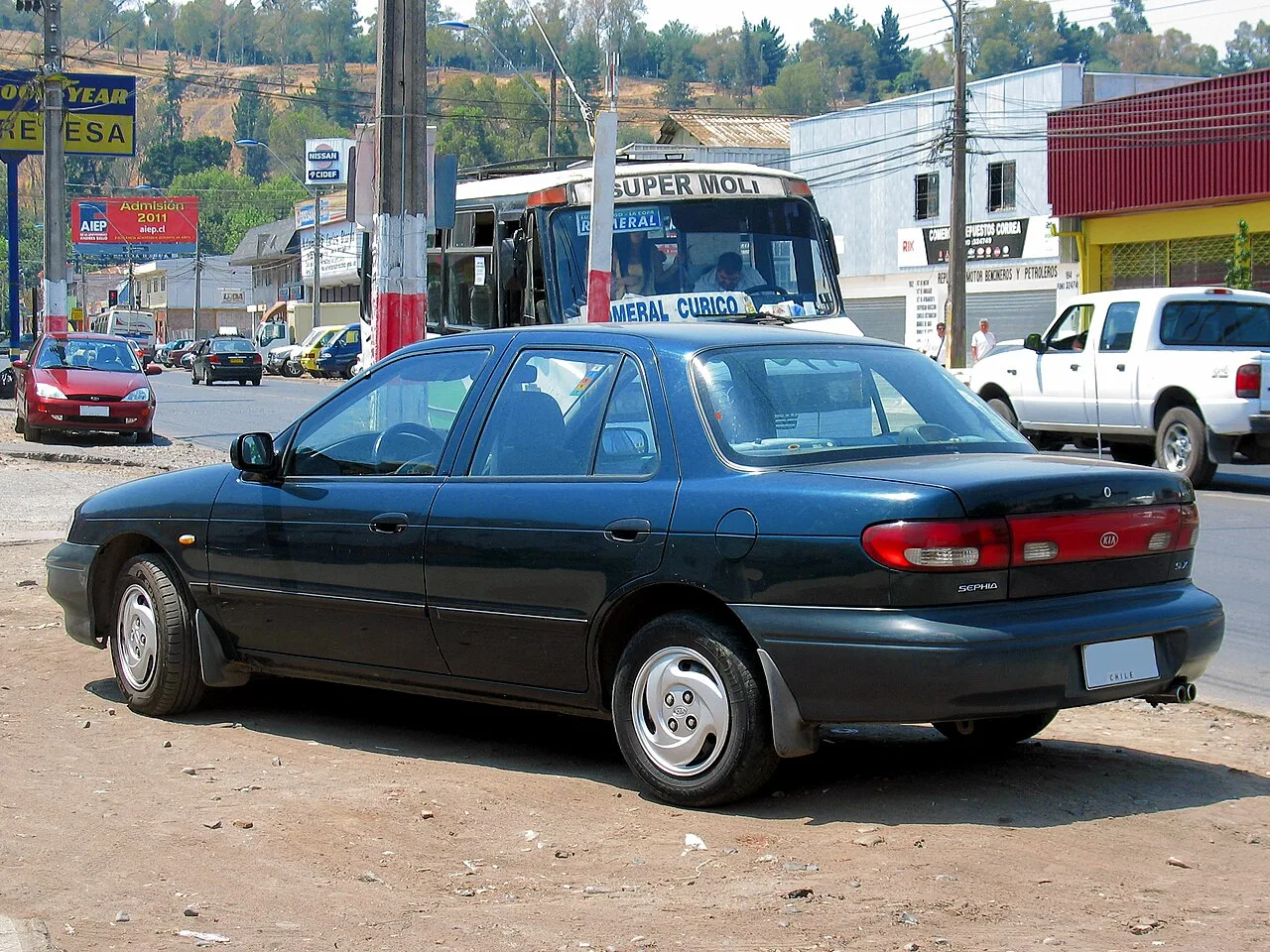
This Sephia-based platform had a long global afterlife — built on as the Spectra in Cairo, in Malaysia until 2010, and in Russia until 2011.
To sell this Sephia in Brazil, Kia didn't just localize the trim — it studied Brazilian road surfaces and imported 1,000 litres of actual Brazilian gasoline just to tune the engine management for it.
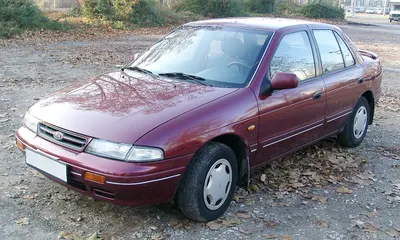
Launching the Sephia in Brazil in 1994, Kia didn't just retune the suspension — it imported 1,000 litres of actual Brazilian gasoline to properly calibrate the engine management.
Rivals
Same body, same money, other badges — tap any card to flip.

It briefly served as senior sibling to Marquette, a GM companion brand cancelled after just one year.

Nissan hired former BMW engineers to help develop the 510's suspension, which is why period reviewers frequently compared its handling to the BMW 1600/2002.

A Trabant 601 won its class at the 1970 Monte Carlo Rally, with a second 601 right behind it in second.

The 600 was a stopgap: the P50's body over the 601's mechanicals, and for a while its estate was built alongside the new 601 saloon.

The G80 Sport brought a 370 PS twin-turbo 3.3 V6, a mesh grille and copper-tinted chrome with copper stitching to match.

The Vigor was sold only with a five-cylinder engine, an unusual configuration Honda used to fit a longer engine transversely under a short hood.

The GS/E coupe earned the nickname "German Charger" for its long hood, short deck stance borrowed from Detroit muscle cars.

This DeVille/Fleetwood was the first production car anywhere to mount its V8 sideways, Cadillac's front-drive gamble on the new C-body.