Buy the Imperial's Frank Sinatra Edition and you got more than his name on the fender — 16 cassette tapes of his music, locked in their own leather case under the dash.
Lead trim: Imperial 318 cu in LA V8 EFI (140 hp at 4,000 rpm)
Imperial ImperialYS · 1981–1983
- 0spots by members
- Unclaimednobody has spotted one yet
- 0sets it belongs to
Nobody in Burbles has spotted a Imperial Imperial yet. See one on the street, point the app at it, and the first card is yours — with your @handle permanently credited on this page.
FactBuy the Imperial's Frank Sinatra Edition and you got more than his name on the fender — 16 cassette tapes of his music, locked in their own leather case under the dash.
Hoping to revive Chrysler, the company recruited former Ford executive Lee Iacocca, who sought to repeat his Thunderbird-to-Continental Mark III upscaling but this time downsized and de-featured: the Series YS Imperial (production 1980–1983, model years 1981–1983; designer Steven N. Bollinger) was a two-door coupé on the intermediate J platform (related to the Chrysler Cordoba and Dodge Mirada), built at Windsor, Ontario and marketed simply as Imperial without the Chrysler name on the car. The only engine was the 318 cu in (5.2 L) LA V8 with a Chrysler-built throttle-body electronic fuel injection making 140 hp at 4,000 rpm and 245 lb-ft at 2,000 rpm, with a 3-speed TorqueFlite A904; special trims included the Frank Sinatra Edition, and the Imperial name reappeared in 1990 as the flagship Chrysler Imperial. Wheelbase 112.7 in, length 213.3 in, width 72.7 in, height 52.6 in, curb weight 3,968 lb.
Collectors Spotted in the Imperial Imperial Lineage
No member has published a public street spot of the Imperial Imperial yet — the First · Worldwide stamp is wide open.
Trims & Figures
One published trim in the catalogue. A blank is a figure not recorded, not zero.
| Trim | Years | Engine | Power | Torque | 0–60 | Drive | Gearbox | MSRP |
|---|---|---|---|---|---|---|---|---|
| Imperial 318 cu in LA V8 EFI (140 hp at 4,000 rpm) | 1981–1983 | 5.2 L V8 | 140 hp | 245 lb-ft | — | — | — | — |
Owning one
We don’t estimate running costs for a car like this. What it costs depends on its condition, its specialist and how it is driven, and an average would mislead.
Owners’ builds
Nobody has claimed one yet.
Buy the Imperial's Frank Sinatra Edition and you got more than his name on the fender — 16 cassette tapes of his music, locked in their own leather case under the dash.

To cut costs, the 1974 Imperial shared most of its body with the Chrysler New Yorker — keeping only its own front clip and trunk lid to look distinct.

The 1971 fuselage-era Imperial quietly made history as the first production car in America offered with a 4-wheel anti-lock braking system — a Bendix option almost nobody ordered.
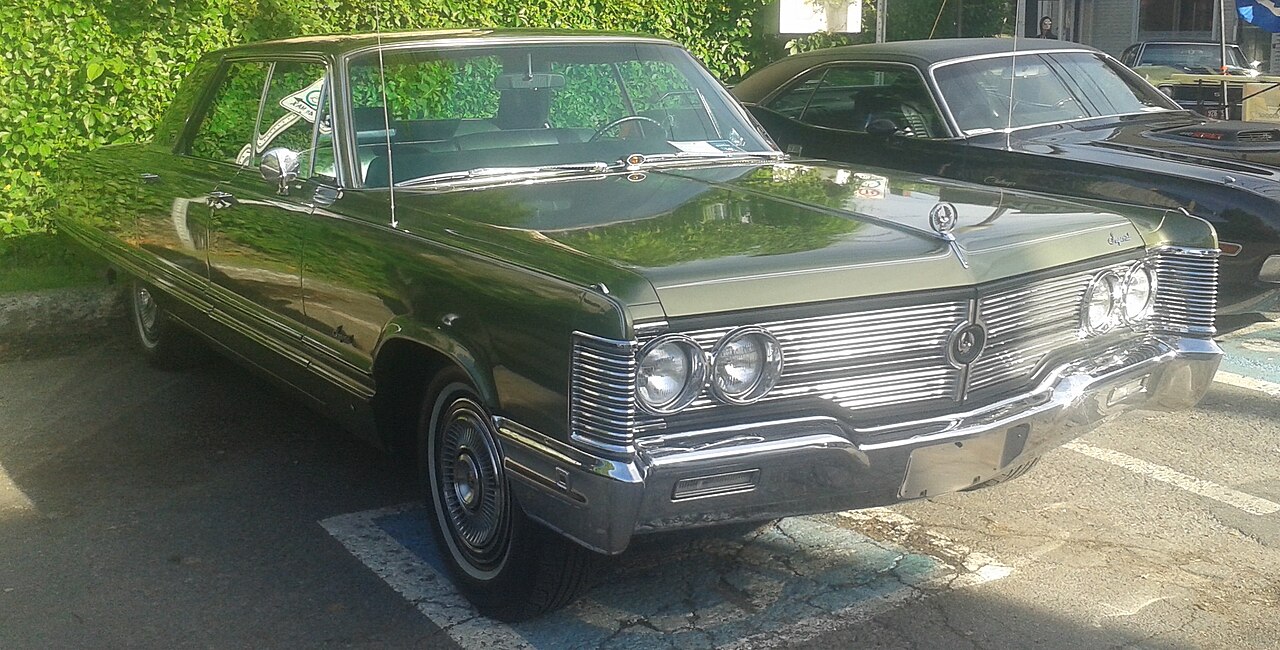
Imperial's switch to a shared C-body platform wasn't really about progress — it was about money. Keeping a separate platform for such low sales volume had become impossible to justify.

The 1957 Imperial set a front shoulder-room record so wide that no car — not even a later Imperial — beat it for more than a decade, until GM's full-size cars of the mid-1970s.

These Italian-built Imperial Crown limousines were made so slowly by Ghia that they kept the old 392-cubic-inch Hemi long after the rest of the lineup had moved on.
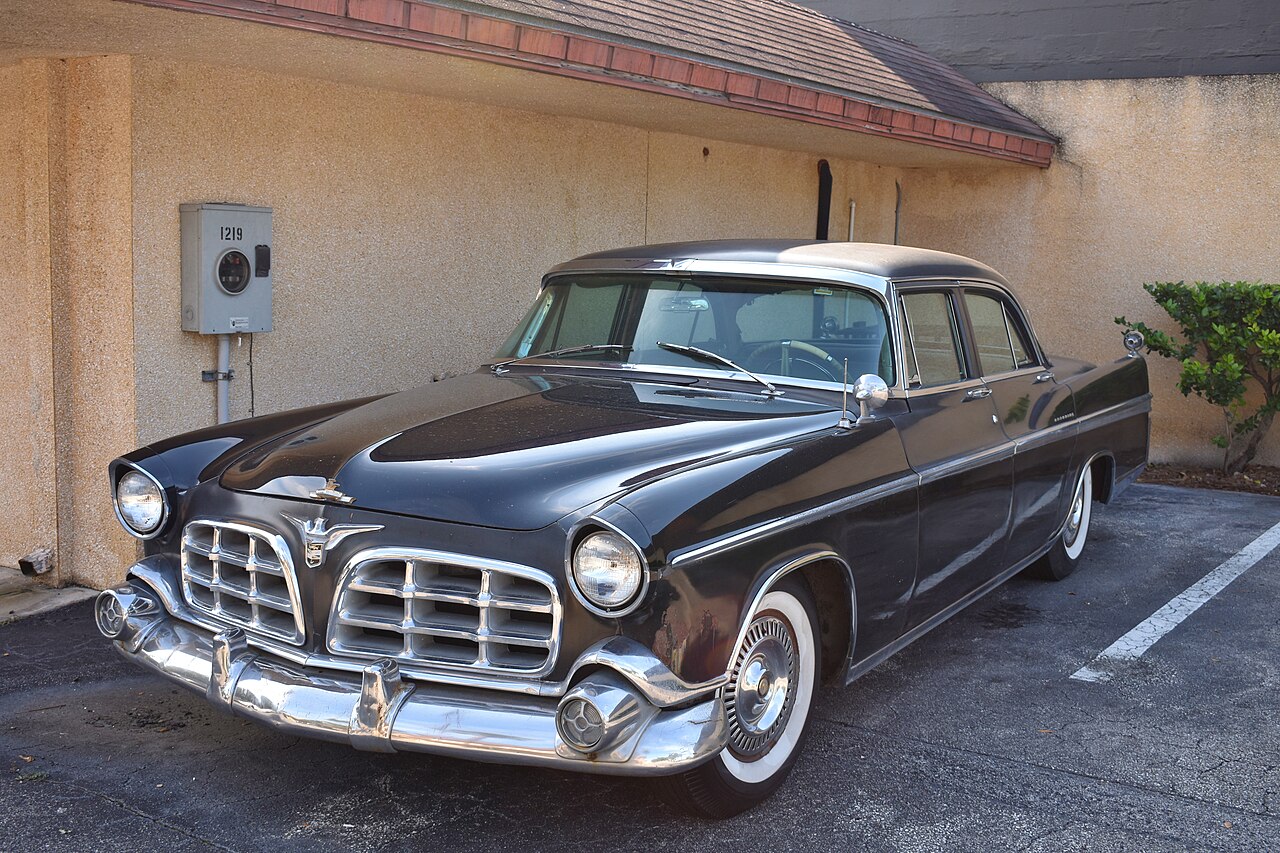
The year Imperial became its own make, it also got a world first riding along: Chrysler and Philco's all-transistor car radio, a 1956 option that beat every other automaker to solid-state.
Rivals
Same body, same money, other badges — tap any card to flip.

It briefly served as senior sibling to Marquette, a GM companion brand cancelled after just one year.

Nissan hired former BMW engineers to help develop the 510's suspension, which is why period reviewers frequently compared its handling to the BMW 1600/2002.

A Trabant 601 won its class at the 1970 Monte Carlo Rally, with a second 601 right behind it in second.

The 600 was a stopgap: the P50's body over the 601's mechanicals, and for a while its estate was built alongside the new 601 saloon.

The G80 Sport brought a 370 PS twin-turbo 3.3 V6, a mesh grille and copper-tinted chrome with copper stitching to match.

The Vigor was sold only with a five-cylinder engine, an unusual configuration Honda used to fit a longer engine transversely under a short hood.

The GS/E coupe earned the nickname "German Charger" for its long hood, short deck stance borrowed from Detroit muscle cars.

This DeVille/Fleetwood was the first production car anywhere to mount its V8 sideways, Cadillac's front-drive gamble on the new C-body.