The Mark VI's brakes weren't an afterthought: Humber gave it 40 percent more lining area than the outgoing Mark V, on top of a 20 percent more powerful engine.
Median 90 hp across 175 similar cars
Lead trim: Hawk Mk VIA 2.3 OHV four
Humber Hawk Mk VI and VIA1954–1957
- 0spots by members
- Unclaimednobody has spotted one yet
- 0sets it belongs to
Nobody in Burbles has spotted a Humber Hawk Mk VI and VIA yet. See one on the street, point the app at it, and the first card is yours — with your @handle permanently credited on this page.
FactThe Mark VI's brakes weren't an afterthought: Humber gave it 40 percent more lining area than the outgoing Mark V, on top of a 20 percent more powerful engine.
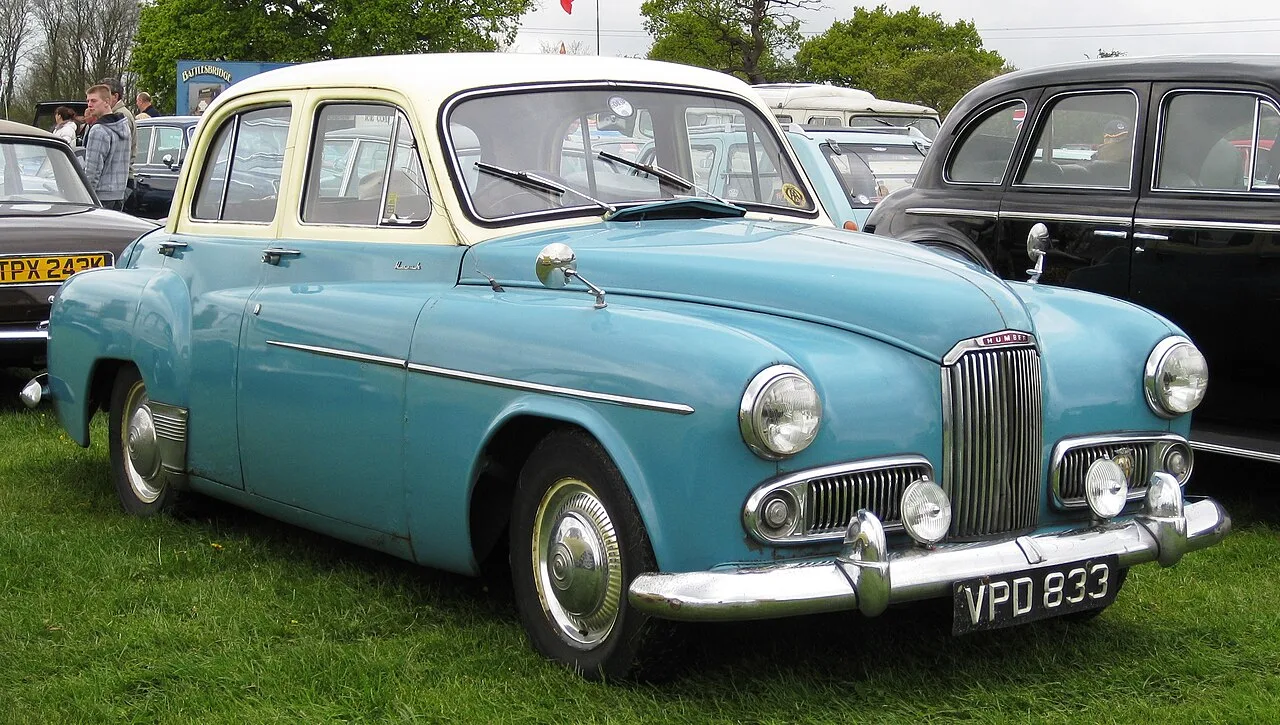
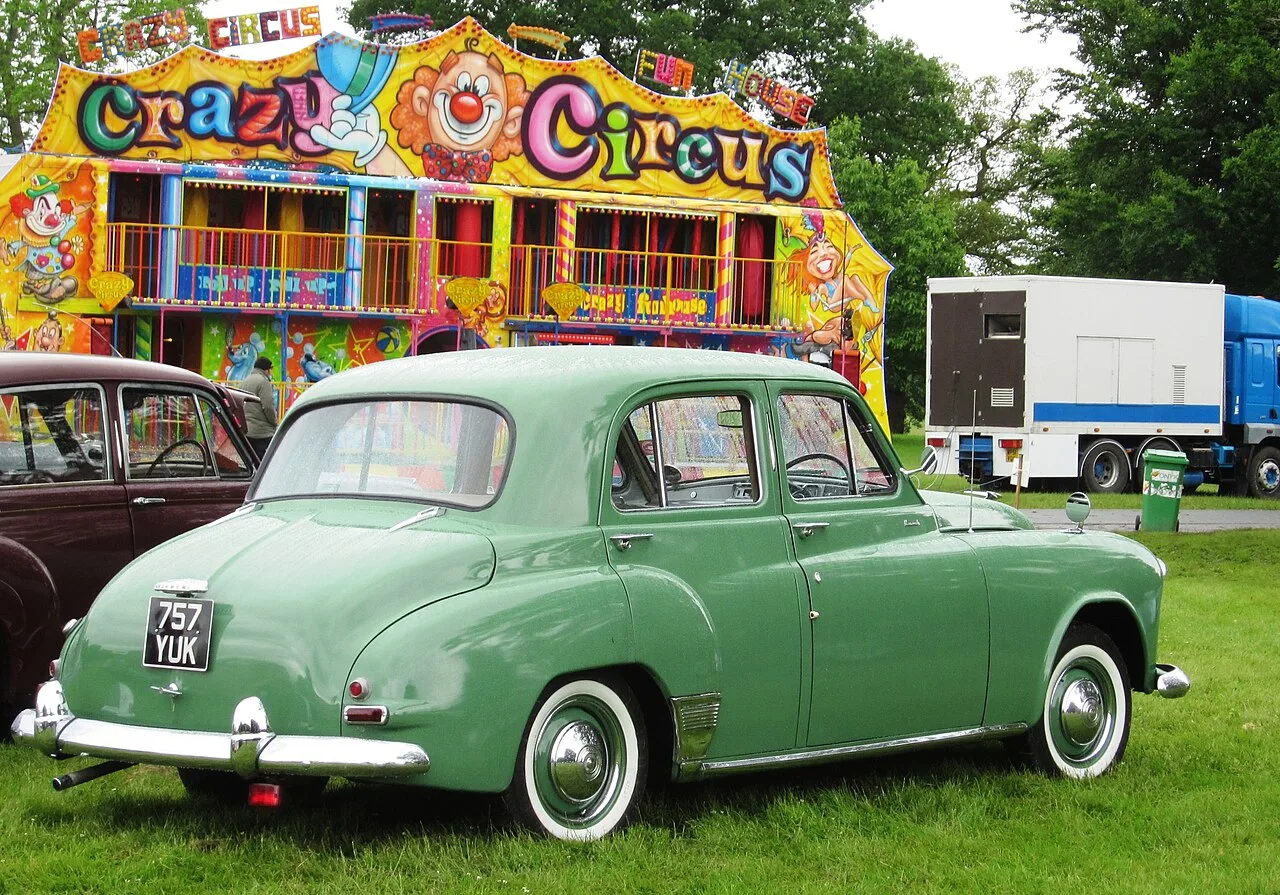
The Humber Hawk Mark VI, introduced in June 1954 (18,836 made), fitted an overhead-valve cylinder head to the 2267 cc engine, which The Times motoring correspondent described as 20 per cent more powerful, able to swing the car effortlessly along at 70 mph; the rear of the body was slightly changed, making the car longer, brake lining area was 40 per cent more than on the Mark V, and an estate version with a fold-down tailgate appeared in 1955. The April 1956 Mk VIA (9,614 made) was a fairly minor upgrade with changes mainly to the interior, and a de-luxe version was added. A replacement with an entirely new body was announced in May 1957. A Mk VI estate car with overdrive tested by The Motor in 1956 had a top speed of 79.7 mph and reached 0–60 mph in 25.2 seconds, and the test car cost £1405 including taxes. It used a 4-speed manual transmission with optional overdrive.
Collectors Spotted in the Humber Hawk Lineage
No member has published a public street spot of the Humber Hawk yet — the First · Worldwide stamp is wide open.
Trims & Figures
2 published trims in the catalogue. A blank is a figure not recorded, not zero.
| Trim | Years | Engine | Power | Torque | 0–60 | Drive | Gearbox | MSRP |
|---|---|---|---|---|---|---|---|---|
| Hawk Mk VI 2.3 OHV four | 1954–1956 | 2.3 L Inline-4 | 70 hp | — | 25.2 s | — | — | — |
| Hawk Mk VIA 2.3 OHV four | 1956–1957 | 2.3 L Inline-4 | 70 hp | — | — | — | — | — |
Owning one
We don’t estimate running costs for a car like this. What it costs depends on its condition, its specialist and how it is driven, and an average would mislead.
Owners’ builds
Nobody has claimed one yet.
Photographs
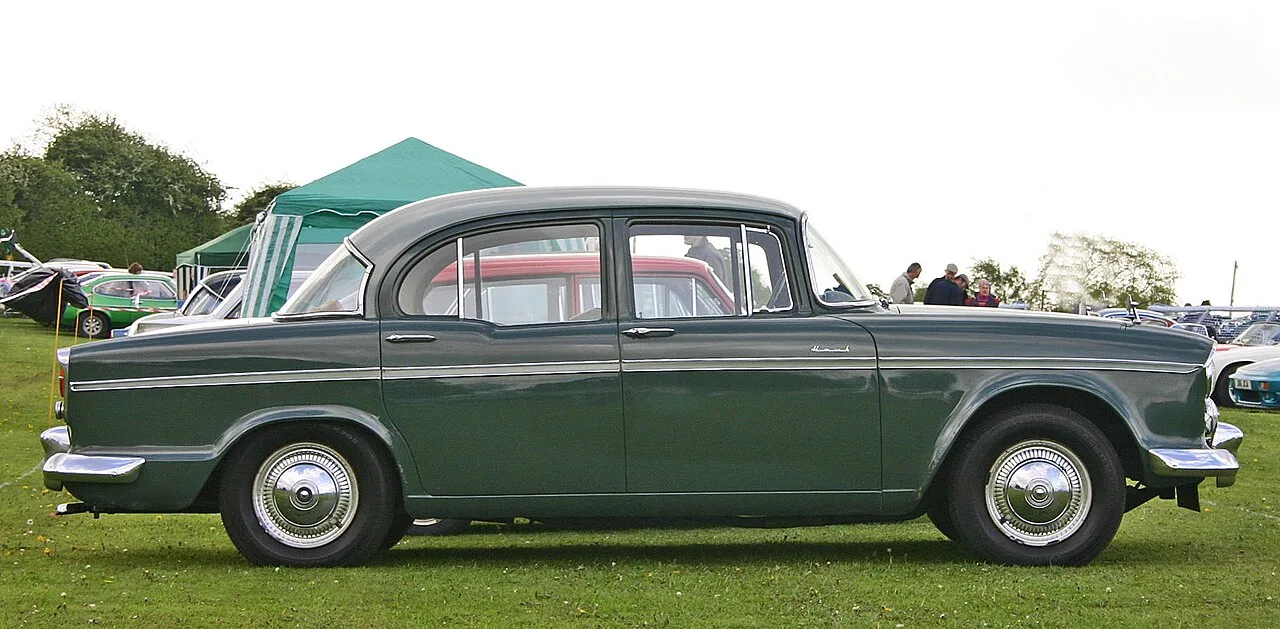
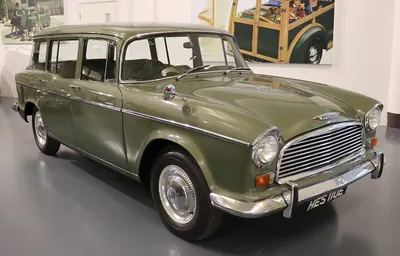
The 1957 Hawk estate briefly held a title you'd expect from a luxury brand: the largest unitary bodyshell of any British-built car, a record it kept until Jaguar's Mark X showed up in 1961.
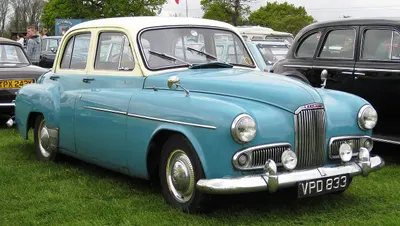
The Mark VI's brakes weren't an afterthought: Humber gave it 40 percent more lining area than the outgoing Mark V, on top of a 20 percent more powerful engine.
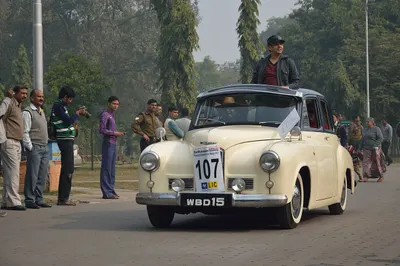
The restyled Mark III Hawk that kicked off this generation wasn’t an in-house Humber design — its body came out of Raymond Loewy’s studio.
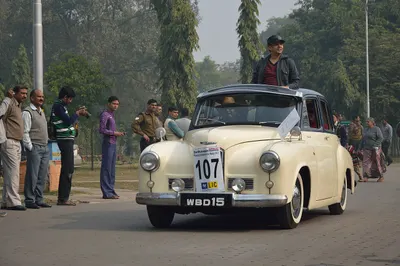
Humber's first postwar Hawk was actually longer than the prewar car it replaced, yet somehow ended up 112 pounds lighter, after shedding its running boards.
Rivals
Same body, same money, other badges — tap any card to flip.

It briefly served as senior sibling to Marquette, a GM companion brand cancelled after just one year.

Nissan hired former BMW engineers to help develop the 510's suspension, which is why period reviewers frequently compared its handling to the BMW 1600/2002.

A Trabant 601 won its class at the 1970 Monte Carlo Rally, with a second 601 right behind it in second.

The 600 was a stopgap: the P50's body over the 601's mechanicals, and for a while its estate was built alongside the new 601 saloon.

The G80 Sport brought a 370 PS twin-turbo 3.3 V6, a mesh grille and copper-tinted chrome with copper stitching to match.

The Vigor was sold only with a five-cylinder engine, an unusual configuration Honda used to fit a longer engine transversely under a short hood.

The GS/E coupe earned the nickname "German Charger" for its long hood, short deck stance borrowed from Detroit muscle cars.

This DeVille/Fleetwood was the first production car anywhere to mount its V8 sideways, Cadillac's front-drive gamble on the new C-body.