The postwar Super Snipe's independent front suspension wasn't new even in 1948 — it dated back to 1935, carried over with almost twice the leaf springs.
Median 90 hp across 133 similar cars
Lead trim: Super Snipe Mk III 4.1 side-valve six (100 bhp)
Humber Super Snipe Mark I to III1945–1952
- 0spots by members
- Unclaimednobody has spotted one yet
- 0sets it belongs to
Nobody in Burbles has spotted a Humber Super Snipe Mark I to III yet. See one on the street, point the app at it, and the first card is yours — with your @handle permanently credited on this page.
FactThe postwar Super Snipe's independent front suspension wasn't new even in 1948 — it dated back to 1935, carried over with almost twice the leaf springs.
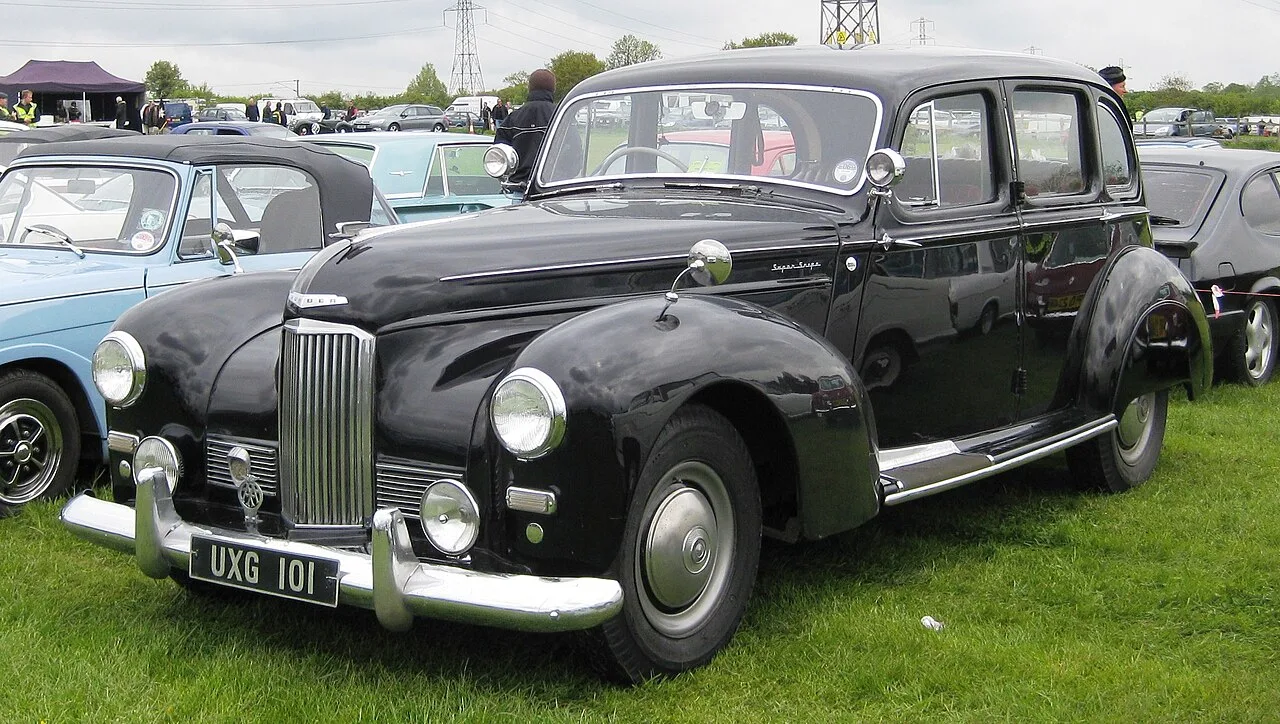
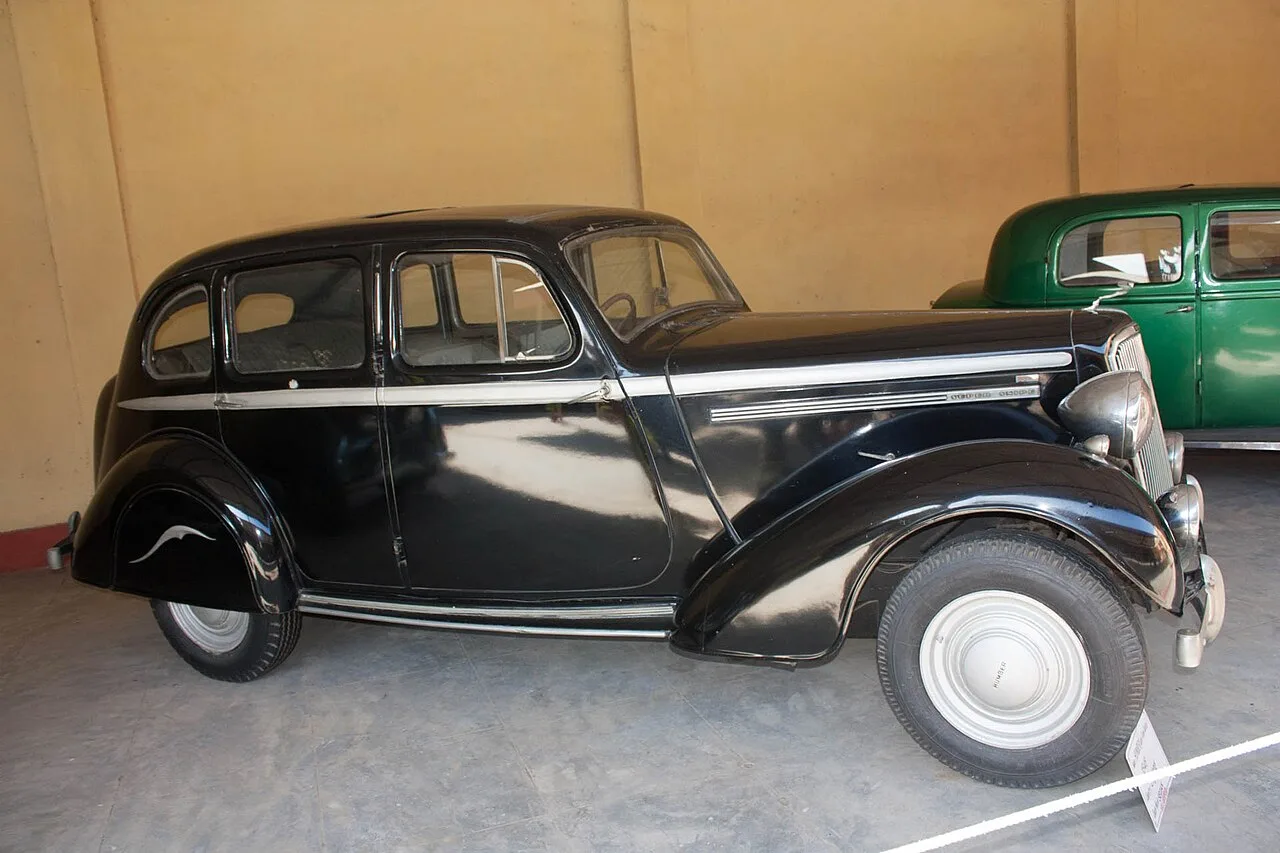
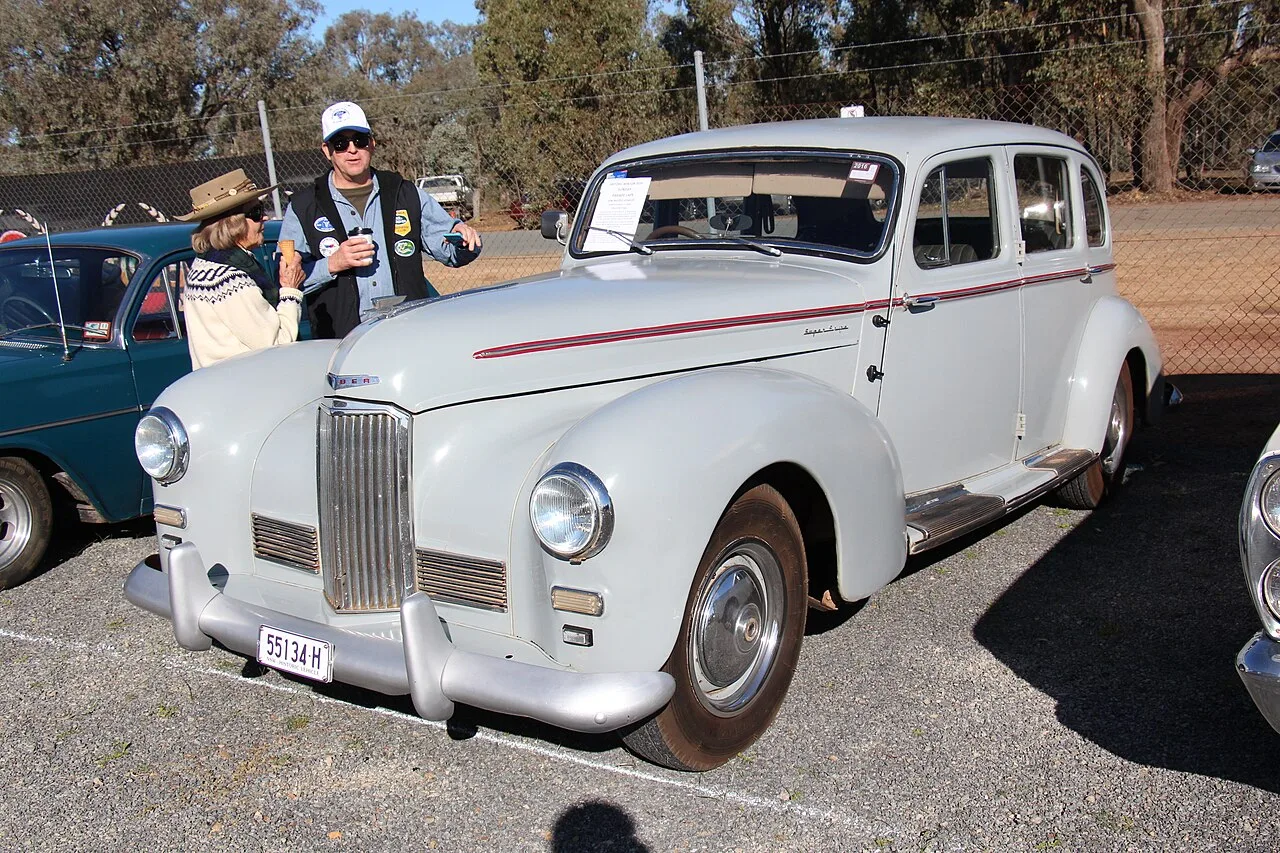
In 1946 post-war civilian production of the Super Snipe resumed and it evolved through several versions, each designated by a Mark number, each generally larger and more powerful (3,909 Mk I, 8,361 Mk II, 8,703 Mk III). The Mark I was essentially a six-cylinder version of the 1945 Humber Hawk, with the 4086 cc side-valve engine that had appeared in the Humber Pullman in 1936, whose maximum power output was always given by the manufacturer as 100 bhp at 3400 rpm through 1952. The Mark II, announced in mid-September 1948, was mostly redesigned in chassis and body: a full six-seater with a bench-type front seat, wider track, variable ratio steering and a column gear lever, with headlights in the wings and running boards reintroduced; 125 drophead coupés were made by Tickford in 1949 and 1950. The Mark III of August 1950, identifiable by spats over the rear wheels, added a Panhard rod to the rear suspension which permitted softer springs. A Mk III tested by The Motor in 1951 had a top speed of 81.6 mph and reached 0–60 mph in 19.1 seconds (17.7 mpg), and the test car cost £1,471 including taxes.
Collectors Spotted in the Humber Super Snipe Lineage
No member has published a public street spot of the Humber Super Snipe yet — the First · Worldwide stamp is wide open.
Trims & Figures
3 published trims in the catalogue. A blank is a figure not recorded, not zero.
| Trim | Years | Engine | Power | Torque | 0–60 | Drive | Gearbox | MSRP |
|---|---|---|---|---|---|---|---|---|
| Super Snipe Mk I 4.1 side-valve six (100 bhp) | 1946–1948 | 4.1 L Inline-6 | 100 hp | — | — | — | — | — |
| Super Snipe Mk II 4.1 side-valve six (100 bhp) | 1948–1950 | 4.1 L Inline-6 | 100 hp | — | — | — | — | — |
| Super Snipe Mk III 4.1 side-valve six (100 bhp) | 1950–1952 | 4.1 L Inline-6 | 100 hp | — | 19.1 s | — | — | — |
Owning one
We don’t estimate running costs for a car like this. What it costs depends on its condition, its specialist and how it is driven, and an average would mislead.
Owners’ builds
Nobody has claimed one yet.
Photographs
The Series III Super Snipe quietly made British motoring history — it was the first British car built with two pairs of headlights.
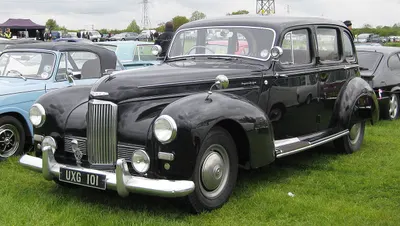
Just after launch, a Super Snipe was driven from Oslo to Lisbon through fifteen countries in under four days, with Stirling Moss behind the wheel for part of the run.
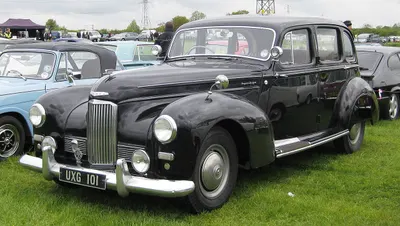
The postwar Super Snipe's independent front suspension wasn't new even in 1948 — it dated back to 1935, carried over with almost twice the leaf springs.
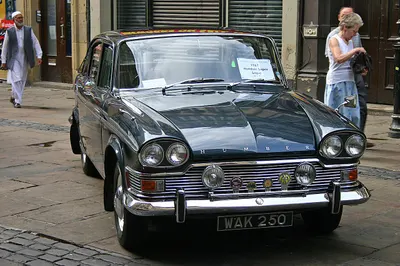
Built by dropping the big Pullman's four-litre six into the smaller Snipe's chassis — the mashup hit 79 mph, properly quick for 1938.
Rivals
Same body, same money, other badges — tap any card to flip.

It briefly served as senior sibling to Marquette, a GM companion brand cancelled after just one year.

Nissan hired former BMW engineers to help develop the 510's suspension, which is why period reviewers frequently compared its handling to the BMW 1600/2002.

A Trabant 601 won its class at the 1970 Monte Carlo Rally, with a second 601 right behind it in second.

The 600 was a stopgap: the P50's body over the 601's mechanicals, and for a while its estate was built alongside the new 601 saloon.

The G80 Sport brought a 370 PS twin-turbo 3.3 V6, a mesh grille and copper-tinted chrome with copper stitching to match.

The Vigor was sold only with a five-cylinder engine, an unusual configuration Honda used to fit a longer engine transversely under a short hood.

The GS/E coupe earned the nickname "German Charger" for its long hood, short deck stance borrowed from Detroit muscle cars.

This DeVille/Fleetwood was the first production car anywhere to mount its V8 sideways, Cadillac's front-drive gamble on the new C-body.