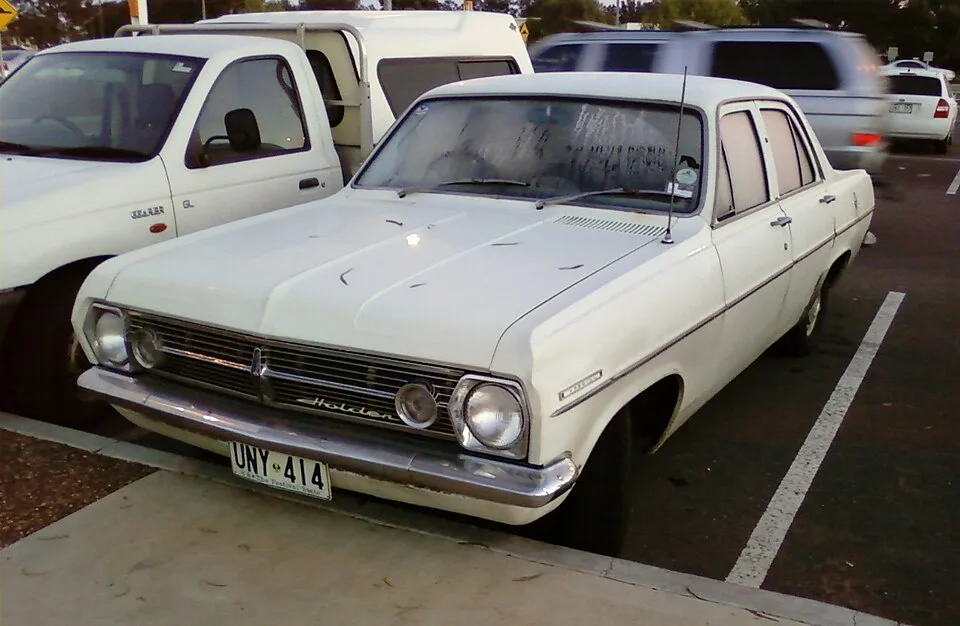
The HR was the first Holden built at GM New Zealand's new Trentham plant in 1967.
Lead trim: 2.6 Red 161 six (114 bhp) · up to 145 hp
Holden HR1966–1968
- 0spots by members
- Unclaimednobody has spotted one yet
- 0sets it belongs to
Nobody in Burbles has spotted a Holden HR yet. See one on the street, point the app at it, and the first card is yours — with your @handle permanently credited on this page.
FactThe HR was the first Holden built at GM New Zealand's new Trentham plant in 1967.
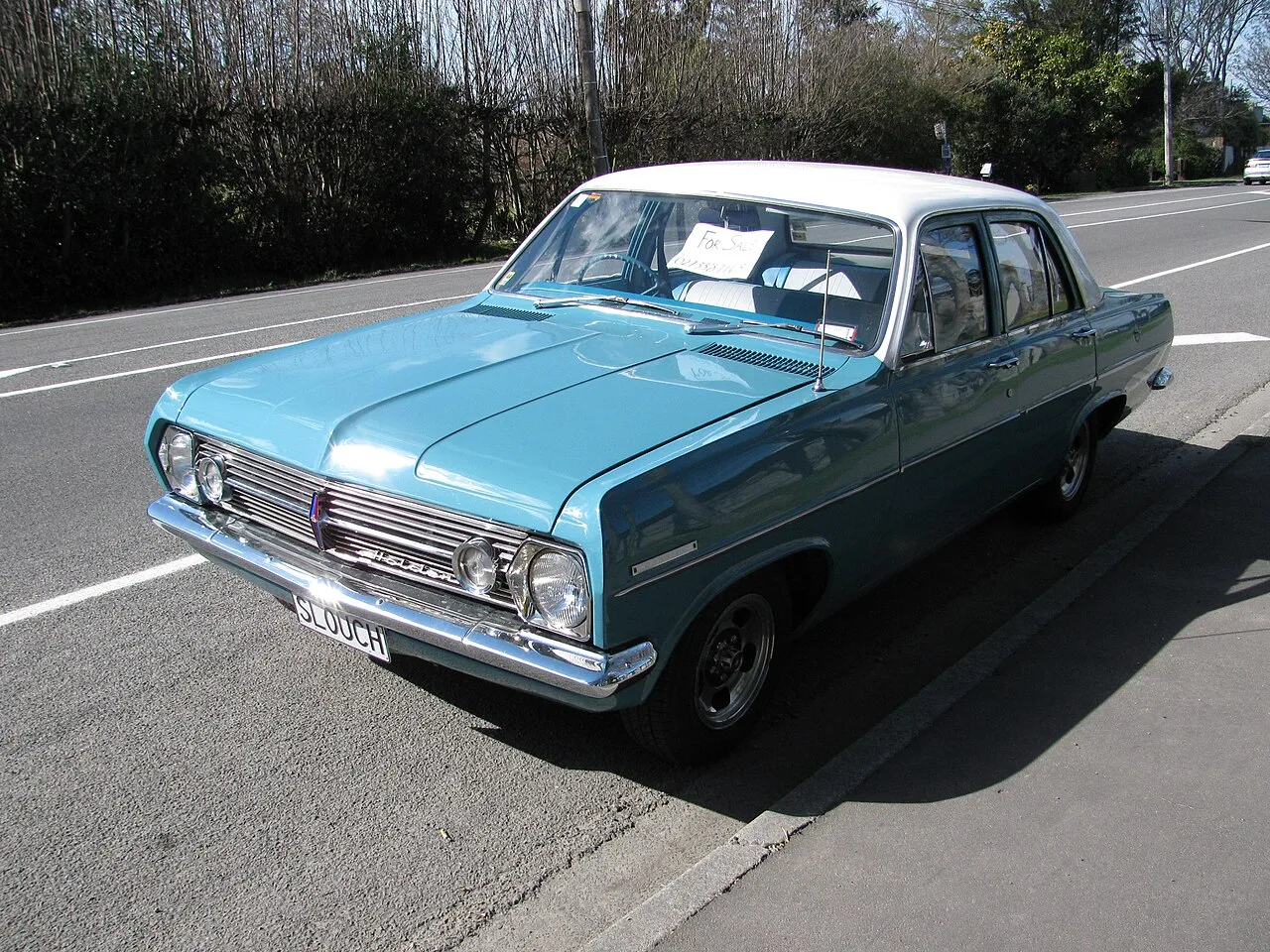
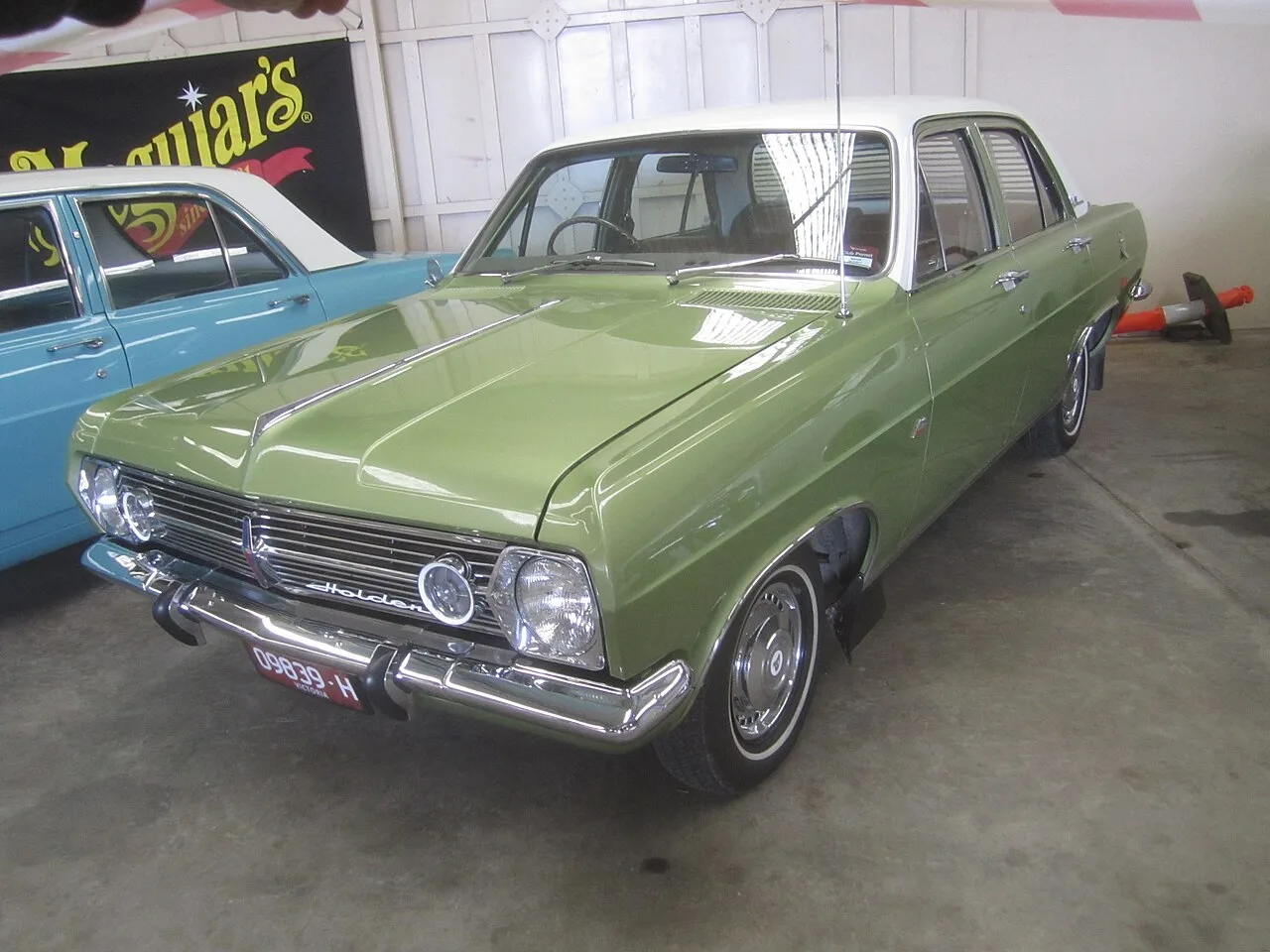
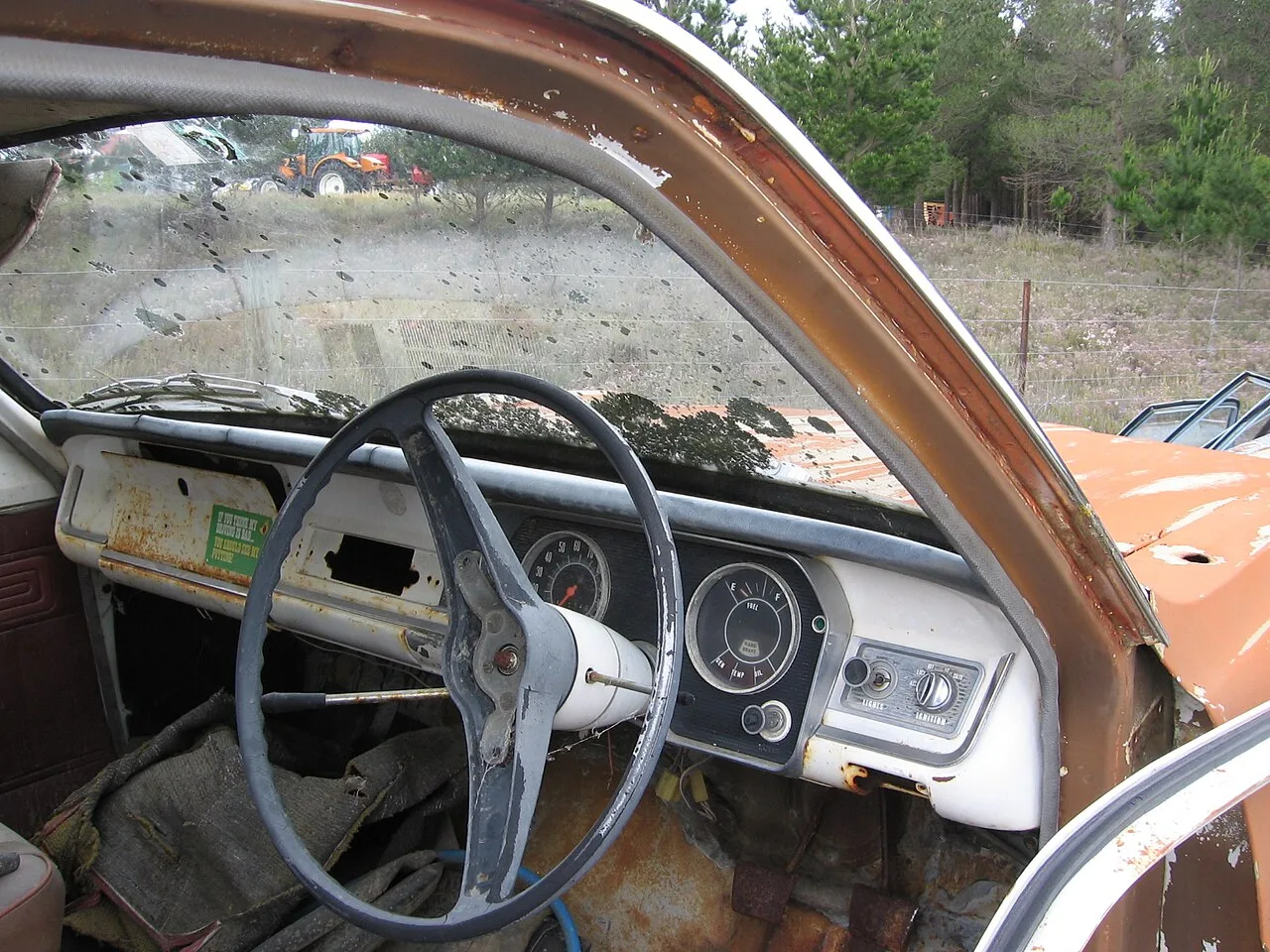
The Holden HR is an automobile manufactured by Holden from April 1966 until January 1968, replacing the HD. In addition to a revised grille it had a reworked roofline and larger rear window (on the sedans), revised rear lights and changes to almost all exterior body panels, with revised ball joint front suspension, a widened track, improved interior trim and woodgrain interior finish on the Premier. Six months after launch all models were given a safety upgrade with front safety belts, windscreen washers, reversing lights, padded sun visors and a shatterproof rear-view mirror. The two versions of the inline six-cylinder Holden Red motor were carried across from the HD with increased capacity and a higher compression ratio of 9.2:1; the 114 bhp 161 cu in (2.6 L) six was standard in all models except the Premiers, and a 126 bhp 186 cu in (3.0 L) six was standard on Premiers and optional elsewhere. A 145 bhp twin-carburettor "X2" version of the "186" was initially available, replaced by the 145 bhp single two-barrel "186S" in June 1967, and a Chevrolet 194 (later 230) six was fitted for the South African market. A total of 252,352 vehicles were produced up to January 1968; the HR was the first Holden assembled at General Motors New Zealand's new plant in Trentham in 1967.
Collectors Spotted in the Holden HR Lineage
No member has published a public street spot of the Holden HR yet — the First · Worldwide stamp is wide open.
Trims & Figures
4 published trims in the catalogue. A blank is a figure not recorded, not zero.
| Trim | Years | Engine | Power | Torque | 0–60 | Drive | Gearbox | MSRP |
|---|---|---|---|---|---|---|---|---|
| 2.6 Red 161 six (114 bhp) | 1966–1968 | 2.6 L Inline-6 | 114 hp | 157 lb-ft | — | RWD | — | — |
| 3.0 Red 186 X2 twin-carb six (145 bhp) | 1966–1967 | 3.0 L Inline-6 | 145 hp | 184 lb-ft | — | RWD | — | — |
| 3.0 Red 186 six (126 bhp) | 1966–1968 | 3.0 L Inline-6 | 126 hp | 181 lb-ft | — | RWD | — | — |
| 3.0 Red 186S six (145 bhp) | 1967–1968 | 3.0 L Inline-6 | 145 hp | 184 lb-ft | — | RWD | — | — |
Owning one
We don’t estimate running costs for a car like this. What it costs depends on its condition, its specialist and how it is driven, and an average would mislead.
Owners’ builds
Nobody has claimed one yet.
Photographs
Rivals
Same body, same money, other badges — tap any card to flip.

It briefly served as senior sibling to Marquette, a GM companion brand cancelled after just one year.

Nissan hired former BMW engineers to help develop the 510's suspension, which is why period reviewers frequently compared its handling to the BMW 1600/2002.

A Trabant 601 won its class at the 1970 Monte Carlo Rally, with a second 601 right behind it in second.

The 600 was a stopgap: the P50's body over the 601's mechanicals, and for a while its estate was built alongside the new 601 saloon.

The G80 Sport brought a 370 PS twin-turbo 3.3 V6, a mesh grille and copper-tinted chrome with copper stitching to match.

The Vigor was sold only with a five-cylinder engine, an unusual configuration Honda used to fit a longer engine transversely under a short hood.

The GS/E coupe earned the nickname "German Charger" for its long hood, short deck stance borrowed from Detroit muscle cars.

This DeVille/Fleetwood was the first production car anywhere to mount its V8 sideways, Cadillac's front-drive gamble on the new C-body.