New Zealand's Trentham plant kept building HQs into 1975, a year after Australia moved on, just to use up leftover parts.
Lead trim: HQ 2.8 Red six low compression (112 bhp) · up to 275 hp
Holden HQ1971–1974
- 0spots by members
- Unclaimednobody has spotted one yet
- 0sets it belongs to
Nobody in Burbles has spotted a Holden HQ yet. See one on the street, point the app at it, and the first card is yours — with your @handle permanently credited on this page.
FactNew Zealand's Trentham plant kept building HQs into 1975, a year after Australia moved on, just to use up leftover parts.
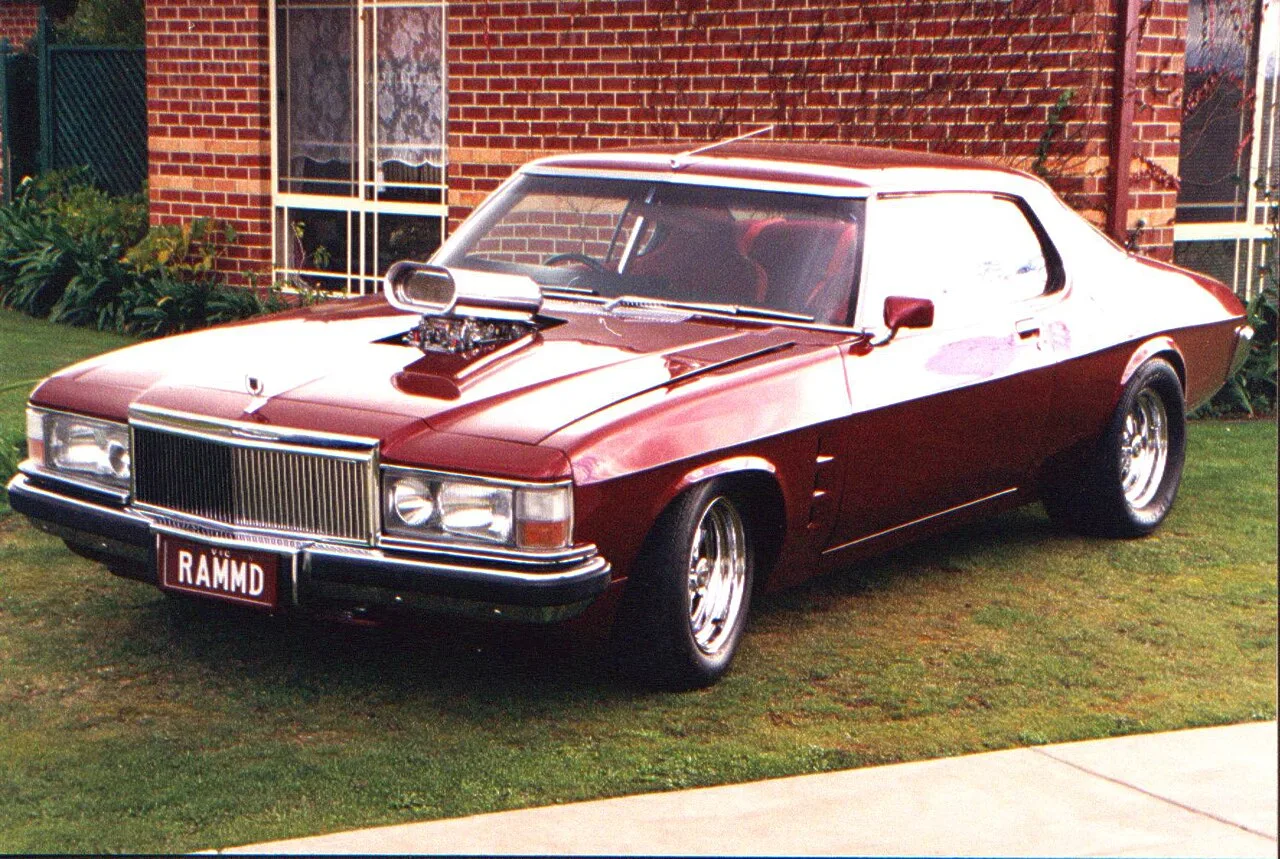
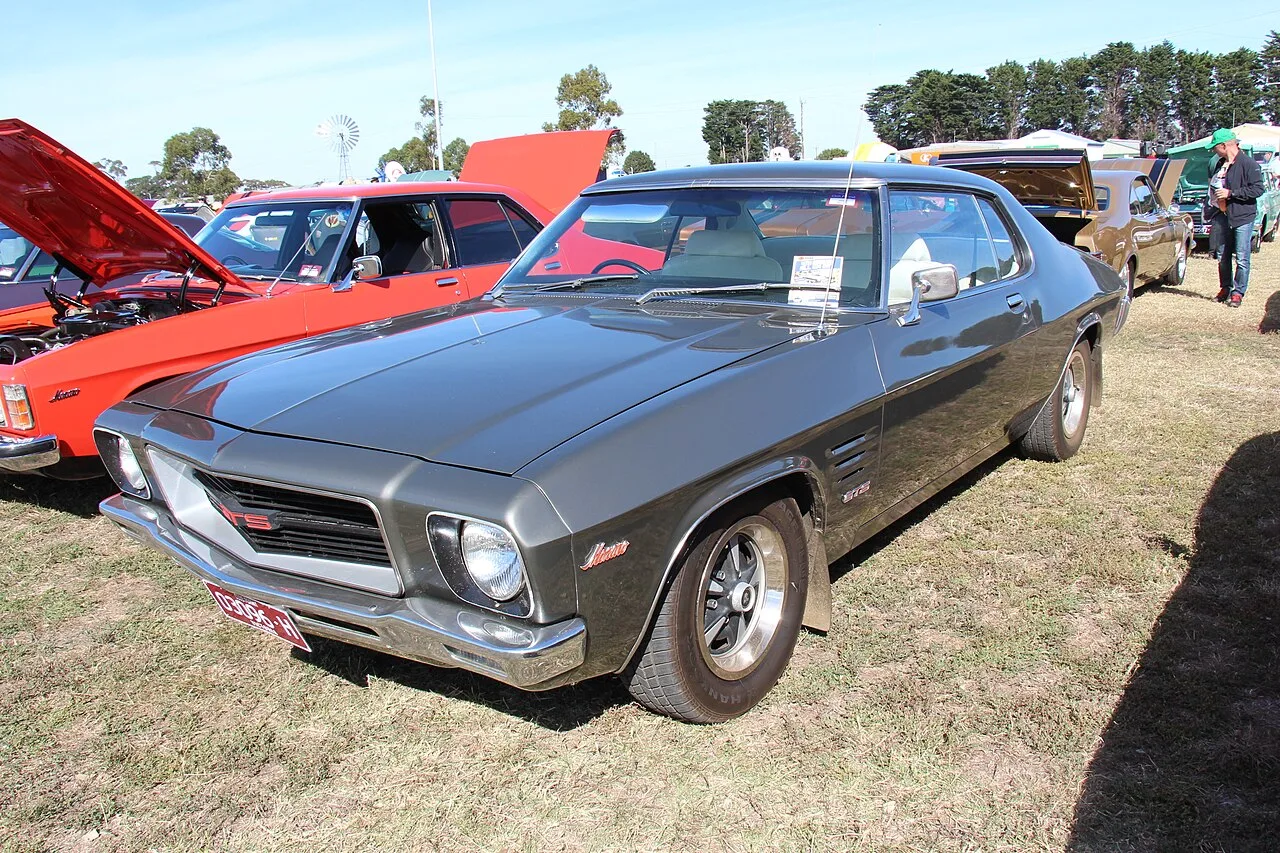
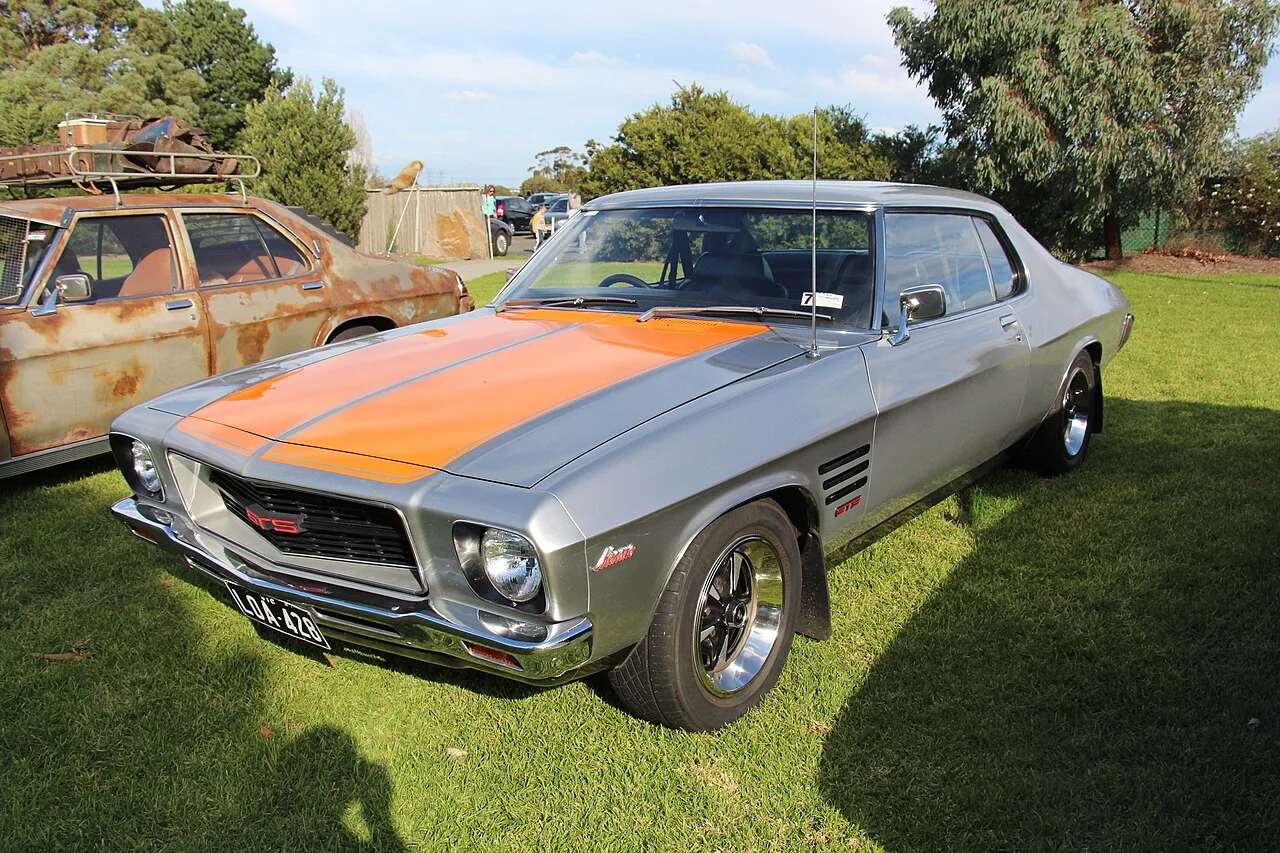
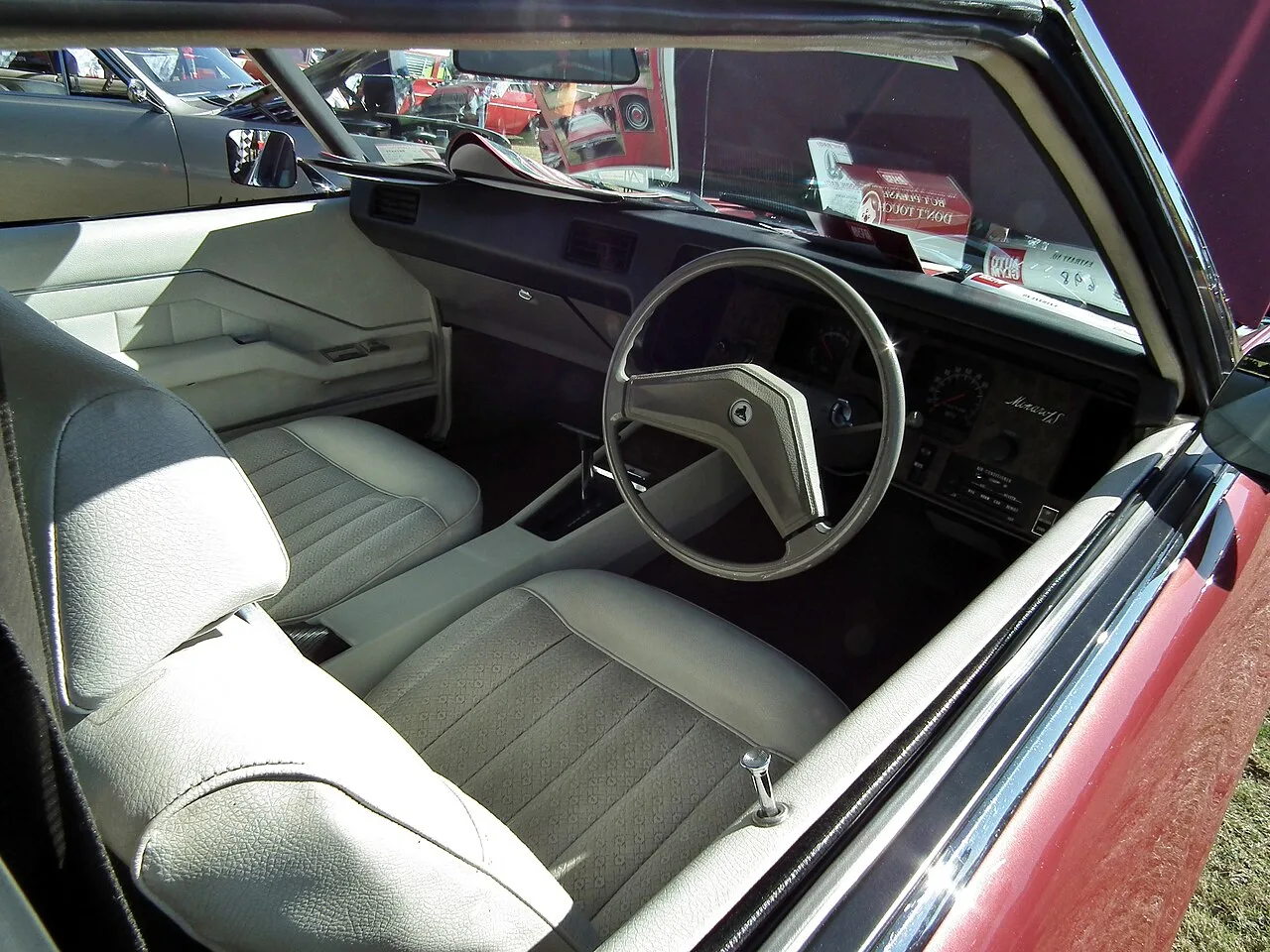
The Holden HQ series is a range of automobiles produced by Holden in Australia from July 1971 to October 1974, released on 15 July 1971 to replace the HG series. It was the first ground-up redesign of the Holden line since its original release in 1948, with an all-new body, chassis and suspension, designed by Phillip Zmood, and developed into a series of successor models that finally ended production when the WB series was discontinued in 1985. The mainstream range consisted of four-door sedan and five-door station wagon models (Belmont, Kingswood and Premier, the Premier topping the range with woodgrain interior and full-length armrests and the XV8 GTS350 sedan of 1973), with the Monaro coupé range (LS and GTS), the limited-edition SS variant of the Belmont V8 sedan (253 or 308 cubic-inch V8, Aussie four-speed, 3.36:1 Salisbury differential), the One Tonner cab-chassis and coupé utility, panel van and Sandman variants; the long-wheelbase Statesman HQ was sold separately, and the car was also assembled in Wellington, New Zealand, and sold in South Africa as the Chevrolet Kommando, El Camino and El Toro (the Kommando only with the Chevrolet 4.1-litre six). Engines were the 2.83-litre (173 cu in) and 3.3-litre (202) "Red" sixes, the 4.1-litre (253) and 5.0-litre (308) Holden V8s and the imported 5.7-litre Chevrolet 350 V8, in low- and high-compression forms for the smaller engines, with 3-speed manual, Aussie 4-speed manual, 3-speed Tri-Matic automatic and Turbo-Hydramatic transmissions. HQ production totalled 485,650 vehicles at Holden's Acacia Ridge, Dandenong, Elizabeth and Pagewood plants, and HQ production in New Zealand at Trentham ran until 1975 to use up parts not needed for the following HJ series.
Collectors Spotted in the Holden HQ Lineage
No member has published a public street spot of the Holden HQ yet — the First · Worldwide stamp is wide open.
Trims & Figures
8 published trims in the catalogue. A blank is a figure not recorded, not zero.
| Trim | Years | Engine | Power | Torque | 0–60 | Drive | Gearbox | MSRP |
|---|---|---|---|---|---|---|---|---|
| HQ 2.8 Red six high compression (118 bhp) | 1971–1974 | 2.8 L Inline-6 | 118 hp | 168 lb-ft | — | RWD | — | — |
| HQ 2.8 Red six low compression (112 bhp) | 1971–1974 | 2.8 L Inline-6 | 112 hp | 160 lb-ft | — | RWD | — | — |
| HQ 3.3 Red six high compression (135 bhp) | 1971–1974 | 3.3 L Inline-6 | 135 hp | 194 lb-ft | — | RWD | — | — |
| HQ 3.3 Red six low compression (129 bhp) | 1971–1974 | 3.3 L Inline-6 | 129 hp | 190 lb-ft | — | RWD | — | — |
| HQ 4.1 Holden V8 253 high compression (185 bhp) | 1971–1974 | 4.1 L V8 | 185 hp | 262 lb-ft | — | RWD | — | — |
| HQ 4.1 Holden V8 253 low compression (174 bhp) | 1971–1974 | 4.1 L V8 | 174 hp | 247 lb-ft | — | RWD | — | — |
| HQ 5.0 Holden V8 308 (240 bhp) | 1971–1974 | 5.0 L V8 | 240 hp | 315 lb-ft | — | RWD | — | — |
| HQ 5.7 Chevrolet 350 V8 (275 bhp) | 1971–1974 | 5.7 L V8 | 275 hp | 360 lb-ft | — | RWD | — | — |
Owning one
We don’t estimate running costs for a car like this. What it costs depends on its condition, its specialist and how it is driven, and an average would mislead.
Owners’ builds
Nobody has claimed one yet.
Photographs
Rivals
Same body, same money, other badges — tap any card to flip.

It briefly served as senior sibling to Marquette, a GM companion brand cancelled after just one year.

Nissan hired former BMW engineers to help develop the 510's suspension, which is why period reviewers frequently compared its handling to the BMW 1600/2002.

A Trabant 601 won its class at the 1970 Monte Carlo Rally, with a second 601 right behind it in second.

The 600 was a stopgap: the P50's body over the 601's mechanicals, and for a while its estate was built alongside the new 601 saloon.

The G80 Sport brought a 370 PS twin-turbo 3.3 V6, a mesh grille and copper-tinted chrome with copper stitching to match.

The Vigor was sold only with a five-cylinder engine, an unusual configuration Honda used to fit a longer engine transversely under a short hood.

The GS/E coupe earned the nickname "German Charger" for its long hood, short deck stance borrowed from Detroit muscle cars.

This DeVille/Fleetwood was the first production car anywhere to mount its V8 sideways, Cadillac's front-drive gamble on the new C-body.