Ford's Brazilian ethanol engine actually made 105 PS on the dyno, but Ford advertised just 99 — a deliberate underclaim to dodge a tax that kicked in above 100 PS.
Median 125 hp across 311 similar cars
Lead trim: Verona 1.6 AE (AE 1600) petrol (75 hp; 9.0:1) · up to 104 hp
Ford Verona / Volkswagen Apollo first generationNEVADA · 1989–1992
- 0spots by members
- Unclaimednobody has spotted one yet
- 0sets it belongs to
Nobody in Burbles has spotted a Ford Verona / Volkswagen Apollo first generation yet. See one on the street, point the app at it, and the first card is yours — with your @handle permanently credited on this page.
FactFord's Brazilian ethanol engine actually made 105 PS on the dyno, but Ford advertised just 99 — a deliberate underclaim to dodge a tax that kicked in above 100 PS.
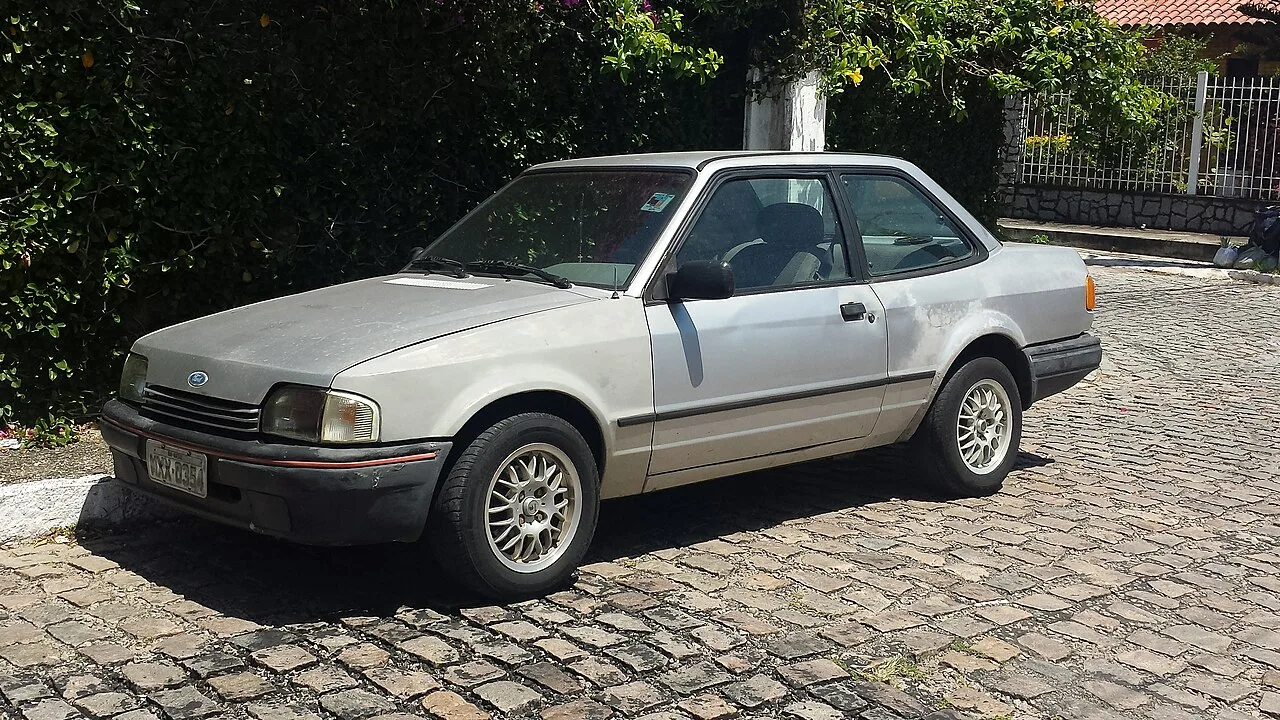
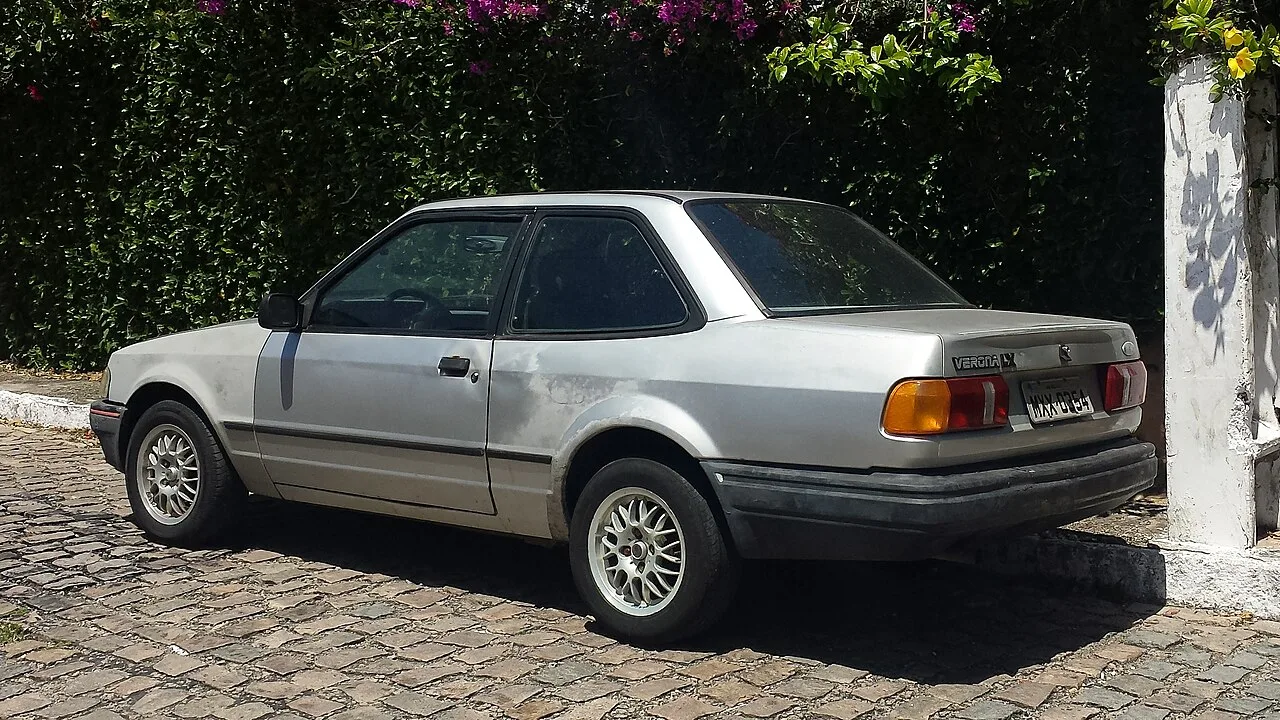
The Ford Verona and Volkswagen Apollo were small family cars made in Brazil by Autolatina, the joint venture between the Brazilian subsidiaries of Ford and Volkswagen, the Verona (1989–1992, then again 1993–1996) a direct replacement for the ageing Del Rey competing mainly with the Chevrolet Monza. Released in November 1989 (code-named Nevada; US$70 million to develop plus US$30 million for the São Bernardo do Campo line) to give Ford a stronger competitor in the mid-size segment, it was heavily based on the second-generation European Orion (itself on the "Erika" Escort platform of 1981) but as a two-door sedan with a higher rear and horizontal taillights resembling the Sierra Sapphire; the Orion was only four-door, the Verona only two-door, and it lacked features such as the Orion's folding rear seats to cut cost. The name was chosen by computer among 21 options including Stallion and Novara. LX and GLX trims came with the 1.6 L CHT (LX) or the 1.8 L Volkswagen AP (GLX), each in ethanol and petrol variants, the Verona's dashboard identical to the Escort's. A 1989 Brazilian road test had the Verona 1.8 from 0 to 100 km/h in 11.72 seconds at a maximum of 168.3 km/h, and dynamometer measurements found the ethanol engines making 105 PS while Ford publicised 99 PS (to avoid the higher ICM tax on cars over 100 PS). Wheelbase 2,402 mm (94.6 in), length 4,215 mm (165.9 in), width 1,640 mm (64.6 in), height 1,331 mm (52.4 in), curb weight 955–980 kg, 5-speed manual. The Volkswagen Apollo twin (1990–1992, 53,130 built) is catalogued as its own model.
Collectors Spotted in the Ford Verona Lineage
No member has published a public street spot of the Ford Verona yet — the First · Worldwide stamp is wide open.
Trims & Figures
4 published trims in the catalogue. A blank is a figure not recorded, not zero.
| Trim | Years | Engine | Power | Torque | 0–60 | Drive | Gearbox | MSRP |
|---|---|---|---|---|---|---|---|---|
| Verona 1.6 AE (AE 1600) ethanol (77 hp; 12.0:1) | 1989–1992 | 1.6 L Inline-4 | 77 hp | 96 lb-ft | — | FWD | — | — |
| Verona 1.6 AE (AE 1600) petrol (75 hp; 9.0:1) | 1989–1992 | 1.6 L Inline-4 | 75 hp | 96 lb-ft | — | FWD | — | — |
| Verona 1.8 AP (AP 1800) ethanol (104 hp; 12.3:1) | 1989–1992 | 1.8 L Inline-4 | 104 hp | 112 lb-ft | — | FWD | — | — |
| Verona 1.8 AP (AP 1800) petrol (90 hp; 8.5:1) | 1989–1992 | 1.8 L Inline-4 | 90 hp | 105 lb-ft | — | FWD | — | — |
Owning one
We don’t estimate running costs for a car like this. What it costs depends on its condition, its specialist and how it is driven, and an average would mislead.
Owners’ builds
Nobody has claimed one yet.
In the Community
Open CommunityNo notes tagged with the Ford Verona / Volkswagen Apollo first generation yet.
Photographs
Ford relaunched the discontinued Verona in Brazil wearing the body of Europe's third-generation Orion -- then in 1996 shifted production to Argentina, where it sold under the Orion name instead.
Ford's Brazilian ethanol engine actually made 105 PS on the dyno, but Ford advertised just 99 — a deliberate underclaim to dodge a tax that kicked in above 100 PS.
Rivals
Same body, same money, other badges — tap any card to flip.

It briefly served as senior sibling to Marquette, a GM companion brand cancelled after just one year.

Nissan hired former BMW engineers to help develop the 510's suspension, which is why period reviewers frequently compared its handling to the BMW 1600/2002.

A Trabant 601 won its class at the 1970 Monte Carlo Rally, with a second 601 right behind it in second.

The 600 was a stopgap: the P50's body over the 601's mechanicals, and for a while its estate was built alongside the new 601 saloon.

The G80 Sport brought a 370 PS twin-turbo 3.3 V6, a mesh grille and copper-tinted chrome with copper stitching to match.

The Vigor was sold only with a five-cylinder engine, an unusual configuration Honda used to fit a longer engine transversely under a short hood.

The GS/E coupe earned the nickname "German Charger" for its long hood, short deck stance borrowed from Detroit muscle cars.

This DeVille/Fleetwood was the first production car anywhere to mount its V8 sideways, Cadillac's front-drive gamble on the new C-body.