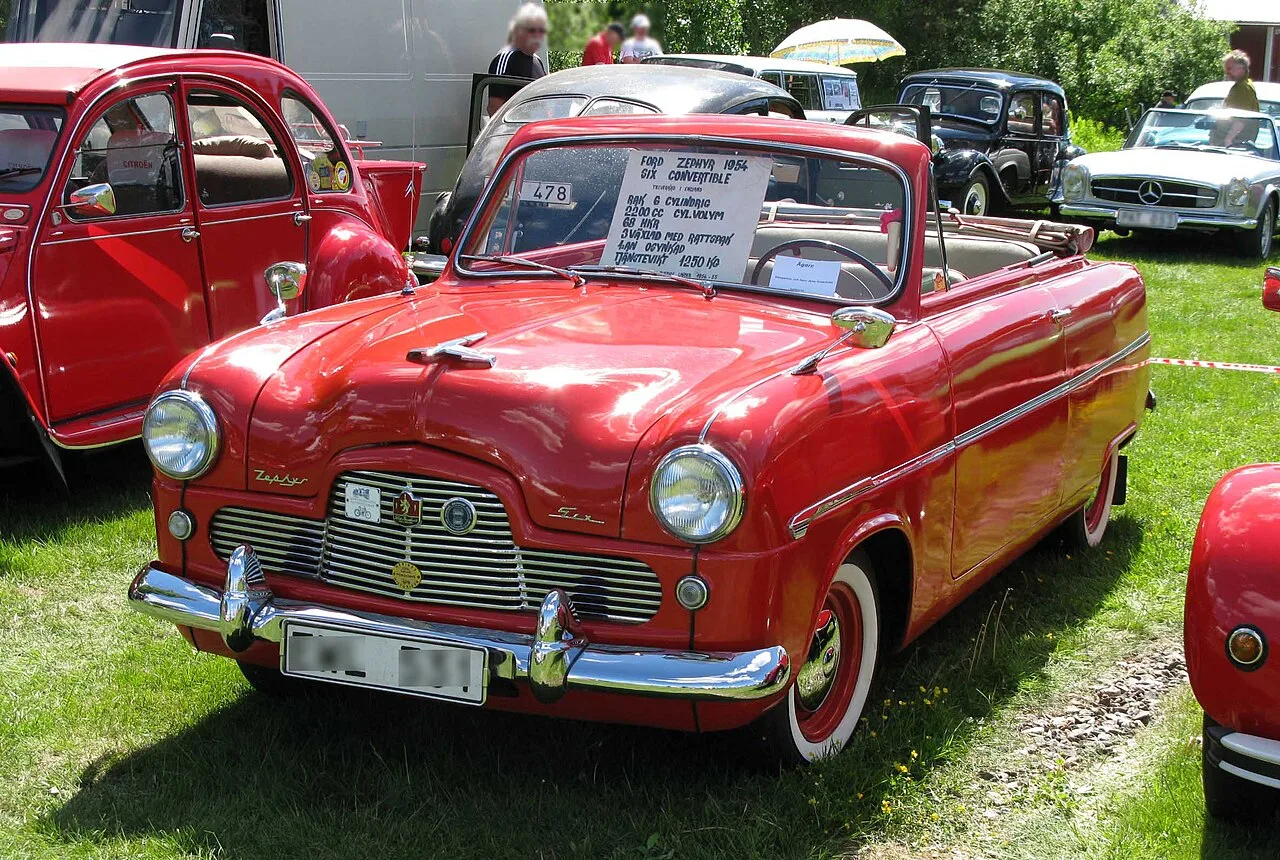
In 1953 an ordinary Ford Zephyr Six beat a Jaguar Mark VII outright to win the Monte Carlo Rally.
Lead trim: 2.3 Zephyr six-cylinder (68 bhp)
Ford Zephyr Six1951–1956
- 0spots by members
- Unclaimednobody has spotted one yet
- 0sets it belongs to
Nobody in Burbles has spotted a Ford Zephyr Six yet. See one on the street, point the app at it, and the first card is yours — with your @handle permanently credited on this page.
FactIn 1953 an ordinary Ford Zephyr Six beat a Jaguar Mark VII outright to win the Monte Carlo Rally.
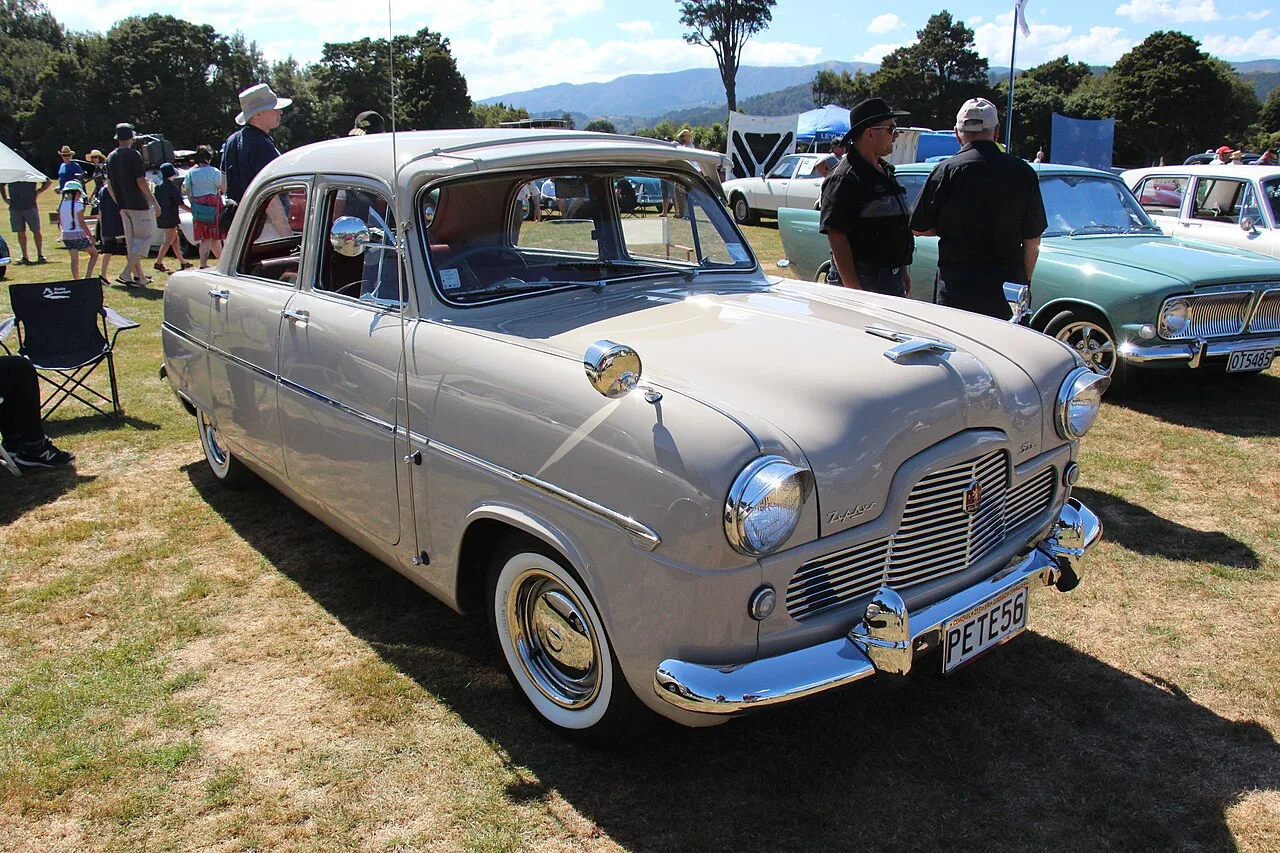
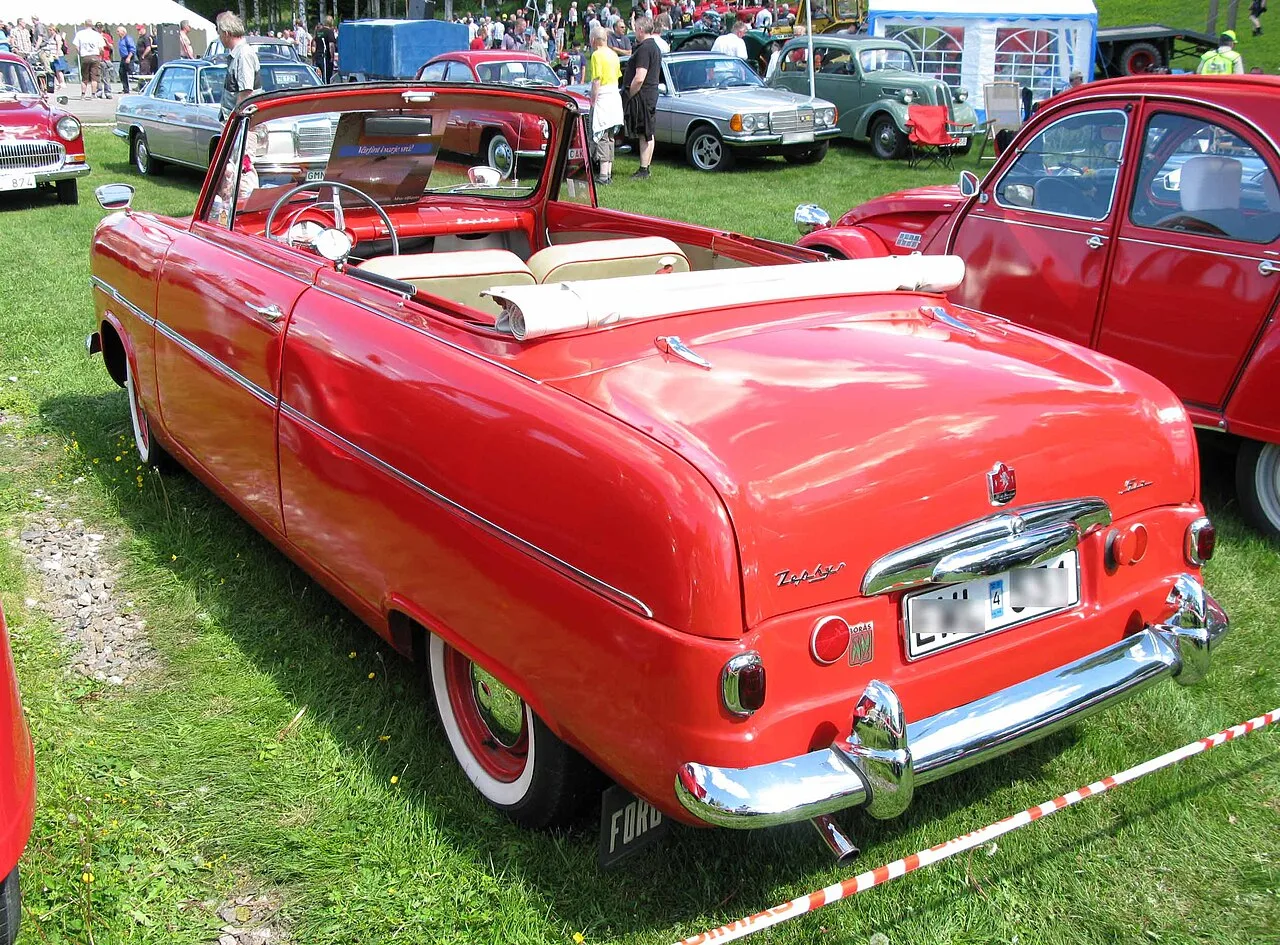
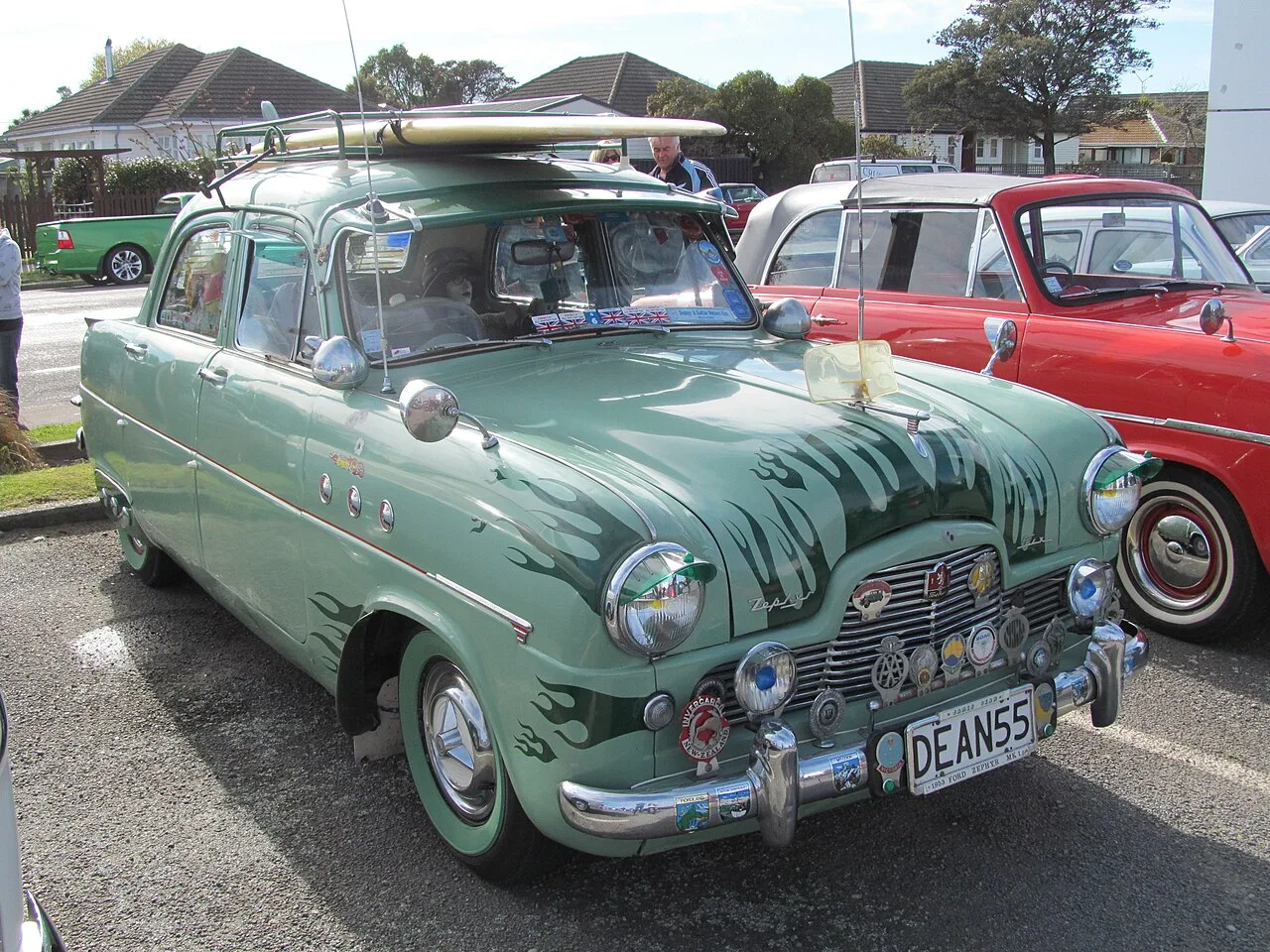
The first of the Zephyr range was a lengthened version of the four-cylinder 1,508 cc Consul, with a 2,262 cc six-cylinder engine producing 68 bhp, model number EOTTA. Like the Consul, it came with a three-speed gearbox controlled by a column-mounted lever, and the front suspension design employed what later came to be known as MacPherson struts, with a live axle on half-elliptical springs at the rear. The car could reach just over 80 mph and 23 mpg. The Zephyr Six was available with four-door saloon, estate and two-door convertible bodies, the convertible made by Carbodies with a power-operated hood and the estate by Abbotts of Farnham, sold as the Farnham.
Collectors Spotted in the Ford Zephyr Lineage
No member has published a public street spot of the Ford Zephyr yet — the First · Worldwide stamp is wide open.
Trims & Figures
One published trim in the catalogue. A blank is a figure not recorded, not zero.
| Trim | Years | Engine | Power | Torque | 0–60 | Drive | Gearbox | MSRP |
|---|---|---|---|---|---|---|---|---|
| 2.3 Zephyr six-cylinder (68 bhp) | 1951–1956 | 2.3 L Inline-6 | 68 hp | 112 lb-ft | — | — | — | — |
Owning one
We don’t estimate running costs for a car like this. What it costs depends on its condition, its specialist and how it is driven, and an average would mislead.
Owners’ builds
Nobody has claimed one yet.
Photographs
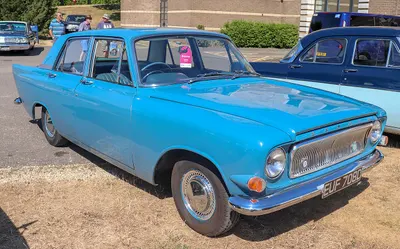
The Mark IV's new V-engines left no room for a spare under the trunk, so Ford tucked the spare wheel in front of the engine, under the bonnet, instead.
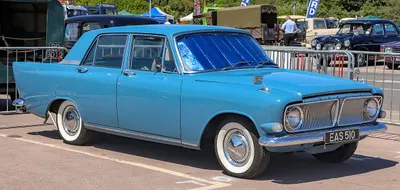
The Mark III Zephyr's clean restyle came from Roy Brown — the same designer responsible for the Ford Edsel, one of the most notorious commercial flops in American car history.
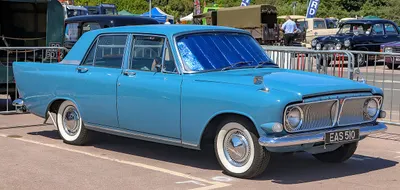
The designer behind this Zephyr's shape also penned the Edsel and the Cortina — Canadian stylist Roy Brown, with an assist on the rear from Italy's Frua.
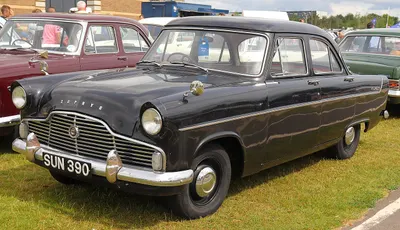
In 1957, a complete Raymond Mays engine conversion pushed the Zephyr Mark II to 101 mph — a genuine leap for a family saloon, timed by The Autocar that November.
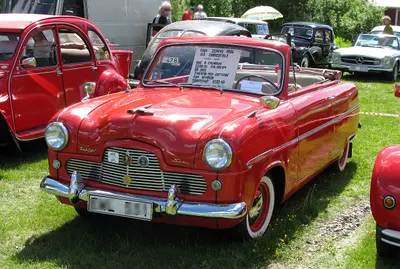
In 1953 an ordinary Ford Zephyr Six beat a Jaguar Mark VII outright to win the Monte Carlo Rally.
Rivals
Same body, same money, other badges — tap any card to flip.

It briefly served as senior sibling to Marquette, a GM companion brand cancelled after just one year.

Nissan hired former BMW engineers to help develop the 510's suspension, which is why period reviewers frequently compared its handling to the BMW 1600/2002.

A Trabant 601 won its class at the 1970 Monte Carlo Rally, with a second 601 right behind it in second.

The 600 was a stopgap: the P50's body over the 601's mechanicals, and for a while its estate was built alongside the new 601 saloon.

The G80 Sport brought a 370 PS twin-turbo 3.3 V6, a mesh grille and copper-tinted chrome with copper stitching to match.

The Vigor was sold only with a five-cylinder engine, an unusual configuration Honda used to fit a longer engine transversely under a short hood.

The GS/E coupe earned the nickname "German Charger" for its long hood, short deck stance borrowed from Detroit muscle cars.

This DeVille/Fleetwood was the first production car anywhere to mount its V8 sideways, Cadillac's front-drive gamble on the new C-body.