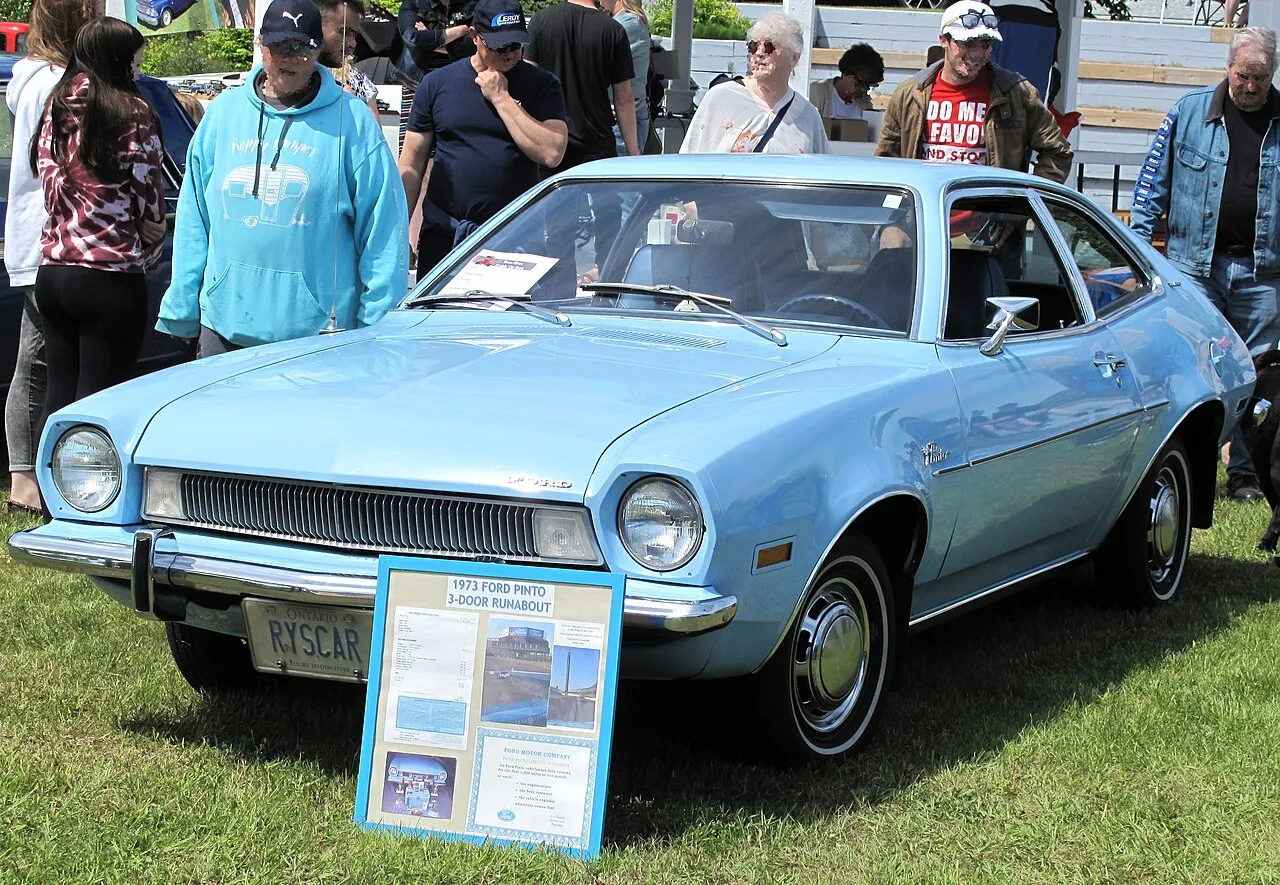
The Pinto marked Ford's return to four-cylinder engines in North America — a 37-year gap stretching back to the Model A's engine being dropped in 1934.
Lead trim: Pinto 1.6 Kent I4 (54 hp net; 1972–1973) · up to 100 hp
Ford PintoPINTO-1 · 1971–1973
- 0spots by members
- Unclaimednobody has spotted one yet
- 0sets it belongs to
Nobody in Burbles has spotted a Ford Pinto yet. See one on the street, point the app at it, and the first card is yours — with your @handle permanently credited on this page.
FactThe Pinto marked Ford's return to four-cylinder engines in North America — a 37-year gap stretching back to the Model A's engine being dropped in 1934.
The Ford Pinto, introduced on September 11, 1970 with the tagline "The Little Carefree Car", was Ford's first North American subcompact, on an all-new platform with a powertrain from the European-specification Escort (the Kent engine sourced from Ford of England), conceived by President Lee Iacocca as a car under 2,000 lb and under US$2,000 and developed in 25 months against an industry average of 43; its bodywork was styled by Robert Eidschun. It is a unibody front-engine, rear-wheel-drive car with unequal-length control arms and front coils, a live rear axle on leaf springs, and optional power-assisted rack-and-pinion steering, offered from launch as a fastback sedan with an enclosed trunk ($1,850) and from February 1971 as the Runabout hatchback ($2,062, 38.1 cubic feet of cargo with the seat folded), followed on February 24, 1972 by a station wagon (172.7 in long, 60.5 cubic feet, flip-open rear quarter windows, 2.0 L and front discs standard; the Squire with simulated woodgrain). The 1.6 L Kent I4 gave 75 hp in 1971, and the 2.0 L SOHC (EAO) I4 100 hp, with 0 to 60 mph in 10.8 seconds for the low-weight 2.0; revised SAE net ratings from 1972 cut them to 54 and 86 hp. It sold over 100,000 by January 1971 (352,402 in 1971, 480,405 in 1972, 484,512 in 1973), with recalls of 26,000 cars on October 30, 1970 (accelerator sticking) and of 220,000 on March 29, 1971 (fuel vapours igniting in the air filter), and the Sprint Decor Group (1972) and Sport Accent and Luxury Decor Groups (1973) as option packs. Later controversy over the fuel tank design in rear-end collisions made the Pinto a business-ethics and tort-reform case study. Wheelbase 94.0 in, length 163 in, width 69.4 in, height 50 in.
Collectors Spotted in the Ford Pinto Lineage
No member has published a public street spot of the Ford Pinto yet — the First · Worldwide stamp is wide open.
Trims & Figures
4 published trims in the catalogue. A blank is a figure not recorded, not zero.
| Trim | Years | Engine | Power | Torque | 0–60 | Drive | Gearbox | MSRP |
|---|---|---|---|---|---|---|---|---|
| Pinto 1.6 Kent I4 (54 hp net; 1972–1973) | 1972–1973 | 1.6 L Inline-4 | 54 hp | — | — | RWD | — | — |
| Pinto 1.6 Kent I4 (75 hp; 1971) | 1971–1971 | 1.6 L Inline-4 | 75 hp | 96 lb-ft | — | RWD | — | — |
| Pinto 2.0 EAO I4 (86 hp net; 1972–1973) | 1972–1973 | 2.0 L Inline-4 | 86 hp | — | — | RWD | — | — |
| Pinto 2.0 EAO SOHC I4 (100 hp; 1971) | 1971–1971 | 2.0 L Inline-4 | 100 hp | 115 lb-ft | 10.8 s | RWD | — | — |
Owning one
An estimate, for the Pinto 1.6 Kent I4 (54 hp net; 1972–1973) trim: fuel on its EPA figure and a dated national price, upkeep on a per-mile average for the kind of car it is.
Owners’ builds
Nobody has claimed one yet.
Photographs
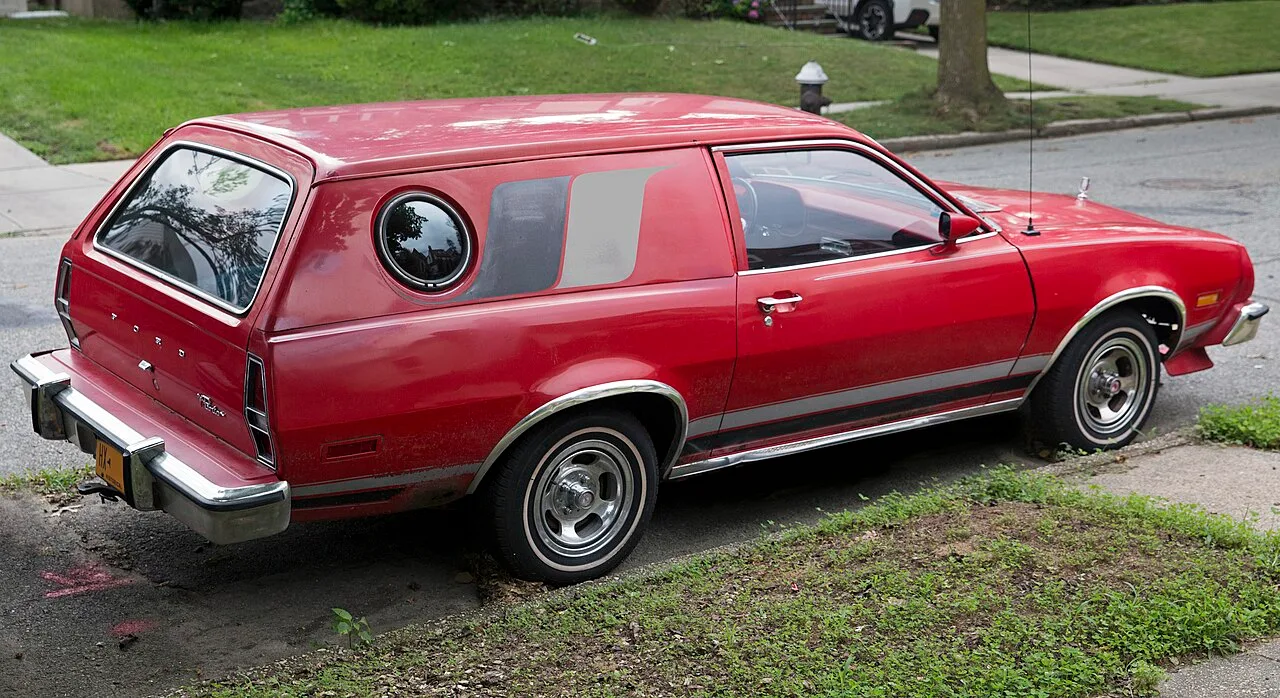
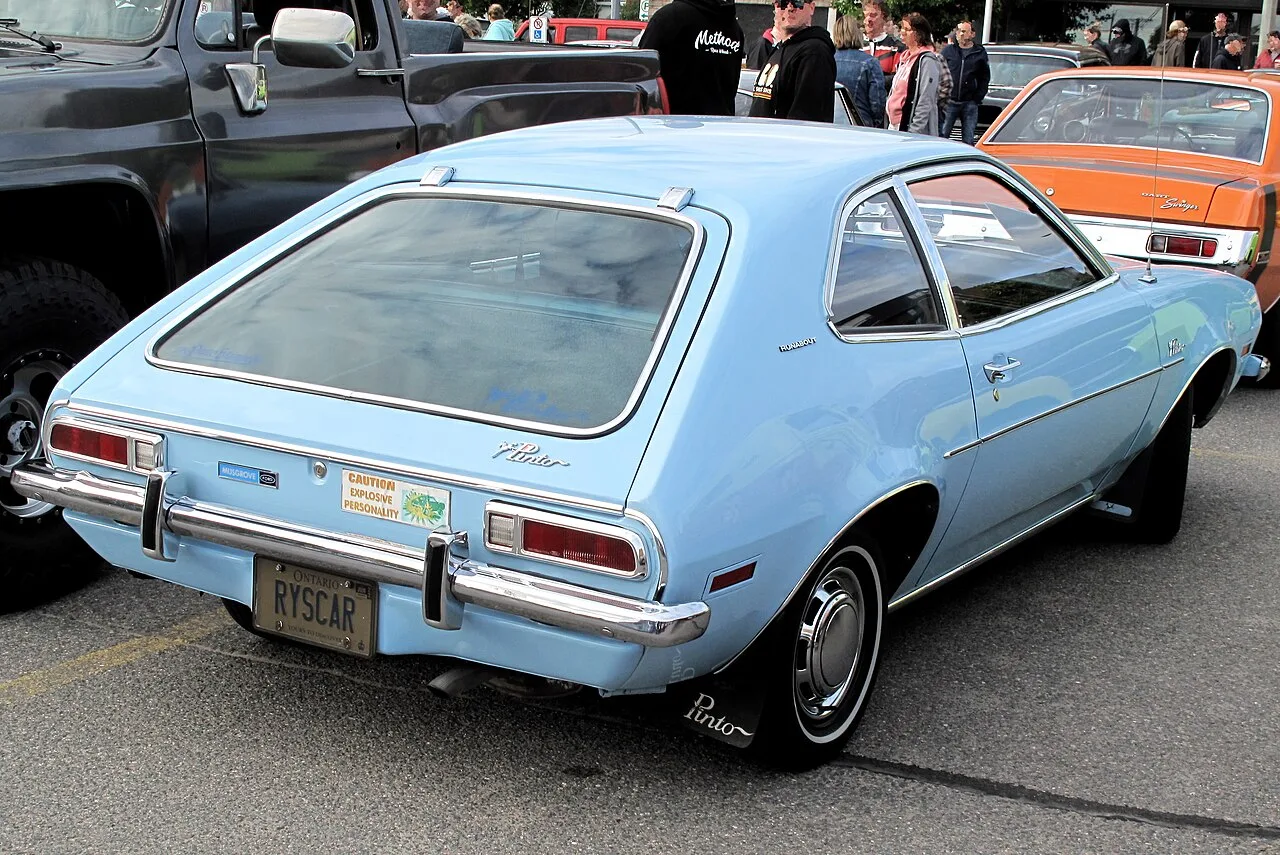
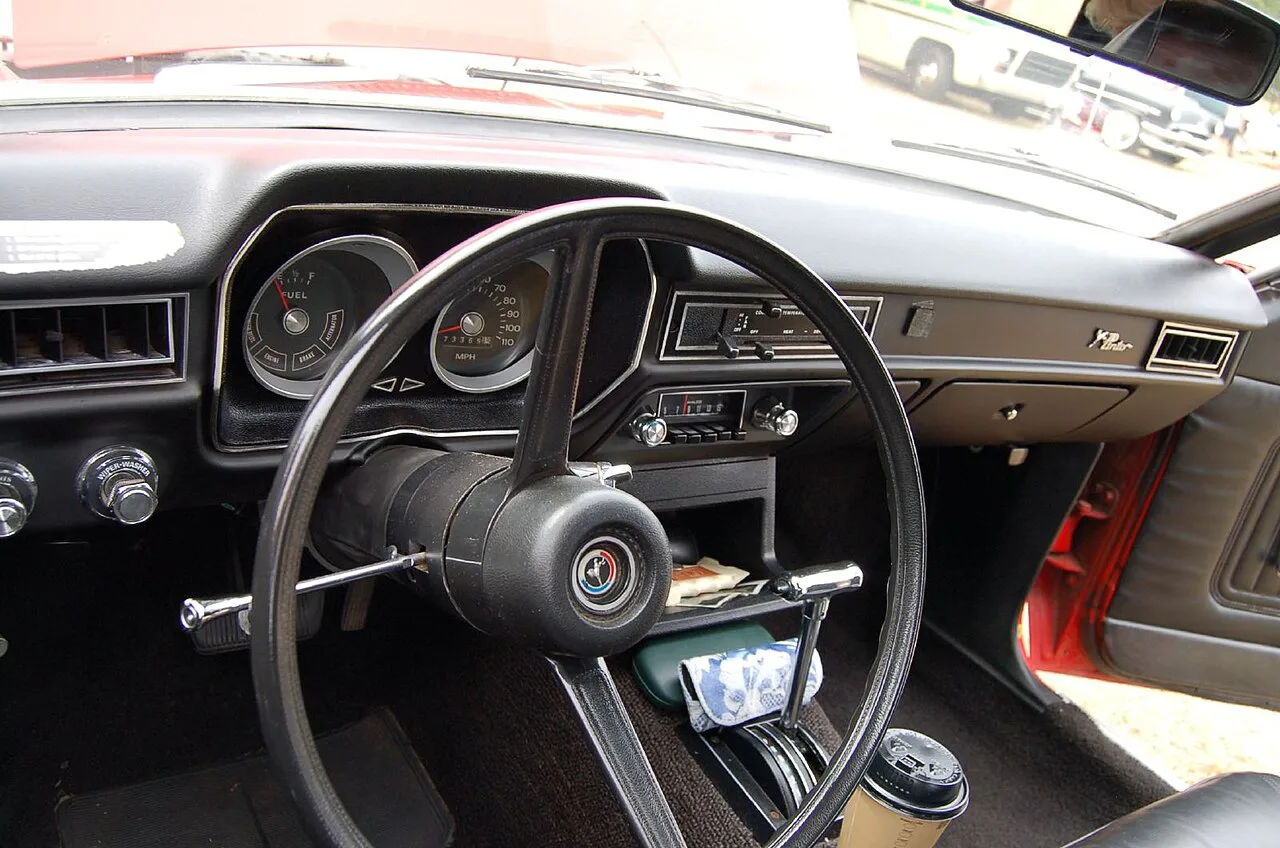
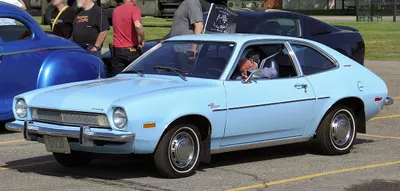
Even in its final year Ford kept trying to dress this one up: the 1979-1980 Pinto ESS (European Sports Sedan) package layered on blacked-out trim and sport badging right up until the car was replaced by the Escort.
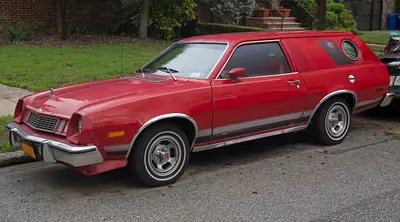
Ford threw a V6 at the Pinto in 1975 purely to out-gun the AMC Gremlin on paper — it was actually weaker than the Gremlin's standard six, but it was something the rival Chevy Vega simply couldn't offer at all.
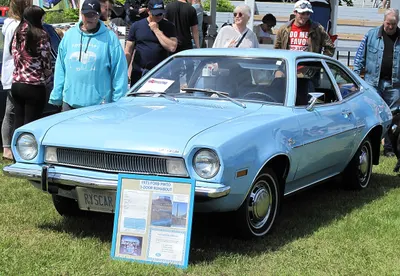
The Pinto marked Ford's return to four-cylinder engines in North America — a 37-year gap stretching back to the Model A's engine being dropped in 1934.
Rivals
Same body, same money, other badges — tap any card to flip.

It briefly served as senior sibling to Marquette, a GM companion brand cancelled after just one year.

Nissan hired former BMW engineers to help develop the 510's suspension, which is why period reviewers frequently compared its handling to the BMW 1600/2002.

A Trabant 601 won its class at the 1970 Monte Carlo Rally, with a second 601 right behind it in second.

The 600 was a stopgap: the P50's body over the 601's mechanicals, and for a while its estate was built alongside the new 601 saloon.

The G80 Sport brought a 370 PS twin-turbo 3.3 V6, a mesh grille and copper-tinted chrome with copper stitching to match.

The Vigor was sold only with a five-cylinder engine, an unusual configuration Honda used to fit a longer engine transversely under a short hood.

The GS/E coupe earned the nickname "German Charger" for its long hood, short deck stance borrowed from Detroit muscle cars.

This DeVille/Fleetwood was the first production car anywhere to mount its V8 sideways, Cadillac's front-drive gamble on the new C-body.