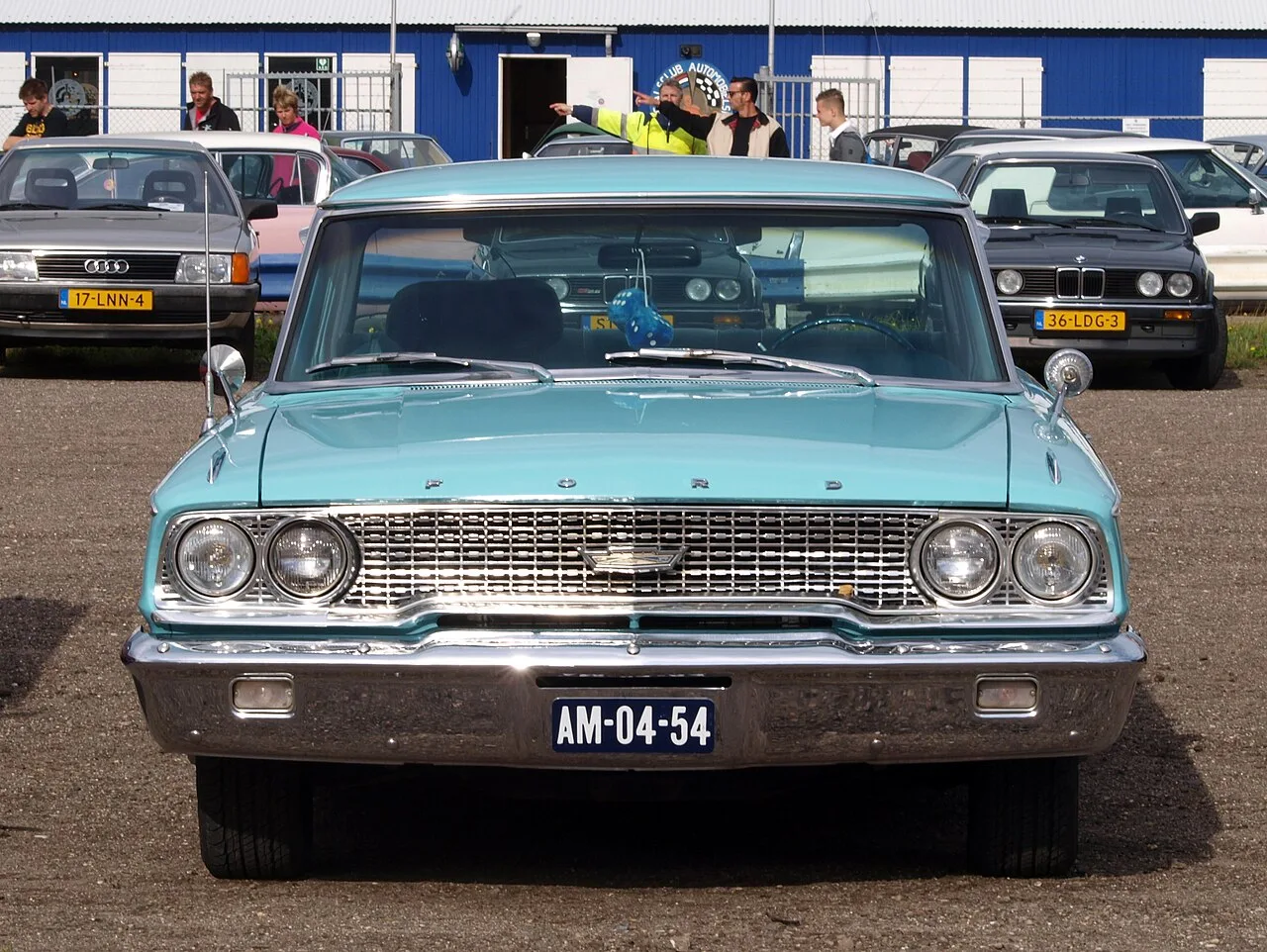
The first 20 lightweight R-code Galaxies had actual fiberglass doors to save weight — until Ford got nervous about the safety of fiberglass doors on public roads and quietly dropped them.
Median 94 hp across 184 similar cars
Lead trim: Galaxie 500 427 FE V8 R code (425 hp gross; 4-speed)
Ford Galaxie 500 427 lightweight "R code"GALAXIE-427-R · 1963–1964
- 0spots by members
- Unclaimednobody has spotted one yet
- 0sets it belongs to
Nobody in Burbles has spotted a Ford Galaxie 500 427 lightweight "R code" yet. See one on the street, point the app at it, and the first card is yours — with your @handle permanently credited on this page.
FactThe first 20 lightweight R-code Galaxies had actual fiberglass doors to save weight — until Ford got nervous about the safety of fiberglass doors on public roads and quietly dropped them.
Partway through 1963, in limited quantities, a new 427 (7.0 L) FE-series V8 replaced the 406 for racing, to meet the NHRA and NASCAR 7-litre engine limits, rated at 425 hp (317 kW) gross with 2 × 4-barrel Holley carburettors and a solid-lifter camshaft. To compete in drag racing Ford produced 212 lightweight "R code" 427 Galaxie 500 Sport Special Tudor Fastbacks (about 170 from Norfolk and 20 from Los Angeles), in Corinthian White with a red vinyl interior only, list price about US$4,200 (when a base Ford 300 went for US$2,324 and an XL Fastback for US$3,268), with a Borg-Warner T-10 four-speed, a 4.11:1 rear axle, heavy-duty suspension and brakes, fibreglass hood (flat at first, the blister hood later), trunk, front fenders and fender aprons, aluminium bumpers, mounting brackets, transmission cases and bellhousing, and heater, trunk lining, spare wheel, jack and half the horns removed; the first 20 had functional fibreglass doors (25 lb lighter, deleted over highway-safety concerns), sound-deadening was removed and there were no options. They were built on the 45-lb lighter Ford 300 chassis, and the 427s were 375 lb (170 kg) lighter than before (425 lb with fibreglass doors) yet were still overweight. In 1964 the 427 was used in 50 lightweight fibreglass-equipped cars for drag racing, still too heavy, which led Ford to the lightweight Fairlane Thunderbolt. Earlier, an 11-car run of "lightweight Galaxies" (under 3,400 lb against 3,499 lb for the base 2-door Club Sedan) had been built in 1962 by Ford's Experimental Garage. Holman and Moody modified some for circuit racing abroad (Jack Sears won the 1963 British Saloon Car Championship driving Galaxies and Cortinas; Jack Brabham and Graham Hill also raced them), but persistent brake failure led to the 12-inch disc brakes of the GT40 programme.
Collectors Spotted in the Ford Galaxie Lineage
No member has published a public street spot of the Ford Galaxie yet — the First · Worldwide stamp is wide open.
Trims & Figures
One published trim in the catalogue. A blank is a figure not recorded, not zero.
| Trim | Years | Engine | Power | Torque | 0–60 | Drive | Gearbox | MSRP |
|---|---|---|---|---|---|---|---|---|
| Galaxie 500 427 FE V8 R code (425 hp gross; 4-speed) | 1963–1964 | 7.0 L V8 | 425 hp | 480 lb-ft | — | RWD | — | — |
Owning one
We don’t estimate running costs for a car like this. What it costs depends on its condition, its specialist and how it is driven, and an average would mislead.
Owners’ builds
Nobody has claimed one yet.
In the Community
Open CommunityNo notes tagged with the Ford Galaxie 500 427 lightweight "R code" yet.
Photographs
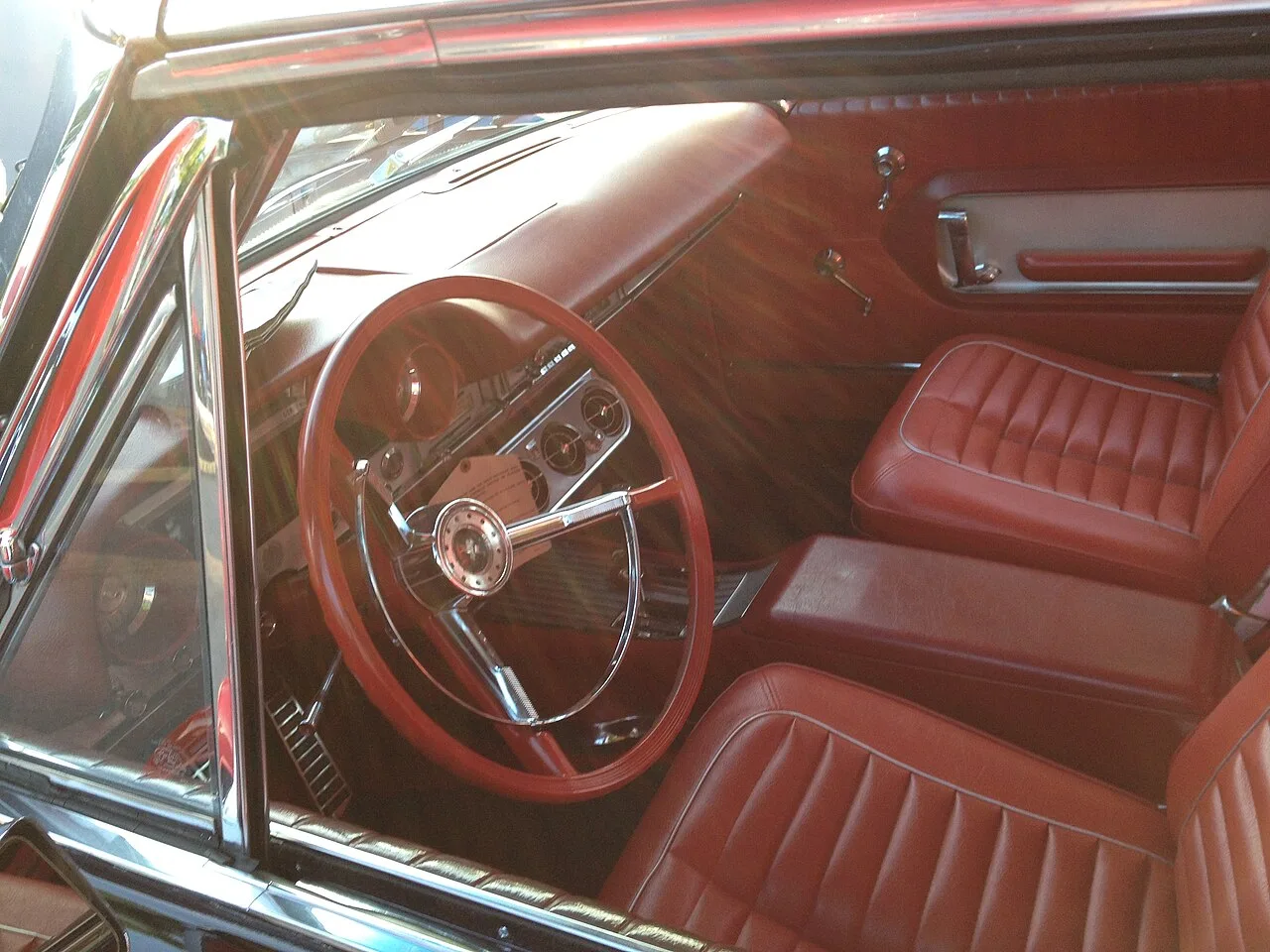
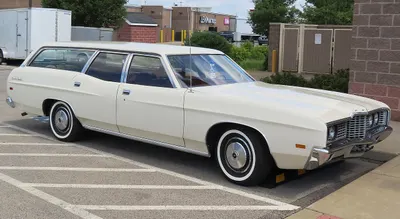
The 1969 Galaxie ditched the usual wall-to-wall dash for something unheard of on a full-size Ford: a cockpit-style instrument pod wrapped around just the driver.
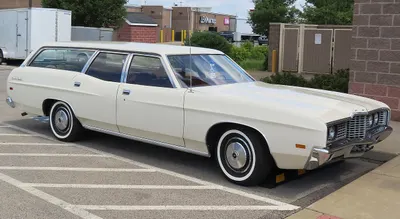
Brazil kept building the Galaxie until 1983 — and kept driving two of them as the country's actual presidential cars until 1990, some running on straight ethanol with 28-gallon tanks.
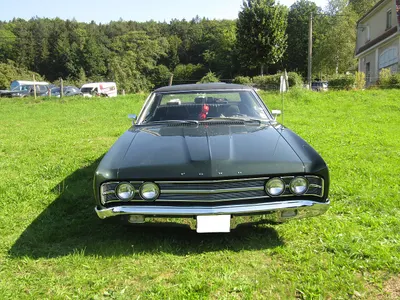
The 1966 Galaxie 500 7 Litre's new 428 V8 wasn't exclusive — Ford put the same engine in the Thunderbird and the Mercury S-55 that same year.
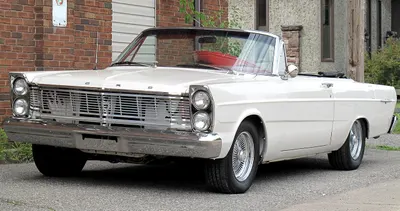
A 1966 Galaxie once carried actual royalty: Queen Elizabeth II used one during her 1968 visit to Chile, and the Chilean government still preserves it today as a ceremonial state car.
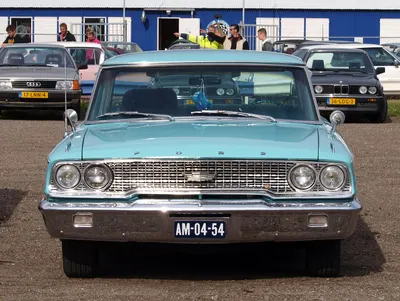
The first 20 lightweight R-code Galaxies had actual fiberglass doors to save weight — until Ford got nervous about the safety of fiberglass doors on public roads and quietly dropped them.
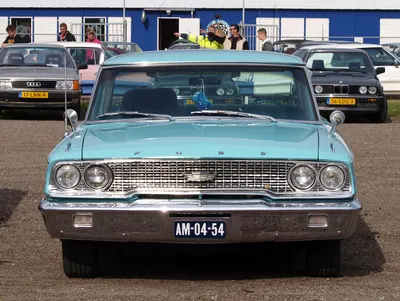
Ford's 1963½ lightweight Galaxie drag specials went to extremes — even the spare tire, one of the two horns, and the dome light were pulled just to shave weight.
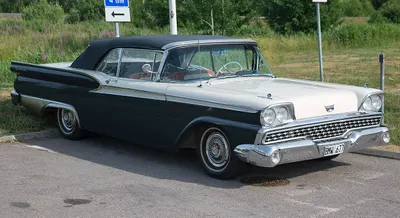
The 1959 Galaxie lineup included the Skyliner — a full steel hardtop that folded itself down into the trunk, years before anyone else dared build a retractable roof with real rear seats.
Rivals
Same body, same money, other badges — tap any card to flip.

It briefly served as senior sibling to Marquette, a GM companion brand cancelled after just one year.

Nissan hired former BMW engineers to help develop the 510's suspension, which is why period reviewers frequently compared its handling to the BMW 1600/2002.

A Trabant 601 won its class at the 1970 Monte Carlo Rally, with a second 601 right behind it in second.

The 600 was a stopgap: the P50's body over the 601's mechanicals, and for a while its estate was built alongside the new 601 saloon.

The G80 Sport brought a 370 PS twin-turbo 3.3 V6, a mesh grille and copper-tinted chrome with copper stitching to match.

The Vigor was sold only with a five-cylinder engine, an unusual configuration Honda used to fit a longer engine transversely under a short hood.

The GS/E coupe earned the nickname "German Charger" for its long hood, short deck stance borrowed from Detroit muscle cars.

This DeVille/Fleetwood was the first production car anywhere to mount its V8 sideways, Cadillac's front-drive gamble on the new C-body.