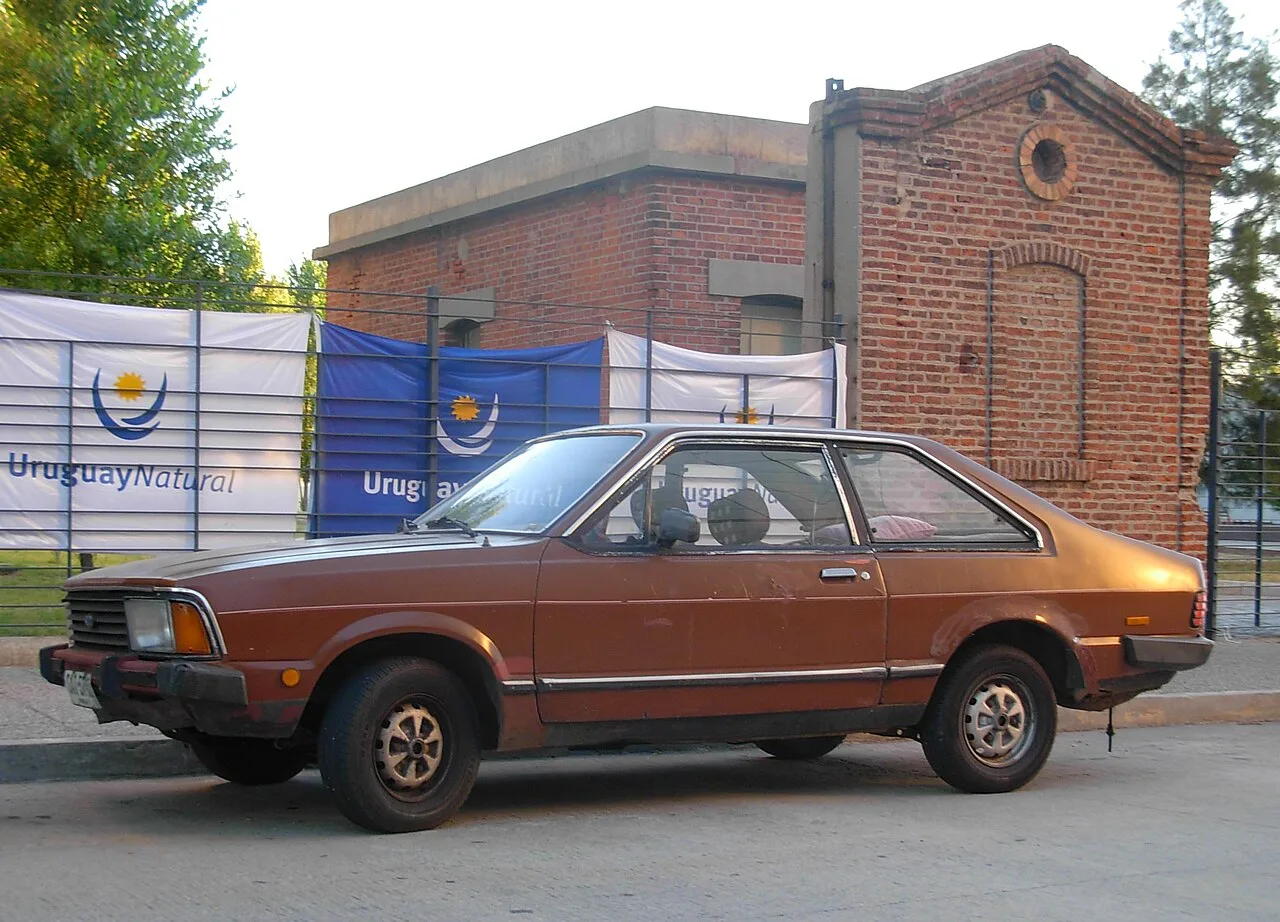
Ford's humble Brazilian Corcel II had its own dedicated FIA racing series — a one-make Group 1 championship that ran from 1979 to 1983.
Median 95 hp across 392 similar cars
Lead trim: Corcel II 1.4 1300-B OHV four (54 hp DIN) · up to 57 hp
Ford Corcel II / BelinaCORCEL-II · 1977–1986
- 0spots by members
- Unclaimednobody has spotted one yet
- 0sets it belongs to
Nobody in Burbles has spotted a Ford Corcel II / Belina yet. See one on the street, point the app at it, and the first card is yours — with your @handle permanently credited on this page.
FactFord's humble Brazilian Corcel II had its own dedicated FIA racing series — a one-make Group 1 championship that ran from 1979 to 1983.
In 1977, for the 1978 model year, Ford launched the Corcel II with a completely remade, straight-lined design in place of the pony-car style (the four-door was dropped for lack of interest, leaving a long-and-heavy-doored two-door fastback sedan and the Belina wagon), bearing a strong resemblance to the European Escort and Cortina of the time on the same Renault underpinnings. It was originally equipped with the same 1.4-litre four as the first Corcel, now rated 54 hp (40 kW) DIN for the base, Luxo and LDO versions and 57 hp (42 kW) for the sporting GT with a twin-barrel Solex carburettor; the Corcel II also served an FIA Group 1 one-marque championship in Brazil from 1979 to 1983. The upright, four-door-available Del Rey arrived in 1981 (its wagon the Scala until 1986), the Pampa pickup in 1982, and as of 1982 the engine was the CHT, the 1555 cc (bored and stroked) "Cléon" reworked with a redesigned cylinder head and rotating valve design. Venezuelan assembly began on 30 October 1981 (2,244 Corcel IIs and 2,439 Ghias in 1986). A slight 1985 facelift made the model simply the Corcel again and, from 1985 to 1987, the Belina was offered with a four-wheel-drive system also used in the Pampa (its reputation ruined by frequent breakdowns in a Quatro Rodas long-term test). 1986 was the last year of the Corcel; the Belina name then moved to the Del Rey wagon. Front-wheel drive (four-wheel drive optional), 4/5-speed manual, wheelbase 2,440 mm (96.1 in), width 1,660 mm (65.4 in), height 1,350–1,360 mm.
Collectors Spotted in the Ford Corcel Lineage
No member has published a public street spot of the Ford Corcel yet — the First · Worldwide stamp is wide open.
Trims & Figures
3 published trims in the catalogue. A blank is a figure not recorded, not zero.
| Trim | Years | Engine | Power | Torque | 0–60 | Drive | Gearbox | MSRP |
|---|---|---|---|---|---|---|---|---|
| Corcel 1.6 CHT OHV four (1,555 cc) | 1982–1986 | 1.6 L Inline-4 | — | — | — | FWD | — | — |
| Corcel II 1.4 1300-B OHV four (54 hp DIN) | 1977–1982 | 1.4 L Inline-4 | 54 hp | 83 lb-ft | — | FWD | — | — |
| Corcel II GT 1.4 twin-barrel Solex (57 hp DIN) | 1977–1982 | 1.4 L Inline-4 | 57 hp | 83 lb-ft | — | FWD | — | — |
Owning one
We don’t estimate running costs for a car like this. What it costs depends on its condition, its specialist and how it is driven, and an average would mislead.
Owners’ builds
Nobody has claimed one yet.
Photographs
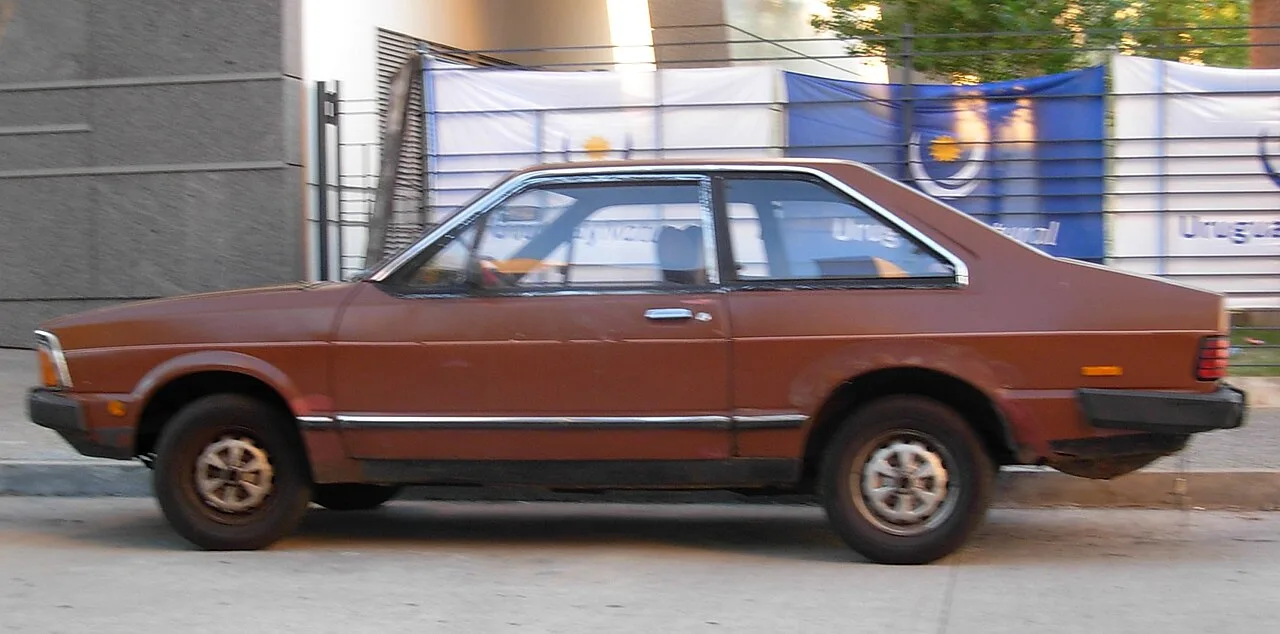
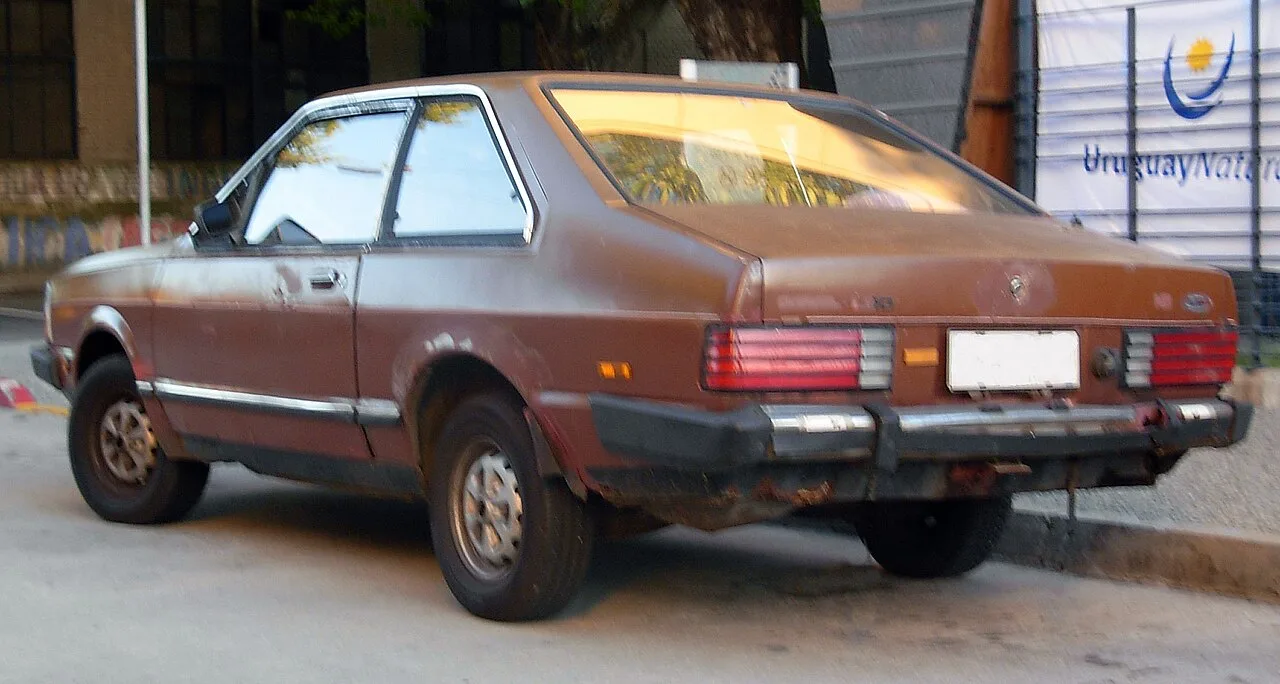
Ford's humble Brazilian Corcel II had its own dedicated FIA racing series — a one-make Group 1 championship that ran from 1979 to 1983.
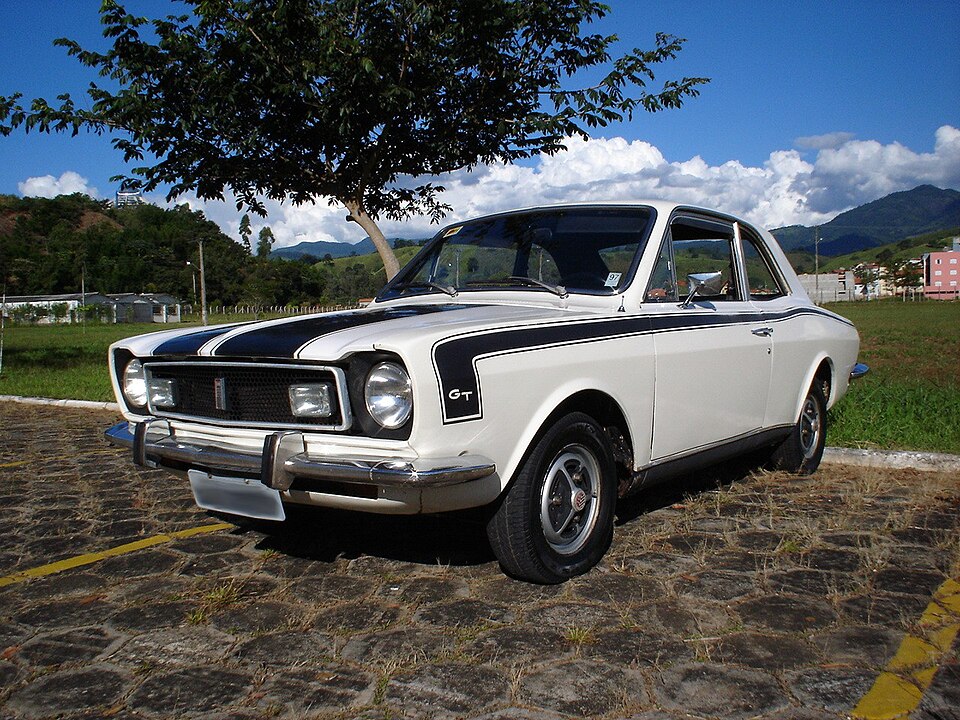
The Corcel made Brazilian history for an odd reason: it was the subject of the country's first-ever automotive recall, reaching 65,000 owners.
Rivals
Same body, same money, other badges — tap any card to flip.

It briefly served as senior sibling to Marquette, a GM companion brand cancelled after just one year.

Nissan hired former BMW engineers to help develop the 510's suspension, which is why period reviewers frequently compared its handling to the BMW 1600/2002.

A Trabant 601 won its class at the 1970 Monte Carlo Rally, with a second 601 right behind it in second.

The 600 was a stopgap: the P50's body over the 601's mechanicals, and for a while its estate was built alongside the new 601 saloon.

The G80 Sport brought a 370 PS twin-turbo 3.3 V6, a mesh grille and copper-tinted chrome with copper stitching to match.

The Vigor was sold only with a five-cylinder engine, an unusual configuration Honda used to fit a longer engine transversely under a short hood.

The GS/E coupe earned the nickname "German Charger" for its long hood, short deck stance borrowed from Detroit muscle cars.

This DeVille/Fleetwood was the first production car anywhere to mount its V8 sideways, Cadillac's front-drive gamble on the new C-body.