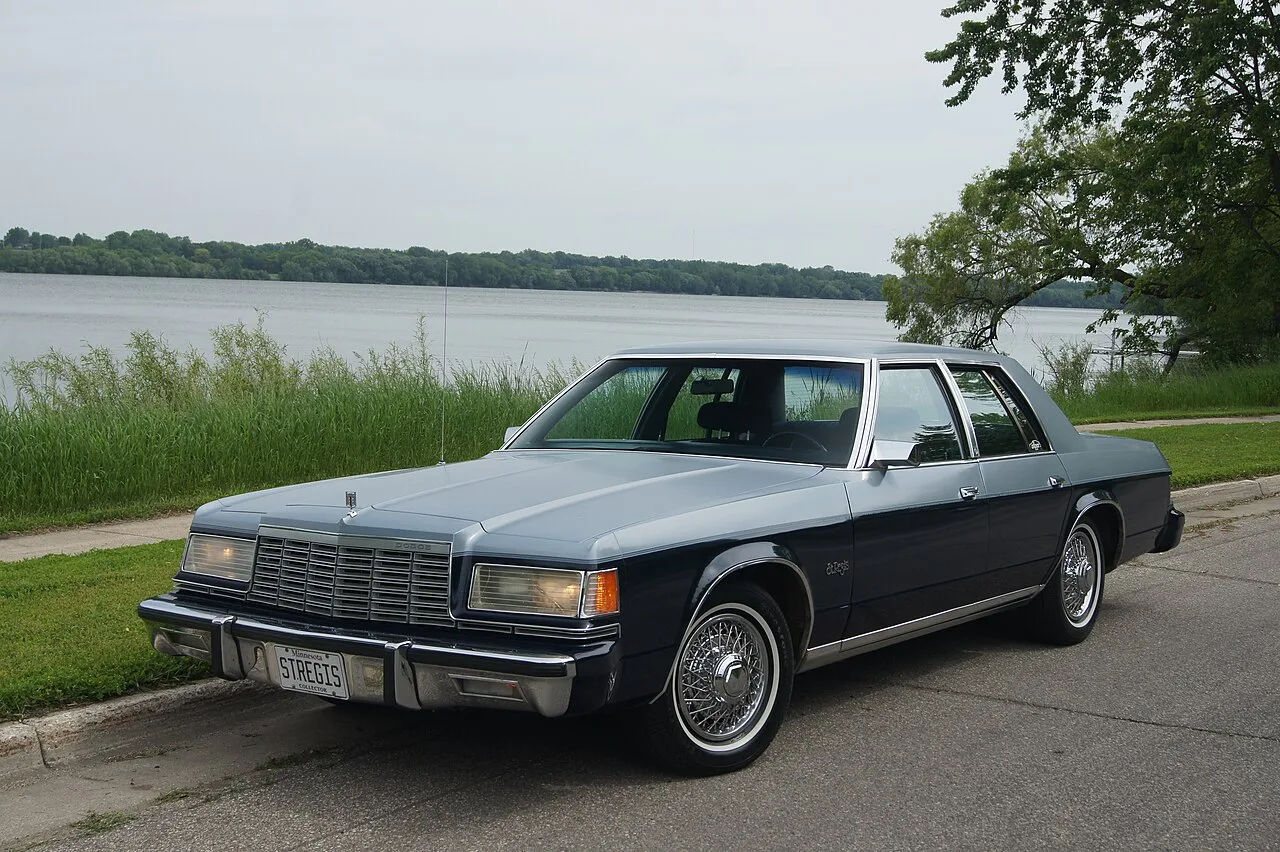
California Highway Patrol officers hated the St. Regis so much they nicknamed it the 'dog car' — in 1980 the state sold off 86 of them, some never even put into service, for exactly what it paid.
Lead trim: St. Regis 225 Slant-6 I6 (standard) · up to 185 hp
Dodge St. RegisST-REGIS · 1978–1981
- 0spots by members
- Unclaimednobody has spotted one yet
- 0sets it belongs to
Nobody in Burbles has spotted a Dodge St. Regis yet. See one on the street, point the app at it, and the first card is yours — with your @handle permanently credited on this page.
FactCalifornia Highway Patrol officers hated the St. Regis so much they nicknamed it the 'dog car' — in 1980 the state sold off 86 of them, some never even put into service, for exactly what it paid.
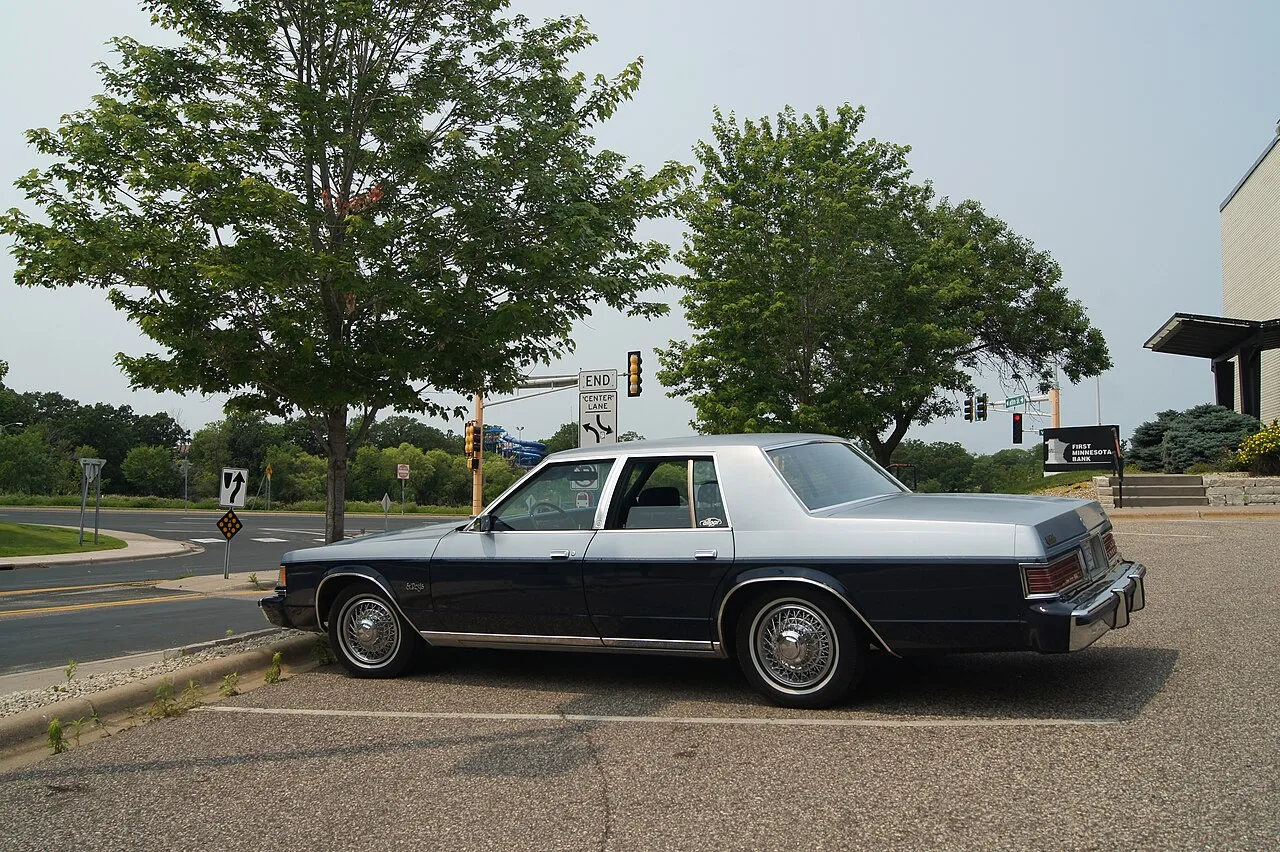
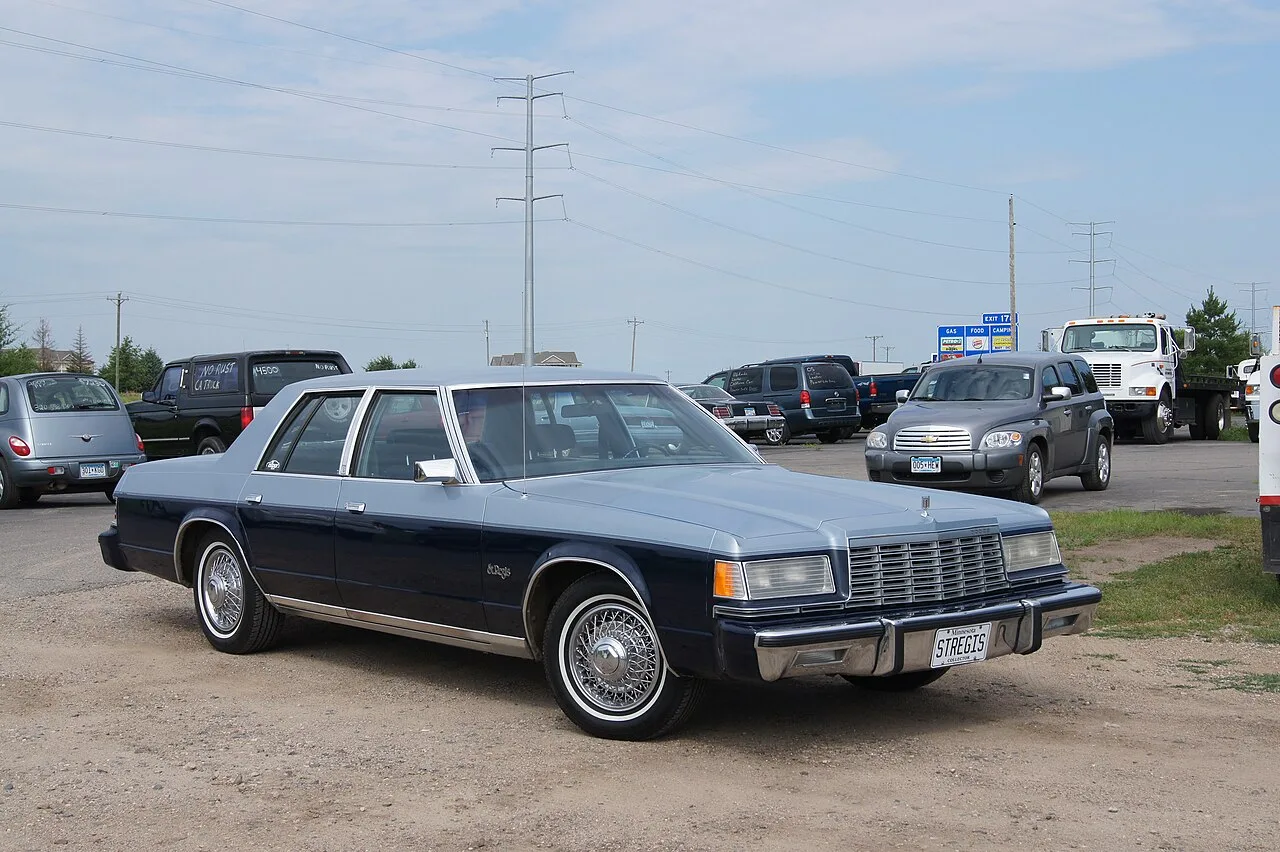
The Dodge St. Regis is a full-size automobile manufactured by Chrysler from 1978 to 1981 and marketed by Dodge for the 1979 to 1981 model years, replacing the Monaco as the largest Dodge sedan, above the mid-size Diplomat and Aspen; it was offered solely as a four-door notchback sedan (frameless door glass, fixed rear quarter glass) and was one of the shortest-lived Dodge nameplates (64,502 built), assembled at Lynch Road Assembly in Detroit alongside the Chrysler Newport, New Yorker and Plymouth Gran Fury as the final production vehicles at that facility. Based on the rear-wheel-drive Chrysler R-body, an update of the intermediate B-body developed on existing underpinnings at minimal cost (rather than redesigning the full-size C-body), it shed 5.5 inches in length, 2.7 in width, 3 in of wheelbase and nearly 900 lb against the 1977 Royal Monaco; the 225 Slant-6 was standard with optional 318 and 360 V8s (the 400 and 440 big-blocks deleted), all with a three-speed automatic, and Chrysler's longitudinal front torsion bars (Torsion-Aire) with a solid rear axle on leaf springs. The front fascia had transparent retractable headlamp covers (introduced on the 1978 Dodge Magnum). The name came from a 1956 New Yorker hardtop coupé trim package and the 1974–78 New Yorker Brougham coupé. It arrived just as a second gasoline crisis hit in 1979, remaining far larger than its Ford LTD and Chevrolet Caprice competitors (at 220.2 inches, an inch shorter than a Cadillac Fleetwood Brougham) with nearly 30% of production going to police/law enforcement. The R platform was dropped in mid-1981 and the Diplomat became the largest Dodge for 1982. Wheelbase 118.5 in (3,009.9 mm), length 220.2 in, width 77.1 in, height 54.5 in, curb weight 3,810 lb. The page gives no power figures.
Collectors Spotted in the Dodge St. Regis Lineage
No member has published a public street spot of the Dodge St. Regis yet — the First · Worldwide stamp is wide open.
Trims & Figures
3 published trims in the catalogue. A blank is a figure not recorded, not zero.
| Trim | Years | Engine | Power | Torque | 0–60 | Drive | Gearbox | MSRP |
|---|---|---|---|---|---|---|---|---|
| St. Regis 225 Slant-6 I6 (standard) | 1979–1981 | 3.7 L Inline-6 | 85 hp | — | — | RWD | — | — |
| St. Regis 318 LA V8 | 1979–1981 | 5.2 L V8 | 165 hp | 240 lb-ft | — | RWD | — | — |
| St. Regis 360 LA V8 | 1979–1981 | 5.9 L V8 | 185 hp | — | — | RWD | — | — |
Owning one
We don’t estimate running costs for a car like this. What it costs depends on its condition, its specialist and how it is driven, and an average would mislead.
Owners’ builds
Nobody has claimed one yet.
Photographs
Rivals
Same body, same money, other badges — tap any card to flip.

It briefly served as senior sibling to Marquette, a GM companion brand cancelled after just one year.

Nissan hired former BMW engineers to help develop the 510's suspension, which is why period reviewers frequently compared its handling to the BMW 1600/2002.

A Trabant 601 won its class at the 1970 Monte Carlo Rally, with a second 601 right behind it in second.

The 600 was a stopgap: the P50's body over the 601's mechanicals, and for a while its estate was built alongside the new 601 saloon.

The G80 Sport brought a 370 PS twin-turbo 3.3 V6, a mesh grille and copper-tinted chrome with copper stitching to match.

The Vigor was sold only with a five-cylinder engine, an unusual configuration Honda used to fit a longer engine transversely under a short hood.

The GS/E coupe earned the nickname "German Charger" for its long hood, short deck stance borrowed from Detroit muscle cars.

This DeVille/Fleetwood was the first production car anywhere to mount its V8 sideways, Cadillac's front-drive gamble on the new C-body.