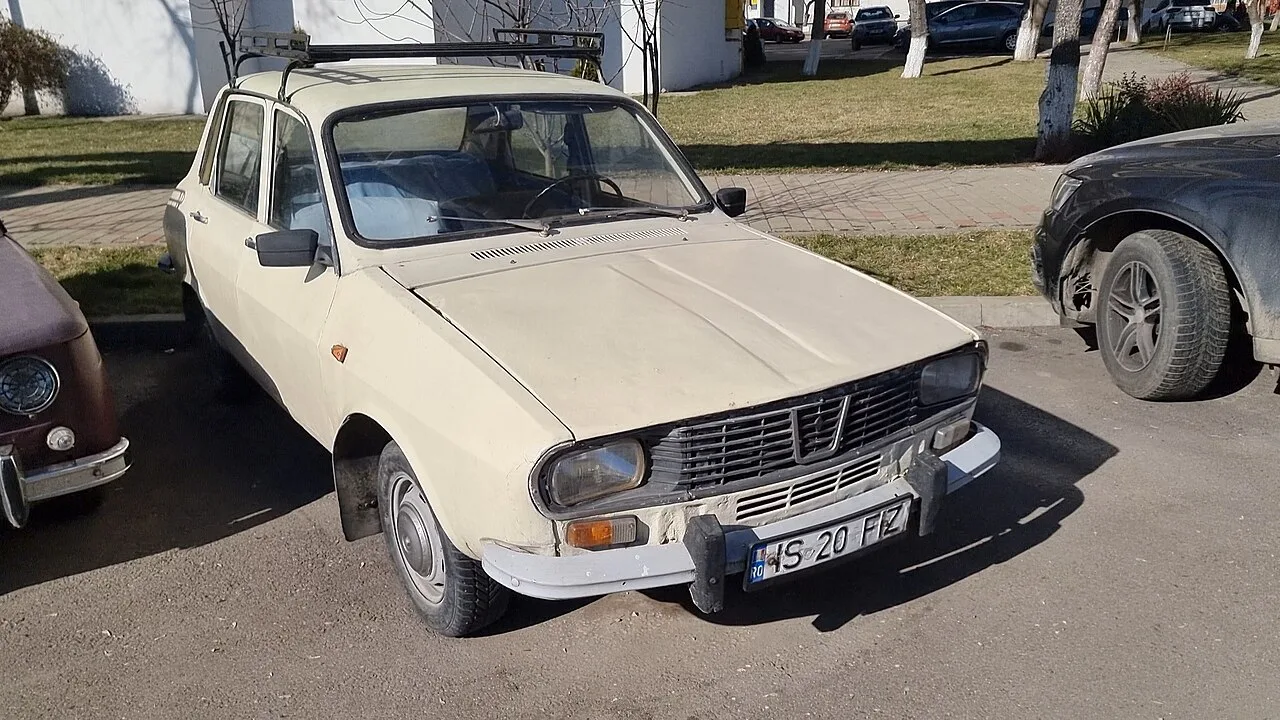
Romania's government set a hard rule for its first mass-market car, an engine no larger than 1.3 litres, and named the result after that number.
Lead trim: 1300 (1,289 cc OHV, 54 PS)
Dacia 13001969–1984
- 0spots by members
- Unclaimednobody has spotted one yet
- 0sets it belongs to
Nobody in Burbles has spotted a Dacia 1300 yet. See one on the street, point the app at it, and the first card is yours — with your @handle permanently credited on this page.
FactRomania's government set a hard rule for its first mass-market car, an engine no larger than 1.3 litres, and named the result after that number.
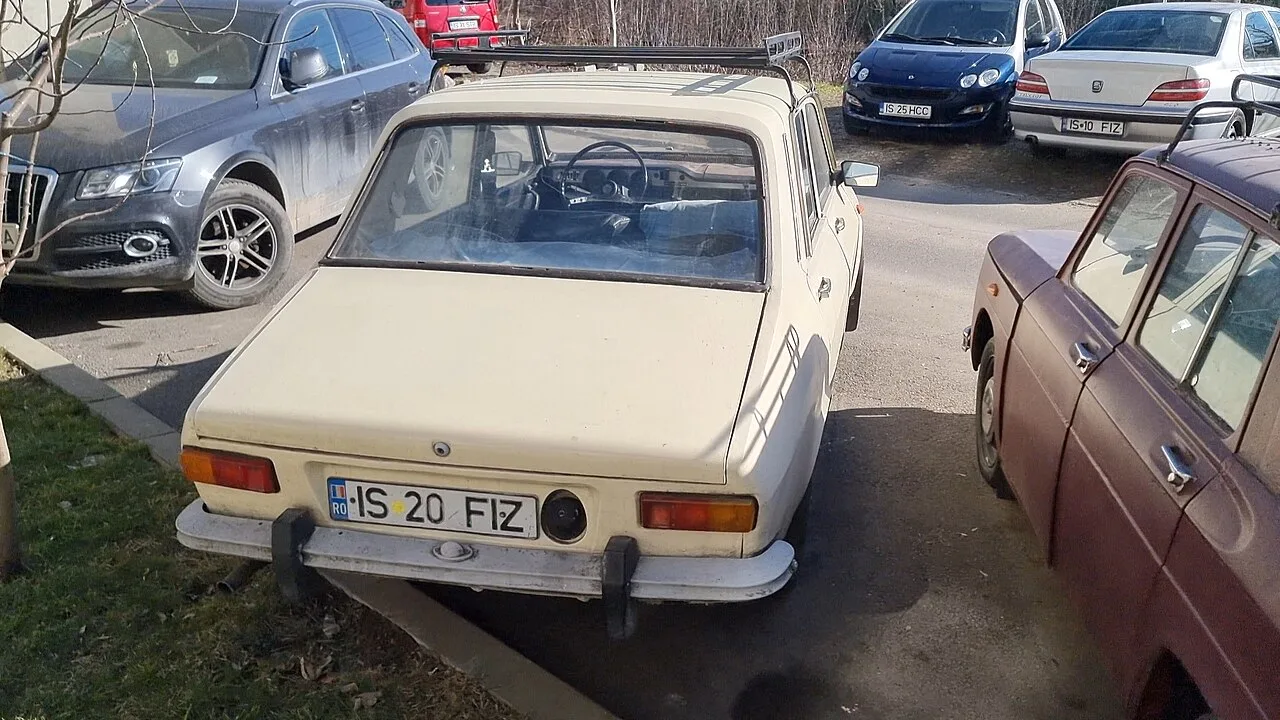
The Dacia 1300 is a medium-sized family car based on the Renault 12 that was built during the Cold War by Romanian automaker Dacia; the "1300" stands for the engine displacement. The Romanian government of the 1960s decided to acquire the tooling and basic design of a Western car to decrease its reliance on imported consumer goods, with the terms that the vehicle be inexpensive, large enough for a family, and powered by an engine displacing not more than 1.3 litres, and the winner was the Renault 12. The first Dacia 1300 left the assembly line on 23 August 1969, and the last Dacia 1310 sedan, number 1,959,730, rolled out of the Mioveni plant on 21 July 2004. In the first few years the plant assembled CKD kits imported from France. The 1301 luxury version went into production in 1970, the 1300 Break estate in 1973 and the 1302 pickup in 1975, and after cooperation with Renault ceased in 1978 Dacia presented a revised version at the 1979 Bucharest Auto Show, renamed the 1310 in 1982. Air conditioning, airbags and anti-lock brakes were never offered.
Collectors Spotted in the Dacia 1300 Lineage
No member has published a public street spot of the Dacia 1300 yet — the First · Worldwide stamp is wide open.
Trims & Figures
One published trim in the catalogue. A blank is a figure not recorded, not zero.
| Trim | Years | Engine | Power | Torque | 0–60 | Drive | Gearbox | MSRP |
|---|---|---|---|---|---|---|---|---|
| 1300 (1,289 cc OHV, 54 PS) | 1969–1984 | 1.3 L Inline-4 | 53 hp | 69 lb-ft | — | FWD | — | — |
Owning one
We don’t estimate running costs for a car like this. What it costs depends on its condition, its specialist and how it is driven, and an average would mislead.
Owners’ builds
Nobody has claimed one yet.
Photographs
Rivals
Same body, same money, other badges — tap any card to flip.

It briefly served as senior sibling to Marquette, a GM companion brand cancelled after just one year.

Nissan hired former BMW engineers to help develop the 510's suspension, which is why period reviewers frequently compared its handling to the BMW 1600/2002.

A Trabant 601 won its class at the 1970 Monte Carlo Rally, with a second 601 right behind it in second.

The 600 was a stopgap: the P50's body over the 601's mechanicals, and for a while its estate was built alongside the new 601 saloon.

The G80 Sport brought a 370 PS twin-turbo 3.3 V6, a mesh grille and copper-tinted chrome with copper stitching to match.

The Vigor was sold only with a five-cylinder engine, an unusual configuration Honda used to fit a longer engine transversely under a short hood.

The GS/E coupe earned the nickname "German Charger" for its long hood, short deck stance borrowed from Detroit muscle cars.

This DeVille/Fleetwood was the first production car anywhere to mount its V8 sideways, Cadillac's front-drive gamble on the new C-body.