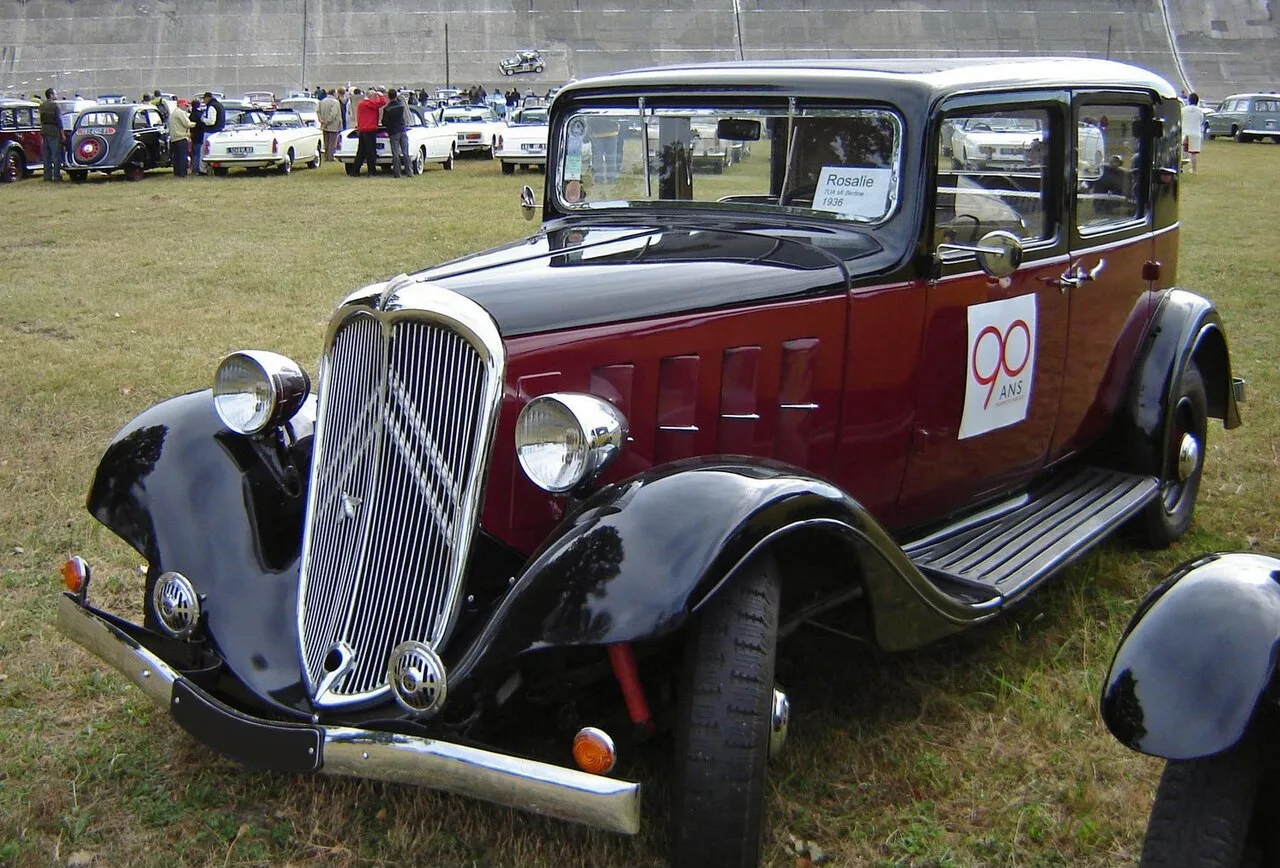
Rather than engineer a new rear-wheel-drive engine, Citroën just took the motor from its new front-wheel-drive Traction Avant and turned it 180 degrees to fit the old-school Rosalie.
Lead trim: Rosalie 8CV 1.5 four (1452 cc) · up to 55 hp
Citroën Rosalie1932–1938
- 0spots by members
- Unclaimednobody has spotted one yet
- 0sets it belongs to
Nobody in Burbles has spotted a Citroën Rosalie yet. See one on the street, point the app at it, and the first card is yours — with your @handle permanently credited on this page.
FactRather than engineer a new rear-wheel-drive engine, Citroën just took the motor from its new front-wheel-drive Traction Avant and turned it 180 degrees to fit the old-school Rosalie.
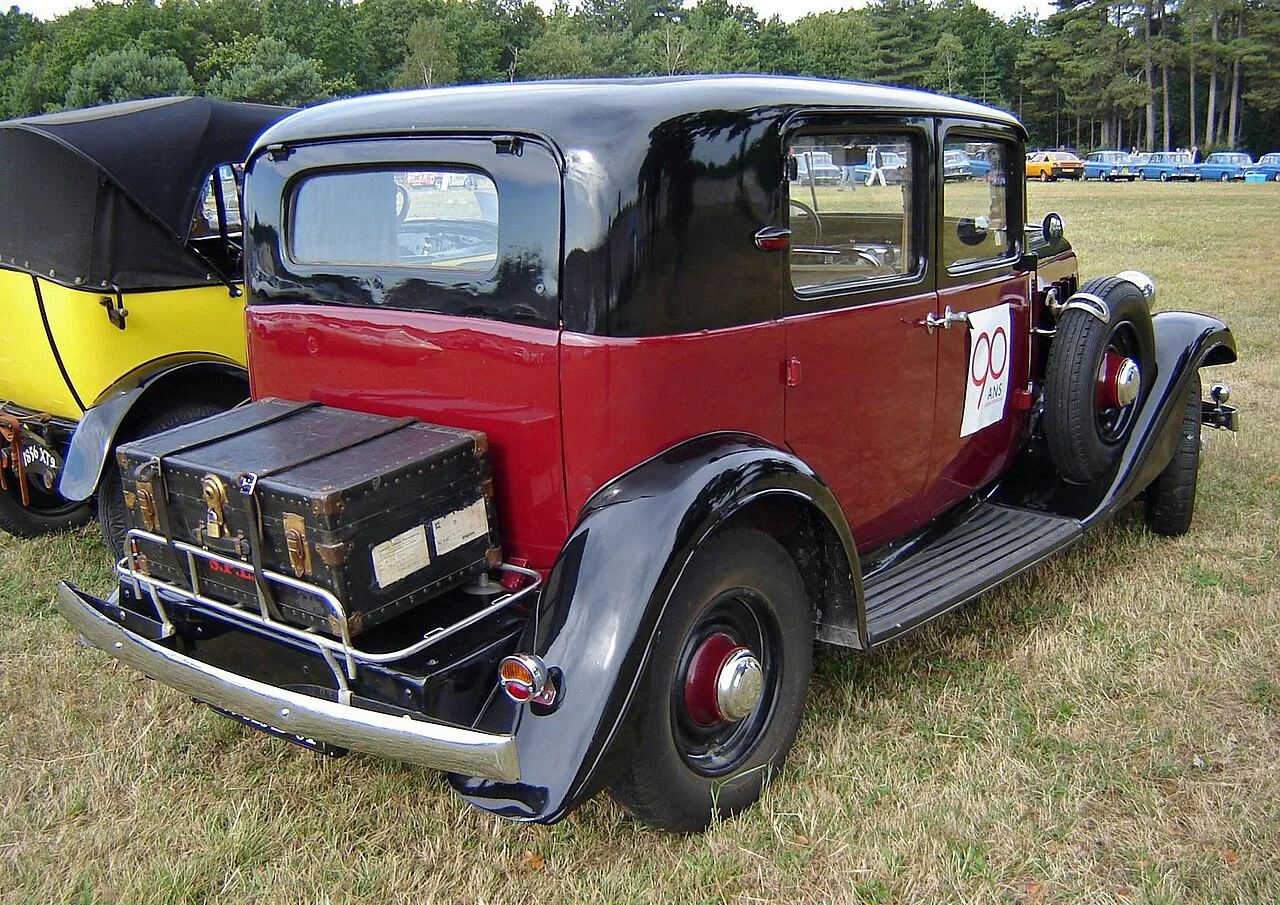
The original Citroën Rosalie was a lightweight racing car that established a succession of records at the Montlhéry racing circuit; more generally the Rosalie was a range of three models that comprised the core of Citroën's range between 1932 and 1938: the 8CV, 10CV and 15CV (the numbers indicating the cars' fiscal horsepower, which defined approximate engine size). At introduction the larger Rosalies replaced the C4 and C6, launched in 1928 and 1929, and represented a move upmarket for the business, which had appeared for a time to lose interest in the smaller cars that had filled its dealerships during the 1920s; the Rosalies, especially the 15CV, were offered in a range of body types, and the look was significantly more modern than that of the C4 and C6, though the real revolution involved production technology, as André Citroën drew inspiration from his 1912 visit to Henry Ford's Highland Park plant and in 1932 Citroën was still a European leader in assembly-line manufacturing. In 1934 all the Rosalies got a gently raked front grille facelift (the NH, or "Nouvel Habillage", B-series), the year of the Traction Avant, whose troubled birth was part of an ambitious investment programme that also saw the bankruptcy of the business; larger Rosalies, re-engined with a turned-around version of the Traction's OHV four-cylinder engines, remained available until 1938, and at the 1934 Paris Salon the two smaller models became the 7UA and 11UA with the overhead-valve engines from the Traction; a 1,766 cc 11UD diesel option was offered from the 1933 model year. The smallest 8CV had a four-cylinder motor of 1,452 cc driving the rear wheels, 4.27 metres long and a maximum 90 km/h (56 mph); the 10CV a four-cylinder of 1,767 cc and a claimed 100 km/h (62 mph); the 15CV a six-cylinder of 2,650 cc with cylinders the same size as those of the 10CV, including a 15 Légère (a 15CV with the shorter cabin of the 10CV) capable of a claimed 120 km/h (75 mph). In all 88,090 four-cylinder and 7,230 six-cylinder Rosalies were built (38,840 7/8 and 49,250 10/11), of which 8,400 were the short-lived B-series.
Collectors Spotted in the Citroën Rosalie Lineage
No member has published a public street spot of the Citroën Rosalie yet — the First · Worldwide stamp is wide open.
Trims & Figures
4 published trims in the catalogue. A blank is a figure not recorded, not zero.
| Trim | Years | Engine | Power | Torque | 0–60 | Drive | Gearbox | MSRP |
|---|---|---|---|---|---|---|---|---|
| Rosalie 10CV 1.8 four (1767 cc) | 1932–1934 | 1.8 L Inline-4 | 36 hp | — | — | RWD | — | — |
| Rosalie 15 Légère 2.7 six (2650 cc) | 1932–1938 | 2.6 L Inline-6 | 55 hp | — | — | RWD | — | — |
| Rosalie 15CV 2.7 six (2650 cc) | 1932–1938 | 2.6 L Inline-6 | 55 hp | — | — | RWD | — | — |
| Rosalie 8CV 1.5 four (1452 cc) | 1932–1934 | 1.5 L Inline-4 | 36 hp | — | — | RWD | — | — |
Owning one
We don’t estimate running costs for a car like this. What it costs depends on its condition, its specialist and how it is driven, and an average would mislead.
Owners’ builds
Nobody has claimed one yet.
Photographs
Rivals
Same body, same money, other badges — tap any card to flip.

It briefly served as senior sibling to Marquette, a GM companion brand cancelled after just one year.

Nissan hired former BMW engineers to help develop the 510's suspension, which is why period reviewers frequently compared its handling to the BMW 1600/2002.

A Trabant 601 won its class at the 1970 Monte Carlo Rally, with a second 601 right behind it in second.

The 600 was a stopgap: the P50's body over the 601's mechanicals, and for a while its estate was built alongside the new 601 saloon.

The G80 Sport brought a 370 PS twin-turbo 3.3 V6, a mesh grille and copper-tinted chrome with copper stitching to match.

The Vigor was sold only with a five-cylinder engine, an unusual configuration Honda used to fit a longer engine transversely under a short hood.

The GS/E coupe earned the nickname "German Charger" for its long hood, short deck stance borrowed from Detroit muscle cars.

This DeVille/Fleetwood was the first production car anywhere to mount its V8 sideways, Cadillac's front-drive gamble on the new C-body.