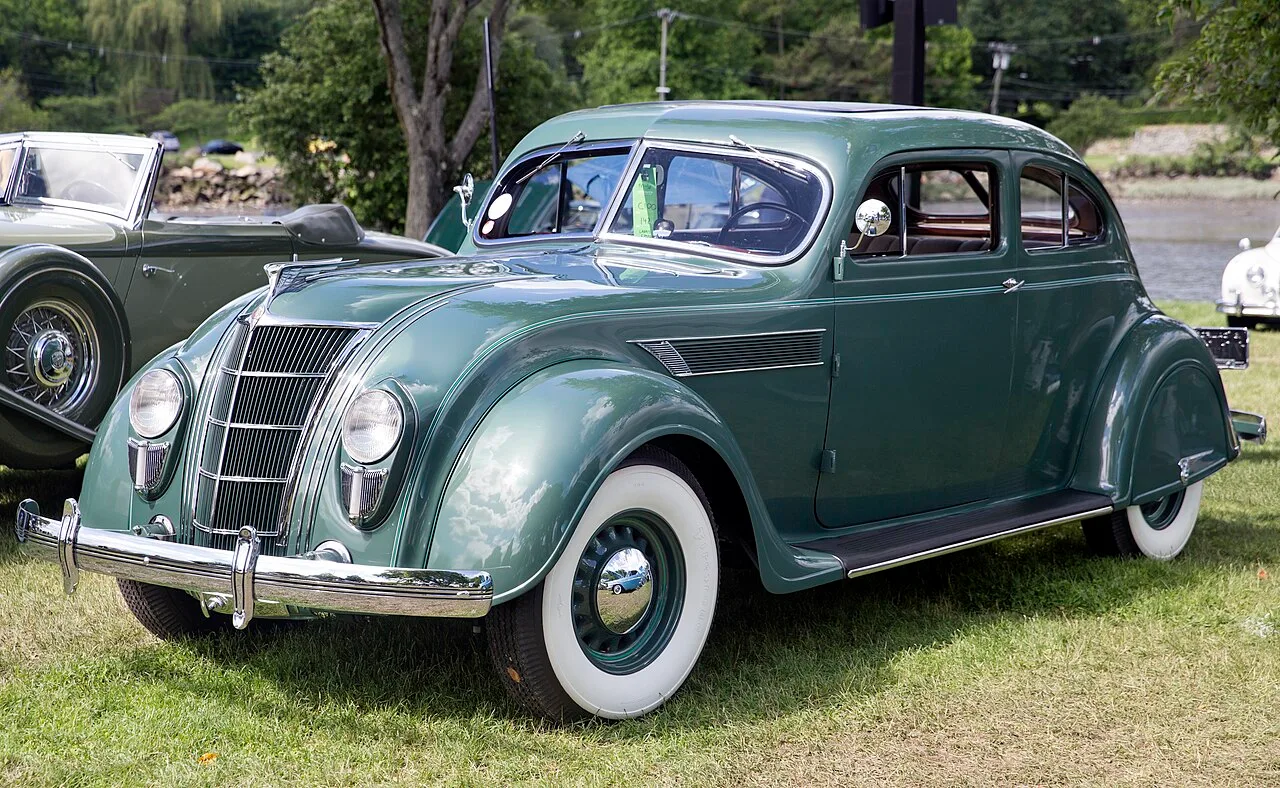
Chrysler wind-tunnel tested this shape and found the standard 1930s car was more aerodynamic backwards.
Lead trim: Airflow Eight 324 I8 (1937)
Chrysler AirflowAIRFLOW · 1934–1937
- 0spots by members
- Unclaimednobody has spotted one yet
- 0sets it belongs to
Nobody in Burbles has spotted a Chrysler Airflow yet. See one on the street, point the app at it, and the first card is yours — with your @handle permanently credited on this page.
FactChrysler wind-tunnel tested this shape and found the standard 1930s car was more aerodynamic backwards.
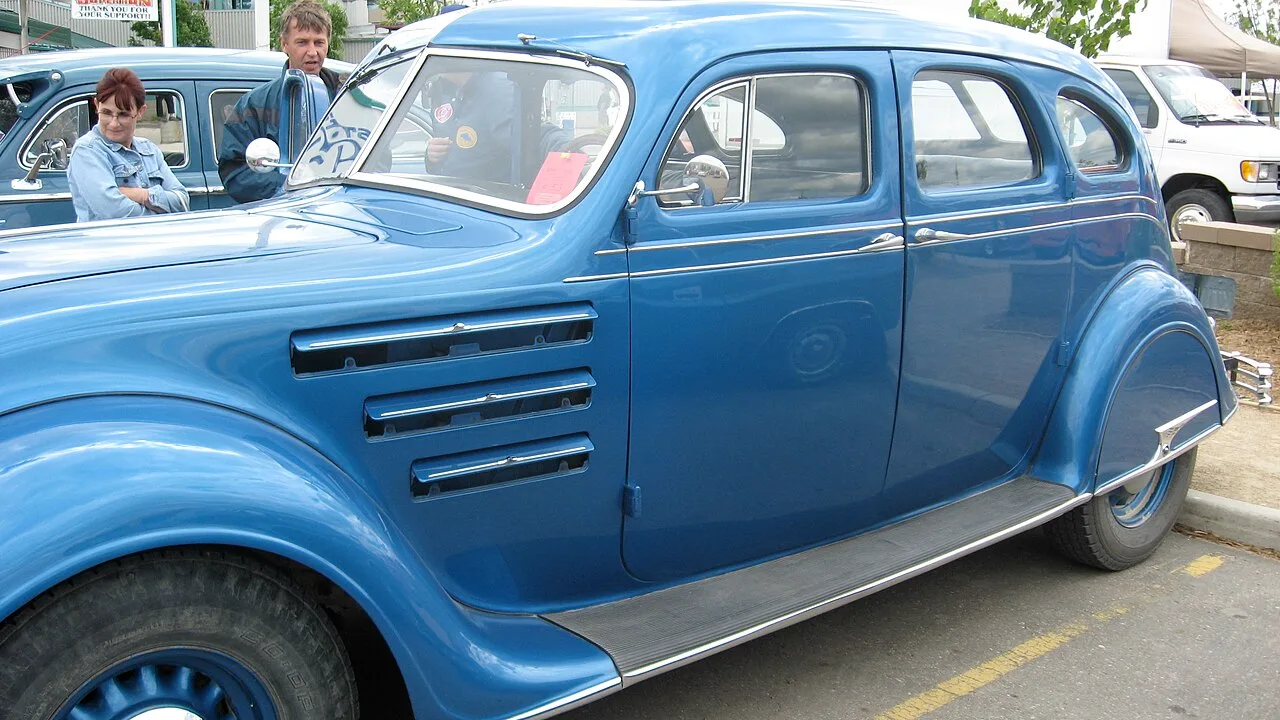
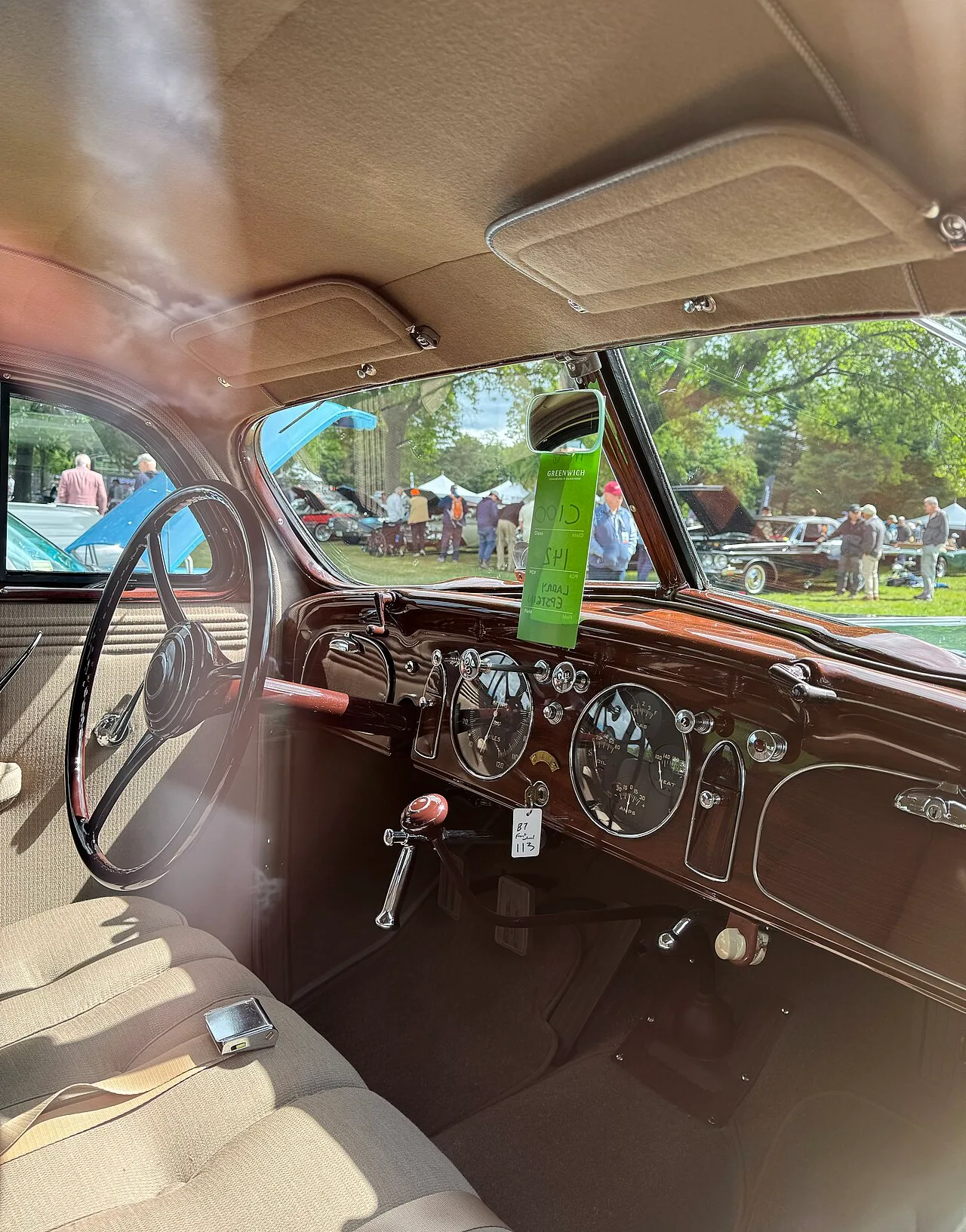
The Chrysler Airflow is a full-size car produced by Chrysler from 1934 to 1937 (fewer than 29,600 built at Highland Park), the first full-size American production car to use streamlining as the basis for a sleeker automobile less susceptible to air resistance, designed by Oliver Clark; a commercial failure due to a lack of market acceptance and its controversial appearance (a companion DeSoto Airflow and the Imperial shared the look). Carl Breer, Fred Zeder and Owen Skelton ran wind tunnel tests with the cooperation of Orville Wright (at least 50 scale models by April 1930) and found the then-current two-box design was more aerodynamic driven backwards; the car used unibody construction with a full steel body (when GM, Ford and even Chrysler still used wooden structural framing), the engine moved forward over the front wheels and passengers seated within the wheelbase, giving about 54% of the weight on the front wheels (near 50:50 with passengers) and a far superior ride. It was introduced in January 1934, months before production; the early Airflows had major manufacturing defects (engines breaking loose at 80 mph in the first 2,000 to 3,000, according to Fred Breer, a claim tagged "citation needed"). The 1934 Airflow used a flathead I8 (299 cu in, 4.9 L) in a 2-door coupé and 4-door sedan, priced at US$1,345, with a 3-speed manual floor shift; the Airflow Eight (CU) rode a 123.5 in wheelbase, the Airflow Imperial Eight (CV) 128 in and the Airflow Custom Imperial (CX) 137.5 in, with first-year Airflow sales of 10,839 (Chrysler's traditional sedans outsold it 2.5 to one). For 1935 a slightly peaked grille replaced the waterfall unit (under 8,000 Airflows against roughly four Airstreams for each), for 1936 a trunk was tacked on and the grille was more pronounced (6,275 Airflows against more than 52,000 Airstreams), and in 1937 the Airflow was reduced to the Airflow Eight in two-door coupé and four-door sedan form with the 324 cu in (5.3 L) I8, 4,600 built. The Airflow was the last Chrysler unibody until Virgil Exner's Forward Look of 1960. The CW Custom Imperial limousine is catalogued as its own generation; Chrysler announced in 2022 that the name would be resurrected for an electric crossover SUV.
Collectors Spotted in the Chrysler Airflow Lineage
No member has published a public street spot of the Chrysler Airflow yet — the First · Worldwide stamp is wide open.
Trims & Figures
2 published trims in the catalogue. A blank is a figure not recorded, not zero.
| Trim | Years | Engine | Power | Torque | 0–60 | Drive | Gearbox | MSRP |
|---|---|---|---|---|---|---|---|---|
| Airflow 299 flathead I8 (1934–1936) | 1934–1936 | 4.9 L Inline-8 | — | — | — | RWD | — | — |
| Airflow Eight 324 I8 (1937) | 1937–1937 | 5.3 L Inline-8 | — | — | — | RWD | — | — |
Owning one
We don’t estimate running costs for a car like this. What it costs depends on its condition, its specialist and how it is driven, and an average would mislead.
Owners’ builds
Nobody has claimed one yet.
Photographs
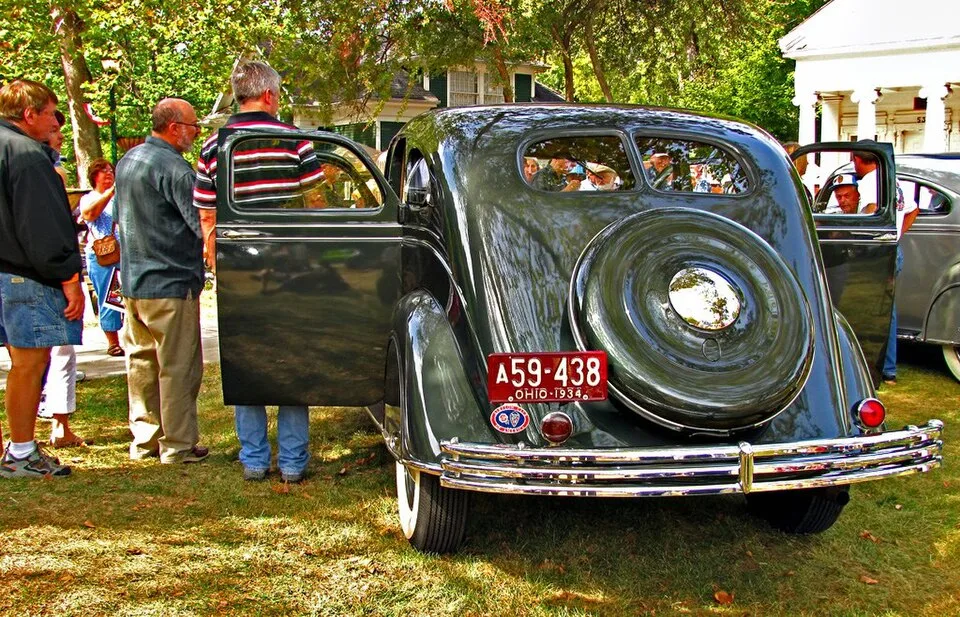
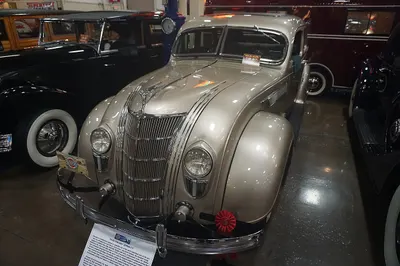
A Philippine president rode in one of these as his official state car, later restored and shown in Manila's Presidential Car Museum.
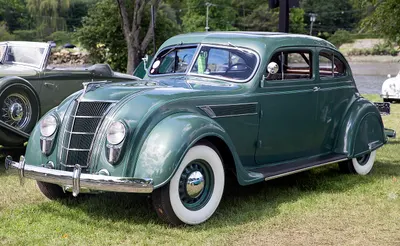
Chrysler wind-tunnel tested this shape and found the standard 1930s car was more aerodynamic backwards.
Rivals
Same body, same money, other badges — tap any card to flip.

It briefly served as senior sibling to Marquette, a GM companion brand cancelled after just one year.

Nissan hired former BMW engineers to help develop the 510's suspension, which is why period reviewers frequently compared its handling to the BMW 1600/2002.

A Trabant 601 won its class at the 1970 Monte Carlo Rally, with a second 601 right behind it in second.

The 600 was a stopgap: the P50's body over the 601's mechanicals, and for a while its estate was built alongside the new 601 saloon.

The G80 Sport brought a 370 PS twin-turbo 3.3 V6, a mesh grille and copper-tinted chrome with copper stitching to match.

The Vigor was sold only with a five-cylinder engine, an unusual configuration Honda used to fit a longer engine transversely under a short hood.

The GS/E coupe earned the nickname "German Charger" for its long hood, short deck stance borrowed from Detroit muscle cars.

This DeVille/Fleetwood was the first production car anywhere to mount its V8 sideways, Cadillac's front-drive gamble on the new C-body.