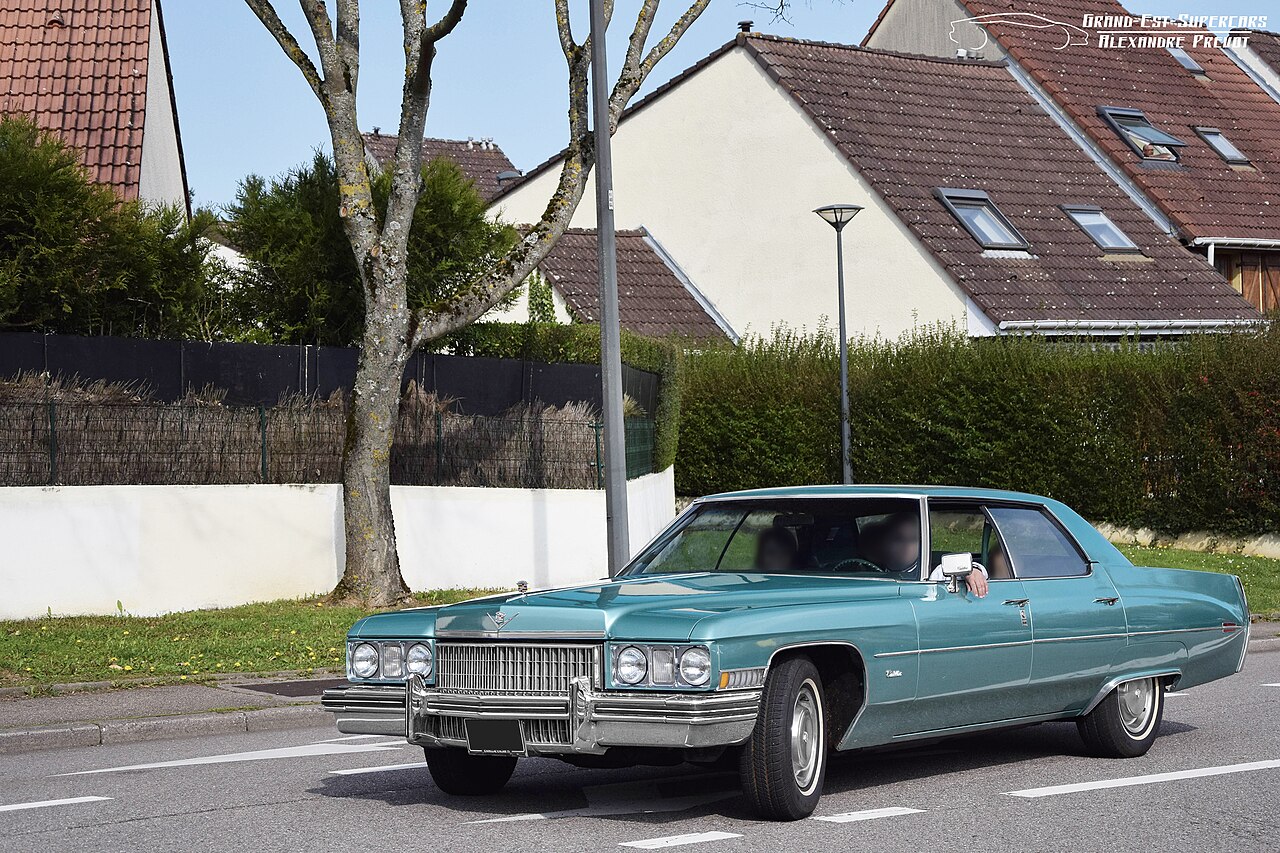
The 1974 Calais quietly offered something that wouldn’t become common for another two decades: GM’s first-ever airbag system, the Air Cushion Restraint System.
Lead trim: Calais (1974) · up to 345 hp
Cadillac Calais1971–1976
- 0spots by members
- Unclaimednobody has spotted one yet
- 0sets it belongs to
Nobody in Burbles has spotted a Cadillac Calais yet. See one on the street, point the app at it, and the first card is yours — with your @handle permanently credited on this page.
FactThe 1974 Calais quietly offered something that wouldn’t become common for another two decades: GM’s first-ever airbag system, the Air Cushion Restraint System.
For 1971 all Cadillac models were redesigned: the new GM full-size bodies set a record for interior width not matched until the full-size GM rear-wheel-drive models of the early to mid-1990s, with pairs of individually housed round headlamps set wider apart, a V-shaped eggcrate grille with massive vertical guards, a wide hood with full-length windsplints and recessed wipers, fender skirts and new vertical taillamps; the Calais wheelbase was extended to 130 in and interiors got a curved instrument panel. A minor 1972 facelift emphasized horizontal grille blades; 1973 brought energy-absorbing bumpers and a wider eggcrate grille; the 1974 Calais, De Ville and Fleetwood received a major facelift (coupes were no longer hardtops but had wide "coach" windows) and GM's optional "Air Cushion Restraint System" airbags, the industry's first (discontinued after 1976). For 1975 the big 500 cu in (8.2 L) engine, an Eldorado exclusive since 1970, was now standard in all Cadillacs except the new, smaller Seville. 1976 was the 11th and final year for the slow-selling Calais, as the cost difference from the base De Ville had become negligible; for 1977 the redesigned, downsized De Ville became the lowest-priced Cadillac. Dimensions: 130.0 in wheelbase, 225.8 in long in 1971, 227.4 in in 1972, 227.8 in in 1973 and 230.7 in in 1974–76, 79.8 in wide, 54.5 in high (54.6 in in 1974, 54.3 in in 1975–76), 4,800–5,300 lb, with the 472 cu in (7.7 L) or 500 cu in (8.2 L) V8 and a 3-speed TH-400.
Collectors Spotted in the Cadillac Calais Lineage
No member has published a public street spot of the Cadillac Calais yet — the First · Worldwide stamp is wide open.
Trims & Figures
5 published trims in the catalogue. A blank is a figure not recorded, not zero.
| Trim | Years | Engine | Power | Torque | 0–60 | Drive | Gearbox | MSRP |
|---|---|---|---|---|---|---|---|---|
| Calais (1971) | 1971–1971 | V8 | 345 hp | 500 lb-ft | — | RWD | — | — |
| Calais (1972) | 1972–1972 | V8 | 220 hp | 365 lb-ft | — | RWD | — | — |
| Calais (1973) | 1973–1973 | V8 | 220 hp | 365 lb-ft | — | RWD | — | — |
| Calais (1974) | 1974–1974 | V8 | 205 hp | 380 lb-ft | — | RWD | — | — |
| Calais 500 cu in V8 (1975–1976) | 1975–1976 | 8.2 L V8 | — | — | — | RWD | — | — |
Owning one
An estimate, for the Calais (1971) trim: fuel on its EPA figure and a dated national price, upkeep on a per-mile average for the kind of car it is.
Owners’ builds
Nobody has claimed one yet.
Photographs
The 1974 Calais quietly offered something that wouldn’t become common for another two decades: GM’s first-ever airbag system, the Air Cushion Restraint System.
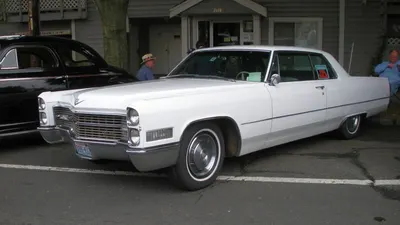
The 1967 Calais coupe's wraparound roofline wasn't a new idea — Cadillac borrowed it straight off the Florentine, a one-off show car built for the 1964 New York World's Fair.
Rivals
Same body, same money, other badges — tap any card to flip.

It briefly served as senior sibling to Marquette, a GM companion brand cancelled after just one year.

Nissan hired former BMW engineers to help develop the 510's suspension, which is why period reviewers frequently compared its handling to the BMW 1600/2002.

A Trabant 601 won its class at the 1970 Monte Carlo Rally, with a second 601 right behind it in second.

The 600 was a stopgap: the P50's body over the 601's mechanicals, and for a while its estate was built alongside the new 601 saloon.

The G80 Sport brought a 370 PS twin-turbo 3.3 V6, a mesh grille and copper-tinted chrome with copper stitching to match.

The Vigor was sold only with a five-cylinder engine, an unusual configuration Honda used to fit a longer engine transversely under a short hood.

The GS/E coupe earned the nickname "German Charger" for its long hood, short deck stance borrowed from Detroit muscle cars.

This DeVille/Fleetwood was the first production car anywhere to mount its V8 sideways, Cadillac's front-drive gamble on the new C-body.