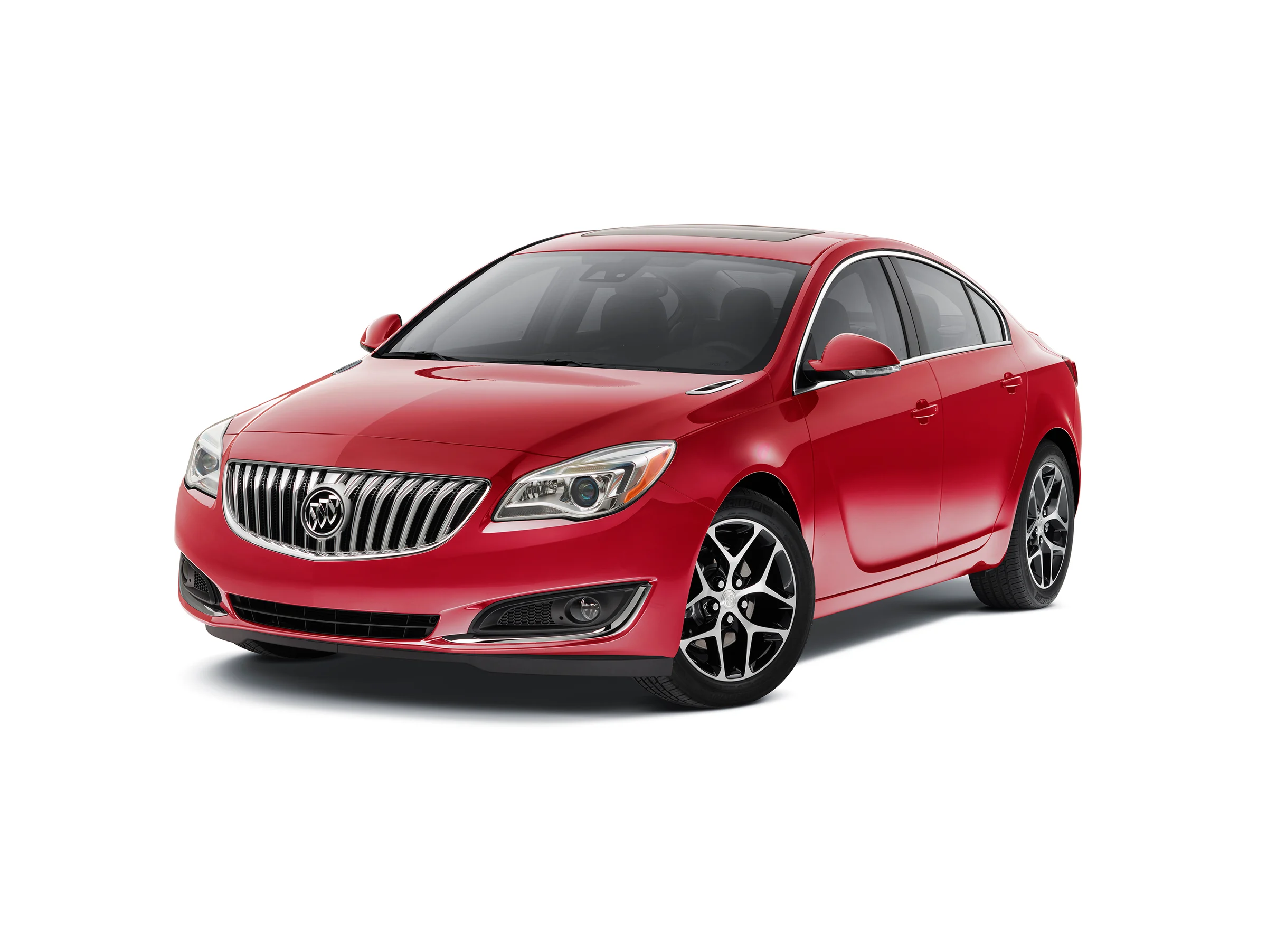
GM called more than four in ten U.S. Regal buyers conquests, people trading out of other brands entirely.
Median 208 hp across 381 similar cars
Lead trim: 2.4 I4
Buick Regal fifth generationEpsilon II · 2009–2017
- 0spots by members
- Unclaimednobody has spotted one yet
- 0sets it belongs to
Nobody in Burbles has spotted a Buick Regal fifth generation yet. See one on the street, point the app at it, and the first card is yours — with your @handle permanently credited on this page.
FactGM called more than four in ten U.S. Regal buyers conquests, people trading out of other brands entirely.
The fifth-generation Buick Regal is a four-door, five-passenger mid-size sedan on GM's Epsilon II platform, mostly identical to the Opel Insignia. It first went into production in Rüsselsheim, Germany, in 2008; the Shanghai GM version was introduced in China in December 2008 for the 2009 model year, and North American cars, built in Oshawa from 2011, were sold for the 2011–2017 model years. Engines were 2.4 litre and turbocharged 2.0 litre fours (plus 1.6 turbo and 2.0 options in China), with six-speed automatics or a six-speed manual. GM said more than 41 percent of U.S. buyers came from non-GM brands.
Collectors Spotted in the Buick Regal Lineage
No member has published a public street spot of the Buick Regal yet — the First · Worldwide stamp is wide open.
Trims & Figures
3 published trims in the catalogue. A blank is a figure not recorded, not zero.
| Trim | Years | Engine | Power | Torque | 0–60 | Drive | Gearbox | MSRP |
|---|---|---|---|---|---|---|---|---|
| 1.6 Turbo I4 (China) | 2009–2017 | 1.6 L I4 | — | — | — | — | — | — |
| 2.0 Turbo I4 | 2009–2017 | 2.0 L I4 | — | — | — | — | — | — |
| 2.4 I4 | 2009–2017 | 2.4 L I4 | 182 hp | 172 lb-ft | — | — | — | — |
Owning one
An estimate, for the 1.6 Turbo I4 (China) trim: fuel on its EPA figure and a dated national price, upkeep on a per-mile average for the kind of car it is.
Owners’ builds
Nobody has claimed one yet.
Photographs
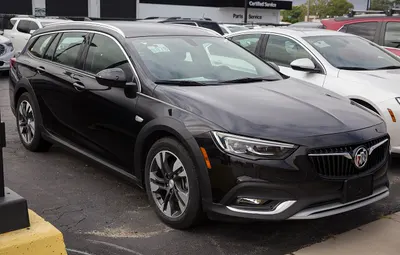
The Regal TourX wasn't just a new wagon for Buick — it was the brand's first wagon in 22 years, the first since the Century and Roadmaster Estates died off after 1996.
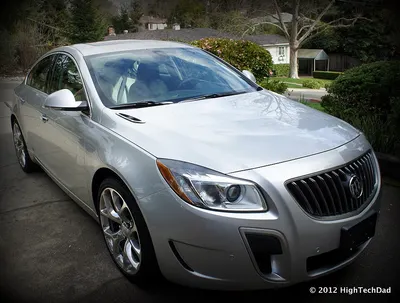
The Regal GS revival used a turbocharged Ecotec engine shared with the Opel Insignia OPC, reflecting the model's roots as a rebadged Opel developed in Germany.
GM called more than four in ten U.S. Regal buyers conquests, people trading out of other brands entirely.
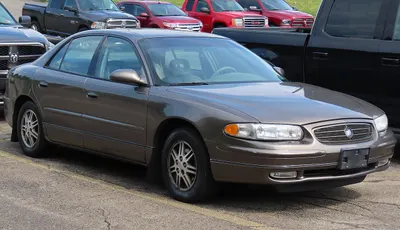
This Regal generation's supercharged GS was the fastest Buick built since the legendary 1987 GNX — switching from turbo to supercharged power for 240 hp.
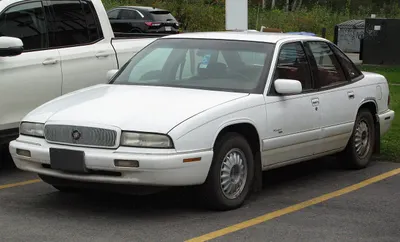
The 1988 Regal broke with Buick tradition in one stroke: the first front-wheel-drive Regal ever built, and the first with no serious performance option or edition at all.
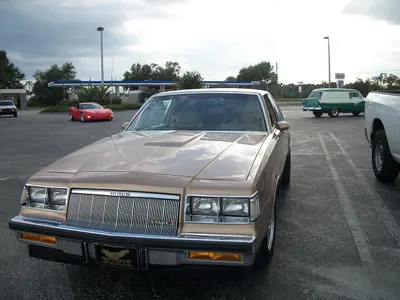
This Regal's aero-nosed facelift was so effective on the NASCAR circuit that Richard Petty drove one to victory in the 1981 Daytona 500, and it won the manufacturers' title two years running.
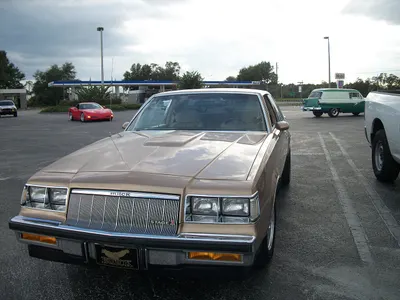
All-black and launched right as Star Wars mania peaked, the Grand National/GNX earned itself a nickname that stuck: "Darth Vader’s Car."
Rivals
Same body, same money, other badges — tap any card to flip.

It briefly served as senior sibling to Marquette, a GM companion brand cancelled after just one year.

Nissan hired former BMW engineers to help develop the 510's suspension, which is why period reviewers frequently compared its handling to the BMW 1600/2002.

A Trabant 601 won its class at the 1970 Monte Carlo Rally, with a second 601 right behind it in second.

The 600 was a stopgap: the P50's body over the 601's mechanicals, and for a while its estate was built alongside the new 601 saloon.

The G80 Sport brought a 370 PS twin-turbo 3.3 V6, a mesh grille and copper-tinted chrome with copper stitching to match.

The Vigor was sold only with a five-cylinder engine, an unusual configuration Honda used to fit a longer engine transversely under a short hood.

The GS/E coupe earned the nickname "German Charger" for its long hood, short deck stance borrowed from Detroit muscle cars.

This DeVille/Fleetwood was the first production car anywhere to mount its V8 sideways, Cadillac's front-drive gamble on the new C-body.