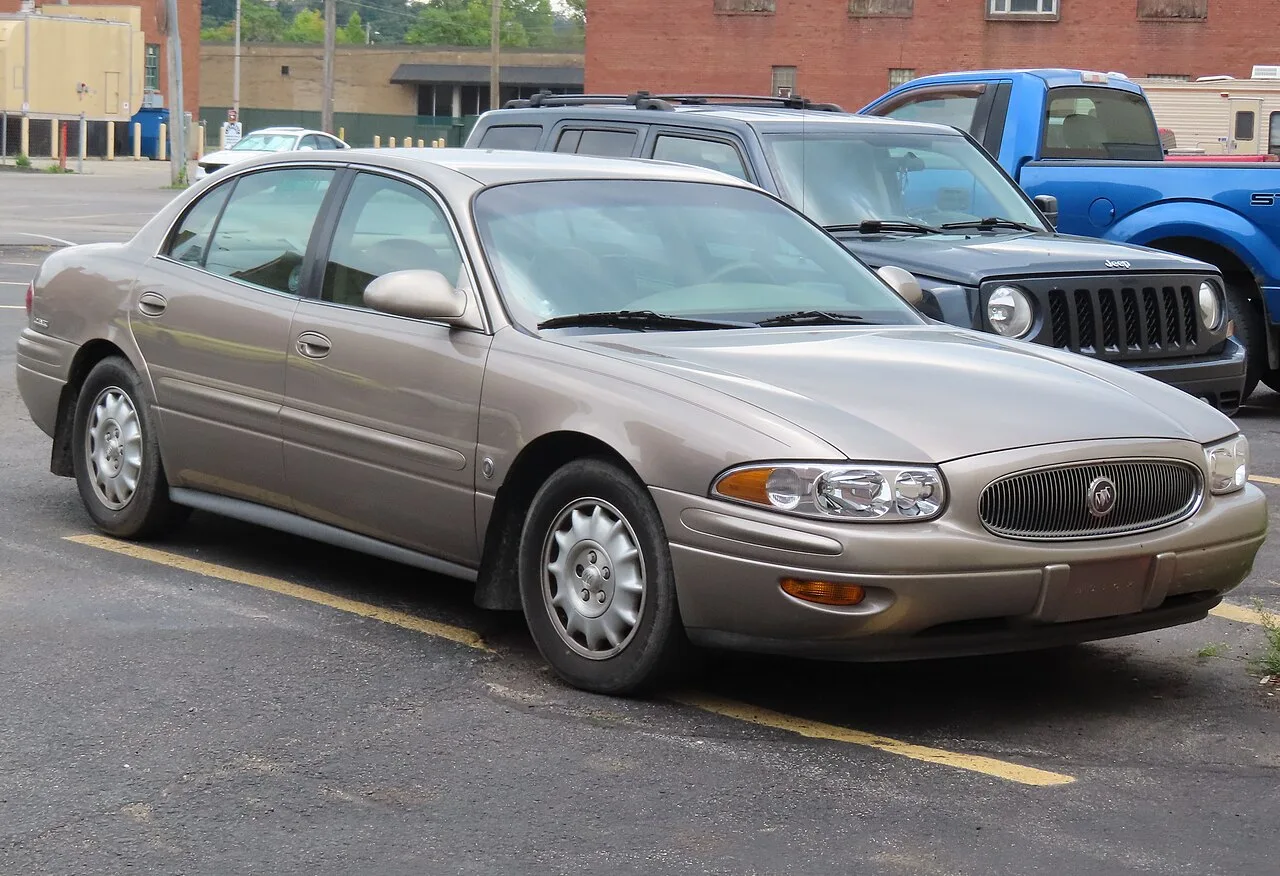
GM shrank the last LeSabre's footprint yet found more trunk space than the model it replaced.
Median 195 hp across 370 similar cars
Lead trim: 3.8 3800 Series II V6
Buick LeSabre eighth generationG platform · 2000–2005
- 0spots by members
- Unclaimednobody has spotted one yet
- 1set it completes
Nobody in Burbles has spotted a Buick LeSabre eighth generation yet. See one on the street, point the app at it, and the first card is yours — with your @handle permanently credited on this page.
FactGM shrank the last LeSabre's footprint yet found more trunk space than the model it replaced.
The eighth and last LeSabre was introduced in March 1999 for the 2000 model year on GM's G platform, which GM continued to call the H platform, and built at Detroit-Hamtramck and Lake Orion, Michigan, until August 2005. Despite slightly narrower exterior dimensions it offered similar interior room and more trunk space than before. It had the 3.8 litre Series II 3800 V6 with a four-speed automatic and front-wheel drive.
Collectors Spotted in the Buick LeSabre Lineage
No member has published a public street spot of the Buick LeSabre yet — the First · Worldwide stamp is wide open.
Trims & Figures
One published trim in the catalogue. A blank is a figure not recorded, not zero.
| Trim | Years | Engine | Power | Torque | 0–60 | Drive | Gearbox | MSRP |
|---|---|---|---|---|---|---|---|---|
| 3.8 3800 Series II V6 | 2000–2005 | 3.8 L V6 | 205 hp | 230 lb-ft | — | FWD | automatic | — |
Owning one
An estimate, for the 3.8 3800 Series II V6 trim: fuel on its EPA figure and a dated national price, upkeep on a per-mile average for the kind of car it is.
Owners’ builds
Nobody has claimed one yet.
Photographs
GM shrank the last LeSabre's footprint yet found more trunk space than the model it replaced.
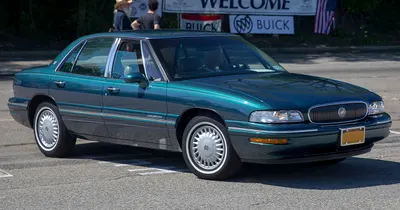
Buick cut the two-door LeSabre entirely for 1992, leaving the nameplate a sedan-only affair for good.
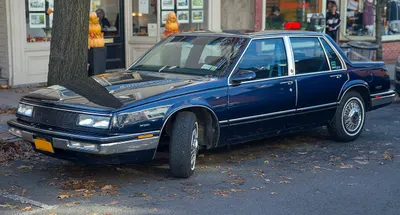
For one year only, Buick built a LeSabre Grand National coupe just to legalize its smaller quarter-window body style for NASCAR racing.
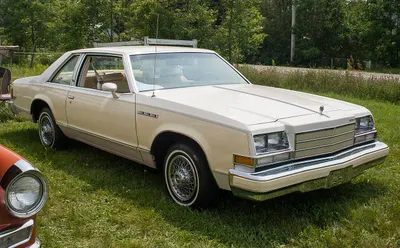
GM's 1977 downsizing shrank the LeSabre's footprint, yet somehow headroom, rear legroom and trunk space all grew over the bigger 1976 model.
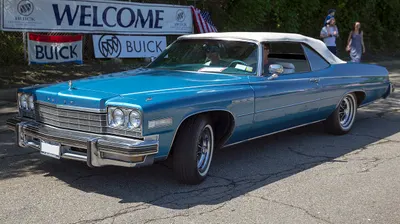
Buick quietly offered factory airbags on this LeSabre decades before they were common — a rarely-ordered option dropped after 1976 for lack of interest.
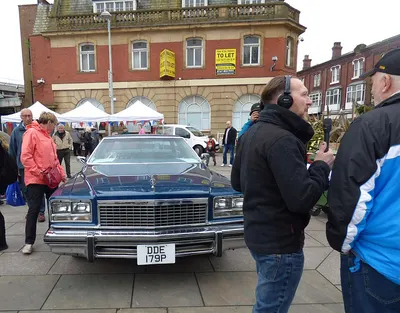
For 1970 Buick slotted a thundering 370-horsepower 455 cubic-inch V8 into the otherwise ordinary LeSabre — wrapped in the same trim as the regular Custom.
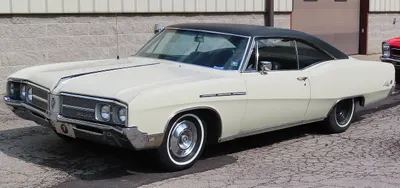
Checking the "400" box on a LeSabre didn’t just buy a bigger four-barrel V8 — it also swapped in the three-speed Super Turbine automatic otherwise reserved for Buick’s much bigger Wildcat, Electra 225 and Riviera.
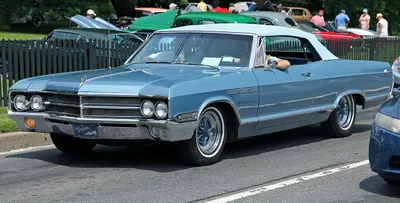
The platform under this LeSabre is one of the best-selling car platforms ever built — GM's 1965-70 B-body ranks behind only the Beetle, the Model T, and the Lada Riva.
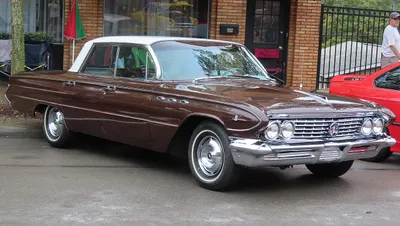
This LeSabre's wagon version came with its own named interior material straight from the factory: a vinyl called "Cordaveen," standard equipment nowhere else in the lineup.
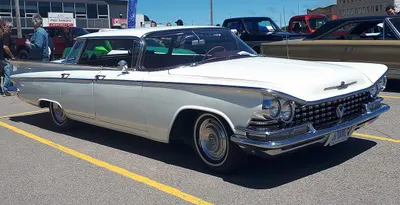
One first-generation LeSabre ended up owned by African royalty: a 1959 example once belonged to Sobhuza II, King of Swaziland, and now sits on display at his memorial park.
Rivals
Same body, same money, other badges — tap any card to flip.

It briefly served as senior sibling to Marquette, a GM companion brand cancelled after just one year.

Nissan hired former BMW engineers to help develop the 510's suspension, which is why period reviewers frequently compared its handling to the BMW 1600/2002.

A Trabant 601 won its class at the 1970 Monte Carlo Rally, with a second 601 right behind it in second.

The 600 was a stopgap: the P50's body over the 601's mechanicals, and for a while its estate was built alongside the new 601 saloon.

The G80 Sport brought a 370 PS twin-turbo 3.3 V6, a mesh grille and copper-tinted chrome with copper stitching to match.

The Vigor was sold only with a five-cylinder engine, an unusual configuration Honda used to fit a longer engine transversely under a short hood.

The GS/E coupe earned the nickname "German Charger" for its long hood, short deck stance borrowed from Detroit muscle cars.

This DeVille/Fleetwood was the first production car anywhere to mount its V8 sideways, Cadillac's front-drive gamble on the new C-body.