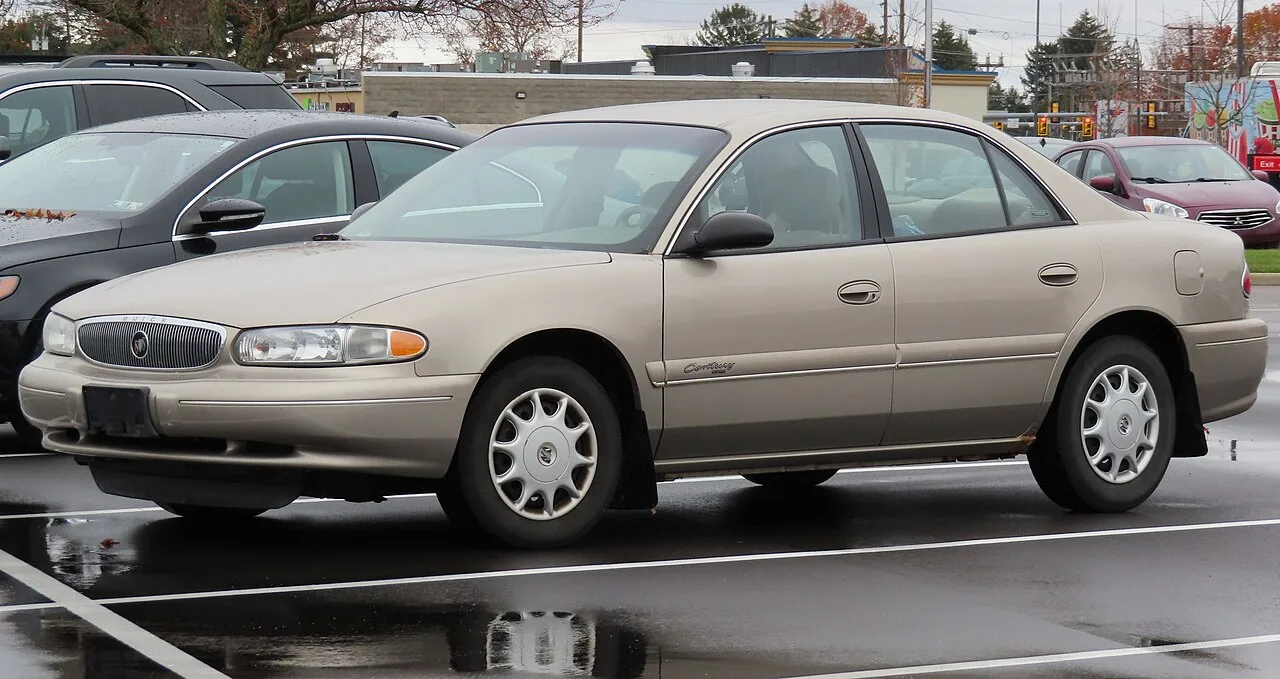
Buick waited nearly 15 years to redesign the Century, then gave it the Regal's chassis under softer, slower bodywork.
Lead trim: 3.1 V6
Buick Century sixth generationW-body · 1997–2005
- 0spots by members
- Unclaimednobody has spotted one yet
- 0sets it belongs to
Nobody in Burbles has spotted a Buick Century sixth generation yet. See one on the street, point the app at it, and the first card is yours — with your @handle permanently credited on this page.
FactBuick waited nearly 15 years to redesign the Century, then gave it the Regal's chassis under softer, slower bodywork.
Buick released the sixth-generation Century for the 1997 model year in December 1996, nearly 15 years after its last redesign, joining the redesigned Regal on the W-body chassis shared with the Oldsmobile Intrigue, Pontiac Grand Prix and Chevrolet Impala. It shared a chassis and nearly identical bodywork with the Regal but had a more upright grille, less powerful engines and softer suspension, continuing its image of traditional entry-level luxury. North American cars, built in Oshawa, used a 3.1 litre V6 with a four-speed automatic; a Chinese version was built in Shanghai from 1998 to 2000.
Collectors Spotted in the Buick Century Lineage
No member has published a public street spot of the Buick Century yet — the First · Worldwide stamp is wide open.
Trims & Figures
One published trim in the catalogue. A blank is a figure not recorded, not zero.
| Trim | Years | Engine | Power | Torque | 0–60 | Drive | Gearbox | MSRP |
|---|---|---|---|---|---|---|---|---|
| 3.1 V6 | 1997–2005 | 3.1 L V6 | — | — | — | FWD | automatic | — |
Owning one
An estimate, for the 3.1 V6 trim: fuel on its EPA figure and a dated national price, upkeep on a per-mile average for the kind of car it is.
Owners’ builds
Nobody has claimed one yet.
Photographs
Buick waited nearly 15 years to redesign the Century, then gave it the Regal's chassis under softer, slower bodywork.
Rare turbo V6 performance Century special edition from 1986, very few survive. About 400 on North American roads today (estimate).
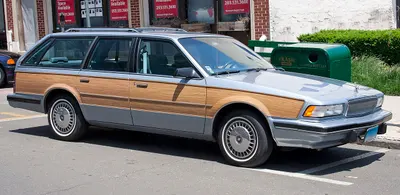
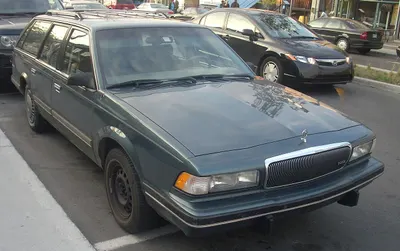
This Century shared its A-body so closely with the Cutlass Ciera, Pontiac 6000 and Chevy Celebrity that Fortune magazine put the lookalikes on its cover in 1983 as a cautionary tale — and GM recommitted to design leadership because of it.
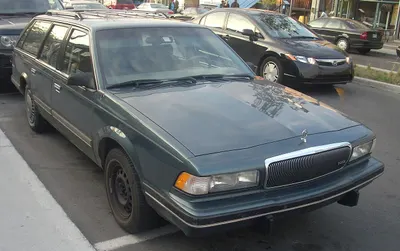
Buick's Turbo Coupe offered V8-like punch with better fuel economy from a turbo 3.8 V6 — but barely anyone bought one: total production across both years is estimated under 2,500.
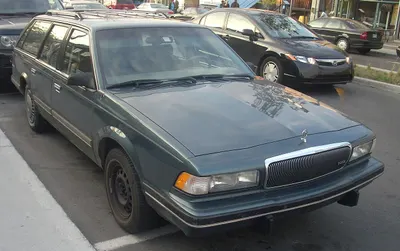
Buried in this Century lineup was a sleeper: the rare 1979-1980 Turbo Coupe, whose turbocharged 3.8L V6 aimed for V8 muscle while sipping less fuel in the thick of the gas-crisis years.
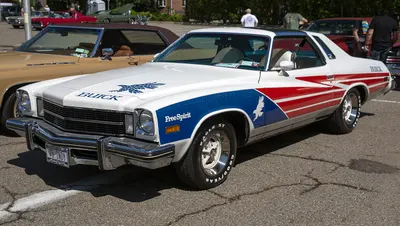
The Buick Century Gran Sport ended quietly in 1975 — just 1,288 built that final year, reduced to an appearance and suspension package with no big 455 V8 left to back it up.
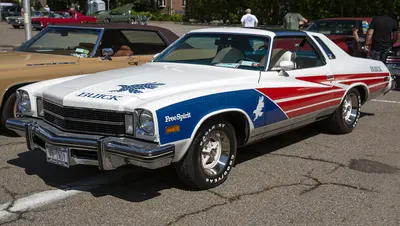
This mid-size Century led the field at the Indy 500 two years running — Buick then sold the public a "Free Spirit" replica wearing the pace car's own decals.
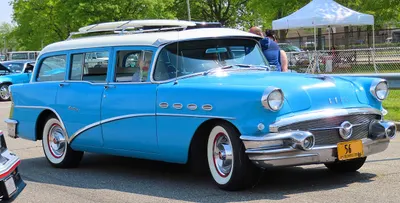
In 1955 the California Highway Patrol ordered 270 Century two-door sedans in a body style civilians couldn't buy — the same cars Broderick Crawford drove on TV's Highway Patrol.
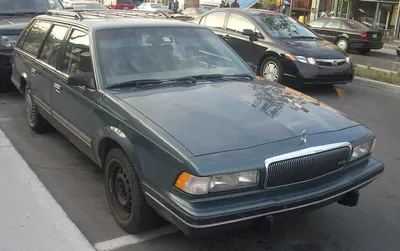
The Century's name was a literal spec: capable of sustained 100 mph in the 1930s, it earned the nickname "the banker's hot rod."
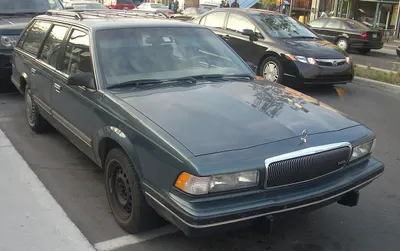
This Series 60 launched right as Harley Earl's new 'Art and Colour Section' put every GM car through the same design studio — the start of corporate styling as we know it.
Rivals
Same body, same money, other badges — tap any card to flip.

It briefly served as senior sibling to Marquette, a GM companion brand cancelled after just one year.

Nissan hired former BMW engineers to help develop the 510's suspension, which is why period reviewers frequently compared its handling to the BMW 1600/2002.

A Trabant 601 won its class at the 1970 Monte Carlo Rally, with a second 601 right behind it in second.

The 600 was a stopgap: the P50's body over the 601's mechanicals, and for a while its estate was built alongside the new 601 saloon.

The G80 Sport brought a 370 PS twin-turbo 3.3 V6, a mesh grille and copper-tinted chrome with copper stitching to match.

The Vigor was sold only with a five-cylinder engine, an unusual configuration Honda used to fit a longer engine transversely under a short hood.

The GS/E coupe earned the nickname "German Charger" for its long hood, short deck stance borrowed from Detroit muscle cars.

This DeVille/Fleetwood was the first production car anywhere to mount its V8 sideways, Cadillac's front-drive gamble on the new C-body.