Bristol Aeroplane Company salvaged BMW's plans for this car's derivatives, and the Bristol 403 still wore a BMW-style grille and a 1971cc engine descended from it.
Lead trim: 326 (M78 2.0 OHV I6, 50 PS)
BMW 326326 · 1936–1946
- 0spots by members
- Unclaimednobody has spotted one yet
- 0sets it belongs to
Nobody in Burbles has spotted a BMW 326 yet. See one on the street, point the app at it, and the first card is yours — with your @handle permanently credited on this page.
FactBristol Aeroplane Company salvaged BMW's plans for this car's derivatives, and the Bristol 403 still wore a BMW-style grille and a 1971cc engine descended from it.
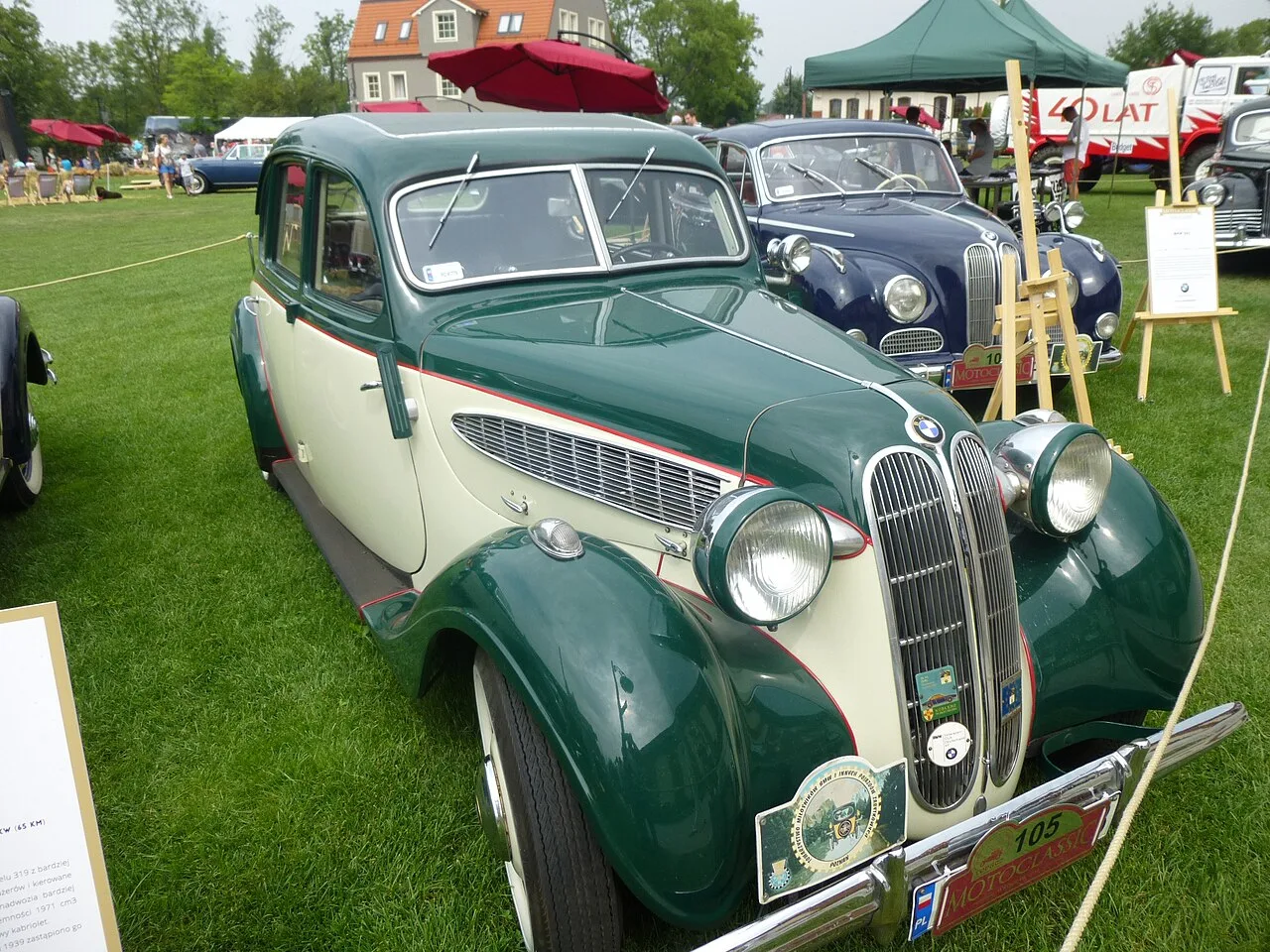
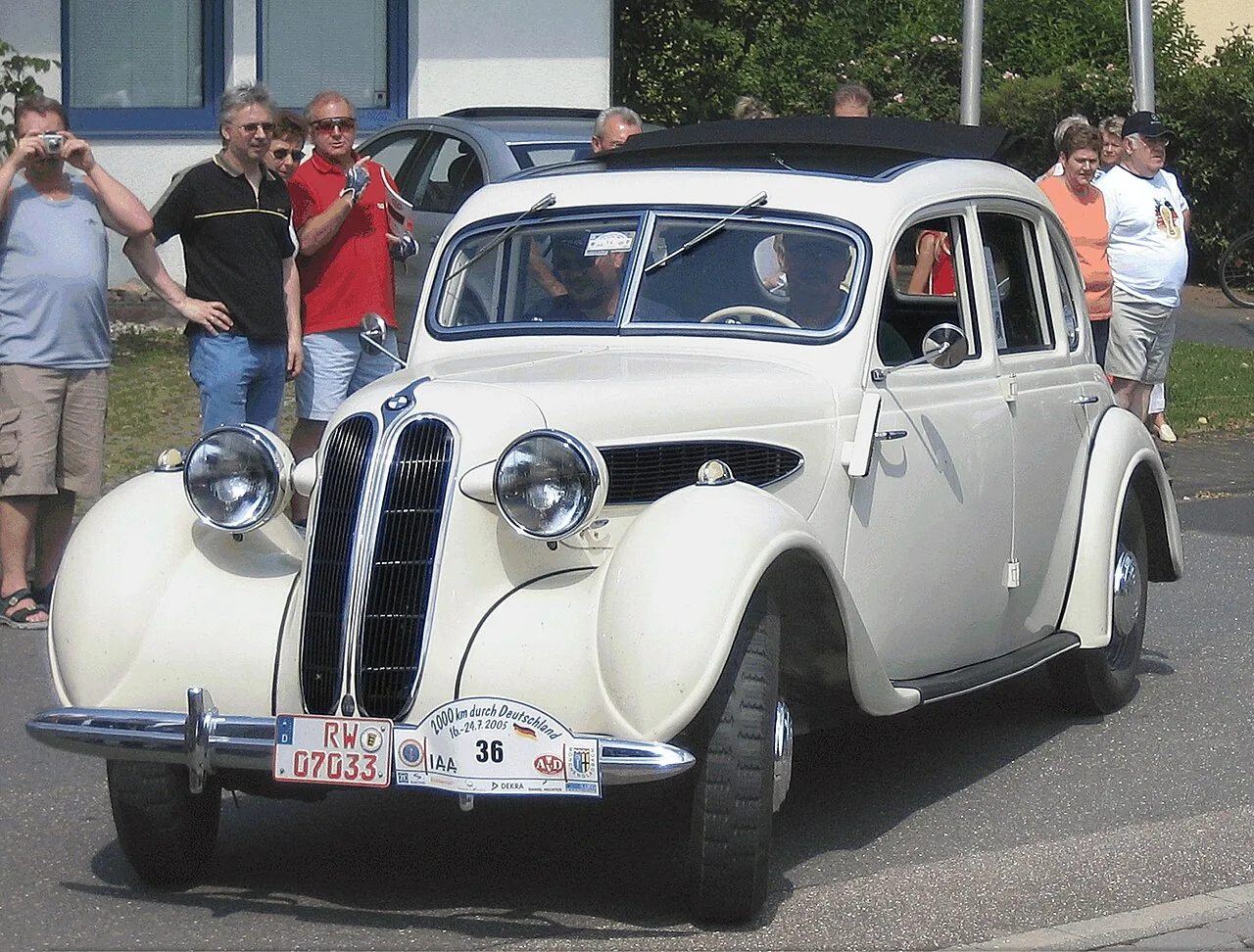
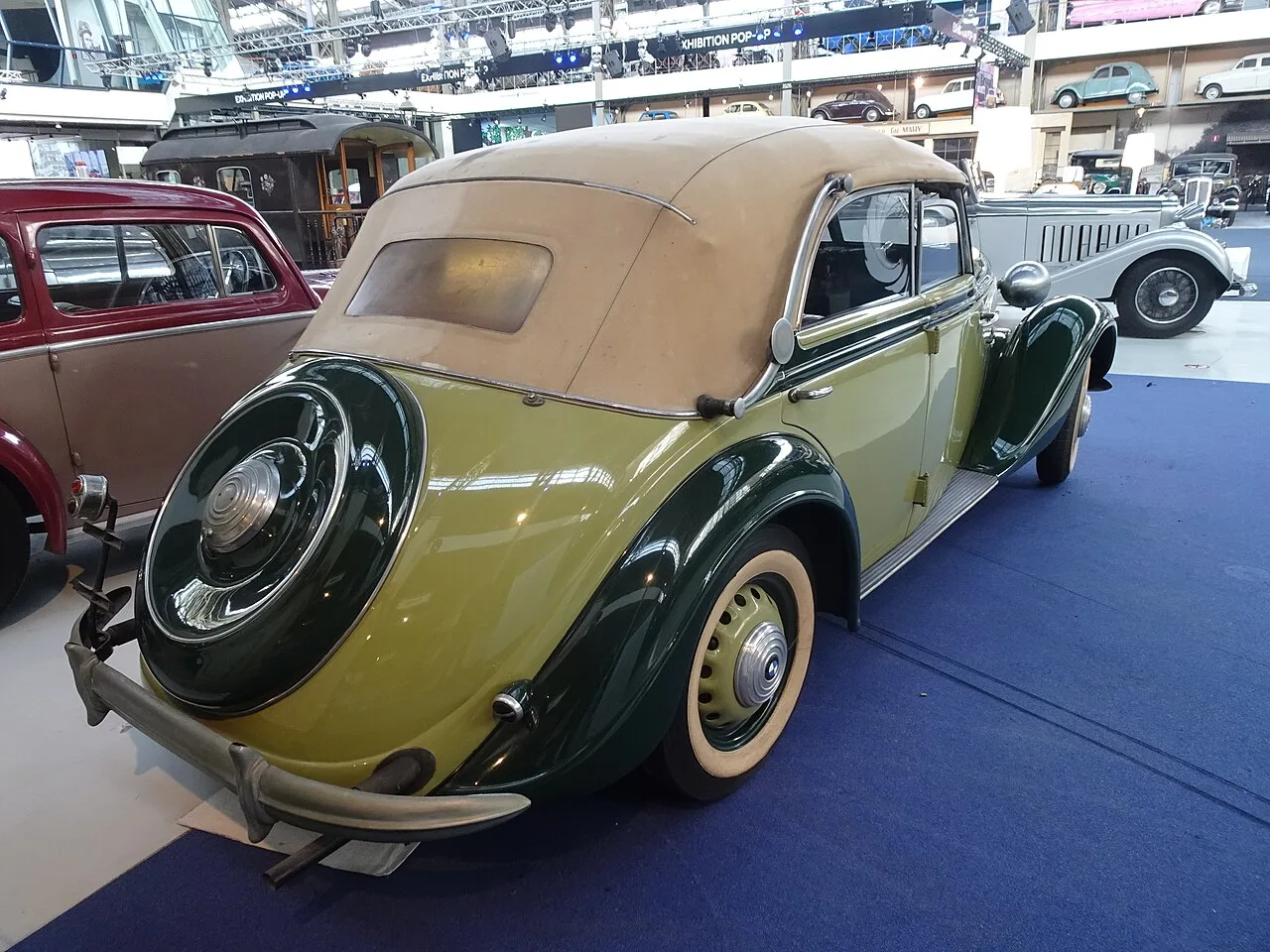
The BMW 326 is a medium-sized sedan produced by BMW between 1936 and 1941 (15,936 built in the infobox, 15,949 in the text) and again briefly, under Soviet control, in 1945–1946 (sixteen built). It was BMW's first four-door sedan, also offered as a two- or four-door cabriolet, styled by Peter Szymanowski and designed by engineers Fritz Fiedler and Alfred Böning. Innovations were the torsion bar rear suspension, inspired by the dead axle suspension of the Citroën Traction Avant, and the hydraulic braking system, the first on a BMW; the 320, 321, 327 and 335 were based on it. The 1,971 cc OHV straight six was a version of the 319's engine with the bore increased from 65 mm to 66 mm and an unchanged 96 mm stroke; fed by twin 26 mm Solex carburetors it produced a claimed 50 PS (37 kW) at 3750 rpm, for a top speed of 115 km/h (71 mph), with a four-speed gearbox with freewheeling on the bottom ratios and synchromesh on the top two. It was introduced at the Berlin Motor Show in February 1936 and was a success despite its relatively high price. In 1945 the Eisenach plant fell in the Soviet zone and returning survivors assembled sixteen postwar 326s; a modernised version emerged around 1948 badged BMW 340 and later EMW 340, and the plant was permitted to produce the design until approximately 1955. The British rescued plans of the sedan and coupé derivatives: Bristol Aeroplane Company, after taking over Frazer-Nash, negotiated rights to several BMW designs, and the Bristol 403 (1953–1955) still had a BMW-style front grille and a claimed 100 bhp from the same 1971 cc. Wheelbase 2,870 mm (113 in), length 4,600 mm (180 in), width 1,600 mm (63 in), height 1,540 mm (61 in).
Collectors Spotted in the BMW 326 Lineage
No member has published a public street spot of the BMW 326 yet — the First · Worldwide stamp is wide open.
Trims & Figures
One published trim in the catalogue. A blank is a figure not recorded, not zero.
| Trim | Years | Engine | Power | Torque | 0–60 | Drive | Gearbox | MSRP |
|---|---|---|---|---|---|---|---|---|
| 326 (M78 2.0 OHV I6, 50 PS) | 1936–1946 | 2.0 L Inline-6 | 49 hp | — | — | RWD | — | — |
Owning one
We don’t estimate running costs for a car like this. What it costs depends on its condition, its specialist and how it is driven, and an average would mislead.
Owners’ builds
Nobody has claimed one yet.
Photographs
Rivals
Same body, same money, other badges — tap any card to flip.

It briefly served as senior sibling to Marquette, a GM companion brand cancelled after just one year.

Nissan hired former BMW engineers to help develop the 510's suspension, which is why period reviewers frequently compared its handling to the BMW 1600/2002.

A Trabant 601 won its class at the 1970 Monte Carlo Rally, with a second 601 right behind it in second.

The 600 was a stopgap: the P50's body over the 601's mechanicals, and for a while its estate was built alongside the new 601 saloon.

The G80 Sport brought a 370 PS twin-turbo 3.3 V6, a mesh grille and copper-tinted chrome with copper stitching to match.

The Vigor was sold only with a five-cylinder engine, an unusual configuration Honda used to fit a longer engine transversely under a short hood.

The GS/E coupe earned the nickname "German Charger" for its long hood, short deck stance borrowed from Detroit muscle cars.

This DeVille/Fleetwood was the first production car anywhere to mount its V8 sideways, Cadillac's front-drive gamble on the new C-body.