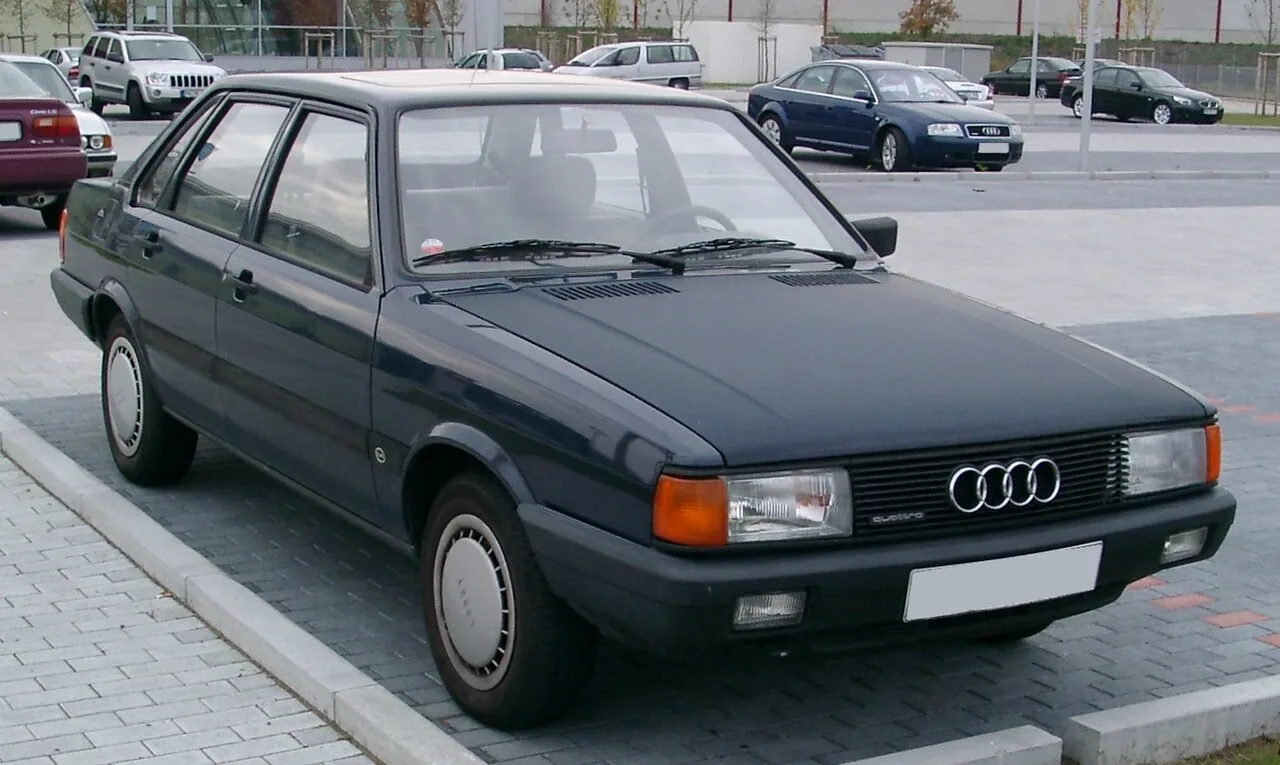
This Audi had crash safety before airbags were common: a hidden system of steel cables yanked the steering wheel into the dash and tightened the seatbelts on impact — no electronics, no airbag, just cables routed behind the gearbox.
Lead trim: 80 1.6 (75 PS) · up to 168 hp
Audi 80Typ 89 · 1986–1992
- 0spots by members
- Unclaimednobody has spotted one yet
- 0sets it belongs to
Nobody in Burbles has spotted a Audi 80 yet. See one on the street, point the app at it, and the first card is yours — with your @handle permanently credited on this page.
FactThis Audi had crash safety before airbags were common: a hidden system of steel cables yanked the steering wheel into the dash and tightened the seatbelts on impact — no electronics, no airbag, just cables routed behind the gearbox.
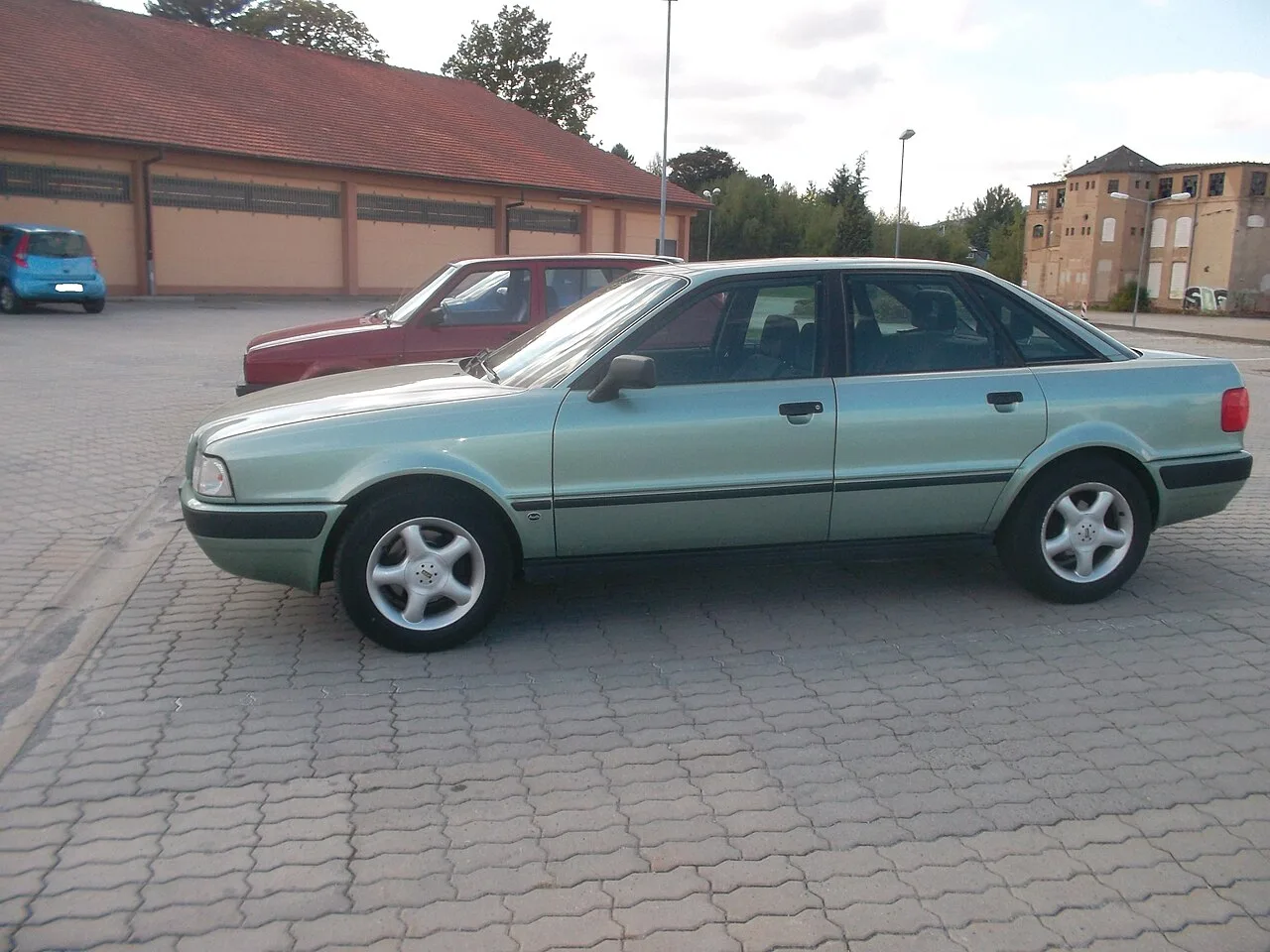
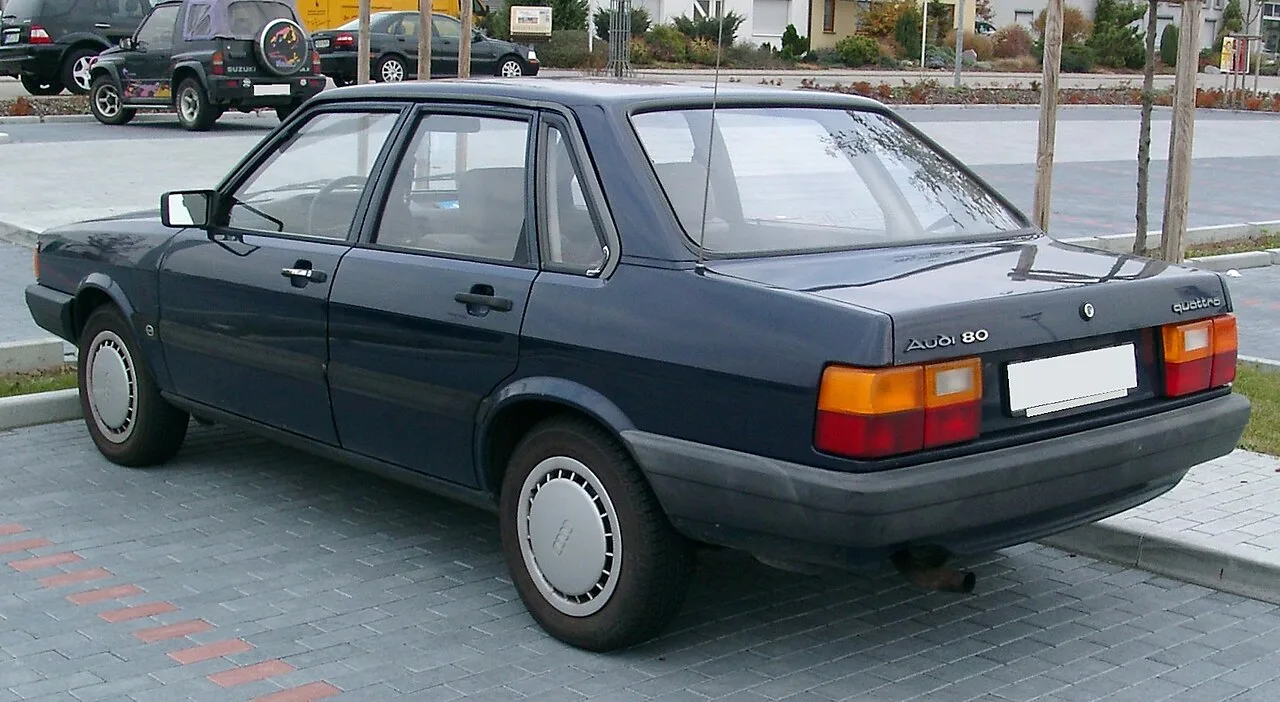
In 1986 Audi released a new Typ 89 Audi 80 for the 1987 model year in Europe, introduced elsewhere within a year. It was based on a new platform that broke the relationship between the 80 and the Volkswagen Passat, whose third generation used the transverse-engined Volkswagen B3 platform, while Audi stuck with the longitudinal front-wheel-drive layout. Production codes were Typ 89 from 1987 to 1989 and Typ 8A from 1990 onward. It introduced a new aerodynamic look and a fully zinc-coated galvanised bodyshell, and the procon-ten safety system, a series of hidden steel cables that pull the steering wheel into the dashboard in a frontal impact, became standard fitment from 1991. The Audi 90 was the upmarket variant with five-cylinder engines; from 1989 to 1991 it offered the first 20-valve engine from Audi since the turbocharged engine of the Sport Quattro, a 2.3-litre making 170 PS. The Audi 80 16V, new in 1990, was also offered with quattro, but the quattro 16V was built in too few numbers to reach the 5,000 annual examples needed to homologate it for Group A rallying. In October 1988 a Coupé based on the 80/90 appeared, called simply the Audi Coupé (Typ 8B). 1,623,382 were built, 1,438,475 Audi 80s and 184,907 Audi 90s.
Collectors Spotted in the Audi 80 Lineage
No member has published a public street spot of the Audi 80 yet — the First · Worldwide stamp is wide open.
Trims & Figures
15 published trims in the catalogue. A blank is a figure not recorded, not zero.
| Trim | Years | Engine | Power | Torque | 0–60 | Drive | Gearbox | MSRP |
|---|---|---|---|---|---|---|---|---|
| 80 1.6 (75 PS) | 1986–1991 | 1.6 L Inline-4 | 74 hp | 92 lb-ft | — | — | — | — |
| 80 1.8 carburettor (75 PS) | 1986–1990 | 1.8 L Inline-4 | 74 hp | 103 lb-ft | — | — | — | — |
| 80 1.8E (112 PS) | 1986–1991 | Inline-4 | 110 hp | 118 lb-ft | — | — | — | — |
| 80 1.8S (90 PS) | 1986–1991 | Inline-4 | 89 hp | 111 lb-ft | — | — | — | — |
| 80 1.9E (113 PS) | 1986–1988 | 1.8 L Inline-4 | 111 hp | 118 lb-ft | — | — | — | — |
| 80 16V (137 PS) | 1990–1991 | 2.0 L Inline-4 | 135 hp | 133 lb-ft | — | — | — | — |
| 80 2.0E (112 PS) | 1988–1990 | 2.0 L Inline-4 | 110 hp | 124 lb-ft | — | — | — | — |
| 80 2.0E (113 PS, from 1990) | 1990–1991 | 2.0 L Inline-4 | 111 hp | 125 lb-ft | — | — | — | — |
| 80 diesel 1.6 (54 PS) | 1986–1992 | 1.6 L Inline-4 | 53 hp | 74 lb-ft | — | — | — | — |
| 80 diesel 1.9 (68 PS) | 1989–1991 | 1.9 L Inline-4 | 67 hp | 94 lb-ft | — | — | — | — |
| 80 turbodiesel 1.6 (80 PS) | 1989–1991 | 1.6 L Inline-4 | 79 hp | 112 lb-ft | — | — | — | — |
| 90 2.0E five-cylinder (115 PS) | 1987–1991 | 2.0 L Inline-5 | 113 hp | 127 lb-ft | — | — | — | — |
| 90 2.2E five-cylinder (136 PS) | 1987–1989 | 2.2 L Inline-5 | 134 hp | 137 lb-ft | — | — | — | — |
| 90 2.3E 20V five-cylinder (170 PS) | 1989–1991 | 2.3 L Inline-5 | 168 hp | 162 lb-ft | — | — | — | — |
| 90 2.3E five-cylinder (136 PS) | 1987–1991 | 2.3 L Inline-5 | 134 hp | 140 lb-ft | — | — | — | — |
Owning one
We don’t estimate running costs for a car like this. What it costs depends on its condition, its specialist and how it is driven, and an average would mislead.
Owners’ builds
Nobody has claimed one yet.
Photographs
The RS2 Avant, the hottest B4 of all, wasn't built on Audi's own line — it was at least partly assembled at Porsche's Rossle-Bau plant in Zuffenhausen.
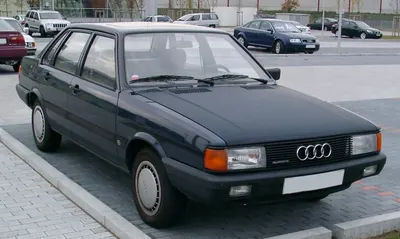
This Audi had crash safety before airbags were common: a hidden system of steel cables yanked the steering wheel into the dash and tightened the seatbelts on impact — no electronics, no airbag, just cables routed behind the gearbox.
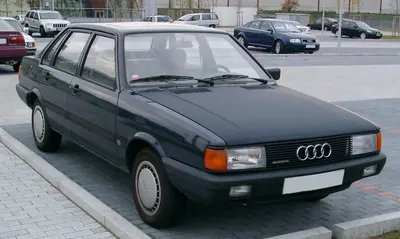
Audi's own catalog didn't quite add up: the four-wheel-drive 80 quattro weighed more and was slower than the larger, cheaper, front-wheel-drive Audi 100 with the identical engine.
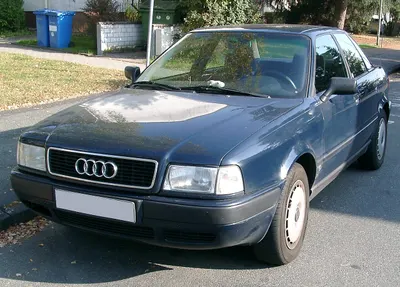
Audi's own chief engineer called the car the B1 replaced a 'bastard' — a mongrel of a DKW body and a Mercedes engine — and built the 80 to erase that legacy.
Rivals
Same body, same money, other badges — tap any card to flip.

It briefly served as senior sibling to Marquette, a GM companion brand cancelled after just one year.

Nissan hired former BMW engineers to help develop the 510's suspension, which is why period reviewers frequently compared its handling to the BMW 1600/2002.

A Trabant 601 won its class at the 1970 Monte Carlo Rally, with a second 601 right behind it in second.

The 600 was a stopgap: the P50's body over the 601's mechanicals, and for a while its estate was built alongside the new 601 saloon.

The G80 Sport brought a 370 PS twin-turbo 3.3 V6, a mesh grille and copper-tinted chrome with copper stitching to match.

The Vigor was sold only with a five-cylinder engine, an unusual configuration Honda used to fit a longer engine transversely under a short hood.

The GS/E coupe earned the nickname "German Charger" for its long hood, short deck stance borrowed from Detroit muscle cars.

This DeVille/Fleetwood was the first production car anywhere to mount its V8 sideways, Cadillac's front-drive gamble on the new C-body.