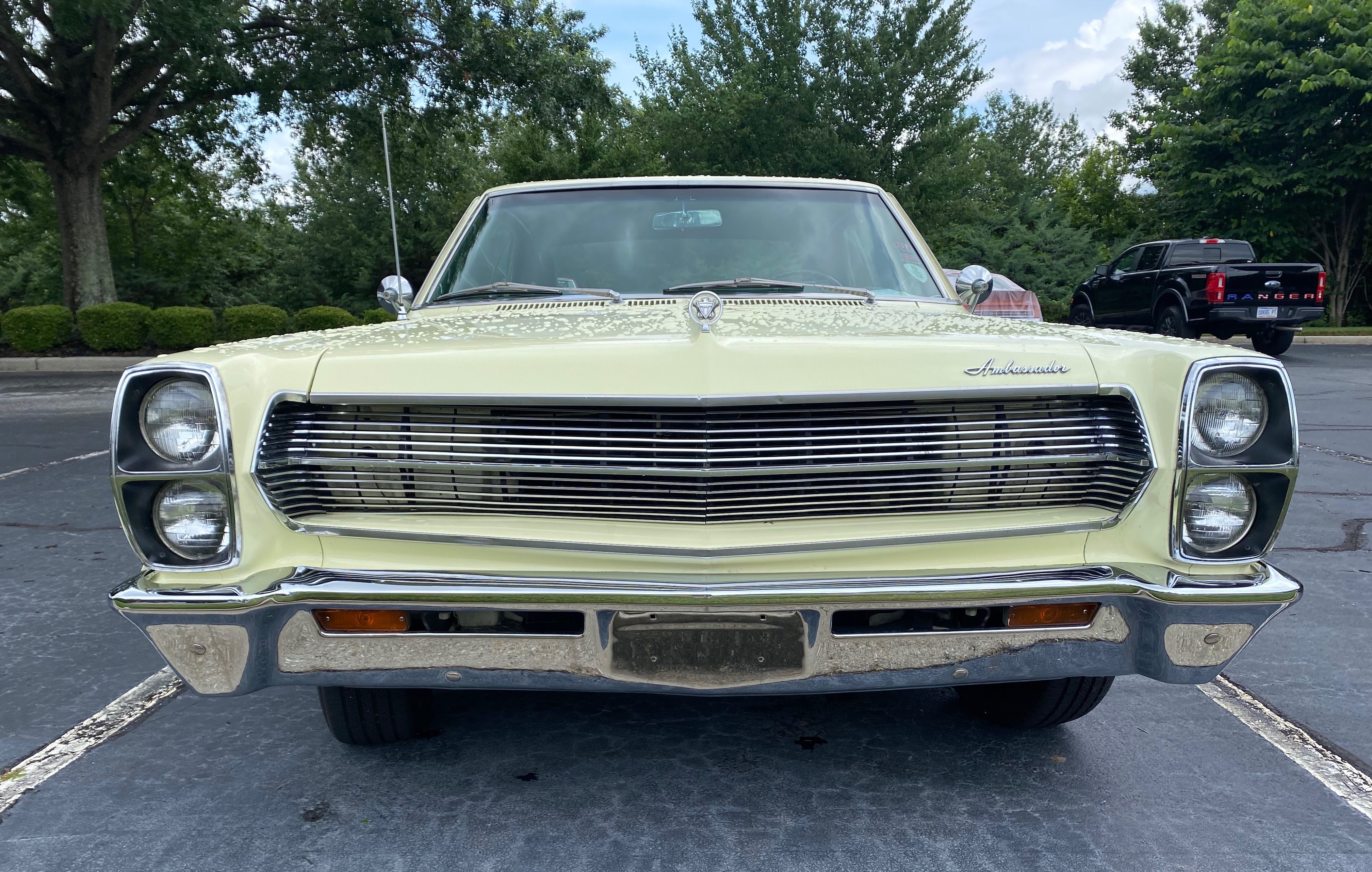
The '67 Ambassador convertible's last-ever year got an all-new folding top that hid its rails so well, three adults could still fit in back.
Lead trim: Ambassador 343 cu in V8 (280 bhp at 4800 rpm) · up to 315 hp
American Motors Corporation Ambassador1967–1968
- 0spots by members
- Unclaimednobody has spotted one yet
- 0sets it belongs to
Nobody in Burbles has spotted a American Motors Corporation Ambassador yet. See one on the street, point the app at it, and the first card is yours — with your @handle permanently credited on this page.
FactThe '67 Ambassador convertible's last-ever year got an all-new folding top that hid its rails so well, three adults could still fit in back.
American Motors introduced a completely restyled, longer, lower and wider Ambassador for 1967 on a 118 in wheelbase (two inches longer than the 1966), as a 2-door sedan and convertible (1967 only), 4-door sedan, station wagon and 2-door hardtop, 202.5 in long (Marlin 201.5 in) and 78.4 in wide in 1967 (77.2 in in 1968). Engines: the 232 cu in (3.8 L) I6, 290 cu in (4.8 L) V8, the new thin-wall-cast 343 cu in (5.6 L) V8 (280 bhp at 4800 rpm and 365 lb-ft with a four-barrel and dual exhaust) and, from mid-1968, the AMX 390 cu in (6.4 L) V8 of 315 hp; a new four-link trailing-arm rear suspension was introduced. Curb weight was 3,142 to 3,434 lb (a range).
Collectors Spotted in the American Motors Corporation Ambassador Lineage
No member has published a public street spot of the American Motors Corporation Ambassador yet — the First · Worldwide stamp is wide open.
Trims & Figures
3 published trims in the catalogue. A blank is a figure not recorded, not zero.
| Trim | Years | Engine | Power | Torque | 0–60 | Drive | Gearbox | MSRP |
|---|---|---|---|---|---|---|---|---|
| Ambassador 232 cu in I6 | 1967–1968 | 3.8 L Inline-6 | — | — | — | RWD | — | — |
| Ambassador 343 cu in V8 (280 bhp at 4800 rpm) | 1967–1968 | 5.6 L V8 | 280 hp | 365 lb-ft | — | RWD | — | — |
| Ambassador AMX 390 cu in V8 (315 hp, from mid-1968) | 1968–1968 | 6.4 L V8 | 315 hp | 425 lb-ft | — | RWD | — | — |
Owning one
We don’t estimate running costs for a car like this. What it costs depends on its condition, its specialist and how it is driven, and an average would mislead.
Owners’ builds
Nobody has claimed one yet.
Photographs
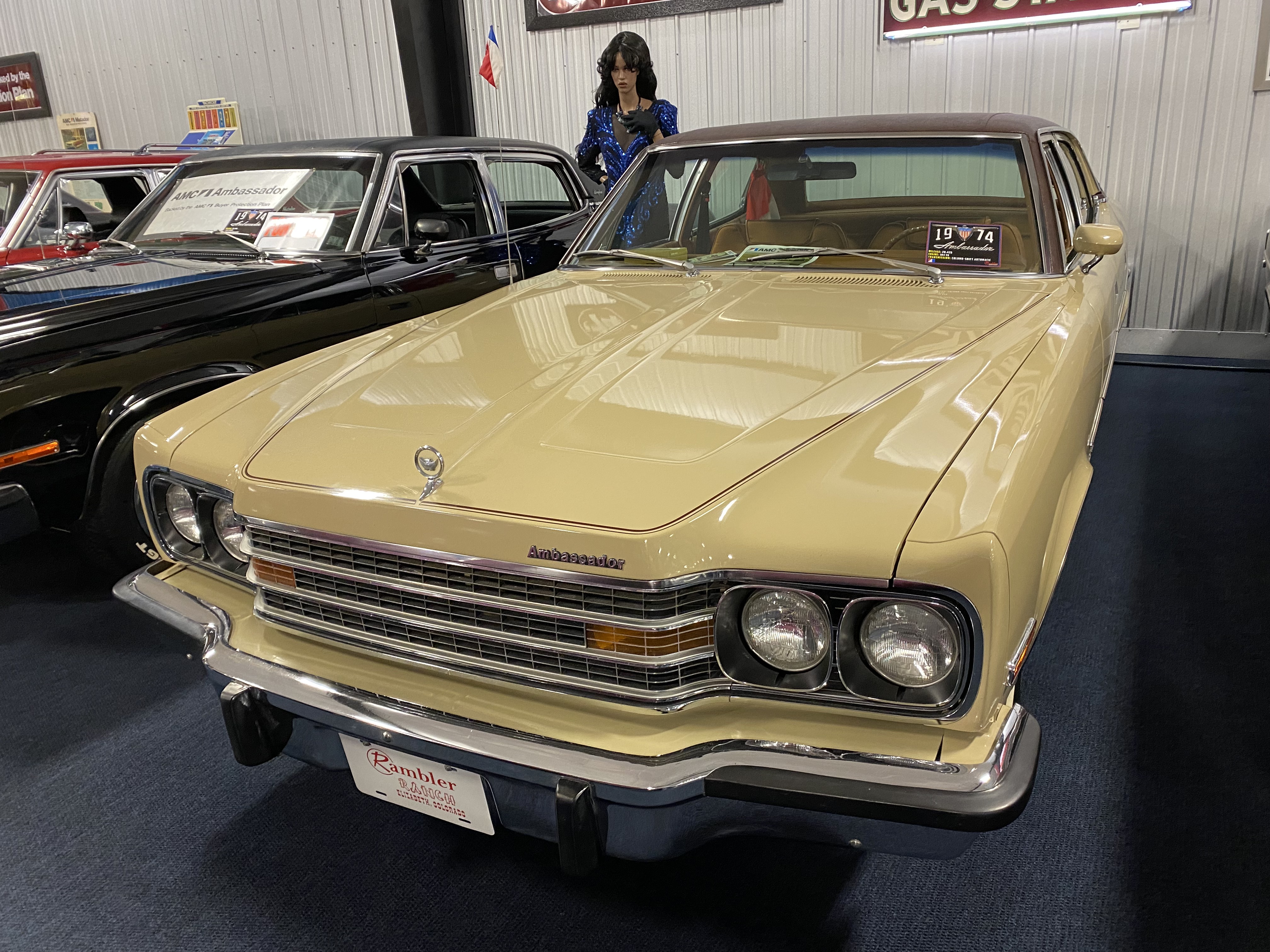
When the last Ambassador left the Kenosha line in June 1974, it closed out a nameplate that had been in continuous production, in some form, for 48 years.
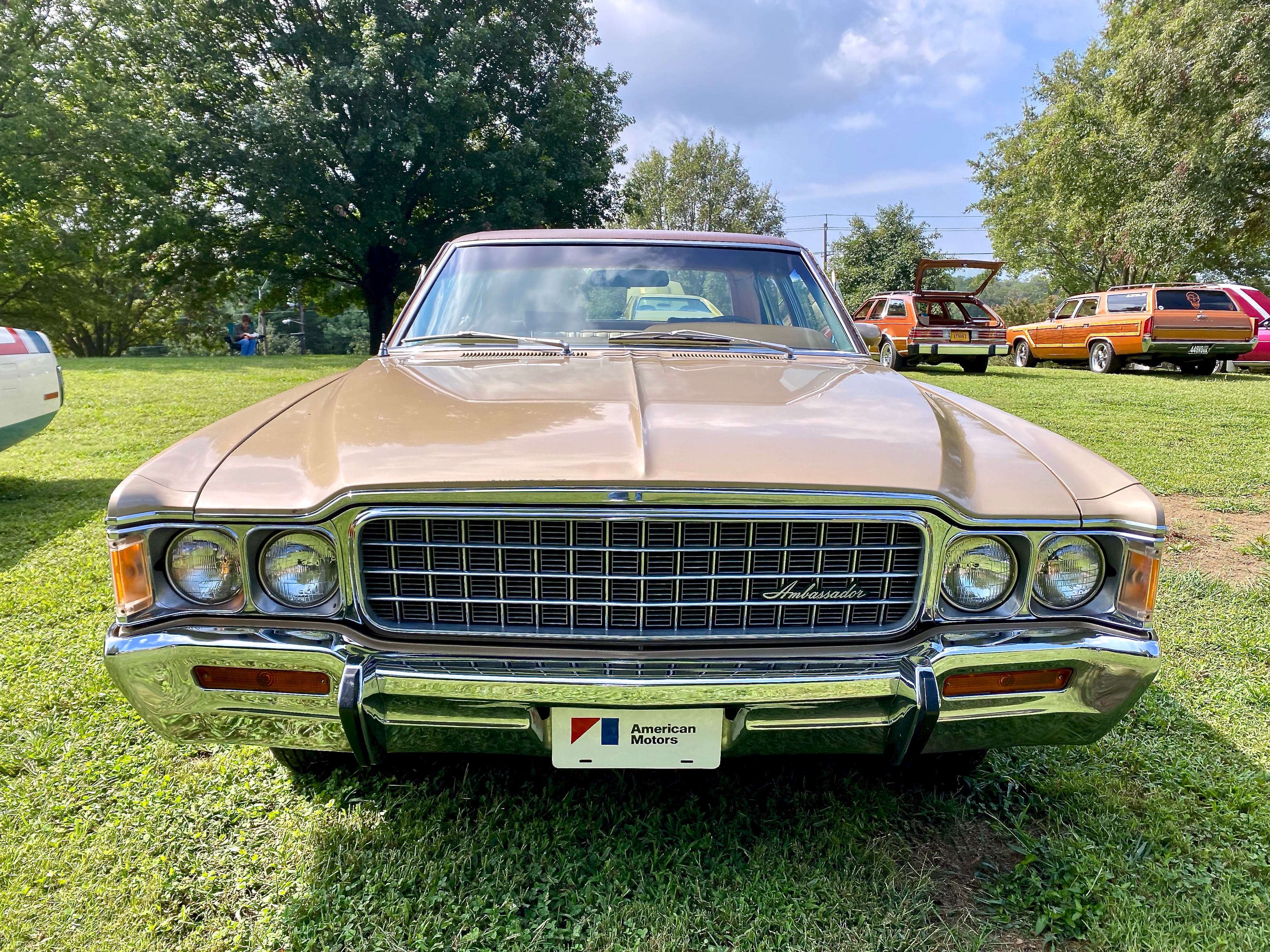
Coachbuilders in Argentina and the US stretched this very Ambassador generation into custom limousines — an unlikely second life for AMC's flagship.
The '67 Ambassador convertible's last-ever year got an all-new folding top that hid its rails so well, three adults could still fit in back.
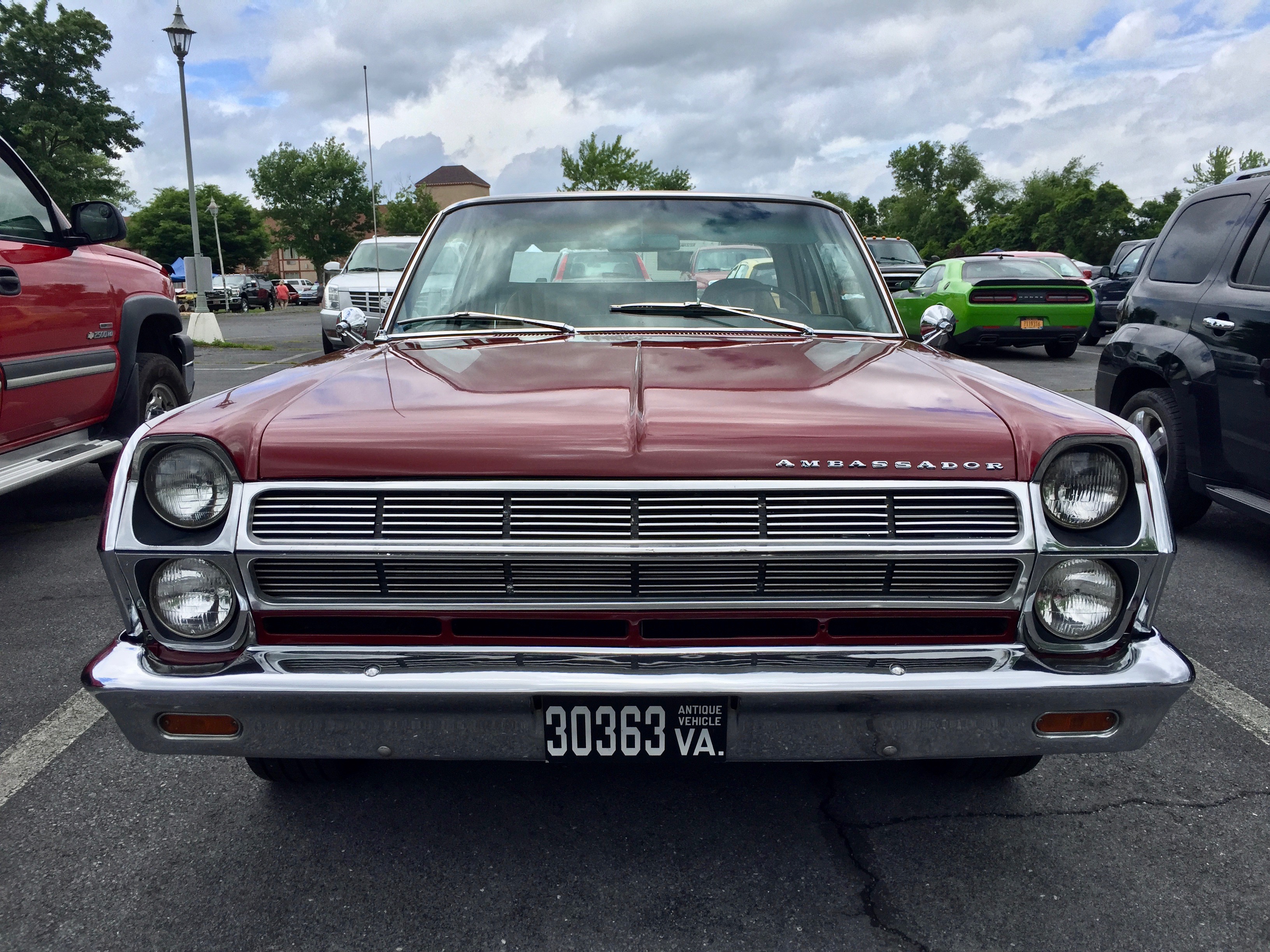
The 1965 Ambassador convertible was the first drop-top in the Ambassador line in 17 years — nobody had offered one since 1948.
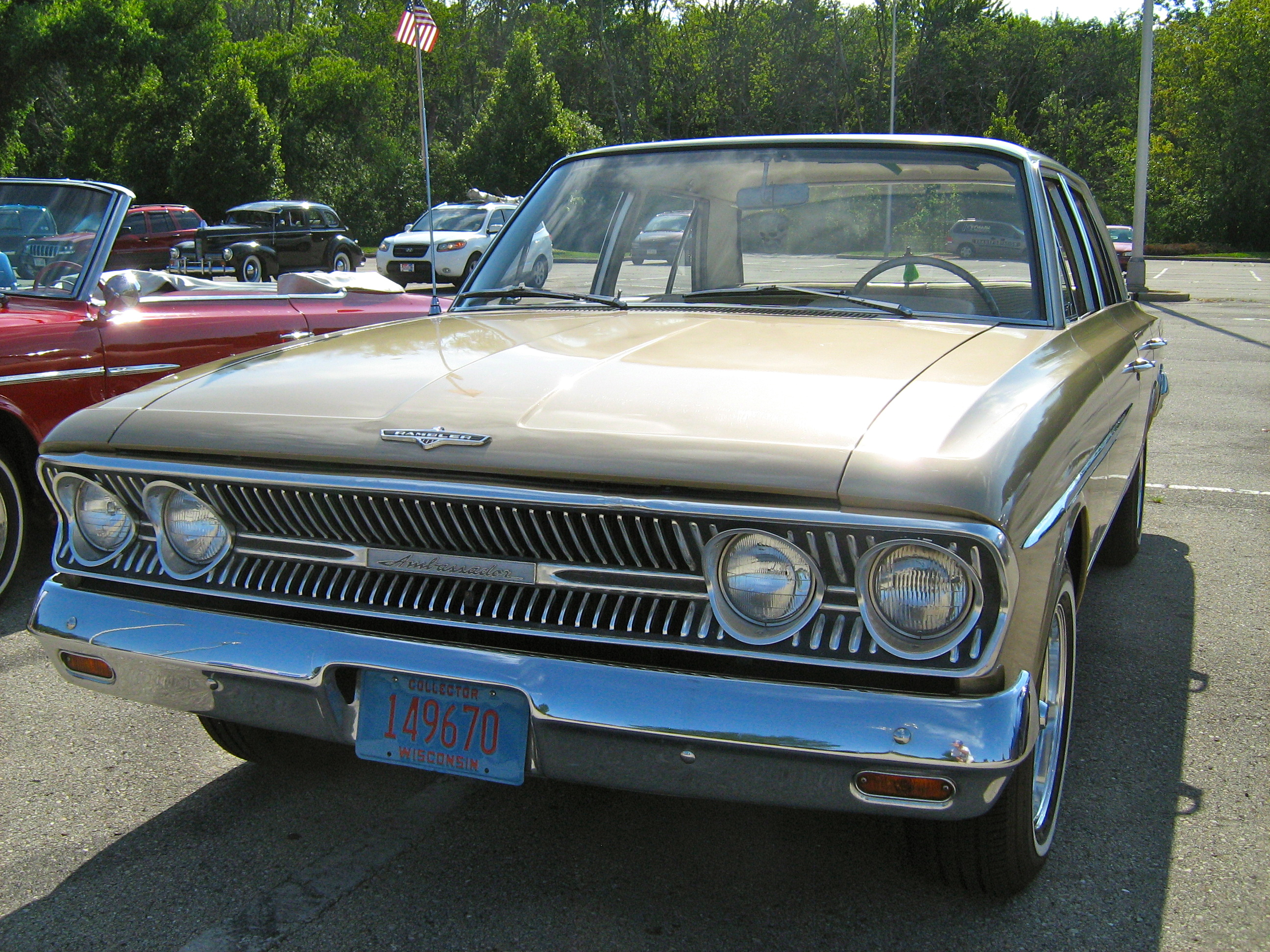
A scrappy independent beating Detroit's Big Three at their own game: Motor Trend named the entire redesigned 1963 Rambler lineup, Ambassador included, its Car of the Year.
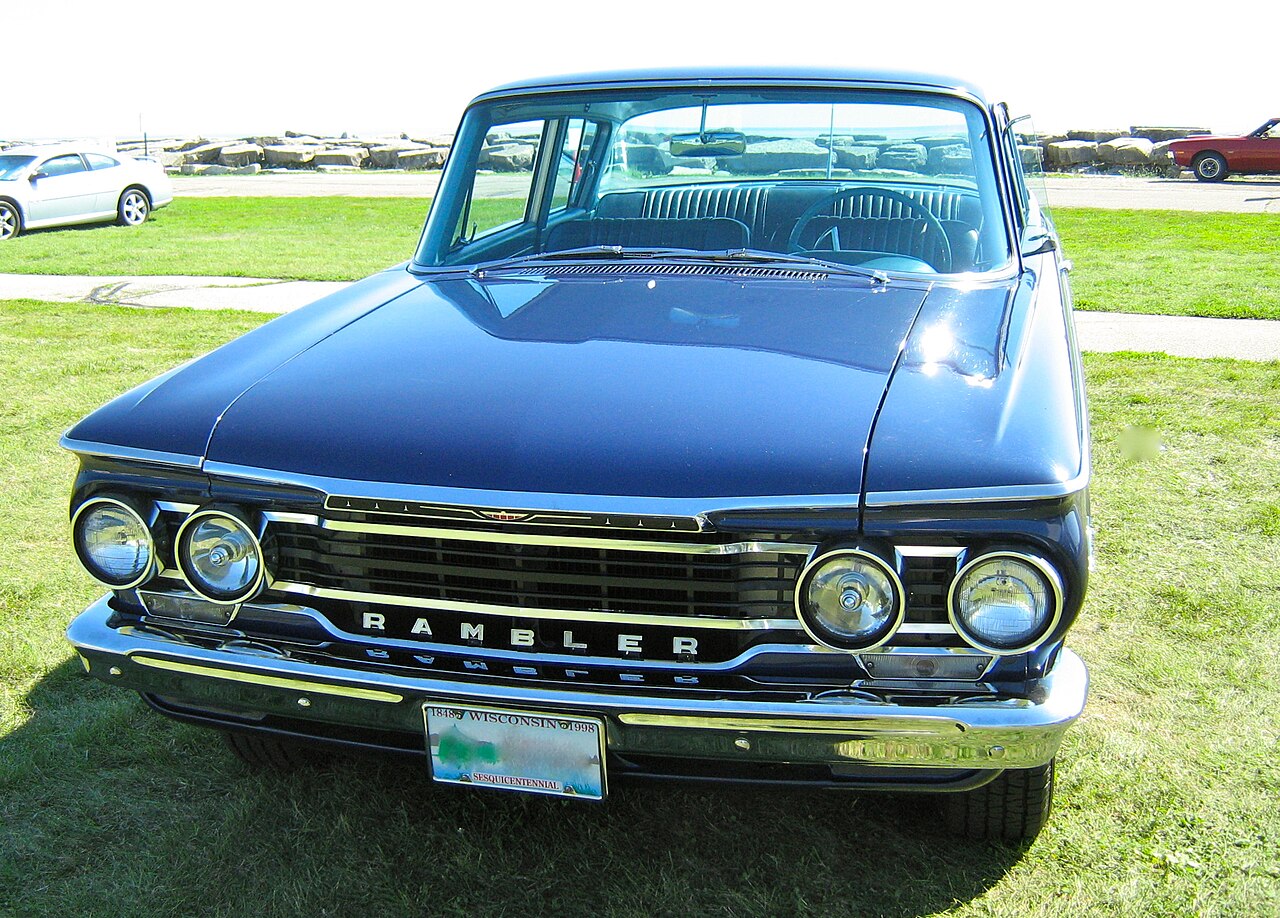
AMC shrank the 1962 Ambassador onto a shorter 108-inch wheelbase and made it lighter than the full-size car it replaced — and quicker, with a 270-hp V8.
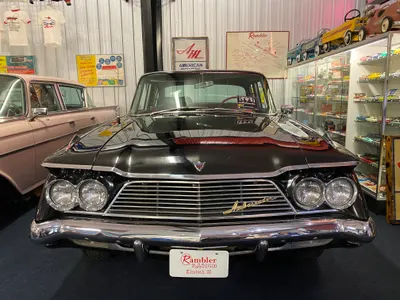
The restyled 1961 Ambassador swept 9 of the top 10 spots in its class at the Pure Oil Company's Economy Trials — a genuine efficiency win in a V8-powered American sedan.
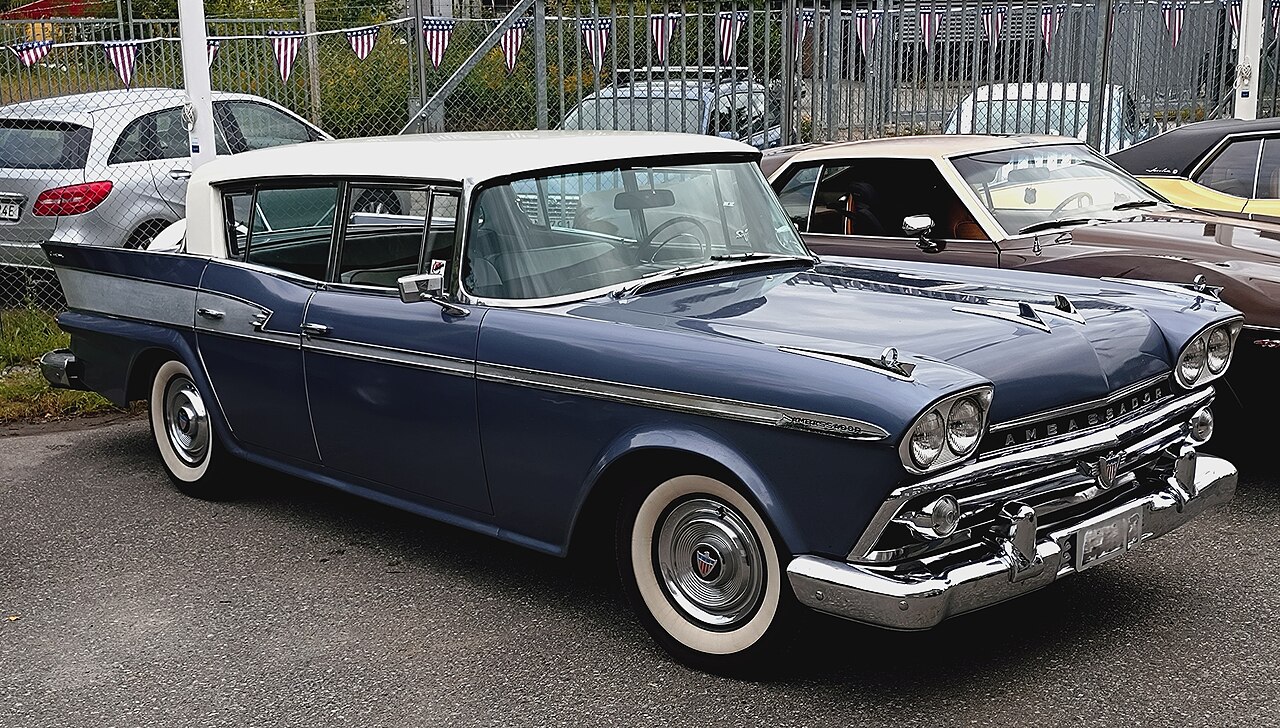
The 1958 Ambassador looked like a much bigger car, but it wasn't: its extra nine inches of wheelbase went entirely ahead of the cowl, so the cabin held exactly as much room as the compact Rambler.
Rivals
Same body, same money, other badges — tap any card to flip.

It briefly served as senior sibling to Marquette, a GM companion brand cancelled after just one year.

Nissan hired former BMW engineers to help develop the 510's suspension, which is why period reviewers frequently compared its handling to the BMW 1600/2002.

A Trabant 601 won its class at the 1970 Monte Carlo Rally, with a second 601 right behind it in second.

The 600 was a stopgap: the P50's body over the 601's mechanicals, and for a while its estate was built alongside the new 601 saloon.

The G80 Sport brought a 370 PS twin-turbo 3.3 V6, a mesh grille and copper-tinted chrome with copper stitching to match.

The Vigor was sold only with a five-cylinder engine, an unusual configuration Honda used to fit a longer engine transversely under a short hood.

The GS/E coupe earned the nickname "German Charger" for its long hood, short deck stance borrowed from Detroit muscle cars.

This DeVille/Fleetwood was the first production car anywhere to mount its V8 sideways, Cadillac's front-drive gamble on the new C-body.