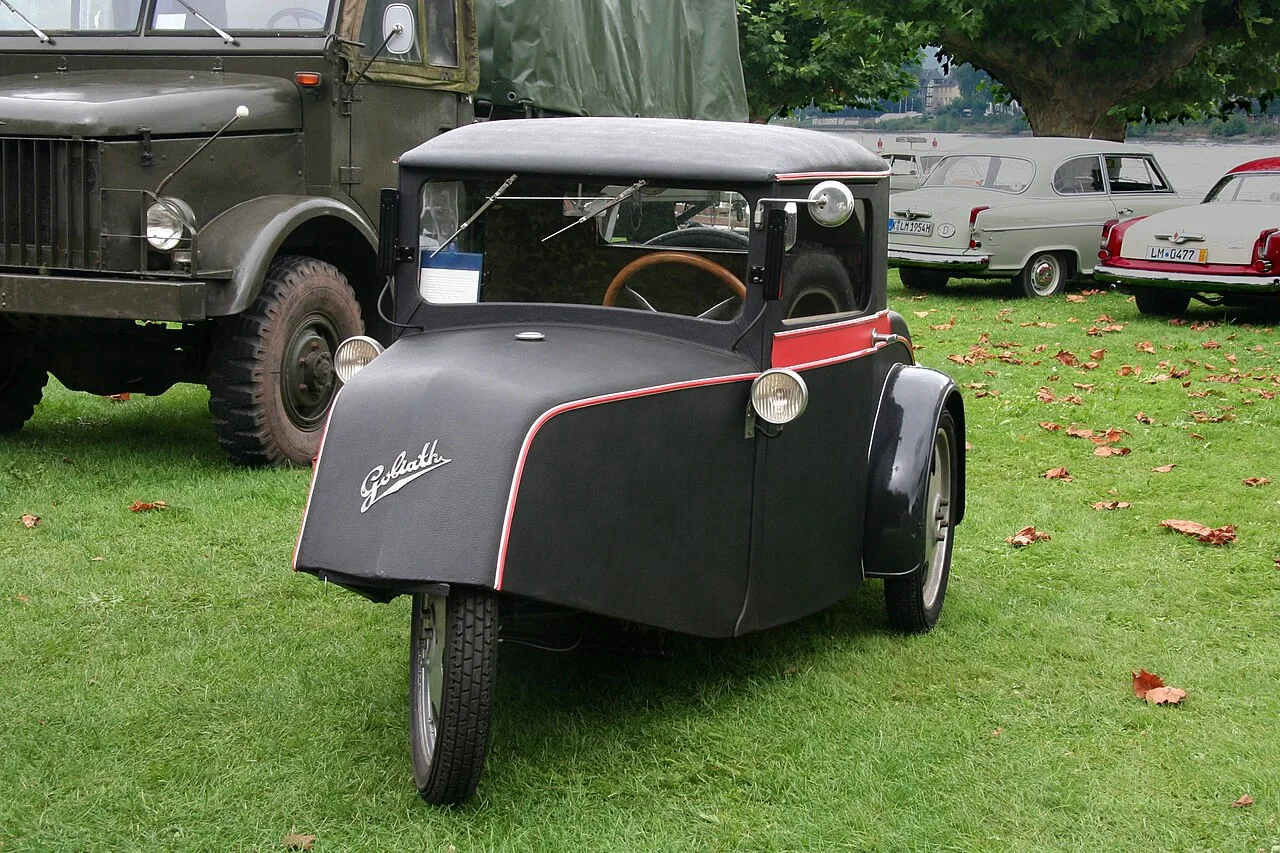
Goliath’s very first passenger car was barely a car at all — the Pionier ran on three wheels with a single-cylinder engine.
Lead trim: Pionier 198 cc single-cylinder two-stroke (5 hp) · up to 7 hp
Goliath Pionier1931–1934
- 0spots by members
- Unclaimednobody has spotted one yet
- 0sets it belongs to
Nobody in Burbles has spotted a Goliath Pionier yet. See one on the street, point the app at it, and the first card is yours — with your @handle permanently credited on this page.
FactGoliath’s very first passenger car was barely a car at all — the Pionier ran on three wheels with a single-cylinder engine.
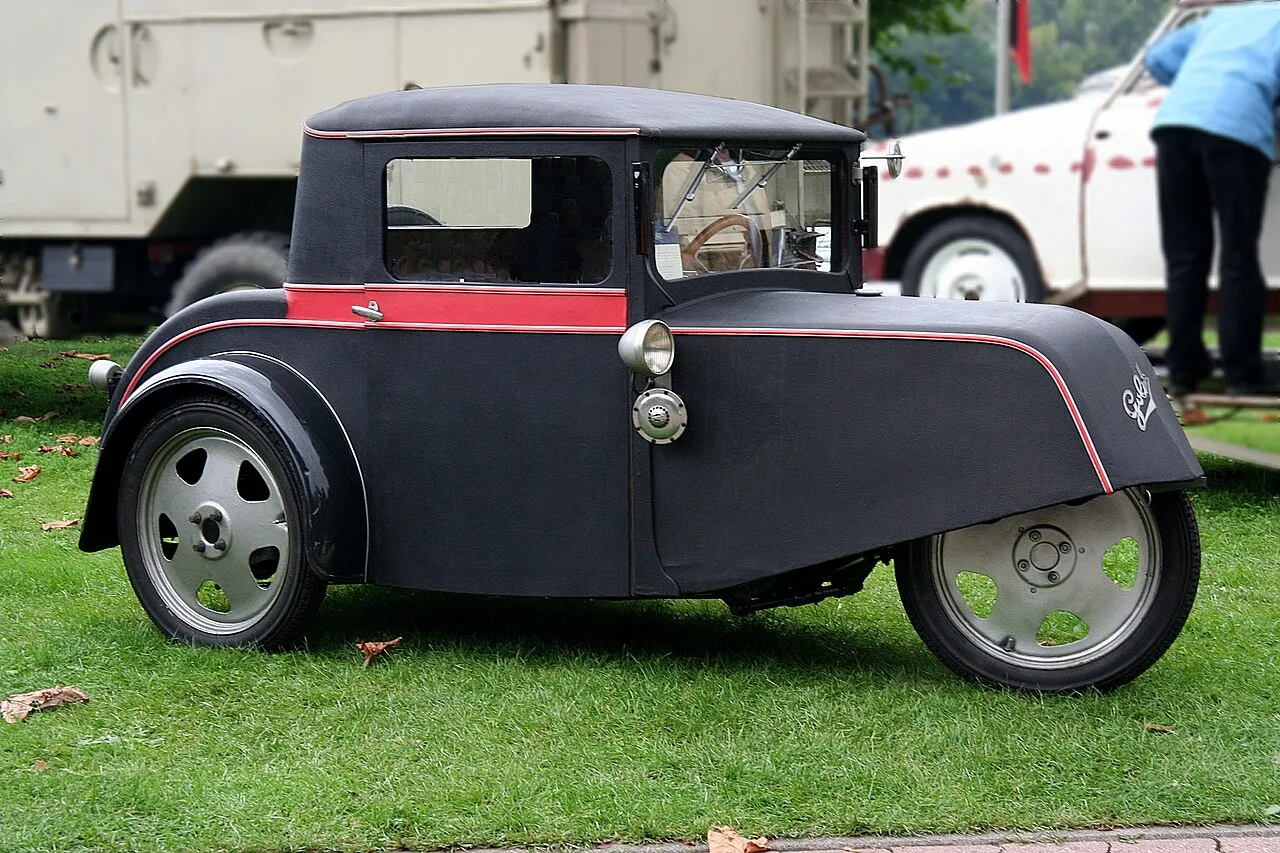
The Goliath Pionier is a small three-wheeled two-seater first presented by Carl F. W. Borgward at the 1931 Berlin motor show and produced until 1934, by which time approximately 4,000 had been built, out of about 24,500 three-wheelers sold in Germany between 1931 and 1934. Borgward, whose first venture into motorised transport had been the three-wheeled "Blitzkarren" of 1924, founded Goliath-Werke Borgward & Co. in 1928; the Pionier was an evolution of that design, with a single wheel at the front, a timber frame coated in a synthetic-leather skin (with a "streamlined" rear end from 1934, in only a few hundred cars), and could be driven without a driver's licence and owned without car tax. There was a choice of single-cylinder two-stroke engines: the 198 cc unit claimed 5.5 PS (5 hp) at 3200 rpm and the 247 cc unit 6.7 PS (7 hp), with a 3-speed gearbox. In 1933 Borgward derived a commercial version, the Goliath F400; the company's next small car, the four-wheeled Hansa 400 of September 1933, had a two-cylinder engine of at least 12 PS. Length 3,100 mm (122.0 in), width 1,500 mm (59.1 in), height 1,400 mm (55.1 in), curb weight 350 kg (770 lb) empty.
Collectors Spotted in the Goliath Pionier Lineage
No member has published a public street spot of the Goliath Pionier yet — the First · Worldwide stamp is wide open.
Trims & Figures
2 published trims in the catalogue. A blank is a figure not recorded, not zero.
| Trim | Years | Engine | Power | Torque | 0–60 | Drive | Gearbox | MSRP |
|---|---|---|---|---|---|---|---|---|
| Pionier 198 cc single-cylinder two-stroke (5 hp) | 1931–1934 | 0.2 L Single-cylinder | 5 hp | — | — | RWD | — | — |
| Pionier 247 cc single-cylinder two-stroke (7 hp) | 1931–1934 | 0.2 L Single-cylinder | 7 hp | — | — | RWD | — | — |
Owning one
We don’t estimate running costs for a car like this. What it costs depends on its condition, its specialist and how it is driven, and an average would mislead.
Owners’ builds
Nobody has claimed one yet.
Photographs
Rivals
Same body, same money, other badges — tap any card to flip.
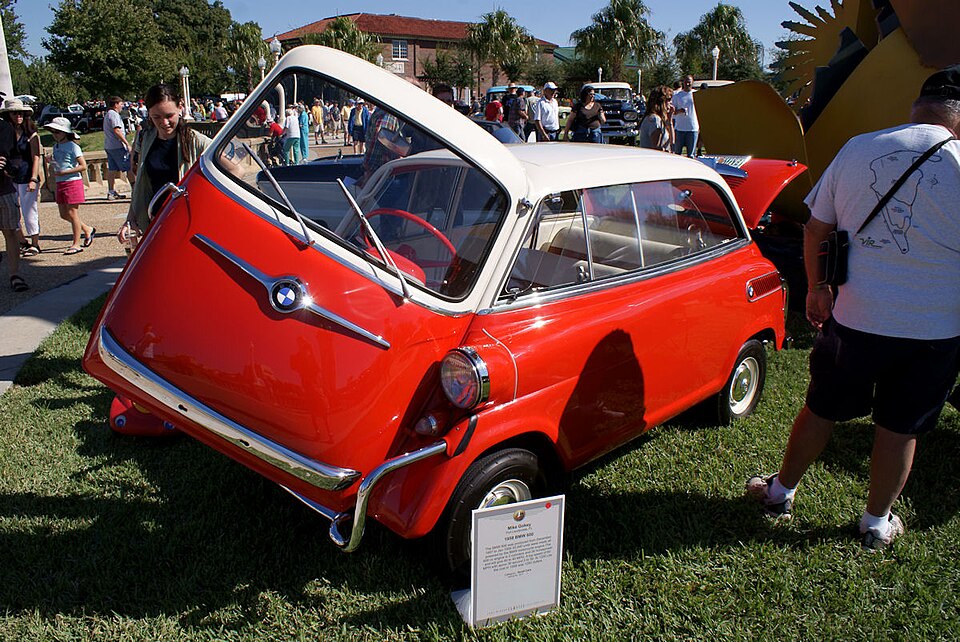
BMW bolted a motorcycle engine from the R67 sidecar rig behind the rear wheels of this car, borrowing the Isetta's front door because there wasn't budget for anything new.
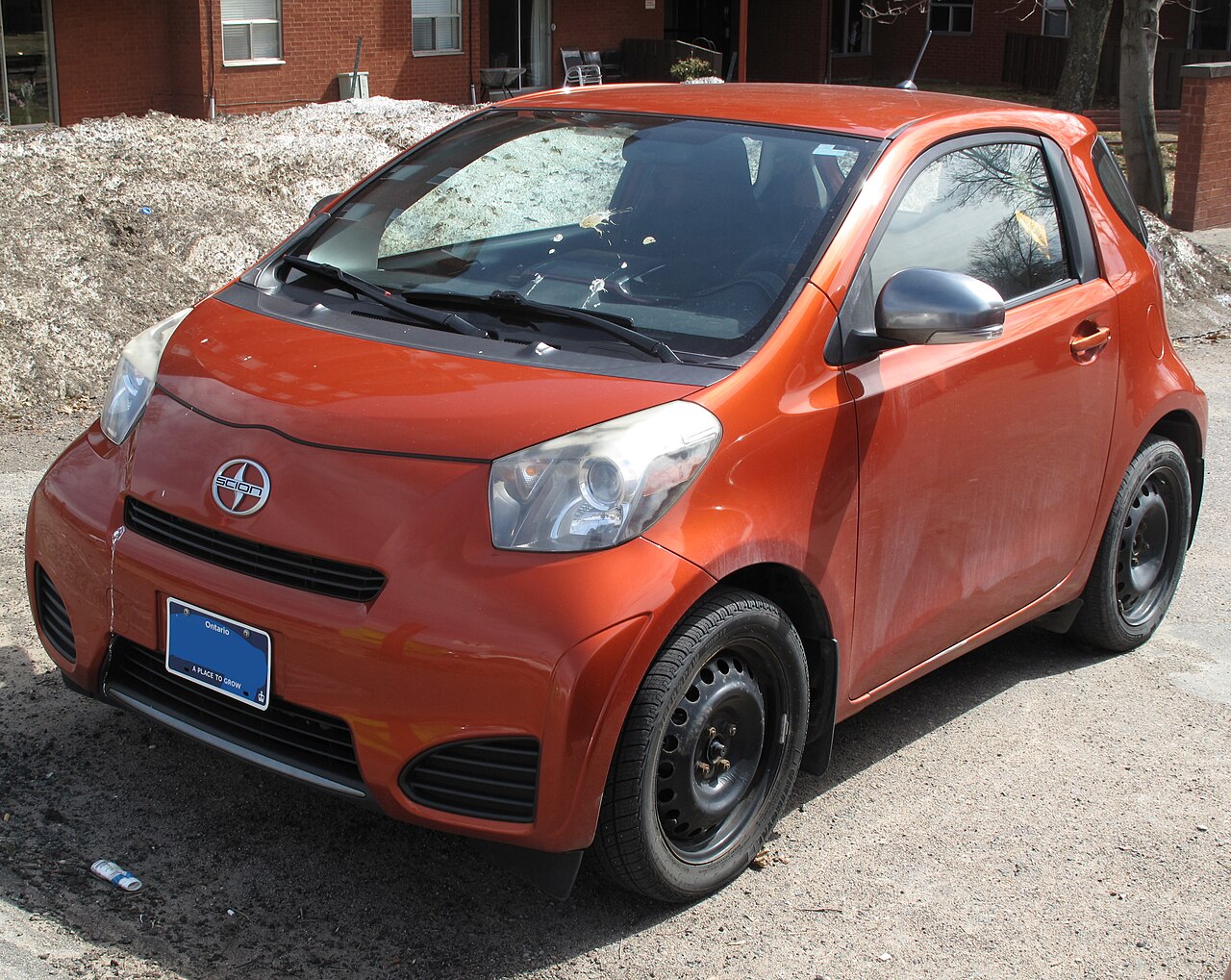
The iQ's rear passenger seat is asymmetrical, with the left side cut narrower than the right to make room for crash-safety structure while keeping a usable seating position.
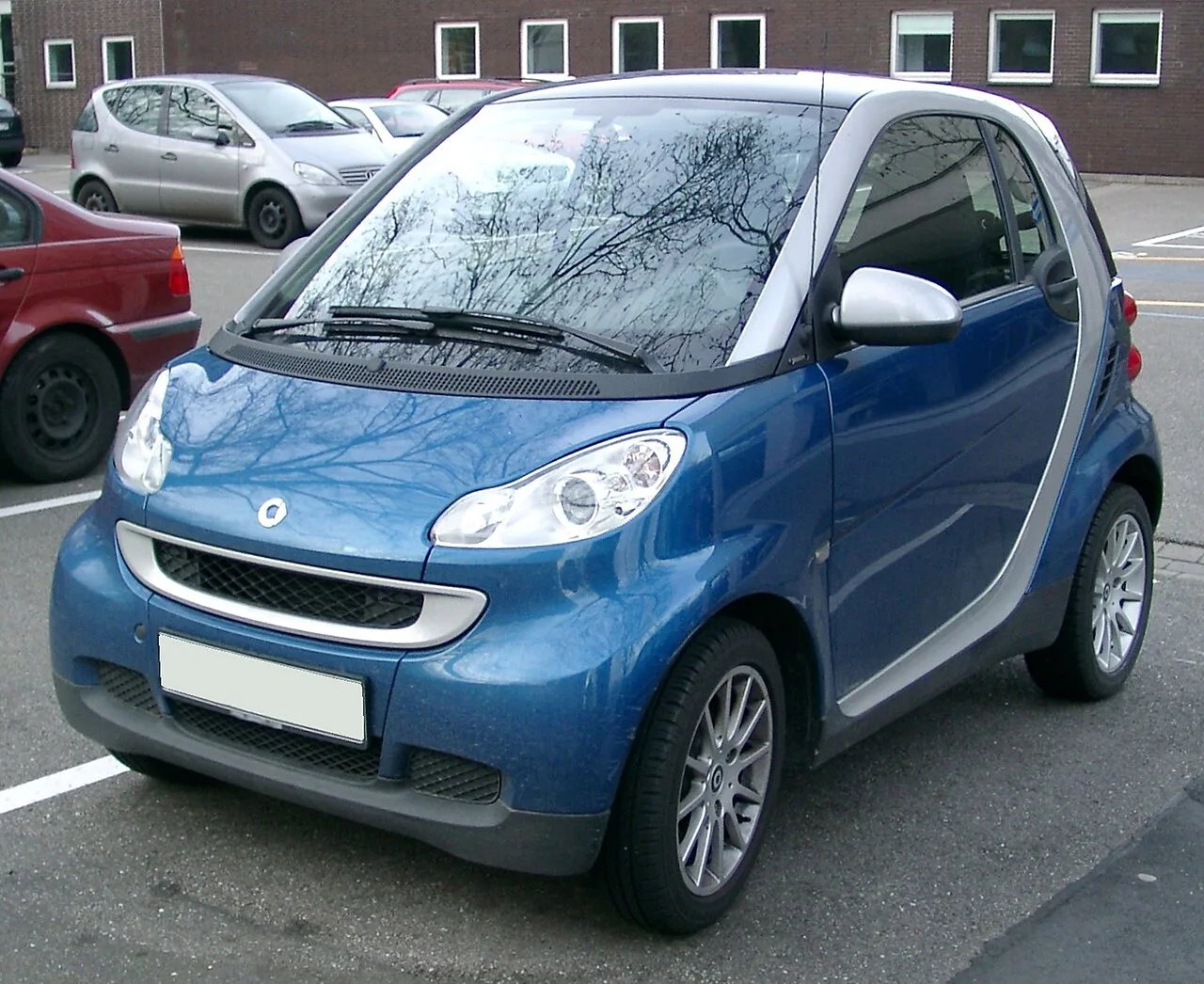
This fortwo held onto a title through its whole run — the lightest production car sold anywhere in Europe.
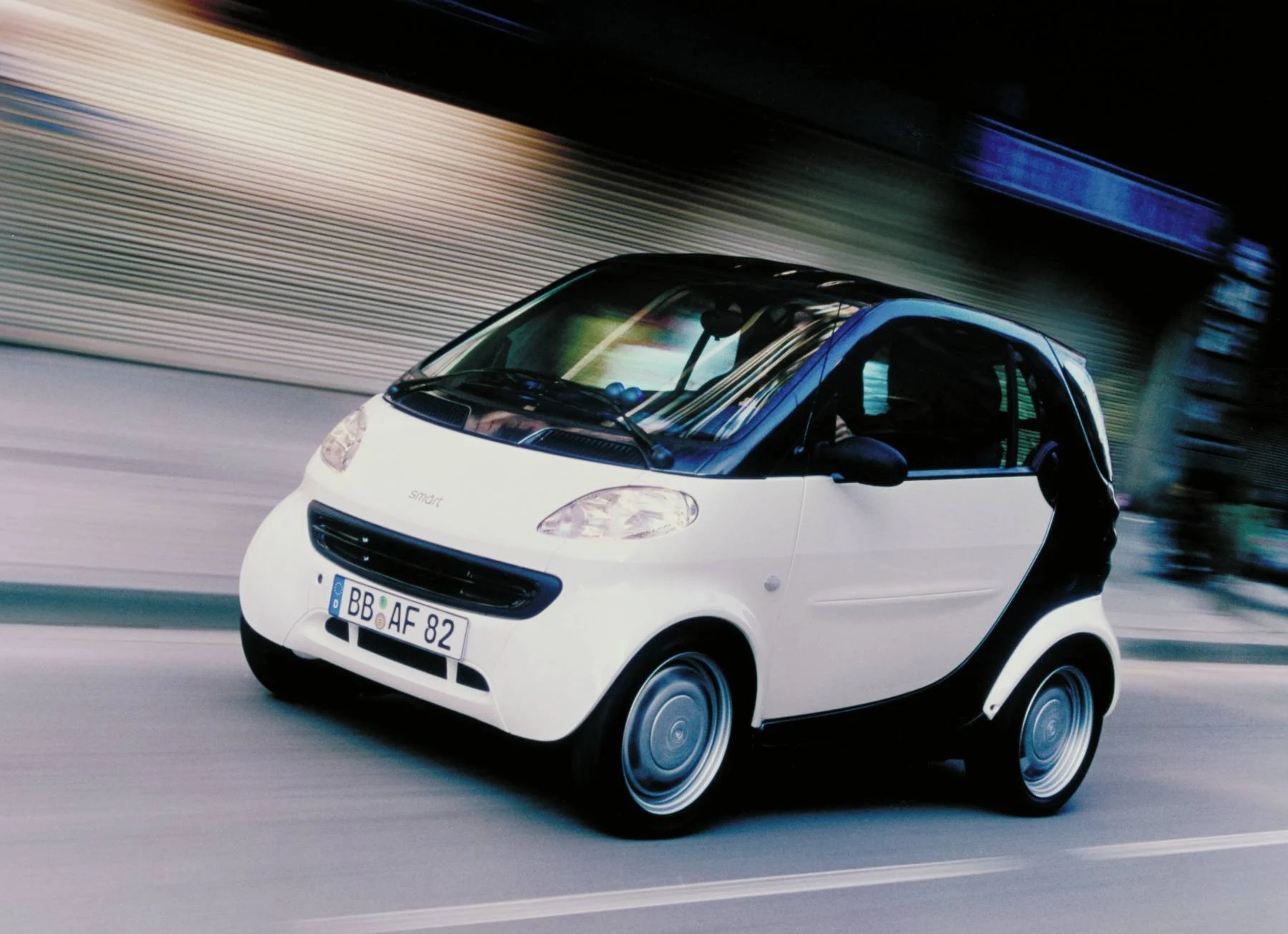
A watchmaker co-designed this city car: Swatch and Mercedes-Benz built it together and debuted it as the City-Coupé.
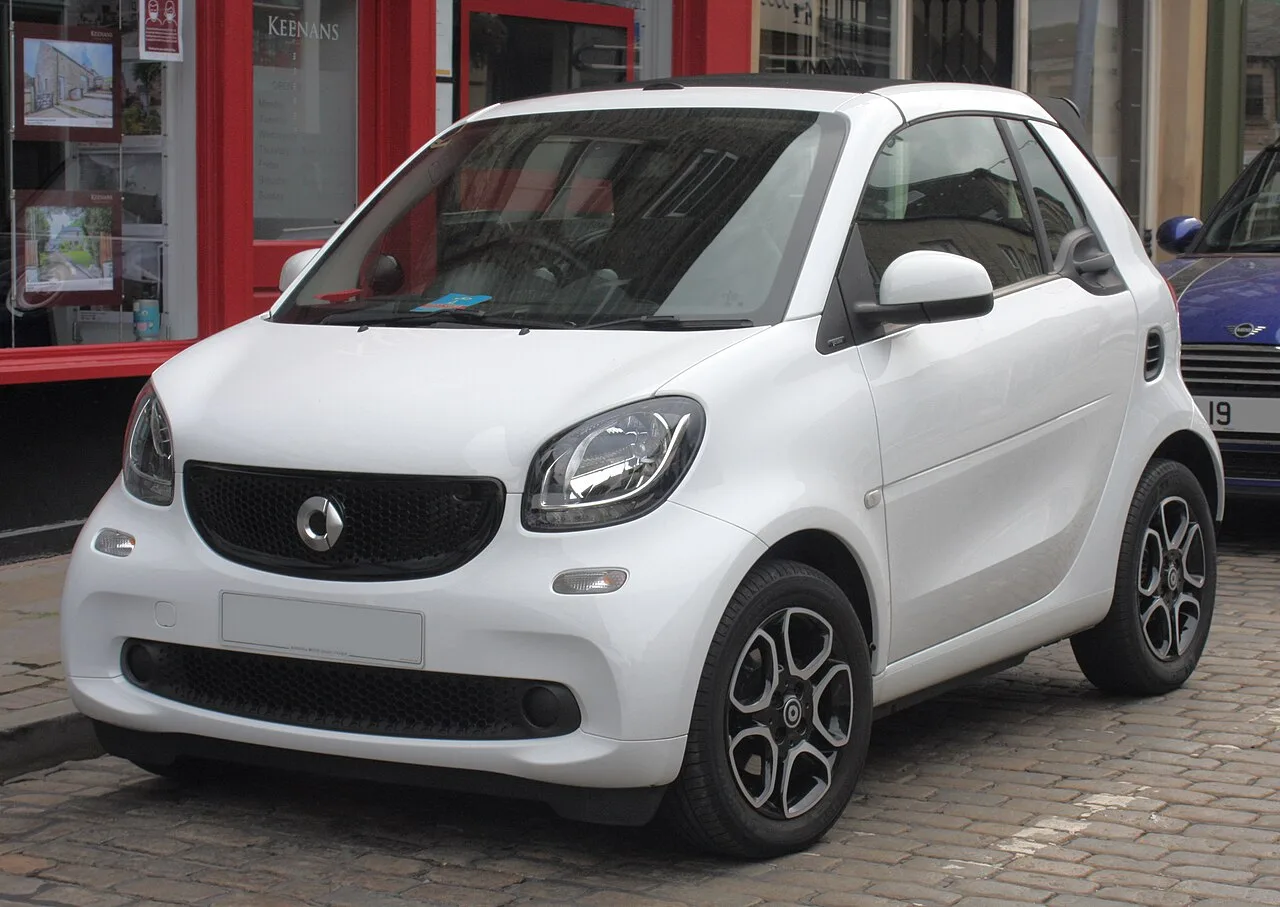
This fortwo isn't a pure smart design — Mercedes-Benz co-developed this generation with Renault, sharing its platform and engines with the third-generation Renault Twingo.
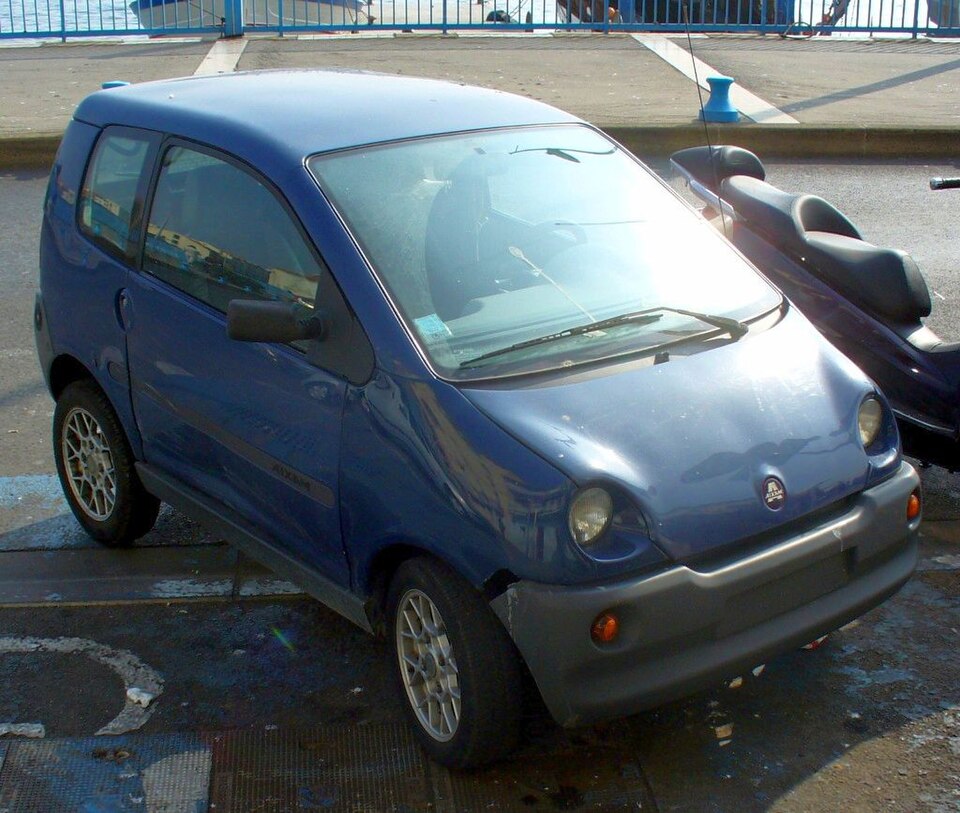
Aixam's diesel microcar runs a Kubota Z402, an industrial farm-equipment engine making 4-6 kW, built to dodge a driving licence.
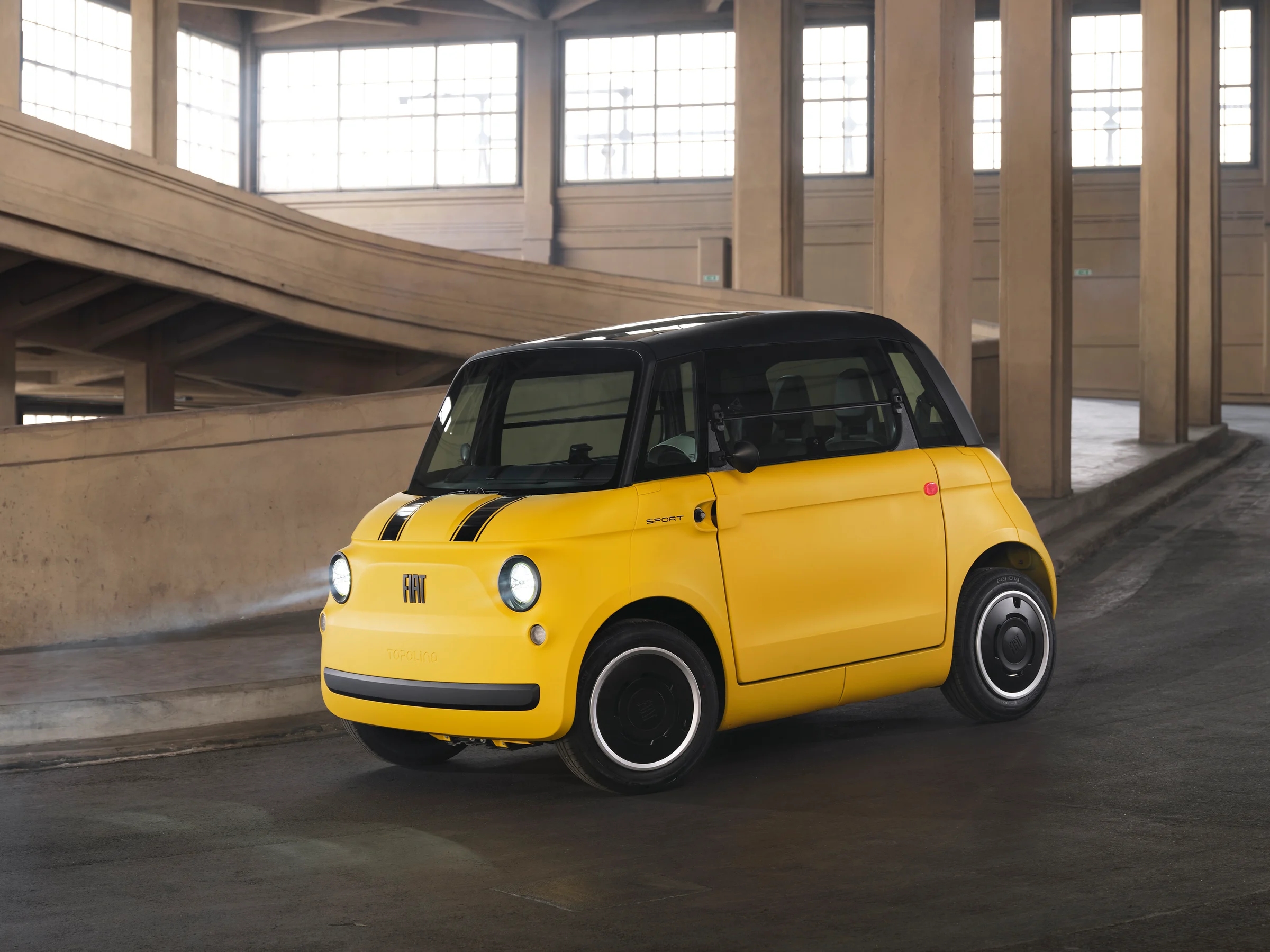
Italian customs impounded 134 of them at Livorno in May 2024 for wearing Italian flag stickers while built in Morocco; Stellantis agreed to remove the stickers.