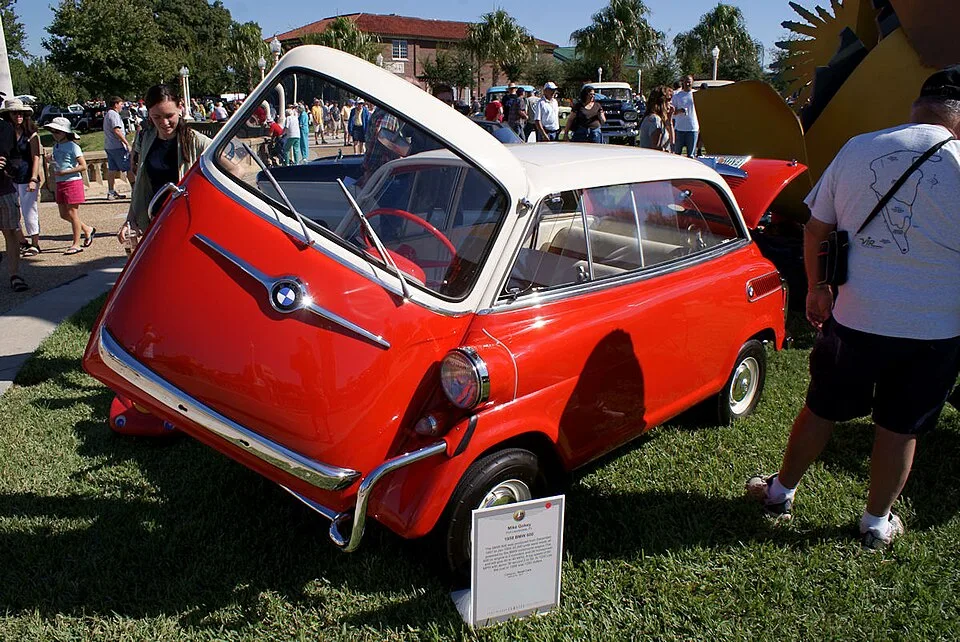
BMW bolted a motorcycle engine from the R67 sidecar rig behind the rear wheels of this car, borrowing the Isetta's front door because there wasn't budget for anything new.
Lead trim: 600 (582 cc flat-twin)
BMW 600600 · 1957–1959
- 0spots by members
- Unclaimednobody has spotted one yet
- 0sets it belongs to
Nobody in Burbles has spotted a BMW 600 yet. See one on the street, point the app at it, and the first card is yours — with your @handle permanently credited on this page.
FactBMW bolted a motorcycle engine from the R67 sidecar rig behind the rear wheels of this car, borrowing the Isetta's front door because there wasn't budget for anything new.
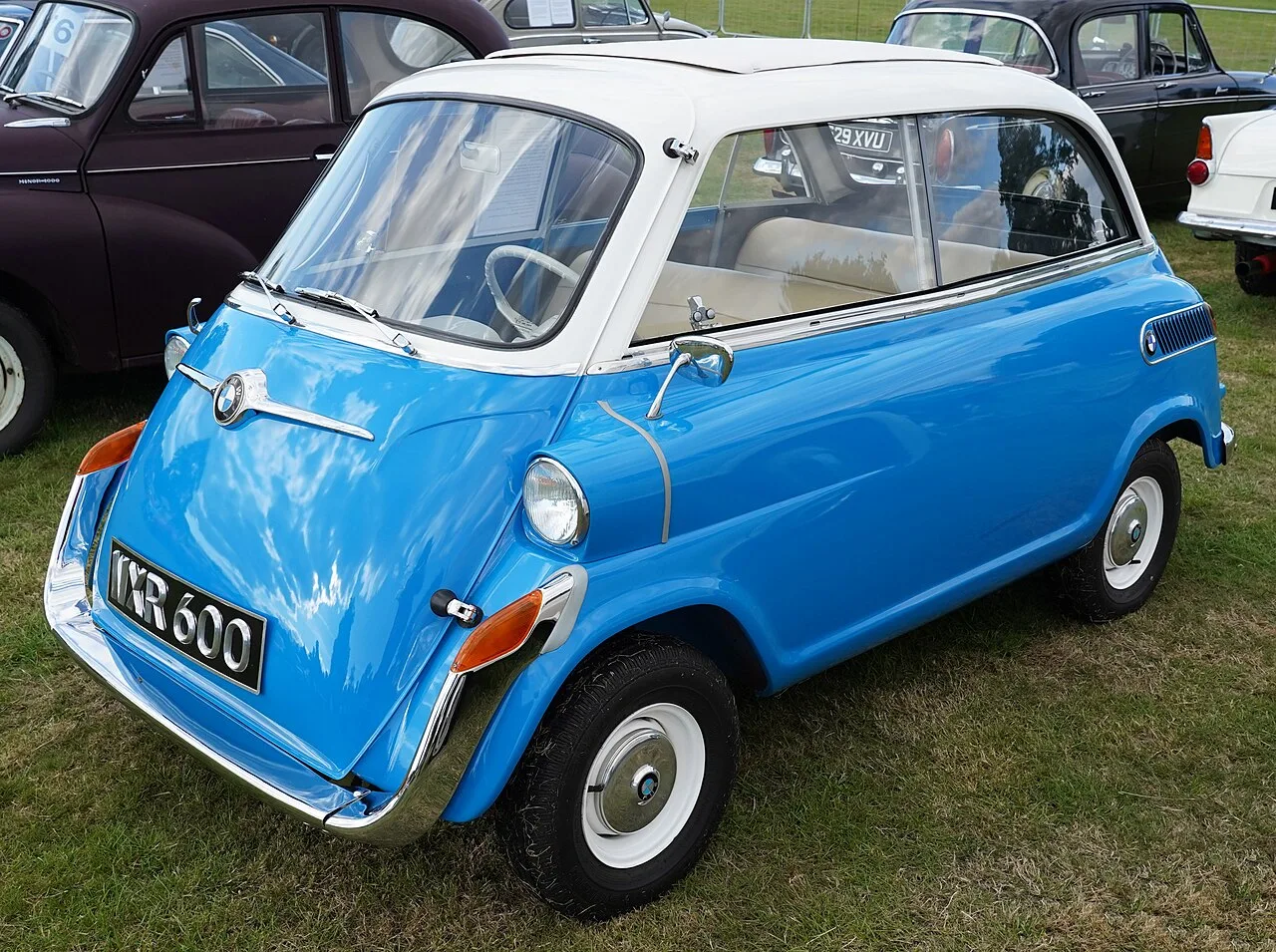
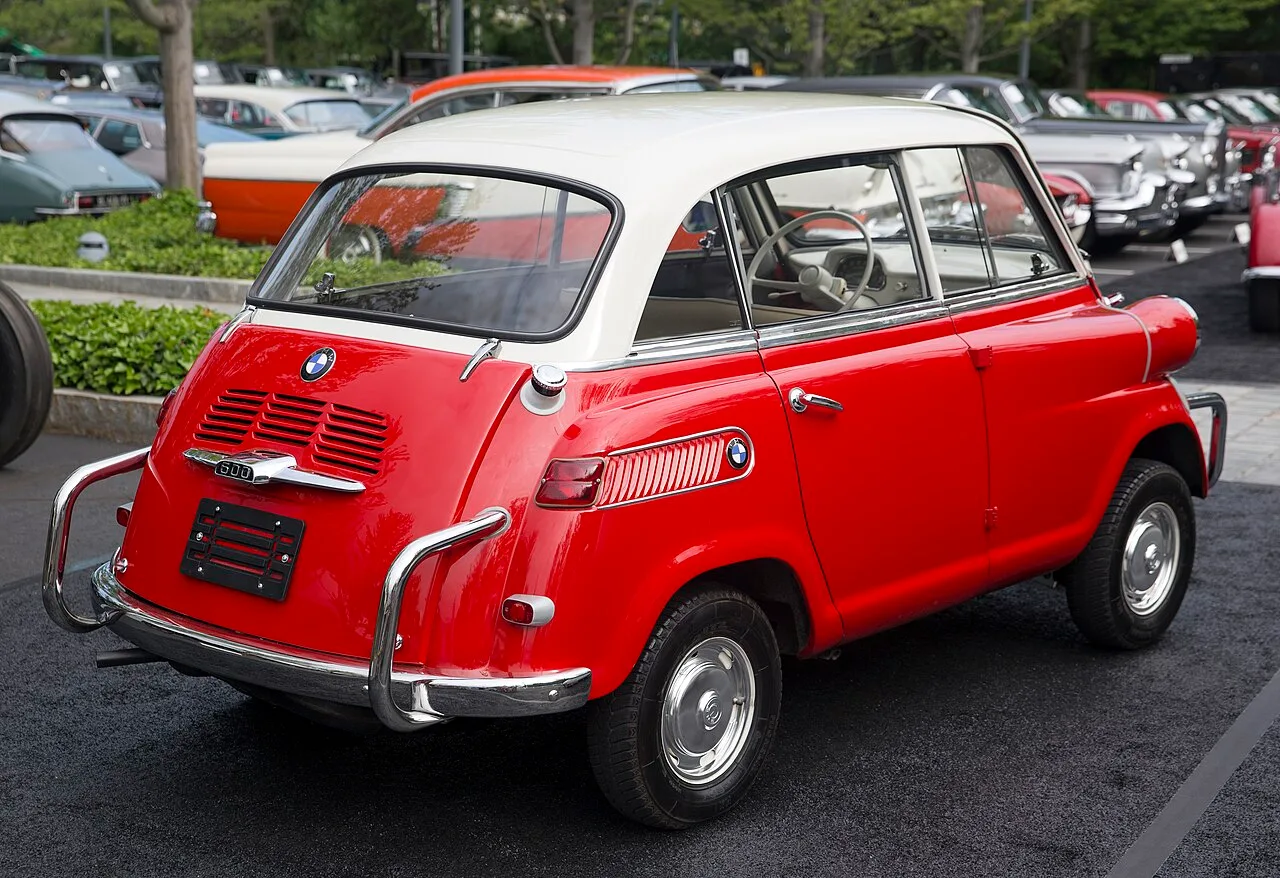
The BMW 600 is a four-seater city car produced by BMW from mid-1957 until November 1959, partially based on the Isetta two-seater and BMW's first postwar four-seater economy car. BMW needed to expand its range without the resources for an all-new car and engine, so the 600 used the Isetta's front suspension and front door, with a new perimeter frame (box-section side members and straight tube crossmembers), an independent semi-trailing arm rear suspension (the first time BMW had used it, on every BMW production automobile except the M1 until the 1990s) and a larger engine: the 582 cc flat-twin from the R67 motorcycle/sidecar combination, delivering 19.5 hp (14.3 kW) at 4,500 revolutions per minute, mounted behind the rear wheels. A four-speed all-synchromesh manual was standard, with a Saxomat semi-automatic available; the top speed was approximately 100 km/h. Rear seat access was by a conventional door on the right side. The wheelbase is 1,700 mm (66.9 in), front track 1,220 mm and rear track 1,160 mm; length 2,900 mm (114.2 in), or 2,946 mm (116.0 in) for the US version, with sealed-beam headlights and large bumper overriders. It was not a sales success — about 35,000 were built (34,813 in the infobox), attributed in part to competition from more conventional cars such as the Volkswagen Beetle and to the bubble-car image — but it began the design process for its more successful successor, the BMW 700, and was noted for carrying four people within a shorter length than the Mini.
Collectors Spotted in the BMW 600 Lineage
No member has published a public street spot of the BMW 600 yet — the First · Worldwide stamp is wide open.
Trims & Figures
One published trim in the catalogue. A blank is a figure not recorded, not zero.
| Trim | Years | Engine | Power | Torque | 0–60 | Drive | Gearbox | MSRP |
|---|---|---|---|---|---|---|---|---|
| 600 (582 cc flat-twin) | 1957–1959 | 0.6 L Flat-2 | 19.5 hp | 28 lb-ft | — | RWD | — | — |
Owning one
We don’t estimate running costs for a car like this. What it costs depends on its condition, its specialist and how it is driven, and an average would mislead.
Owners’ builds
Nobody has claimed one yet.
Photographs
Rivals
Same body, same money, other badges — tap any card to flip.
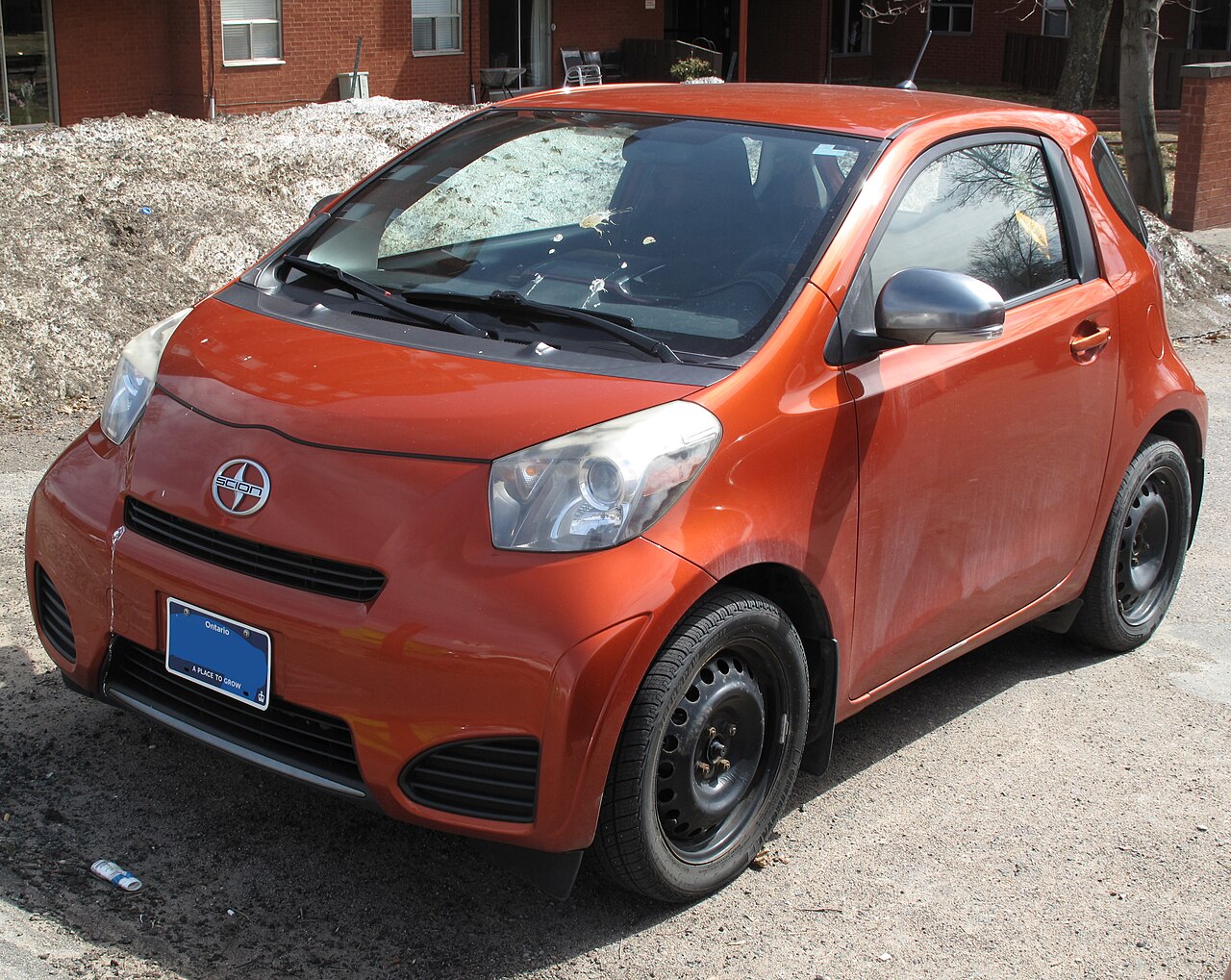
The iQ's rear passenger seat is asymmetrical, with the left side cut narrower than the right to make room for crash-safety structure while keeping a usable seating position.
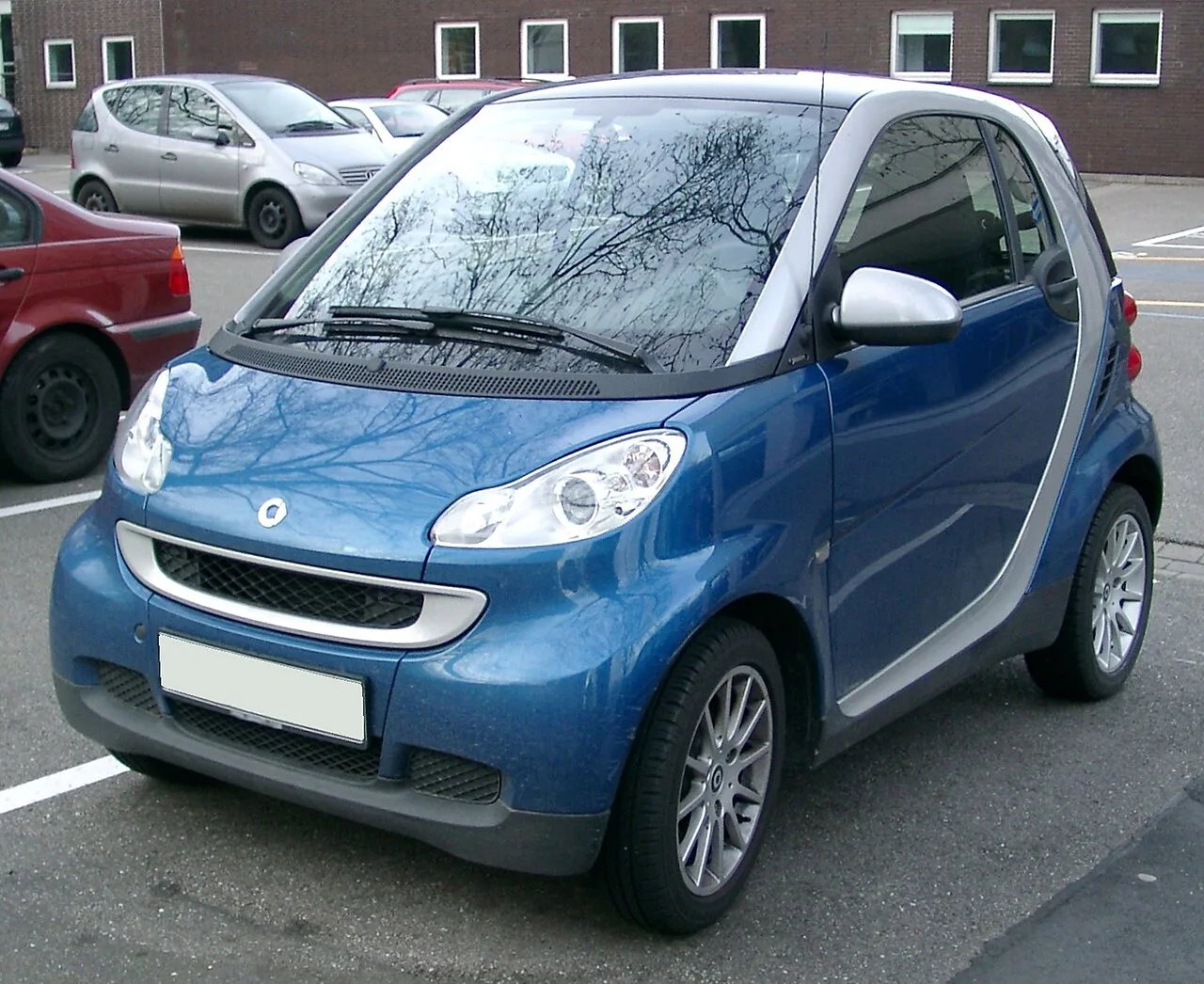
This fortwo held onto a title through its whole run — the lightest production car sold anywhere in Europe.
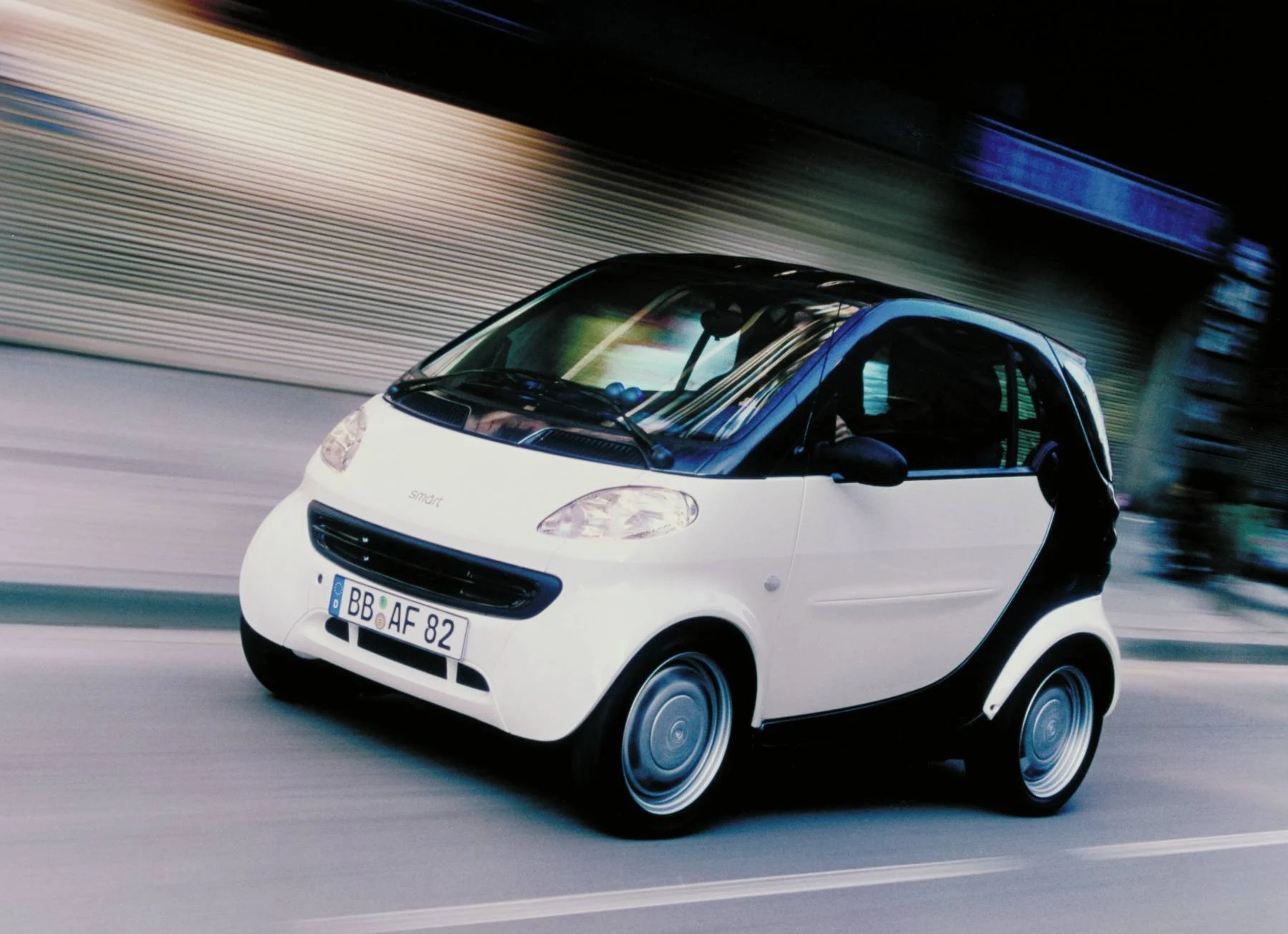
A watchmaker co-designed this city car: Swatch and Mercedes-Benz built it together and debuted it as the City-Coupé.
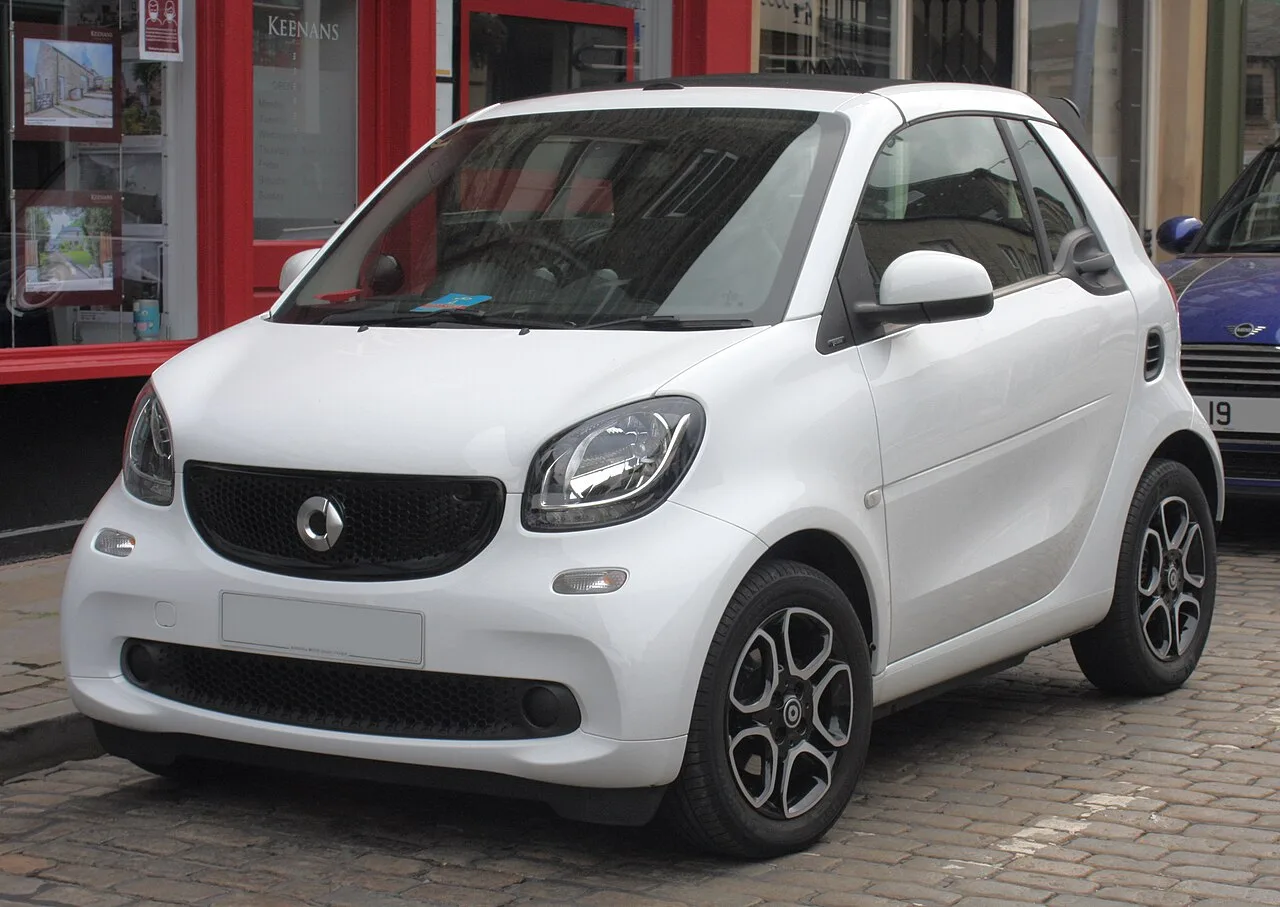
This fortwo isn't a pure smart design — Mercedes-Benz co-developed this generation with Renault, sharing its platform and engines with the third-generation Renault Twingo.
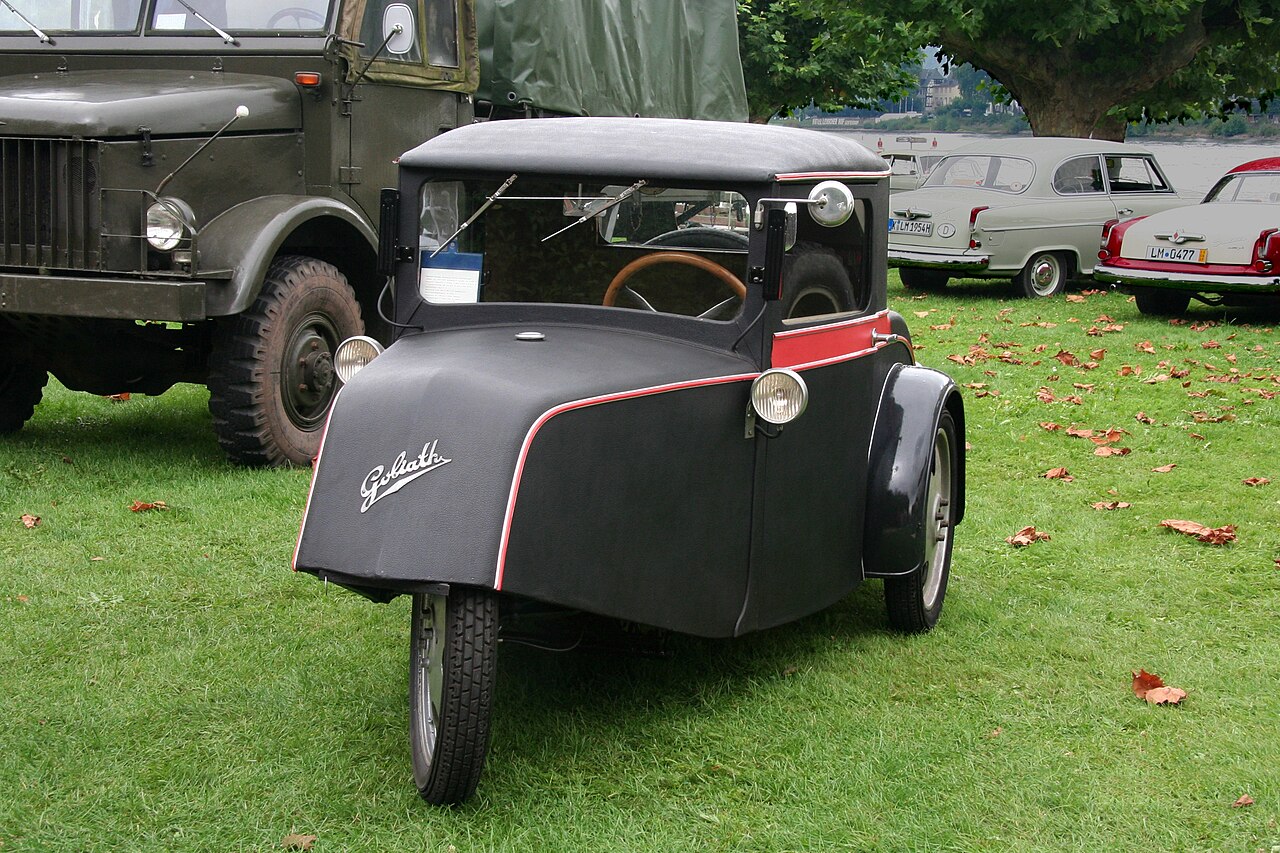
Goliath’s very first passenger car was barely a car at all — the Pionier ran on three wheels with a single-cylinder engine.
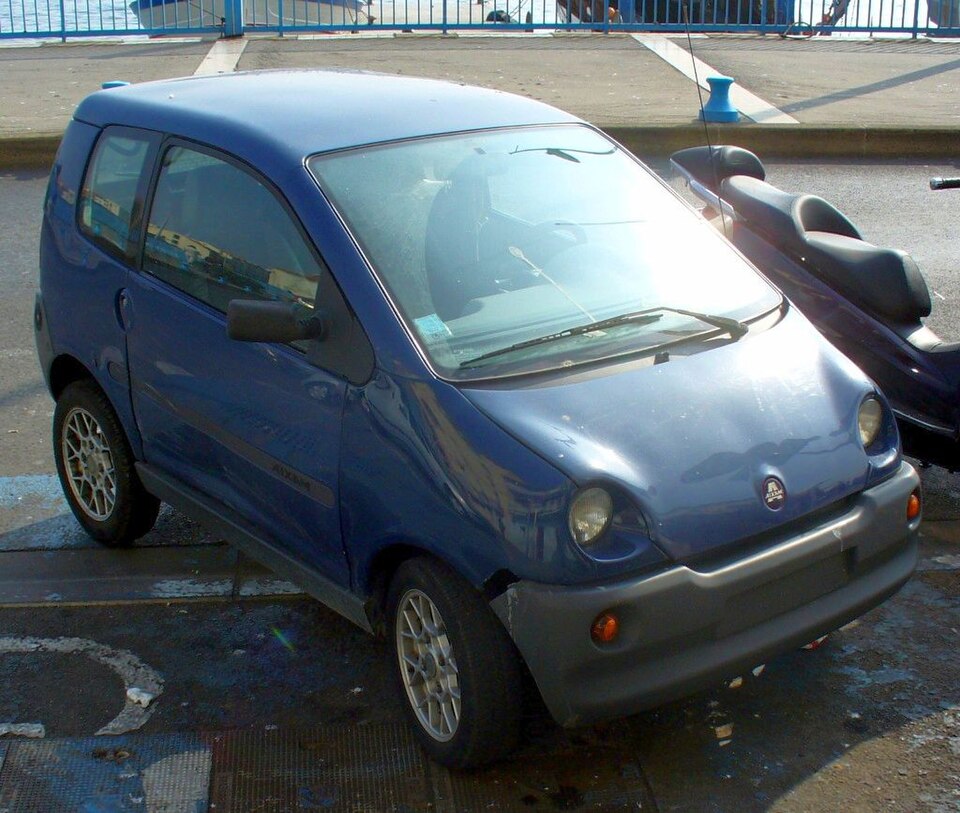
Aixam's diesel microcar runs a Kubota Z402, an industrial farm-equipment engine making 4-6 kW, built to dodge a driving licence.
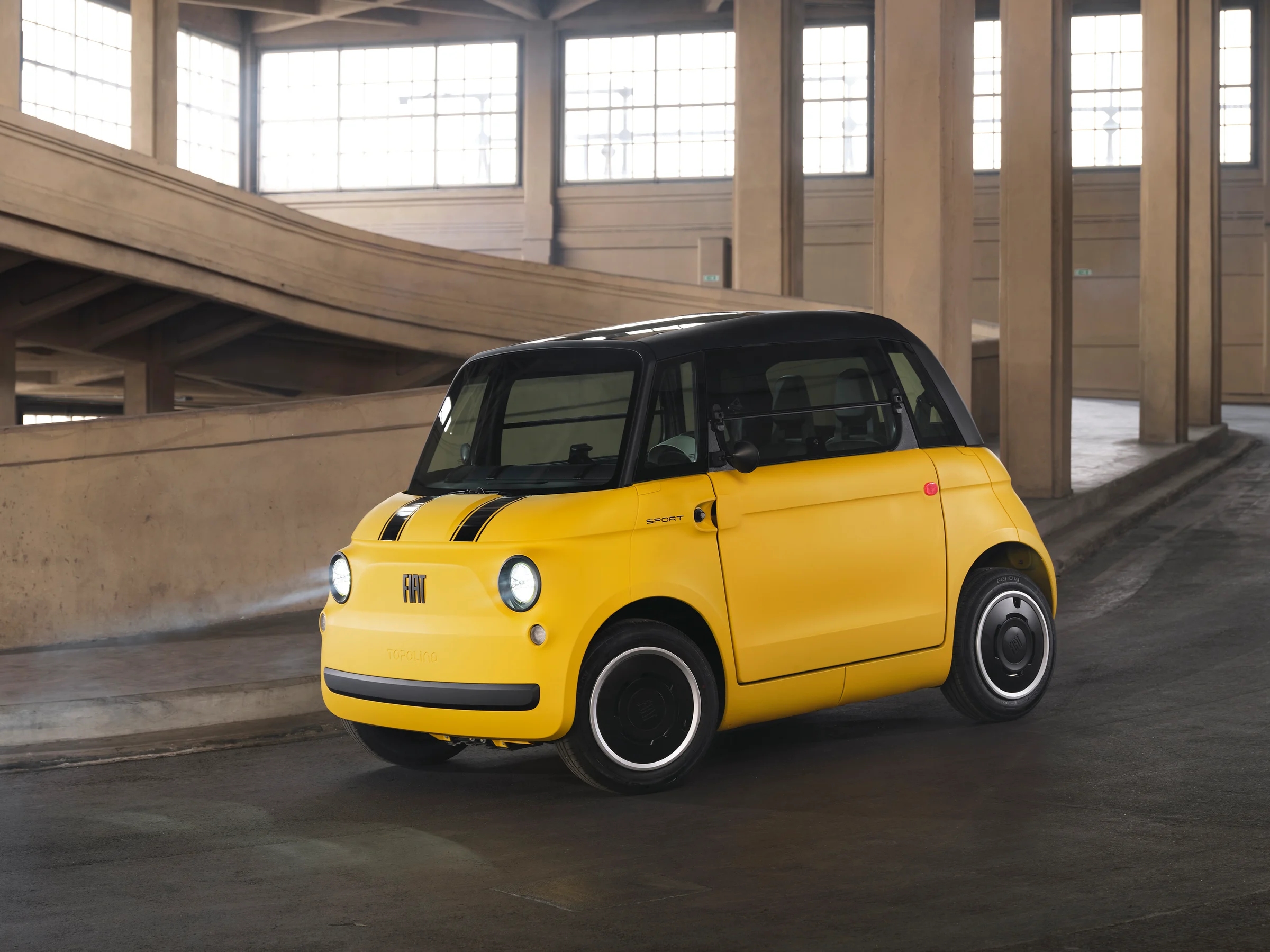
Italian customs impounded 134 of them at Livorno in May 2024 for wearing Italian flag stickers while built in Morocco; Stellantis agreed to remove the stickers.