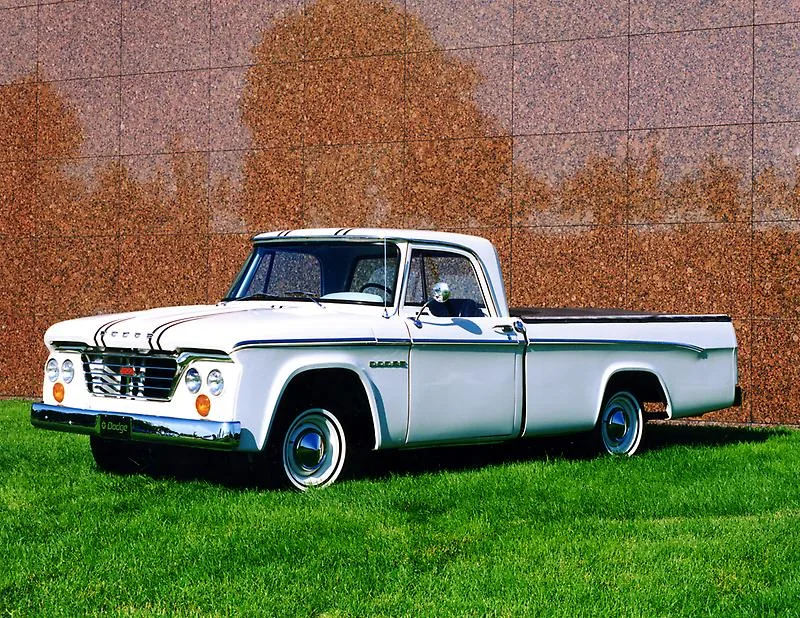
In 1963 Dodge beat Ford and Chevy to the punch, becoming the first Big Three maker to sell a factory four-door crew-cab pickup.
Median 71 hp across 13 similar cars
Lead trim: 170 slant-six · up to 365 hp
Dodge D-Series / Ram (D-100 to D-350)1961–1965
- 0spots by members
- Unclaimednobody has spotted one yet
- 0sets it belongs to
Nobody in Burbles has spotted a Dodge D-Series / Ram (D-100 to D-350) yet. See one on the street, point the app at it, and the first card is yours — with your @handle permanently credited on this page.
FactIn 1963 Dodge beat Ford and Chevy to the punch, becoming the first Big Three maker to sell a factory four-door crew-cab pickup.
The first D-100/D-200/D-300 (two-wheel drive; W for four-wheel drive) pickups, built from October 1960 in Warren, Michigan, and also sold as Fargo in Canada. Chrysler's 318 A V8 was the smallest V8 option, and all of its larger engines except the Hemi were factory options. Sweptline straight-sided beds and step-sided Utiline beds (6.5 ft D-100 only, 8 ft D-100/200, 9 ft D-300 only); in 1963 Dodge introduced a factory four-door crew cab, the first of the "Big Three" to market a truck with two rows of seating (after the 1961 International Travelette). The 1964 Custom Sports Special had bucket seats, a console, carpet and racing stripes, and the optional high-performance package (413 wedge V8 in 1964, 426 in 1965, 365 hp and 470 lb⋅ft, with LoadFlite automatic, a 6,000 rpm Sun tachometer and 1961 Imperial traction bars; the Custom Sports Special was built 1964–67). A Perkins 354 diesel was offered in 1962 and dropped after only about 1,000 were built.
Collectors Spotted in the Dodge D-Series / Ram (D-100 to D-350) Lineage
No member has published a public street spot of the Dodge D-Series / Ram (D-100 to D-350) yet — the First · Worldwide stamp is wide open.
Trims & Figures
4 published trims in the catalogue. A blank is a figure not recorded, not zero.
| Trim | Years | Engine | Power | Torque | 0–60 | Drive | Gearbox | MSRP |
|---|---|---|---|---|---|---|---|---|
| 170 slant-six | 1961–1965 | 2.8 L Inline-6 | 105 hp | — | — | — | — | — |
| 225 slant-six | 1961–1965 | 3.7 L Inline-6 | 145 hp | 215 lb-ft | — | — | — | — |
| 318 A V8 | 1961–1965 | 5.2 L V8 | — | — | — | — | — | — |
| High-performance 426 RB V8 (365 hp, 1965) | 1965–1965 | 7.0 L V8 | 365 hp | 470 lb-ft | — | — | — | — |
Owning one
We don’t estimate running costs for a car like this. What it costs depends on its condition, its specialist and how it is driven, and an average would mislead.
Owners’ builds
Nobody has claimed one yet.
Photographs
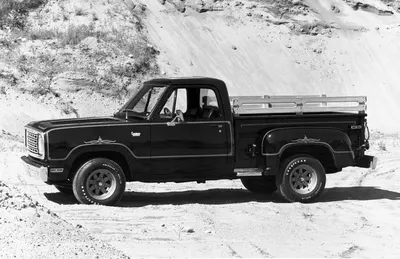
Dodge beat Ford and Chevy to a genuinely new idea: the 1973 Club Cab was the pickup industry’s first extended cab.
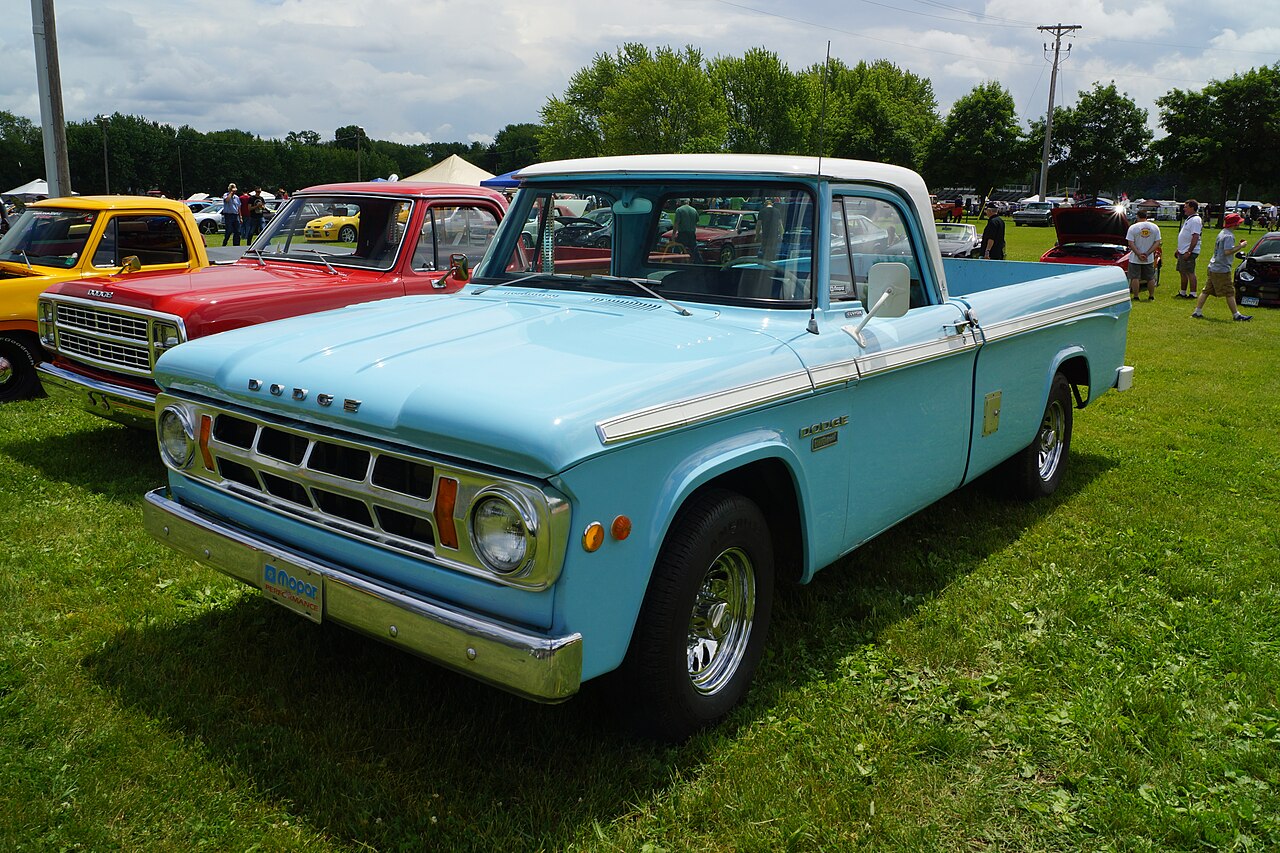
In 1969, Dodge dressed up a plain D-100 with a stripe, a dash decal and dog-dish hub caps, called it "The Dude," and had Don Knotts front the ad campaign. Barely 2,000 were built.
In 1963 Dodge beat Ford and Chevy to the punch, becoming the first Big Three maker to sell a factory four-door crew-cab pickup.
Rivals
Same body, same money, other badges — tap any card to flip.
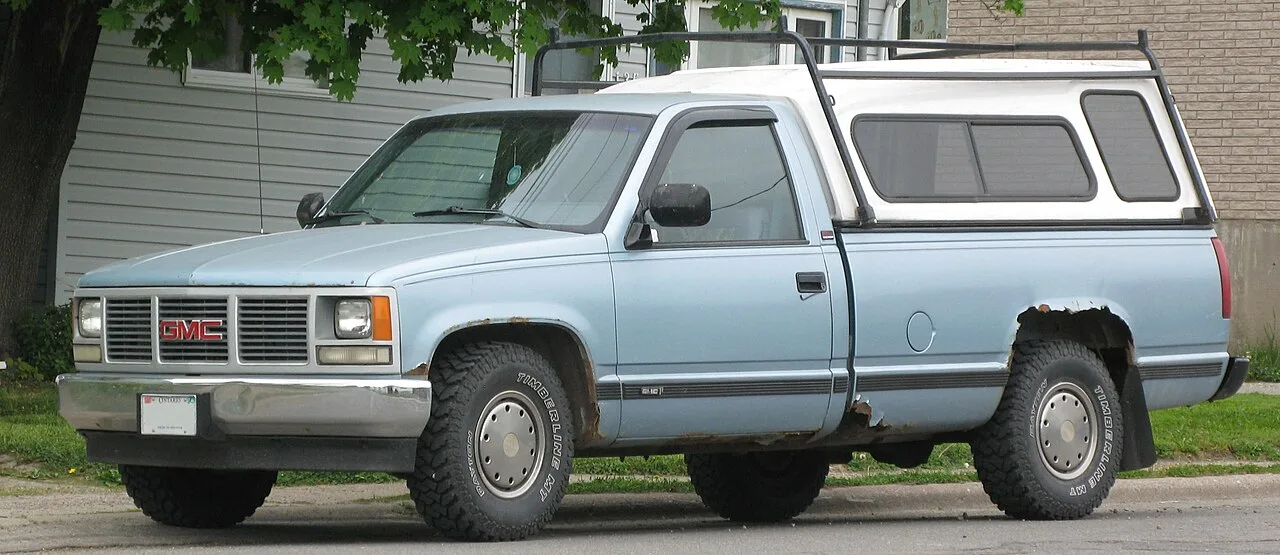
The GMT400 split the twins for good: 1988 was the year "C/K" became Chevrolet-only badging, while GMC's version of the very same truck became the Sierra.
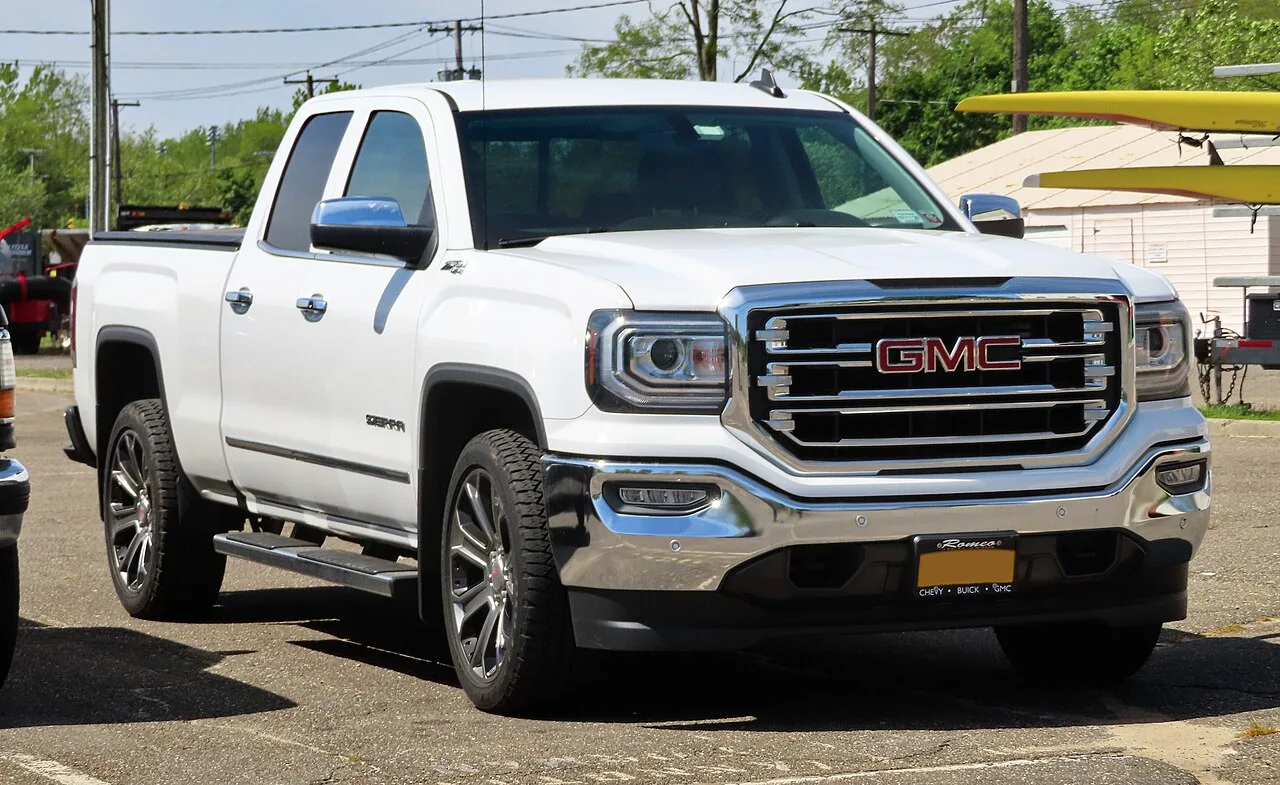
GMC found 10 extra horsepower in the Sierra All Terrain X's 5.3L V8 with nothing more than a performance exhaust, no other changes needed to go from 355 to 365 hp.
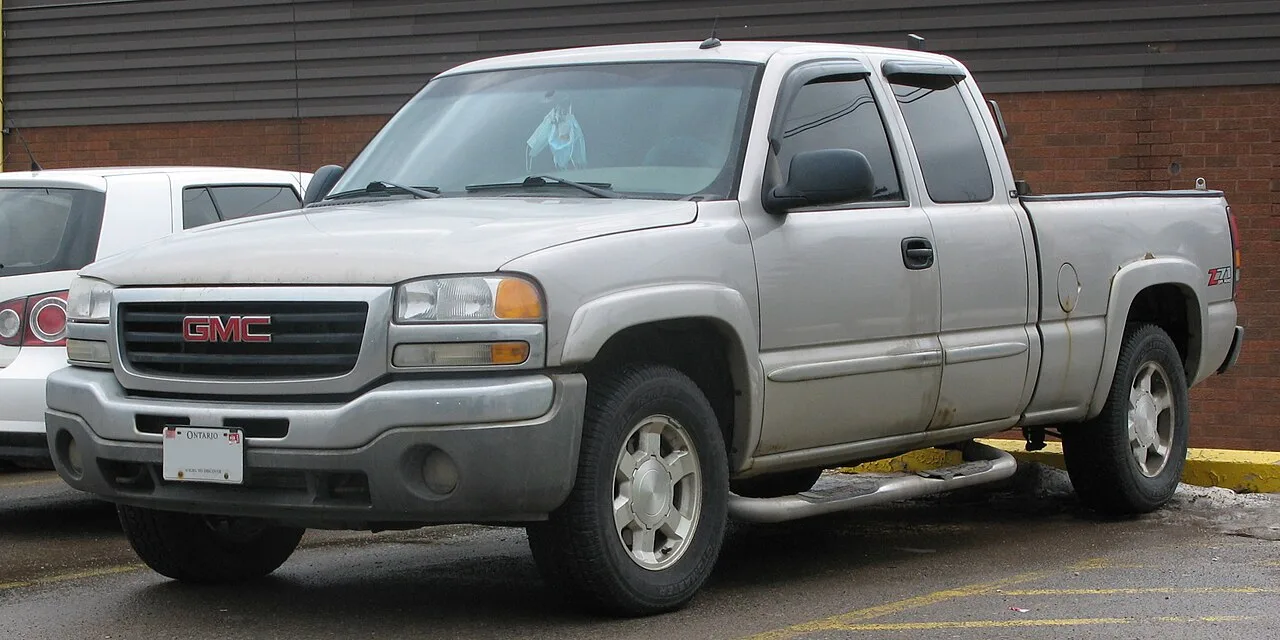
This Sierra kept rolling off the line for a full extra year after its replacement arrived - badged "Classic" in 2007 just to tell the two generations apart on dealer lots.
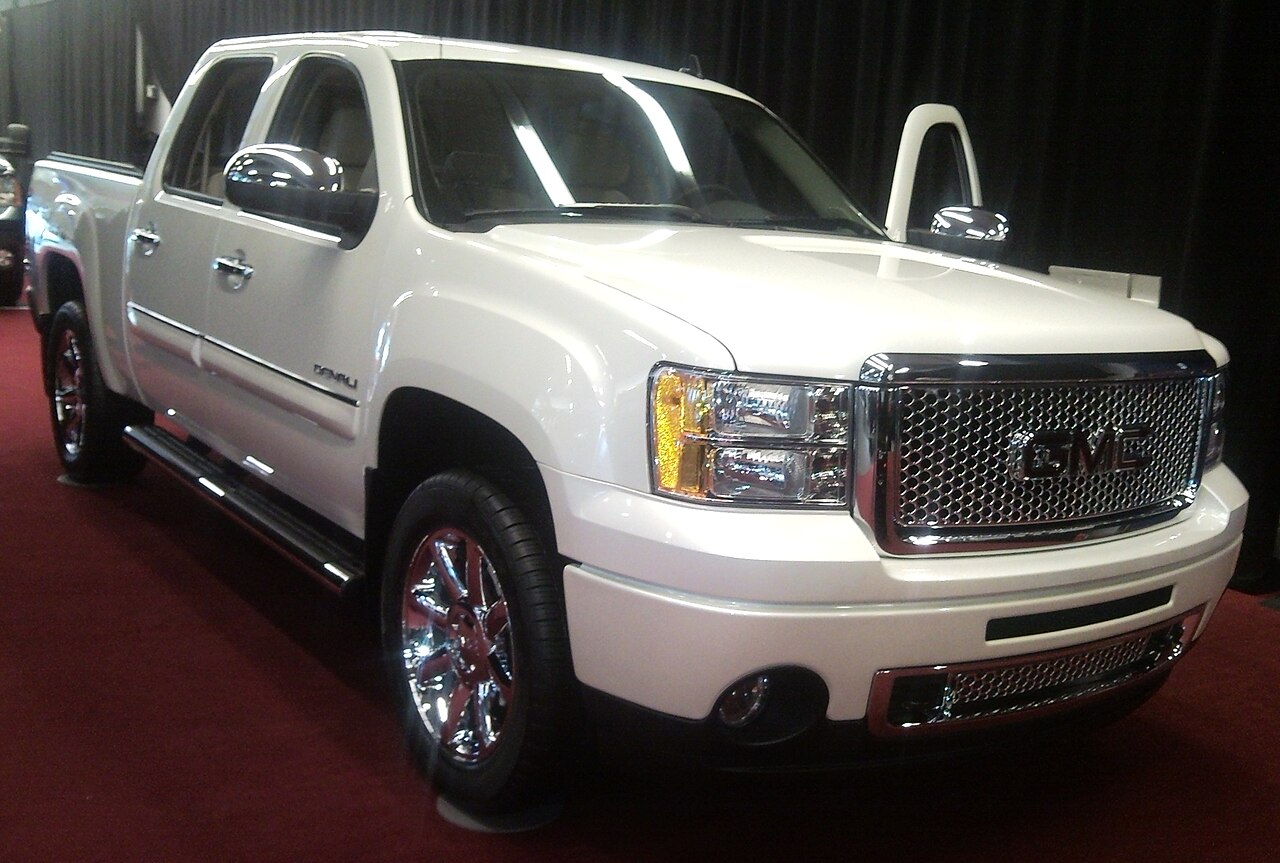
When this GMT900 Sierra launched for 2007, GM kept selling the outgoing truck alongside it, badged "Classic," so buyers could choose old or new side by side on the same lot.
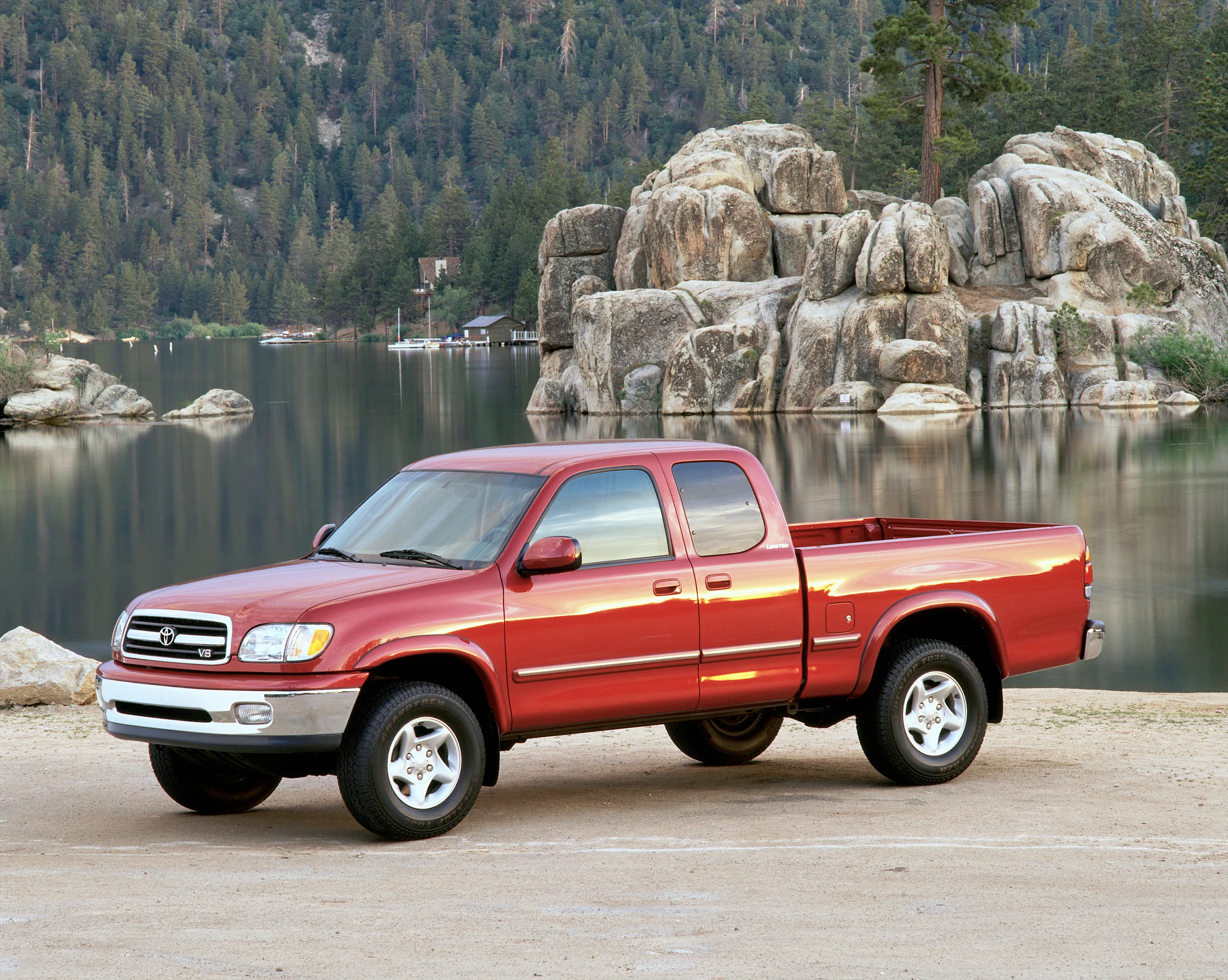
Toyota showed it as the T150 until Ford sued over the likeness to the F-150, and the production truck was renamed Tundra.
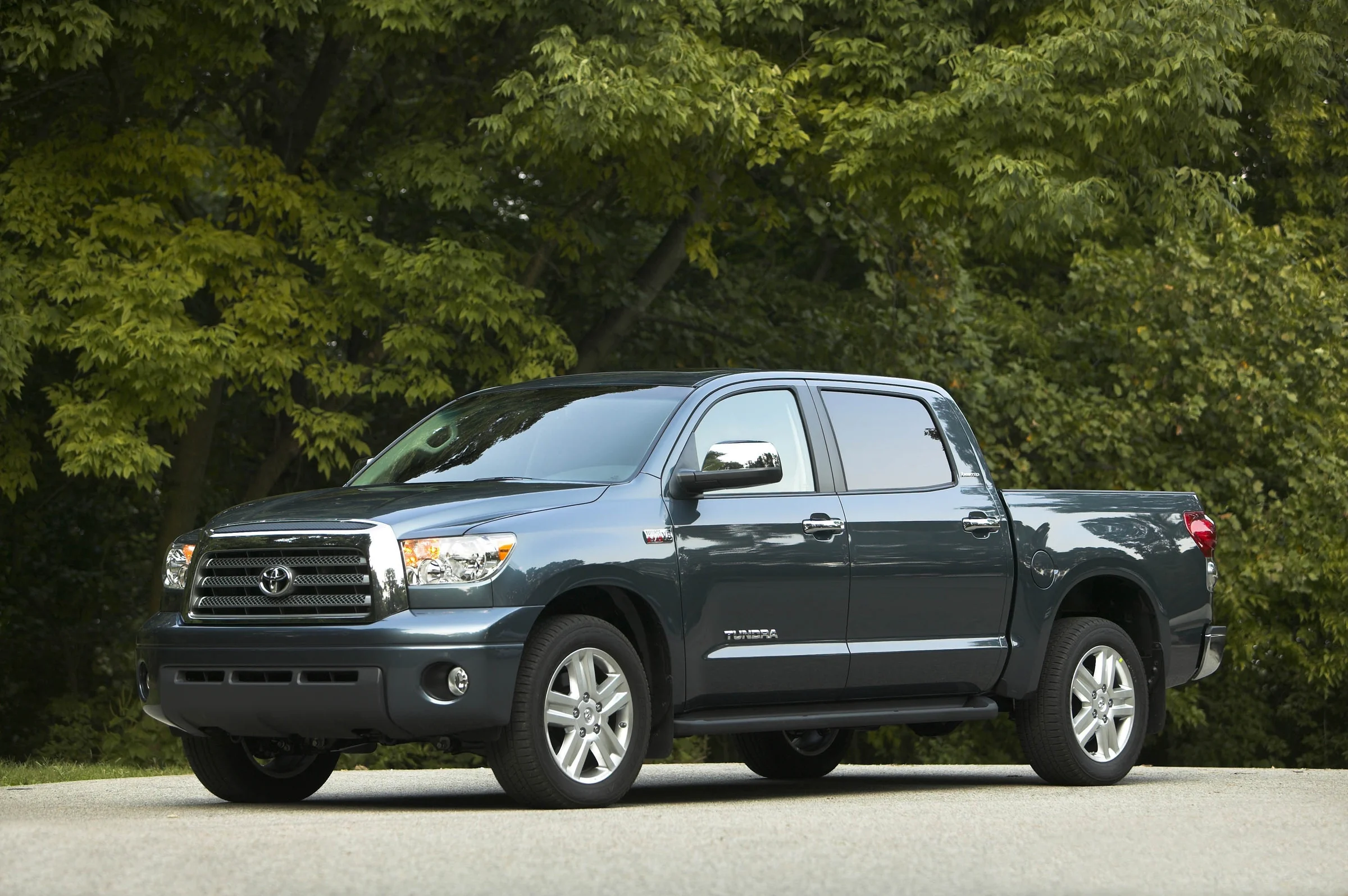
A Louisiana owner put over a million miles on his 2007 Tundra in eight years; Toyota gave him a new truck and took his apart to study it.
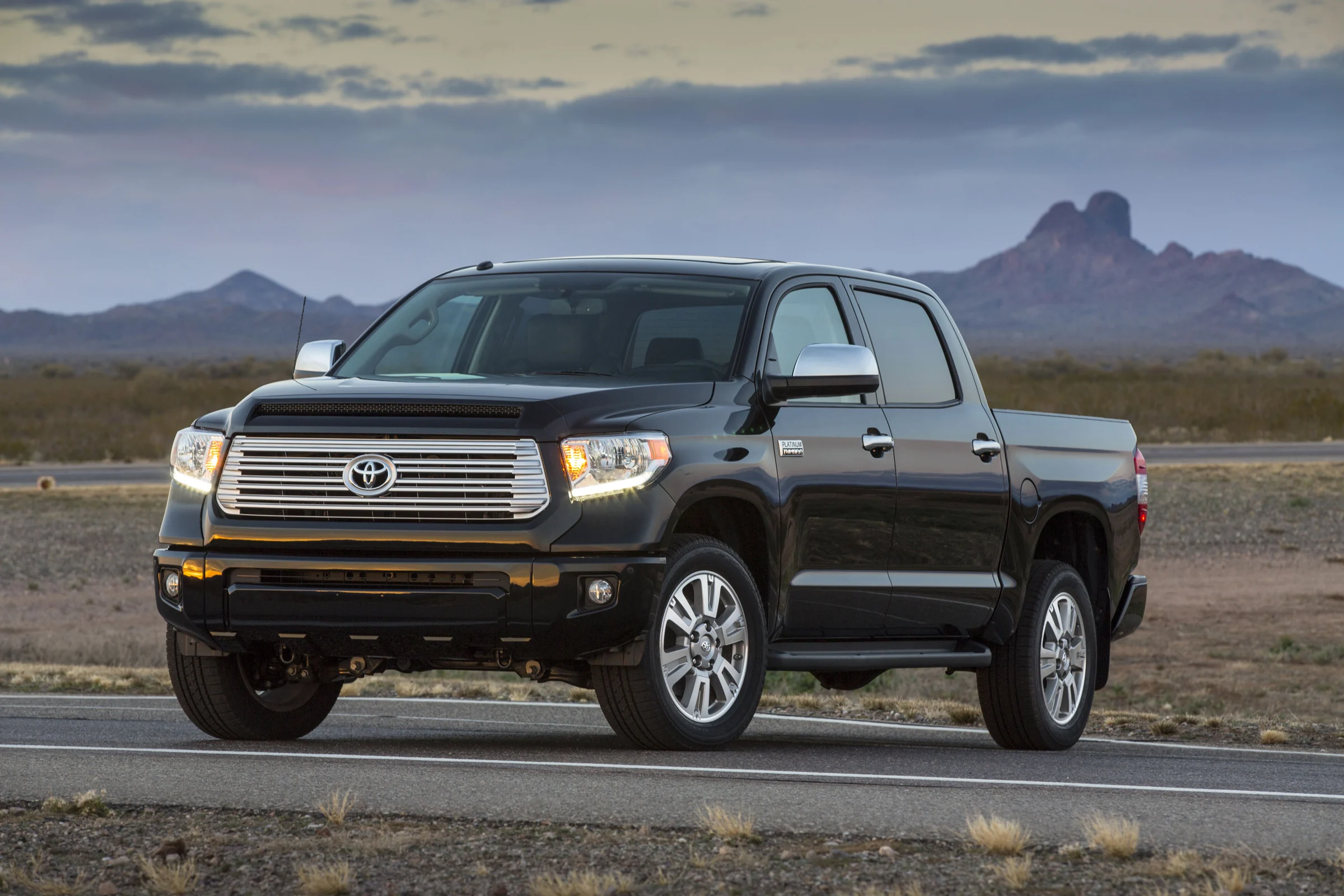
Toyota's Texas Tundra plant sits on land bought from the state's oldest working cattle ranch, and the 1794 Edition is named for the year that ranch was founded.
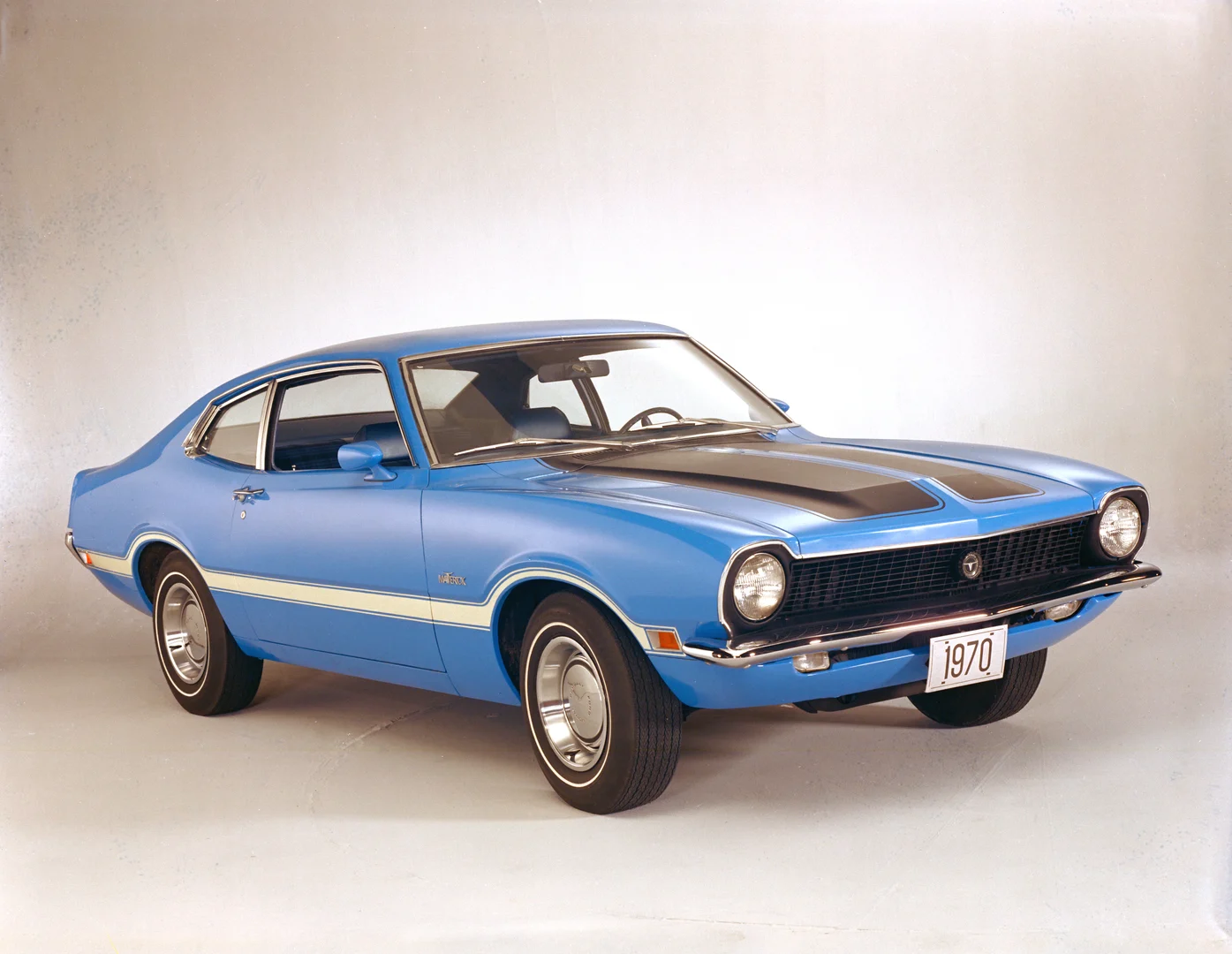
Its launch colours had pun names such as "Anti-Establish Mint" and "Freudian Gilt", sent to Lee Iacocca by a friend.