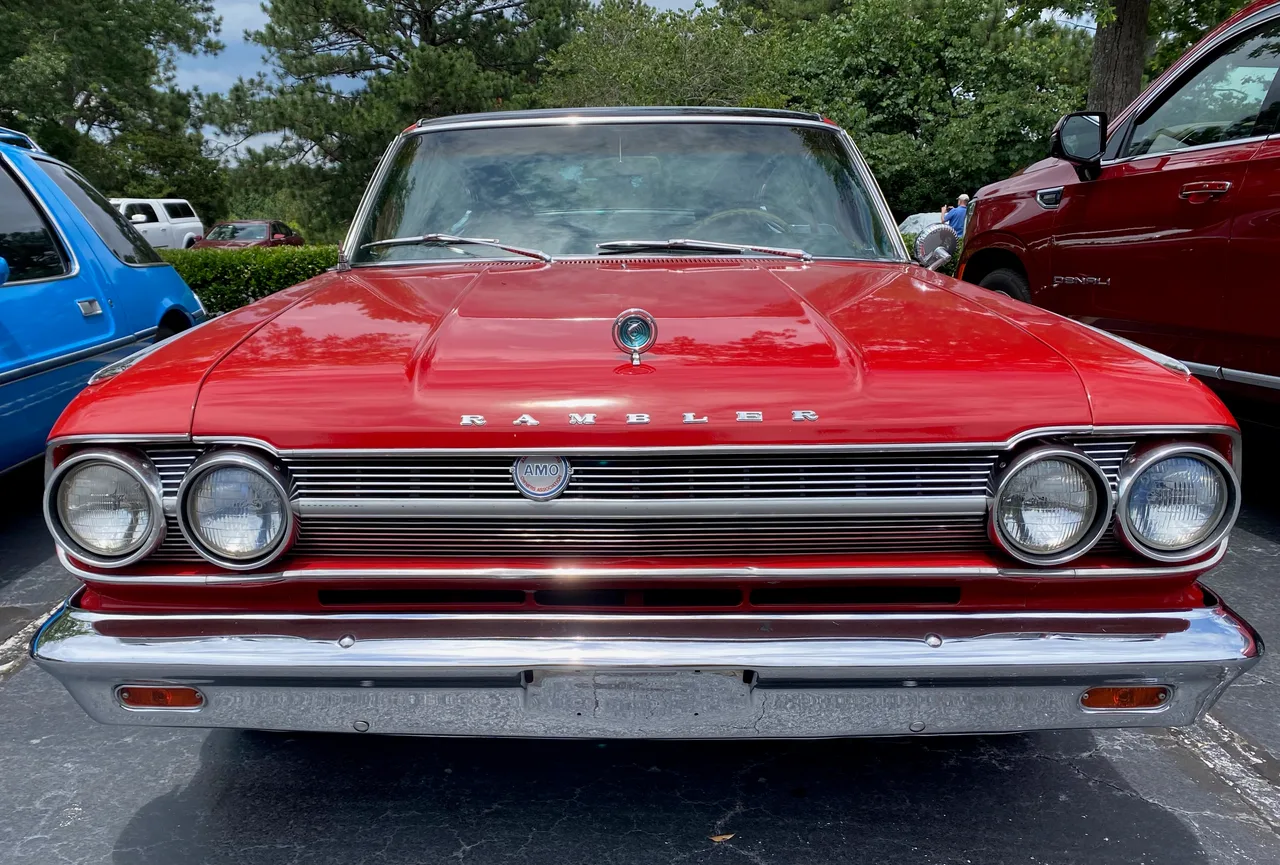
The Marlin's distinctive raised rear roofline exists because of one man: AMC's 6'4" CEO Roy Abernethy demanded he personally be able to sit comfortably in the back seat.
Lead trim: Marlin 232 cu in I6 (155 hp) · up to 270 hp
American Motors Corporation Marlin1965–1966
- 0spots by members
- Unclaimednobody has spotted one yet
- 0sets it belongs to
Nobody in Burbles has spotted a American Motors Corporation Marlin yet. See one on the street, point the app at it, and the first card is yours — with your @handle permanently credited on this page.
FactThe Marlin's distinctive raised rear roofline exists because of one man: AMC's 6'4" CEO Roy Abernethy demanded he personally be able to sit comfortably in the back seat.
The Rambler Marlin (AMC Marlin for 1966) is a two-door pillarless fastback produced by American Motors from 1965 to 1967, a halo car marketed as a personal luxury car (designer Dick Teague), its fastback roof previewed on the 1964 Rambler Tarpon show car and built on the Rambler Classic platform for 1965–1966 (14,874 built), officially announced on 10 February 1965 as part of AMC's "Sensible Spectaculars". Engines: the 232 cu in (3.8 L) I6 at 155 hp, the 287 cu in (4.7 L) V8 at 189 hp and the 327 cu in (5.4 L) V8 in 250 hp two-barrel and 270 hp four-barrel forms, with a 3-speed manual, overdrive, "Twin-Stick" (1965), 4-speed manual (1966) or automatic. Wheelbase 112 in, length 195 in, width 74.5 in, height 53 in, curb weight 2,992 lb (V8).
Collectors Spotted in the American Motors Corporation Marlin Lineage
No member has published a public street spot of the American Motors Corporation Marlin yet — the First · Worldwide stamp is wide open.
Trims & Figures
4 published trims in the catalogue. A blank is a figure not recorded, not zero.
| Trim | Years | Engine | Power | Torque | 0–60 | Drive | Gearbox | MSRP |
|---|---|---|---|---|---|---|---|---|
| Marlin 232 cu in I6 (155 hp) | 1965–1966 | 3.8 L Inline-6 | 155 hp | 222 lb-ft | — | RWD | — | — |
| Marlin 287 cu in V8 (189 hp) | 1965–1966 | 4.7 L V8 | 189 hp | — | — | RWD | — | — |
| Marlin 327 cu in V8 (250 hp, 2-barrel) | 1965–1966 | 5.4 L V8 | 250 hp | 340 lb-ft | — | RWD | — | — |
| Marlin 327 cu in V8 (270 hp, 4-barrel) | 1965–1966 | 5.4 L V8 | 270 hp | 360 lb-ft | — | RWD | — | — |
Owning one
We don’t estimate running costs for a car like this. What it costs depends on its condition, its specialist and how it is driven, and an average would mislead.
Owners’ builds
Nobody has claimed one yet.
Photographs
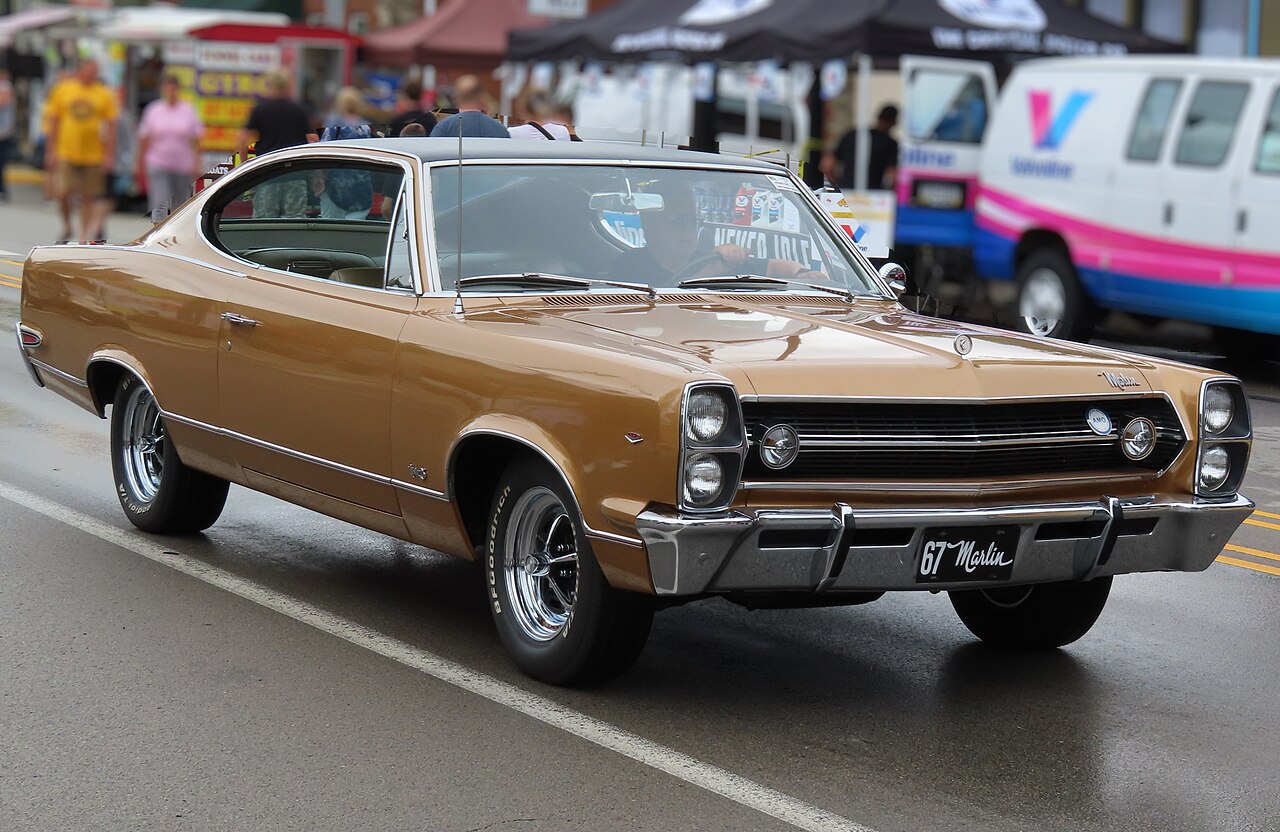
AMC spent $35 million retooling its senior cars for 1967 — but the redesigned Marlin's sales collapsed to just 2,545 units, as buyers grew wary of the automaker's finances.
The Marlin's distinctive raised rear roofline exists because of one man: AMC's 6'4" CEO Roy Abernethy demanded he personally be able to sit comfortably in the back seat.
Rivals
Same body, same money, other badges — tap any card to flip.
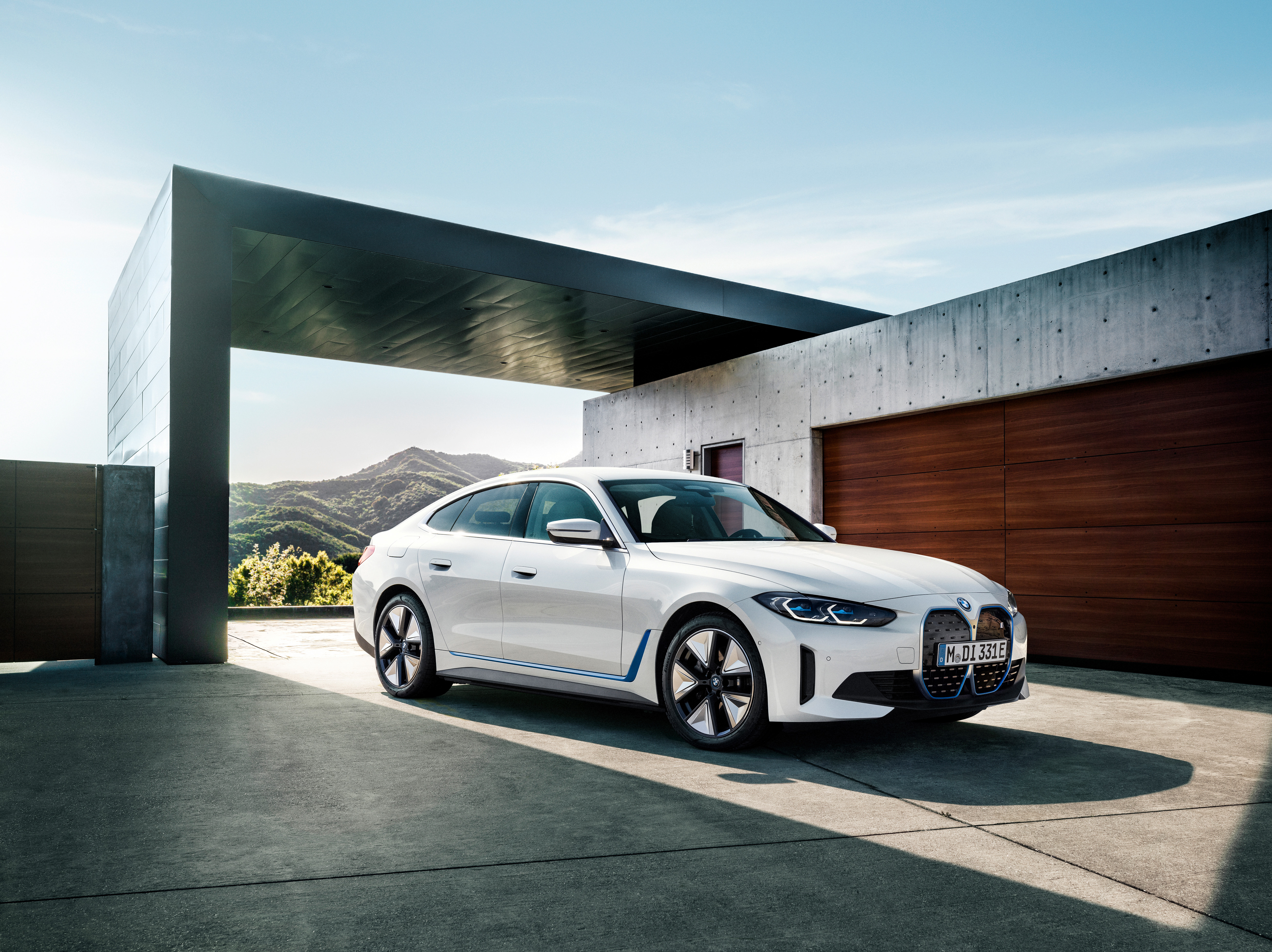
The i4's giant floor-mounted battery pack isn't just dead weight down low — BMW says bolting it into the floorpan actually stiffens the whole car's structure.
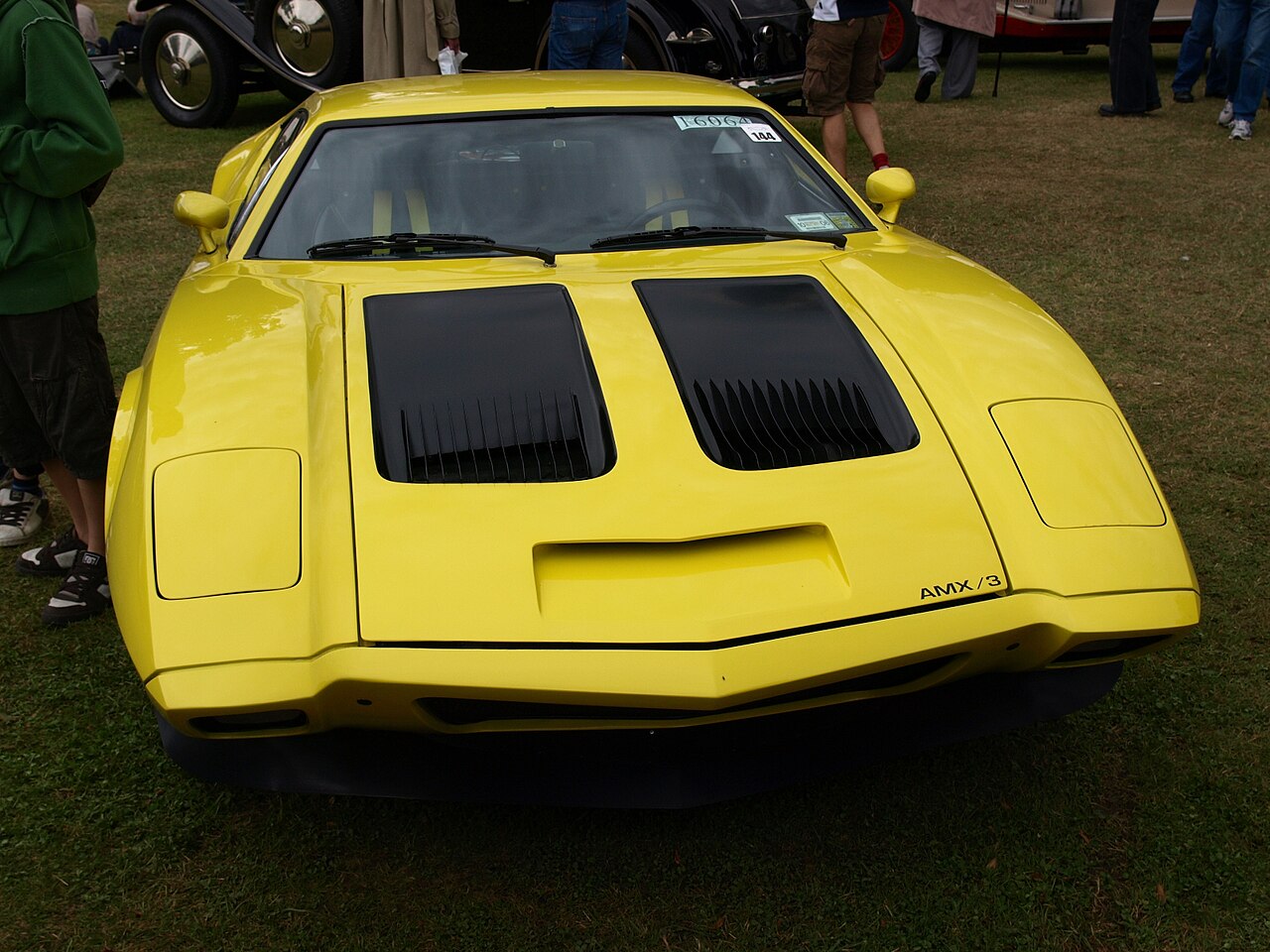
When SAE named the AMX best-engineered car of 1969, one reason was its dashboard — injection-molded in a single piece, an industry first for safety.
AMC spent $35 million retooling its senior cars for 1967 — but the redesigned Marlin's sales collapsed to just 2,545 units, as buyers grew wary of the automaker's finances.
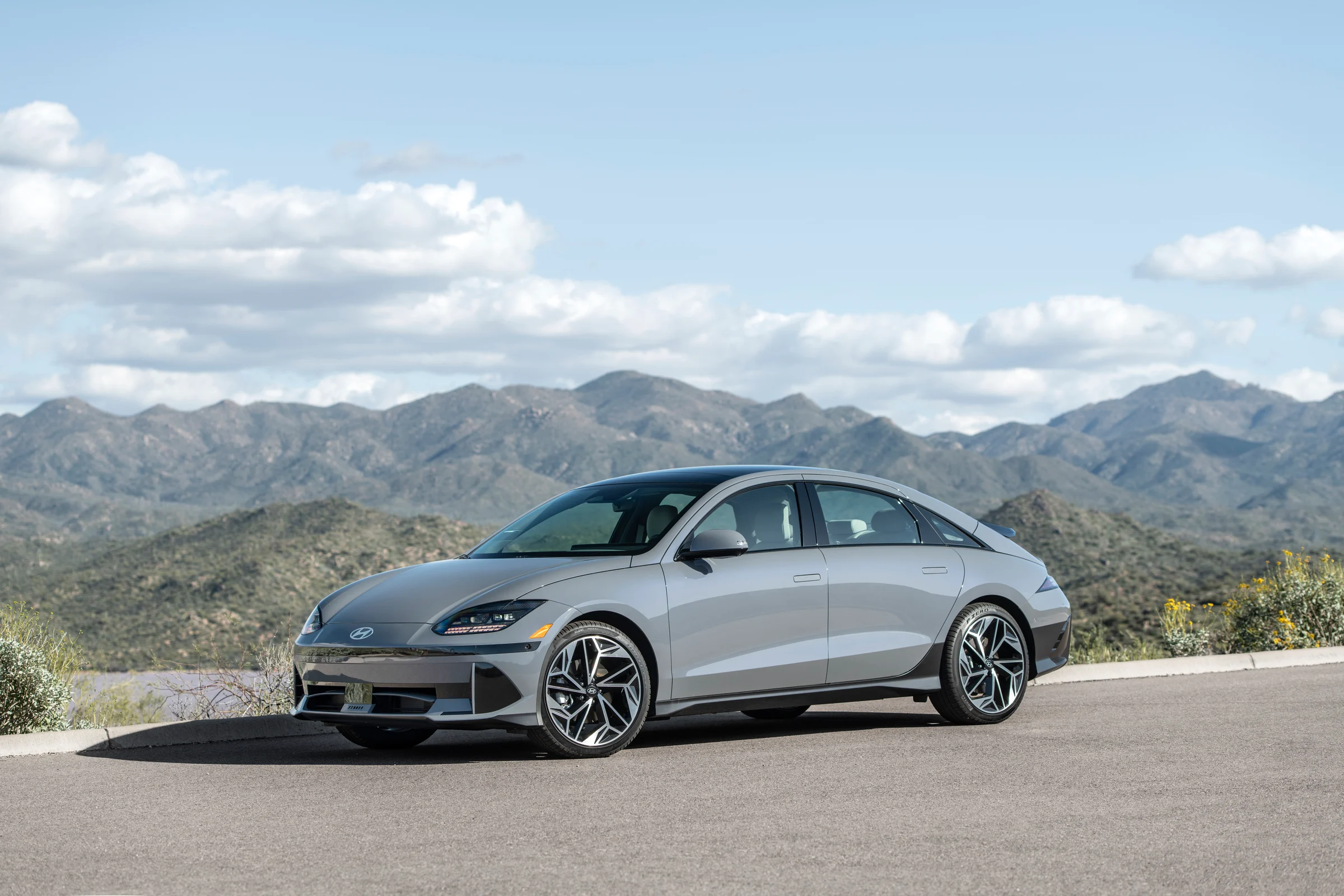
The Ioniq 6 slips through air at a 0.21 drag coefficient, slicker than most sports cars.
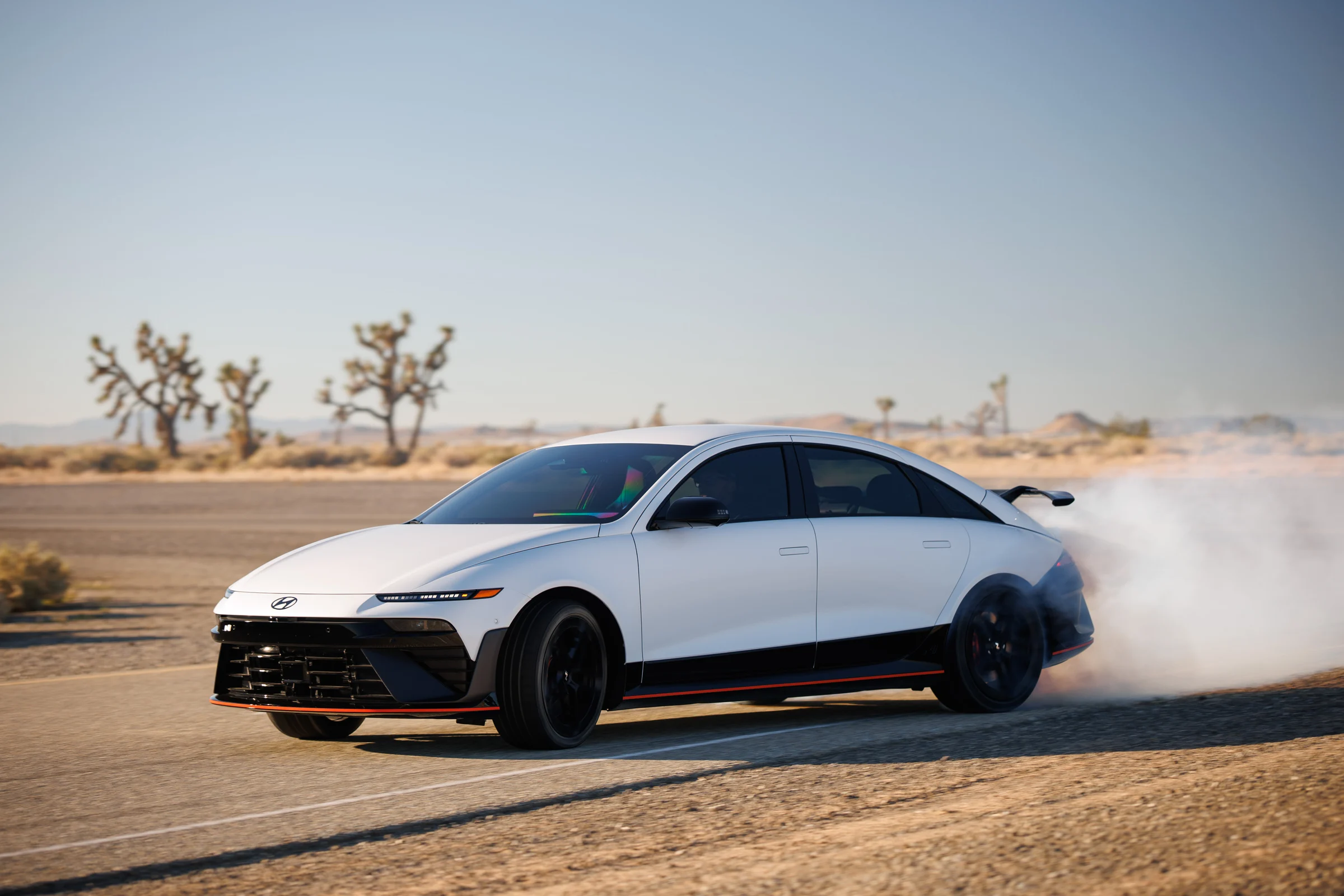
Hyundai used the Ioniq 6 N's RN22e concept to test parts for an Ioniq 6 racer replacing the Veloster N ETCR in touring car racing.